
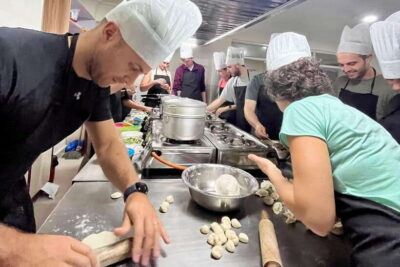
This experience is interesting because you do not just watch momo get made, you make it. In a Kathmandu home kitchen, you work through the steps yourself, from kneading dough to folding dumplings and cooking them.
I like that the class is hands-on, so even if you start with zero cooking skills, you’ll still get something to show for your time. I also like the social part, where you sit with your host and family to eat and chat after you finish. One drawback to consider: if you have gluten allergies, this is not recommended, since the workshop focuses on traditional momo dough.
Over about 2.5 hours, you’ll learn the core technique behind Nepal’s most loved dumplings, and you’ll get to pick from veg and non-veg options. It’s a private setup, so you’re not squeezed into a crowded group scene.
Key things to know before you go
- A real home-kitchen class in Kathmandu, not a studio demo
- Hands-on training, starting from dough and working through to cooking
- Veg and non-veg momo choices, including chicken and buffalo
- Eat with your host and family at the end, so it feels like a meal, not a class
- Private tour format, just your group participates
- Near public transportation with a clear meeting point at Sorakhutte
Entering a Kathmandu home kitchen for momo-making
Momo is the kind of food that turns into a memory fast. In Nepal, it’s not just a dish, it’s a comfort routine, a snack, and often a go-to meal when you want something filling without fuss. This cooking class gives you the simplest path into that culture: you learn how momos are made from scratch, right in a local host’s kitchen in Kathmandu.
What makes this work so well is the setting. A home kitchen has the right energy, the kind where people explain as they go, and where questions feel natural. You’re not hovering at a distance. You’re at the worktable, with flour on your hands, learning the motion and the feel. And because it is a private activity, your group gets to move at a human pace instead of watching a faster group fly through the steps.
For me, that is the best kind of food experience in a city like Kathmandu. You eat well, but you also leave with a skill. Later, when you find dumplings anywhere else, you will recognize the technique behind the taste.
More Cooking Classes in Kathmandu
- Half day cooking class in Thamel kathmandu
★ 5.0 · 607 reviews - Kathmandu: Local Women-Led Nepali Cooking & Momo Class
★ 4.9 · 360 reviews - Local Women Lead Nepali Cooking Class
★ 5.0 · 125 reviews
The 2.5-hour flow: dough, filling, folding, cooking, then eating
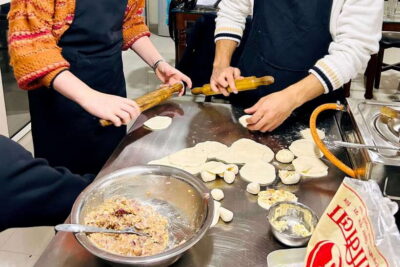
The workshop follows the core momo process, so you will not get stuck doing only one step. The class moves in a logical sequence: kneading dough, preparing the ingredients, folding the momos, and cooking them. Even if you have never folded anything in your life, the folding step is where the experience becomes satisfying, because you can instantly see your progress.
Here is what you can expect as the class progresses, in practical terms.
Kneading dough
You start with the dough. This matters because momo texture comes from how the dough is handled, not from mystery ingredients. You’ll learn how to get it to the right workable consistency so it can be rolled and folded without tearing.
Preparing the ingredients
Next comes the filling work. You’ll get involved in ingredient prep, which helps you understand what the final momo tastes like beyond just the dumpling shape. It also keeps the class moving, so you are not standing around while someone else does everything.
More Momo Making Classes in Kathmandu:
- Kathmandu: Traditional Momo Making Class & Pickup
★ 4.8 · 60 reviews - Traditional Nepali Momo Making Classes
★ 5.0 · 53 reviews - Kathmandu: Local Women-Lead Nepali Cooking & Momo Class
★ 4.9 · 45 reviews - Kathmandu: Local Lead Nepali Cooking & Momo Making Class
★ 4.9 · 40 reviews
Folding the momos
Folding is the signature step. This is where the class feels most like training, because you learn the technique that gives momos their recognizable look. In the class format, you do not just watch the motion once. You follow along and practice enough to make it feel real.
Cooking the dumplings
Then the momos get cooked. This is the payoff stage, where the work turns into food you can actually eat. The dumplings go from dough and filling into something steaming hot and ready for the table.
Eating with the host and family
Once your momos are ready, you sit with your host and family and enjoy your dumplings together. This is a big part of the value. Food classes in tourist areas sometimes end the moment the cooking is done. Here, the social meal and conversation are part of the experience, so you get a more local feel.
Choosing chicken, buffalo, or veg momos (and why that matters)
The class includes both veg and non-veg options. In the past sessions, people have made chicken and buff (buffalo) momos, plus veg versions. That gives you a simple way to match your preferences without turning the class into a complicated ordering process.
Why this matters for your experience: when you pick a filling, you also commit to a flavor direction. You will taste the difference in how the fillings feel and how they pair with the dumpling wrapper. It’s the kind of learning that sticks, because you are not only doing technique, you are also connecting technique to flavor.
If you are traveling with someone who eats differently, this is helpful too. Veg and non-veg options mean the class can work for mixed groups without forcing everyone into one menu.
One practical consideration: if you have gluten-related dietary needs, the class is not recommended for gluten allergies. Even if you personally can eat wheat elsewhere, the momo dough process is part of the core workshop, so you’ll want to skip it if gluten is a hard no.
Where it starts in Kathmandu: Sorakhutte, easy transit, private group pace
You meet at People’s Dental College & Hospital, Sorakhutte Sorakhutte Chowk, Kathmandu 44600, Nepal. The activity ends back at the meeting point.
Two things about this setup are worth noting for planning.
First, it is near public transportation. That reduces stress on the day of your class. Kathmandu traffic can be unpredictable, and having a meeting point that is reachable by normal transit helps you keep your schedule realistic.
Second, it is a private tour/activity, so only your group participates. That changes the tone. You can ask questions, take breaks if you need them, and learn without feeling like you’re competing with a larger crowd. For families, this matters a lot, since kids learn better with patience and direct attention.
In past sessions, a guide picked participants up at their hotel and brought them to the home kitchen. The exact pickup approach can vary, so if that detail matters to you, confirm it when you book. Still, the meeting point itself is clearly listed, so you have a solid fallback plan.
Price and value: what $35 buys you in real skills
The price is $35.00 per person, and the class runs for about 2 hours 30 minutes. On paper, that might sound like just a food activity. In practice, it is better than that because you are paying for labor, ingredients, and instruction, plus the most valuable part: you take home the process in your hands.
Here is the value equation I like to use for cooking classes.
You’re not just paying for the momo you eat. You’re paying for:
- Structured step-by-step guidance from a local host who has been teaching for many years
- A full cycle, from kneading dough through cooking
- A private group experience, which usually means better attention per person
- Time spent in a home setting, followed by eating with the host family
When all of that fits into one price, it tends to be fair. Especially in Kathmandu, where street food is common, the real differentiator is learning how to make it. If you want the taste of momo plus the skill behind it, this class is a smart use of a few hours.
Who this momo class suits best
This is a good fit if you want a break from sightseeing that still feels local and practical. You might enjoy it most if you:
- Are a first-timer in Nepal who wants an easy entry into local food culture
- Travel as a family, since the pace and instruction style can work for different ages
- Want a hands-on activity that gives you something real to practice later
- Like conversational meals, because you will sit with your host family after cooking
It may be less suitable if you have gluten allergies, since traditional momo dough is part of the workshop. Also, if you strongly dislike cooking classes or any hands-on food prep, you might find the process longer than you want. But if you are even mildly curious, the steps are designed to be learnable.
Practical tips to make your class smoother
You’ll get the best experience if you show up ready to be hands-on.
- Wear clothes you do not mind getting flour on. Kneading dough can be messy, in a normal way.
- Bring a light layer if your home kitchen feels cool. You’ll be standing and moving a bit.
- Ask ahead which momo type you plan to make (veg, chicken, buffalo), especially if you have dietary preferences.
- If language is a concern, it can help to know that some sessions include a translator. Confirm this during booking so expectations match your needs.
- Go with curiosity, not perfection. Folding looks hard until someone shows you how to start.
Also, plan your day so you are not rushing afterward. You finish by eating with the host family, and that part takes a bit of time. Think of it like a meal stop with a skill workshop attached.
Should you book this Kathmandu momo cooking class?
I would book it if you want a genuine food moment that goes beyond ordering. This class is built around the real process, not a quick demo. You knead dough, prepare filling, fold dumplings, cook them, and then eat together with the people hosting you.
Skip it if gluten allergies are part of your life, because this format is centered on traditional momo dough. And if you hate hands-on cooking, you might prefer a simple restaurant meal where you just enjoy.
For the right traveler, though, this is one of the most efficient ways to get local flavor plus local technique in a short time. If you are in Kathmandu and you like the idea of coming home with a new dumpling skill, this is a strong choice.
FAQ
What is the duration of the Momo Cooking Class?
The class lasts about 2 hours 30 minutes.
How much does the class cost?
It costs $35.00 per person.
Where do I meet for the class?
You meet at People’s Dental College & Hospital, Sorakhutte Sorakhutte Chowk, Kathmandu 44600, Nepal.
Is this a group tour or private?
It is a private tour/activity, so only your group participates.
What types of momos will I be making?
You will make both veg and non-veg momos. Chicken and buff (buffalo) momos are included.
Is the class suitable for gluten allergies?
No, it is not recommended for travelers with gluten allergies.
Is there free cancellation?
Yes, you can cancel for a full refund up to 24 hours in advance of the experience’s start time.
Latest Kathmandu write-ups
- Langtang Valley Trek★ 5.0 · 3 reviews
- Langtang Valley Trek from Kathmandu★ 5.0 · 3 reviews
- Khopra Danda Trek★ 5.0 · 3 reviews
- 5 night / 6 days Kathmandu Nagarkot Chitwan Pokhara tour★ 5.0 · 3 reviews
- Nepal Highlights Tour: 5 Nights 6 Days Kathmandu & Pokhara Tour★ 5.0 · 3 reviews
- Kathmandu Valley Private Day Tour★ 5.0 · 3 reviews
- Kathmandu Heritage Day Tour★ 5.0 · 3 reviews
- Conquer the Himalayas: The Ultimate 16-Day Annapurna Circuit Trek★ 3.5 · 3 reviews
Momo Making Classes, compared.
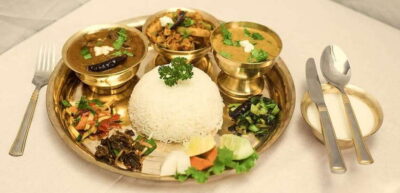
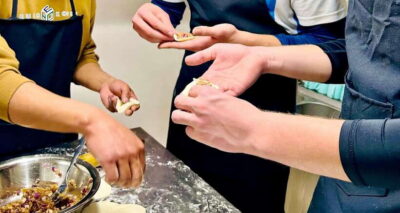
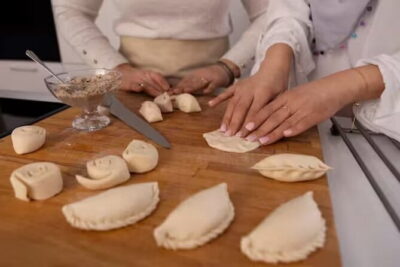
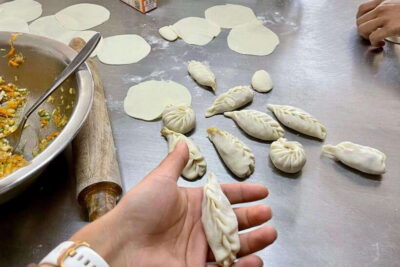
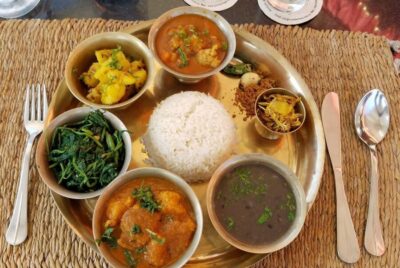
MoMo or Dal Bhat Cooking Class at Aama Kitchen in Pokhara
Read our review →
Browse the lists this tour appears in