
Reviewed · ANNAPURNA CIRCUIT TREK
Annapurna Circuit Trek
This trek is interesting because it strings together several Nepal “zones” in one trip. You start in Kathmandu with UNESCO sight time, then shift to remote valleys and high passes on the Annapurna side, and finish near Pokhara for sunrise views.
I especially like the small-group setup and the way the schedule builds in acclimatization in Manang. I also like the guide support and logistics that take the stress out of daily planning, which shows up in the consistent praise for guides like Ram, Jitu, Indra, Kapil, and Bala (Balarama).
One drawback to flag: this is a real high-altitude trek, and the long walking days plus a big pass day mean you need solid fitness and smart pacing, especially on steep or knee-heavy descents.
Key things to love about this Annapurna Circuit Trek
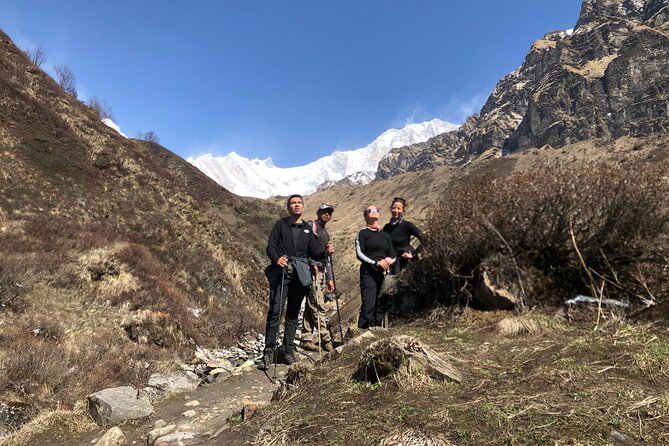
- Focused support on the ground with an experienced guide and porters, max 10 trekkers per group
- Manang acclimatization built in, so you are not just grinding upward day after day
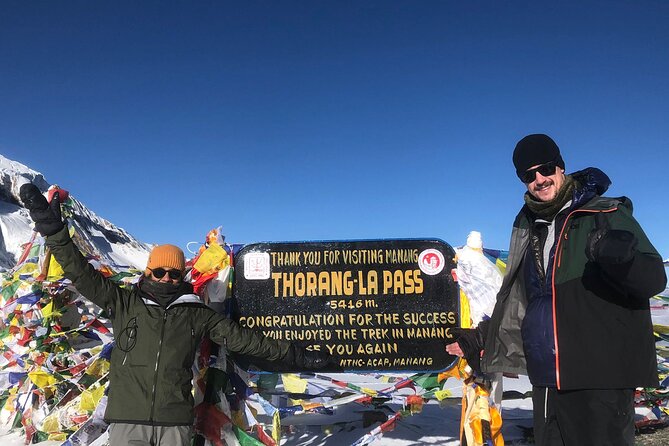
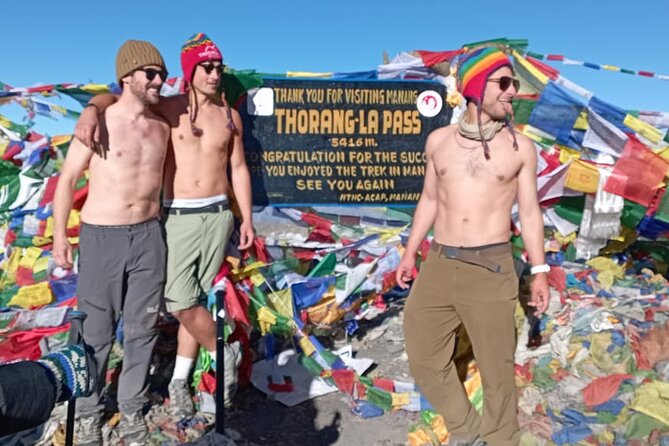
- Thorung La day at 5416m with dramatic pass views before a steep descent
- Classic mix of culture and scenery, including Gurung-area villages and Muktinath
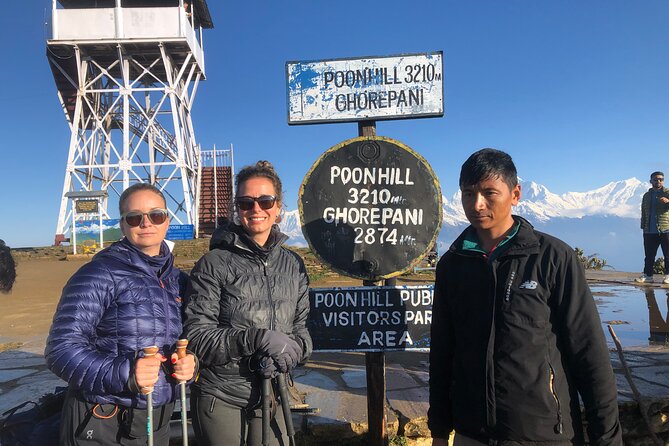
- Pokhara-area sunrise time, with an early Poon Hill trip from 3232m
Annapurna Circuit Trek: Kathmandu, Manang, Thorung La, and Pokhara in one plan
If you want one of Nepal’s most famous trekking routes but still like structure and good timing, this itinerary is a strong match. It is not a “push through at all costs” plan. It gives you a Kathmandu sightseeing day before you head out, then it staggers the climbing with a rest and acclimatization day in Manang before the big pass.
You also get that satisfying sense of moving through different worlds. The lower valley days feel green and busy with farms and villages. As you climb into Manang, everything turns quieter and more stark. After Thorung La, the Kali Gandaki valley opens up, and the scenery starts to look like wide, dramatic geometry, especially when you reach Muktinath.
More of the Annapurna Circuit:
- Annapurna Circuit Trek with Tilicho Lake
★ 5.0 · 368 reviews - Annapurna Circuit Trek
★ 5.0 · 94 reviews - Annapurna Circuit Trek
★ 5.0 · 67 reviews
Price and value: what $994 actually covers
At $994 per person, this trek sits in the “midrange with solid inclusions” zone. You are paying for a guided trek with real logistics, not just a route on a map.
Here is what you do get from the included package:
- All lodge or tea house accommodations during the trek
- An experienced guide and their food, drinks, accommodation, transportation, and insurance
- Ground transportation from Kathmandu to Chamje, plus key jeep or bus legs later (Muktinath to Tatopani, and Hile to Pokhara by local bus)
- Government taxes, VAT, and service charges
- Some meals are included as listed, while city meals are not
What you need to budget for separately:
- Alcohol, non-alcoholic drinks, and dessert
- Meals in Kathmandu and Pokhara
- Nepal visa fee, which you can get on arrival at Tribhuvan International Airport with 2 passport photos
- Travel insurance (it is marked compulsory)
- Tips for guide and porter
- If you want a porter, it is $20 USD per day (they also note you can carry a day pack yourself and they handle your main luggage)
So the value comes down to this: you get the guide team, transfers, and consistent overnight stays. If you prefer not to negotiate buses, hunt for rooms, or figure out logistics on the fly, this is where the money goes.
The guide team and small-group rhythm (what that means day to day)
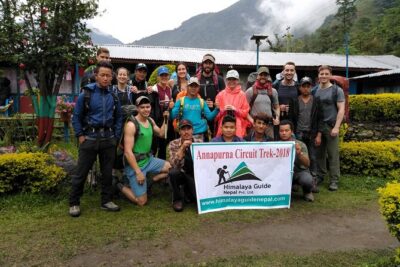
This trek caps at 10 travelers, which matters more than people expect. Smaller groups move with less friction. You get to ask questions, your guide can watch your pace, and the whole day feels calmer.
Support is built around a simple model:
- You carry a day pack with essentials like water, sunscreen, a spare layer, and camera gear.
- Your main luggage is carried by a porter (not always included by default, unless you add it, but the plan assumes lightweight walking for you).
- There is a porter ratio listed as one porter for each 2 trekkers, and you should expect about 20kg total carry capacity split across trekkers.
What stands out in the reviews is how often people mention safety, organization, and a guide who stays flexible. Names that come up repeatedly include Ram, Jitu, Indra, Kapil, and the team led by Bala (Balarama) and his guides and porters. One detail I really like: when something gear-related went wrong, the team stepped in, including helping with shoe repair or replacement work. That is the kind of issue you do not want to handle alone at altitude.
Before the hike: the Kathmandu sightseeing day you will appreciate later
Even though the trekking days are the headline, the itinerary includes a full day of sightseeing in Kathmandu for UNESCO-listed attractions. It is a smart buffer. On day one, you are not only exhausted from travel, you are also trying to mentally switch modes.
By doing Kathmandu first, you walk into the trek with a calmer mindset. You also get context for the places you pass through later, since Nepal’s villages are tied to the same ethnic and religious mix you see in the city.
More to compare around Kathmandu
- Everest Base Camp Trek – 14 Days
★ 5.0 · 1,499 reviews - Everest Base Camp Trek
★ 5.0 · 842 reviews - Private Kathmandu Sightseeing Tour | UNESCO World Heritage sites
★ 5.0 · 756 reviews - Kathmandu: 7 UNESCO Sites with Lunch
★ 4.8 · 744 reviews
Day 1: Kathmandu to Chamje, the long travel day that sets the tone
On day one, you get picked up from your hotel around 7 AM, and you head to the bus terminal for a route to Besisahar. The bus follows the Kathmandu-Pokhara highway style route and stays comfortable until Dumre, then the driving gets more “thrilling” after that.
Once you reach Besisahar, you switch to a local jeep to Chamje for the overnight. It is a classic way to start, because it gets you used to the rhythm of short segments followed by gear-up and settle-in.
Practical tip: you will feel travel fatigue in your legs even before you start trekking. Pack layers and a light rain layer, and keep your day pack organized so you are not stuck rummaging in the morning.
Days 2 to 3: Chamje and Dharapani, suspension bridges, and steep climbs you will learn to respect
The early trekking days focus on getting you moving on the trail with several river crossings and steep sections.
On day two, the plan starts with descending toward the river and crossing a suspension bridge, then it turns into climbing toward Sattale (1550m) and onward to the Tal plain (1700m). The description emphasizes steep zigzags and narrow paths above the river, plus sections where the river is hidden behind big boulders. That is a good signal for what is coming: the Annapurna area rewards steady footwork.
Day three continues the “valley-to-village-to-forest” feel. You move through areas near the Dudh Khola, see the Marsyangdi River angle, and you reach Bagarchhap, a Bhote village with prayer flags around a Buddhist monastery. After that, the trail works through pine and oak forests, hitting Danaque (2210m) and climbing to Timang, before settling into Chame for the night.
What you should take from these two days: this is not just scenic. It is training. Your legs learn to handle descent, your lungs learn to handle elevation, and your mind learns the pace you can keep without burning out.
Days 4 to 5: Chame to Manang, apple orchards, ridges, and the Annapurna view window
Day four shifts you deeper into the Manang approach. You start with clear mountain mornings, set off for Pisang, then pass an apple orchard. That kind of detail matters. It is an indicator that the region is not just rock and snow, it is farming and daily life.
From there, you climb through fir and pine forest toward high rocky areas. The route becomes more dramatic, with steep-sided valley sections and several bridge crossings, including at Bhratang (2950m).
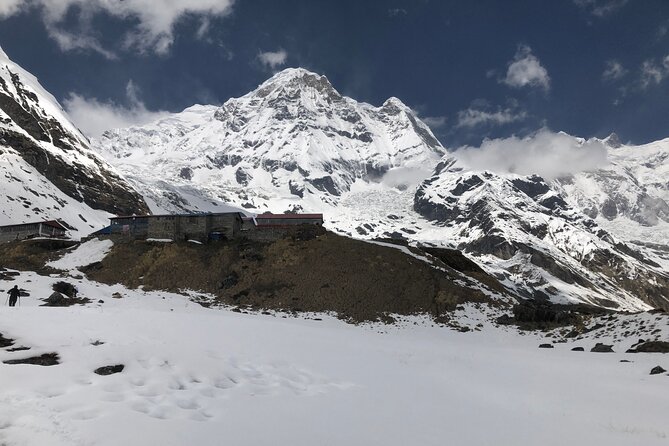
Day five pushes for more altitude awareness without pretending it is easy. You get ridge views, including the chance to see Tilicho from the general view window, then you descend past Manang’s airstrip at Humde (3320m). From the itinerary description, the Annapurna range visual layer builds day by day: you see Annapurna III rise above you, then Annapurna IV joins the view in the distance.
You also pass key village areas like Mungji and Braga. The trek is famous for high scenery, but you will remember these village sections because they show how people survive here.
Day 6 Manang acclimatization: rest day choices that make the pass day safer
This is the day that often turns a good trek into a doable one. Day six is a Manang rest and acclimatization day, and the itinerary lays out real options instead of leaving you bored.
You can:
- Take a day walk near town, including crossing the river to see a tremendous icefall
- Climb above the village for a full panorama of the Annapurna range and the Manang Valley
- Visit a Himalayan Rescue Association (HRA) aid post, which makes the whole trek feel more real and practical
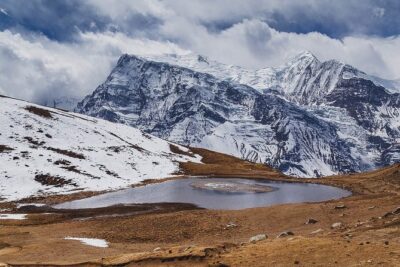
- Head to Ganagapurna Glacier Lake
You might think of a rest day as “saving energy.” I see it more as learning your body. If you do the optional walk to higher viewpoints, keep it slow and stop before you feel wrecked. You want to arrive ready for Thorung La, not just “less tired.”
Day 7 to Day 9: Yak Kharka, Thorung Phedi, and crossing Thorung La at 5416m
Day seven climbs gently but steadily toward Yak Kharka, passing through Gunsang (3960m). The itinerary calls out panoramic views all day, but it also warns that it feels short in terms of time and long in terms of effort because you are moving higher into less oxygen.
Day eight continues that “building height then prepping for the pass” pattern. You cross via a covered wooden bridge, then you move across a narrow trail and an unstable scree slope before descending to Thorung Phedi for the night.
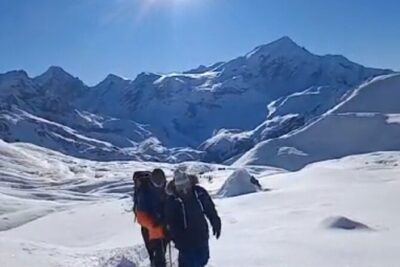
Day nine is the big moment. You start early and cross Thorung La at 5416m. The route is steep at first, then becomes more defined and manageable. You reach a chorten and prayer flags of the pass, and the views are described as dramatic: snow-covered peaks above, the Kali Gandaki valley below, and the brown and purple hills of Mustang out in the distance.
Then comes the part people mention after the trip: the descent to Muktinath is about 1600m and is described as knee-pounding. That is exactly what you plan for. Trek poles help if you use them. Shorter steps help. And if you have sensitive knees, you will want to go slow and controlled rather than “quickly get it over with.”
At Muktinath, the payoff includes excellent views of Dhaulagiri mentioned in the itinerary.
Day 10 to Day 12: Muktinath prayers, Tatopani warmth, Ghorepani rhododendrons, and Poon Hill sunrise into Pokhara
Day ten starts with a prayer visit at Muktinath, then you breakfast, pack up, and take a jeep ride from Muktinath to Tatopani along the Kali Gandaki River. “Tatopani” literally means hot water, so this tends to be your comfort-rest zone after the pass. The itinerary frames it as an adventurous jeep segment, which is exactly what you want here, because it breaks up the heavy walking rhythm.
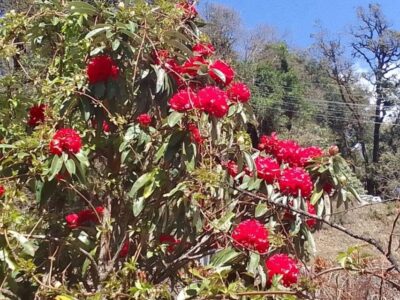
Day eleven moves you toward Ghorepani. You trek through flat sections before the trail starts ascending steeply for at least an hour. The route passes through villages and terraced agricultural areas, and the itinerary notes local community ties, including service connections with the Gorkha Regiment and Indian Regiment. You also move through rhododendron forests, and you may spot wildlife like monkeys and birds.
Then day twelve switches to sunrise mode. You start early for Poon Hill (3232m) to catch the morning view over a long list of Himalayan peaks, including Dhaulagiri, Machhapuchhre, Annapurna I and South, Annapurna III and IV, and others. If you have been staring at big mountains for days, Poon Hill is a different kind of visual treat because it is a sunrise panorama that feels focused and gift-wrapped for photos.
After sunrise, the plan returns to the lodge for breakfast, then follows a gradual descent through rhododendron and oak up to Banthanti for hot and cold drinks before continuing the descent toward Pokhara.
Lodges, gear, comfort, and what to pack for this kind of trek
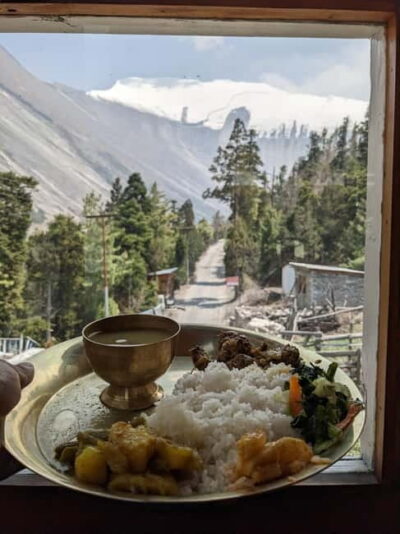
Because you are staying in lodges and tea houses throughout the trek, you should expect simple rooms, shared dining spaces, and basic warmth options. The itinerary makes it clear you should carry a day pack and rely on porters for the main luggage, which usually makes a big difference in how comfortable you feel each day.
For gear, you will do best if you plan for quick weather swings:
- Layers you can add or remove fast
- Rain protection
- A warm outer layer for pass and early morning starts
Also, keep your day pack lean. If you overpack, you will pay for it on every uphill step, not just the hardest day.
Who this Annapurna Circuit Trek suits best, and who should think twice
This trek fits you if:
- You want a guided experience with smooth logistics and a guide team that is repeatedly praised for safety and organization
- You can handle long walking days and a real pass day
- You like an itinerary that includes both big mountain moments and village culture
You might think twice if:
- You are not comfortable with steep ascents and descents, especially the knee-heavy section into Muktinath
- You are hoping for a casual stroll the whole way. This route works you.
If you care about adding extra viewpoint hikes around Pokhara, this is a good moment to confirm details. The trip description mentions Sarankot, but your itinerary content highlights Poon Hill sunrise specifically. If Sarankot matters to you, ask your operator to confirm what is actually included in your exact dates and group setup.
Should you book this Annapurna Circuit Trek?
I think this is a good booking if you want the Annapurna Circuit experience with a trusted local team and a plan that respects acclimatization. The repeated mentions of guides like Jitu, Indra, Kapil, Ram, and Bala’s team plus the emphasis on keeping things organized and safe are exactly what you want when altitude is involved.
I would book it if you are ready to work physically and you value structure. I would not book it if you want to freestyle everything, because here the strength is the guided rhythm, transfers, and day-by-day pacing.
If you do book, do one smart thing before you leave: tell your guide your walking pace honestly and ask about priorities, especially if you have knee concerns. A good guide team will adjust, and the reviews suggest they genuinely try.
FAQ
What time does the trek start?
The start time is listed as 6:15 am. On day one, you are picked up from your hotel at around 7 AM.
Is pickup from my hotel included?
Yes. The plan says you are picked up by your trek guide from the hotel on day one, then transported to the bus terminal.
How big is the group?
This trek has a maximum of 10 travelers.
What kind of lodging is provided during the trek?
You stay in lodges or tea houses during the trekking days.
Are meals included?
Meals are included as listed in the package, but meals in Kathmandu and Pokhara are not included. Drinks are also not included, and alcohol and dessert are listed as not included.
Do I need a porter, and what does a porter cost if I want one?
Porter use is optional based on what you need. If you need a porter, it costs $20 USD per day. Your main luggage is intended to be carried so you can walk with a day pack.
Do I need a Nepal visa, and how do I get it?
The Nepal entry visa fee is not included, but you can issue the visa upon arrival at Tribhuvan International Airport in Kathmandu. You will require 2 passport size photos.
If you want, tell me your travel month and your fitness level, and I will help you sanity-check whether this timing and pace match what you want.
Latest Kathmandu write-ups
- Langtang Valley Trek★ 5.0 · 3 reviews
- Khopra Danda Trek★ 5.0 · 3 reviews
- Langtang Valley Trek from Kathmandu★ 5.0 · 3 reviews
- 5 night / 6 days Kathmandu Nagarkot Chitwan Pokhara tour★ 5.0 · 3 reviews
- Nepal Highlights Tour: 5 Nights 6 Days Kathmandu & Pokhara Tour★ 5.0 · 3 reviews
- Kathmandu Valley Private Day Tour★ 5.0 · 3 reviews
- Conquer the Himalayas: The Ultimate 16-Day Annapurna Circuit Trek★ 3.5 · 3 reviews
- Kathmandu Heritage Day Tour★ 5.0 · 3 reviews
Annapurna Circuit Trek, compared.
15-Day Private Annapurna Circuit Trek from Kathmandu
Read our review →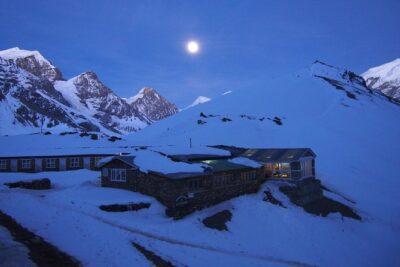
8 Days Private Guided Trekking in Annapurna Circuit with Pickup
Read our review →Browse the lists this tour appears in