
Reviewed · UPPER MUSTANG TREK
Upper Mustang Classic Trek with Local guide
Upper Mustang feels like a time capsule. You trade Kathmandu’s bustle for a remote Buddhist kingdom, then spend your days walking through Mustang’s dry, high-country world of gompas, monasteries, and cave stops, with long views toward the Annapurna and Dhaulagiri rain-shadow zones.
What I really like is the private, guided setup that handles the moving parts for you. You also get strong religious-culture bookends in Kathmandu, then real field time with a local guide who can explain what you are seeing, including early-morning chants and yak-herd visits.
One thing to consider: the price is set up as all-inclusive in many ways, but the special permit for Upper Mustang is not included and is listed as USD 500 per person for 10 days. On top of that, this trek expects moderate physical fitness.
Key highlights to pay attention to
- Boudhanath, Patan, and Swayambhu in Kathmandu at the start, with admission tickets included for Boudhanath and Patan
- Tea house accommodation during the Mustang trekking days, which keeps things more comfortable than camping
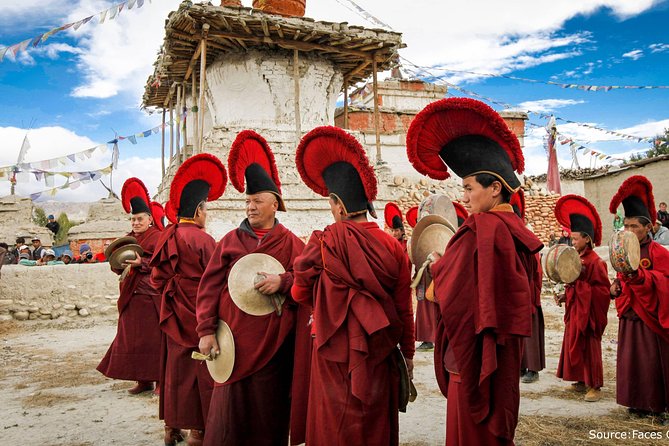
- Local guidance that can include early visits such as monks chanting at Thukchen monastery and a morning yak-herd stop
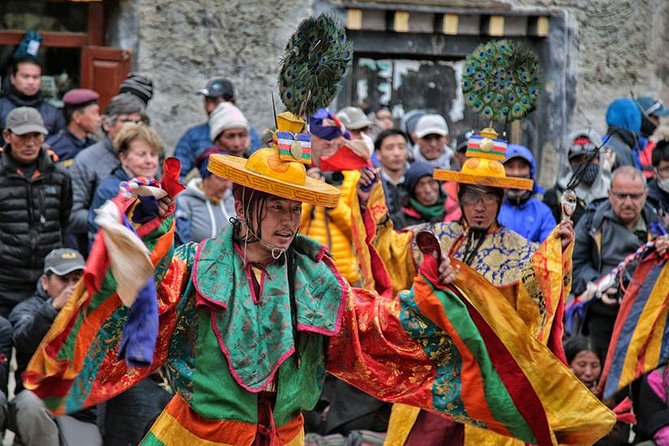
- Tiji festival timing built into at least one departure day, including time to watch the last day of the festival
- Private logistics with pickup offered, domestic flights, and transportation between major hubs like Kathmandu, Pokhara, and Jomsom
- Route flexibility is a real theme in how guides run the trek, adjusting for your group’s daily condition
Kathmandu, then a slow turn into Mustang country
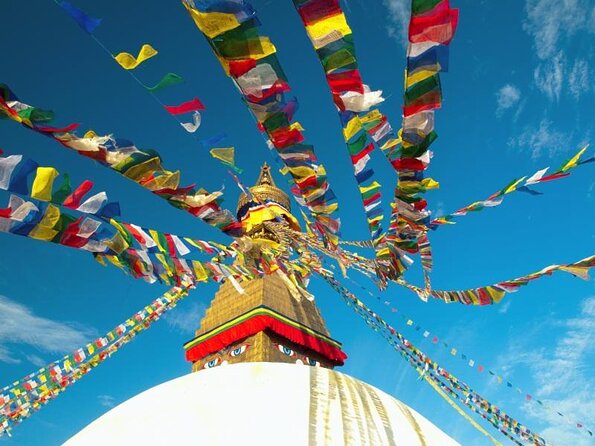
This trek starts with what I call Kathmandu’s religious warm-up. You do not just fly through the city. You begin at Boudhanath Stupa, one of the largest stupas in Nepal, with attention to the details like the white dome and the golden polish around the harmika. You’ll see pilgrims circumambulate, and you’ll notice how many people treat the site with respect even if they are not strictly Buddhist. It sets the tone for a trip that is very much about faith, tradition, and daily practice.
Next is Patan Durbar Square, where the focus is craftsmanship. Patan is known for fine wood and metal work, and the palaces and temple structures are full of that detail: carved struts, window frames, doors, and courtyard spaces. If you like seeing how art is made, the Patan museum inside the palace is part of the experience here, including demonstrations tied to metal statues.
Then you climb to Swayambhu. The stairs are a big part of the fun, and the top brings a wide view over Kathmandu valley. This is also one of those stops where it helps to go early or go with a guide who can explain why the site matters to different communities in the valley.
What to watch for on these first days: you will be doing real sightseeing time, not just photo stops. Admission for Boudhanath and Patan is included, while Swayambhu is listed as free admission. That matters if you are tracking costs and planning energy.
More of Mustang and the Kali Gandaki:
- Lower Mustang Motorbike Tour -8 Days
★ 5.0 · 9 reviews - Upper Mustang Trek – 13 Days
★ 5.0 · 5 reviews - 12 Days Overland Tour to Upper Mustang
★ 5.0 · 4 reviews
Price and logistics: what your money is actually buying
At USD 2,500 per person for about 16 days, this is not a budget trek. It is priced like a private, handled-by-others itinerary. The value is strongest in four places:
1) Permits and local administration
You get the ACAP permit included. But you should also budget for the Upper Mustang special permit, listed separately as USD 500 per person for 10 days in Upper Mustang. That is a key line item to confirm early, because it can change your total trip cost.
2) Transportation and timing
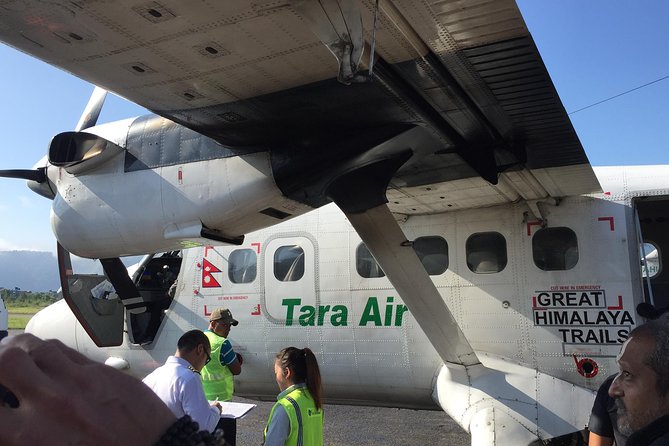
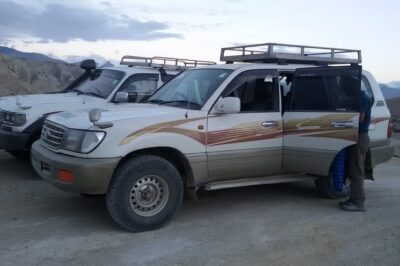
You are not just trekking in isolation. You have pickup offered, private transportation, and domestic flights. The itinerary specifically uses flights between Pokhara and Jomsom, plus an early flight back to Pokhara. In practice, this saves you from additional long overland days in a region where roads can be slow.
3) Real people power
You get a trekking guide and porter. That matters in Mustang, because a lot of the experience is reading the places, not only walking past them. In past departures, guides like Norbu (described as born in Upper Mustang) and Babu (noted for adapting to needs) were highlighted for making the trek run smoothly and feel personal.
4) Food and beds are handled
Tea house accommodation during the Mustang trek is included. Most meals are included too, with breakfast listed for 16 days, and lunch and dinner included for a set number of days (lunch 11, dinner 11). That usually means you’ll have a lot of days where food is covered during trek segments, but you should not assume every day has every meal.
The biggest drawback in the pricing structure is also simple: private tours like this often cost more than group treks. If you do not care about guide-led pacing and curated stops, you can find cheaper options. If you do care, the money here is mostly paying for comfort, coordination, and interpretation.
Lupra and the Bon Monastery, a taste of local depth
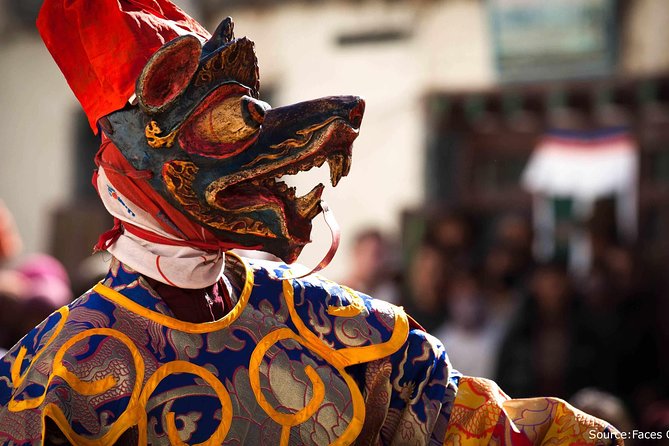
On day 3, you drive into the Lupra area and visit a Bon Monastery. “Bon” is a meaningful thread in the wider spiritual world of the Himalaya, and in a place like Upper Mustang, it helps to understand that Buddhism is not the only spiritual layer you will encounter.
This day is also one of the reasons I like the itinerary: it gives you a non-Trekking cultural block early, before you settle into the walking rhythm. It breaks up the trip and gives you an easy day to orient yourself with local life.
One practical note: the itinerary lists about four hours for this segment. Even when a day is shorter, you still get time on the ground, not only in transit.
The first trek segment from Chhuksang toward Samar
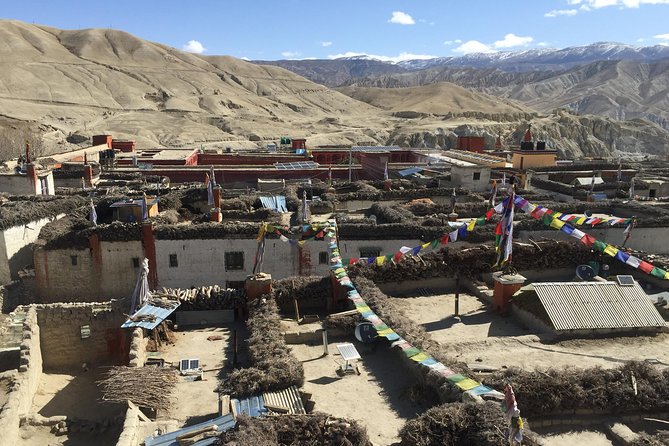
Day 4 is where the trip becomes unmistakably Mustang. You start with a drive to Chhuksang village, then trek toward Samar via Chele and Gyakar villages. This is a classic setup for acclimating your body to the days ahead. You are walking between communities, not only walking through empty trails.
Why this is valuable: it is not just about reaching Lo Manthang or a single highlight. The route is the story. Village links, small changes in architecture, and how people manage daily life in a dry region all help you understand the place.
Also, because the itinerary is private, your guide can nudge the pacing. Reviews of this trek pattern repeatedly mention guides adjusting the route based on group condition. If you have anyone in your party who needs a gentler day, this approach usually helps.
More to compare around Kathmandu
- Kathmandu: 7 UNESCO Sites with Lunch
★ 4.8 · 744 reviews - Everest Base Camp Helicopter Tour landing at Everest View Hotel
★ 5.0 · 668 reviews - Kathmandu: Local Women-Led Nepali Cooking & Momo Class
★ 4.9 · 360 reviews - Manaslu Circuit Trek
★ 5.0 · 292 reviews
The middle Mustang days: walking, village rhythm, and staying flexible
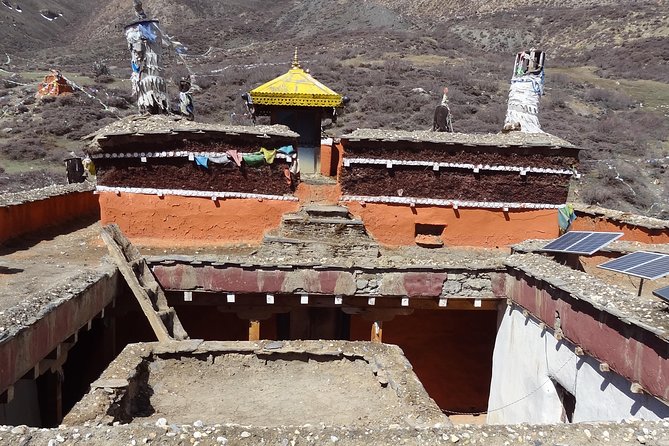
Days 5 through 8 are listed as multiple trekking days in the Mustang region, each with travel or walking time around six to seven hours. The exact village-by-village stops are not fully specified in the provided itinerary text for those days, but the structure is clear: you are doing a sequence of trek days rather than one long push.
This is exactly how a “classic” Mustang trek should feel. You build rhythm. You learn what your body needs. And you let your guide decide how to balance effort with interest, especially if you want extra cultural stops along the way.
If you care about photography or slow wandering, tell your guide early. A well-run Mustang trek can give you time without turning into a rushed checklist.
Thukchen monastery at 6 am, then monks, yak life, and Tiji energy
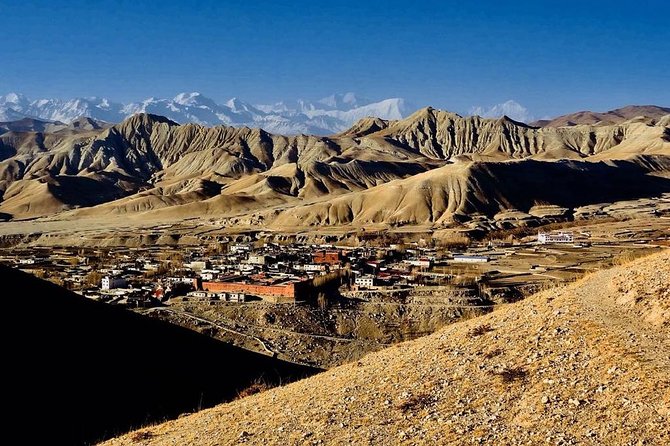
Day 9 is the kind of day that turns a trek into a memory. The schedule has you heading out around 6 am to Thukchen monastery to see how monks chant in the morning. That early timing matters, because it changes the mood from sightseeing to being present during a real daily ritual.
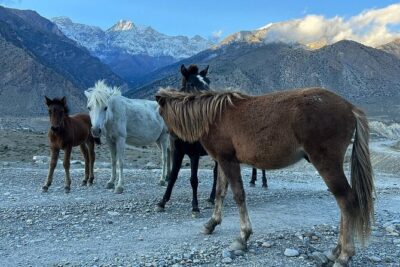
After that, you eat breakfast, then you drive to a nomadic yak place for an early look at how herding life works. You return for lunch and then have time to watch the last day of the Tiji festival.
A quick reality check: if your idea of the trip is pure quiet and solitude, festivals can feel intense. One departure note included a mixed feeling about the festival itself, even while the trek and cultural access were praised. My advice is simple: go in expecting that festival days mean crowds, sound, and ceremony. You’ll either love that energy, or you’ll want the guide to help you step out when you need a quieter break.
Yara village and Luri Gompa, plus the Kali Gandaki corridor
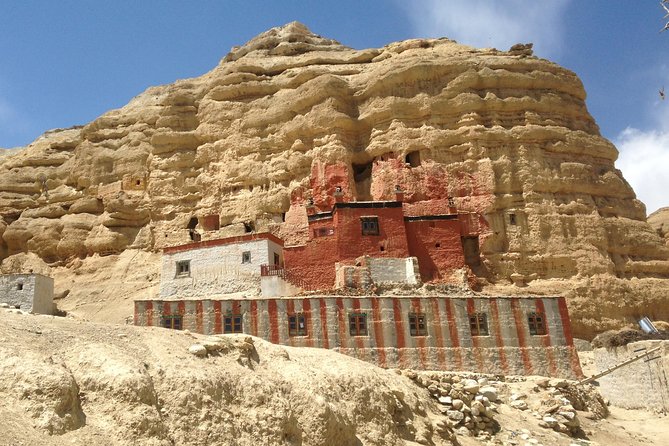
Day 10 moves you deeper into eastern Upper Mustang. You drive to Yara village, and the itinerary calls out the fantastic scenery along the Kali Gandaki river corridor. After lunch, you visit Luri Gompa, described as an amazing monastery.
This day is a good example of why private guiding is worth something. Trekking is physical. Gompas are interpretive. When a guide can explain what you’re seeing, the monastery visits land harder than if you treat them like background for photos.
Charang monastery and the drive to Jomsom
Day 11 combines morning time in Yara with a drive to Charang village for a monastery visit. You then drive to Jomsom.
This kind of day works well after earlier trek days. You still get cultural stops, but you also get movement with fewer hours of steep walking. It sets you up for what comes next: the flight segment.
Pokhara transition: breakfast, city touring, then back to Kathmandu
Day 12 starts with an early morning flight to Pokhara. After breakfast, there’s a city tour in Pokhara. Day 13 then returns you toward Kathmandu via tourist bus, with the plan listing pickup toward the bus station at 7 am.
These back-and-forth days can be a little tiring, but they are also a nice reset. The trek is remote and dry. Pokhara is more relaxed. And Kathmandu brings you back to the big-city comfort level.
Your itinerary text also includes additional Pokhara time in later days and a stop around Kurintar, but those segments are not fully detailed here. In most cases, think of these as administrative and recovery time blocks.
The hidden value: guides who know what matters in Mustang
If you remember one thing from the way this trek is described, make it this: the local guide matters.
In multiple departure accounts, guides named Norbu and Dawa came up for strong communication and day-to-day care. Norbu is highlighted as coming from Upper Mustang, which helps because he can point out what to notice beyond the obvious. Babu is also mentioned for adapting the itinerary as the trip progressed and for taking care of needs.
What you should take from that as a traveler: in a place like Upper Mustang, being local is not just a credential. It affects how you experience every stop. You’ll spend less time wondering what a building is or why a ceremony is happening, and more time understanding the meanings behind it.
Also, multiple accounts praise how organized the trip felt from the start. One departure note specifically mentioned that Dawa provided helpful info before the trip, including guidance on what to pack and what to expect. That kind of prep reduces stress, and it makes the first trekking days much more comfortable.
Who this trek is best for
This Upper Mustang Classic Trek fits best if you want:
- A private, guided trek where the itinerary is handled for you, not improvised day by day
- Cultural depth with Buddhist shrines, temples, monasteries, and ritual moments like early chanting
- Tea house comfort during the Mustang walking days
- A paced itinerary that can adjust for your group’s condition
It may be less ideal if you want a very minimalist trek, or if you are strictly trying to keep costs low, because the special permit is extra and private services are not cheap.
Physical fitness is listed as moderate. That usually means you should be comfortable with long hiking days and uneven terrain, even if the pace is guided.
Practical tips before you book
Before you commit, do these two things:
- Confirm the total permit cost, especially the Upper Mustang special permit listed as USD 500 per person for 10 days.
- Ask the operator to clarify what the itinerary text means for the less-detailed trekking days, and what, specifically, is planned for the “Tiji festival” day in your departure window.
Also, since the trek includes domestic flights between Pokhara and Jomsom, make sure you are comfortable with early travel days. The schedule lists very early start time details, and even when exact timing varies by conditions, the early mornings are part of the rhythm here.
Should you book this Upper Mustang Classic Trek?
I would book it if your priorities are private guiding, logistics handled well, and real cultural access in Upper Mustang. This trip’s biggest strength is that it connects Kathmandu’s major heritage stops to the Mustang route, while also building in monastery moments and local-life details like early yak-herd access.
I would pause and shop around if your priorities are purely budget or purely silent solitude. With a festival day on the calendar for some departures, plus a special permit added on top of the base price, this is a trip you should choose intentionally.
If you want a trek that feels like you are being guided through a living spiritual region, not just hiking for distance, this is the kind of itinerary that tends to satisfy.
FAQ
How long is the Upper Mustang Classic Trek?
The tour is listed as about 16 days, including a 15-night guided trek segment in Upper Mustang from Kathmandu, plus Kathmandu and Pokhara sightseeing and transit days.
What does the price include?
Included items list private transportation, domestic flights, trekking guide and porter, ACAP permit, tea house accommodation during the Mustang trek, and meals. Breakfast is listed for 16 days, while lunch is included for 11 days and dinner for 11 days.
Is the Upper Mustang special permit included?
No. A special permit is listed as USD 500 per person for 10 days in Upper Mustang, and it is marked as not included.
How do you travel between Kathmandu, Pokhara, and Jomsom?
The itinerary includes a tourist bus drive from Kathmandu to Pokhara, flights between Pokhara and Jomsom, and then another early flight from Jomsom back to Pokhara later. It also includes a tourist bus ride to return to Kathmandu.
What fitness level do I need?
The additional info says travelers should have moderate physical fitness level.
What is the cancellation policy?
Free cancellation is offered. You can cancel up to 24 hours in advance for a full refund, and changes within 24 hours of the start time are not accepted.
Latest Kathmandu write-ups
- 16 Days Island Peak Climbing With Everest Base Camp Private Trip★ 5.0 · 3 reviews
- 15 Days Round Annapurna Trek with Poon Hill from Pokhara★ 5.0 · 5 reviews
- Private Nepal round trip including Ghorepani Poonhill trek★ 5.0 · 3 reviews
- Everest Base Camp Trekking 16 Days★ 4.0 · 7 reviews
- 14 Days Luxury Annapurna Base Camp Trek★ 5.0 · 6 reviews
- Everest Base Camp Trek★ 5.0 · 32 reviews
- Everest Base Camp Trek★ 5.0 · 87 reviews
- Everest Base Camp Trek★ 5.0 · 97 reviews
Upper Mustang Trek, compared.
2-Day Scenic Mustang Tour: Pokhara to Jomsom, Kagbeni & Muktinath
Read our review →
Browse the lists this tour appears in