
Reviewed · THAMEL
Kathmandu: Wood Carving Workshop with Local Artisan (Thamel)
A wood carving class in Thamel, Kathmandu is interesting because it turns a cultural background topic into something you can hold in your hands. I love the small group setup, which means you get real attention while you carve, and I love learning the actual moves, like outlining and careful detailing. The only drawback to plan for is that the workshop sits in the middle of normal city life, so expect some street noise to mix into the experience.
In about 3 hours, you’ll create a meaningful souvenir while an English-speaking artisan explains the craft, the tools, and the symbols behind Nepalese woodwork. If you enjoy making things yourself, this feels more satisfying than buying a finished piece from a shop.
Key highlights worth your attention
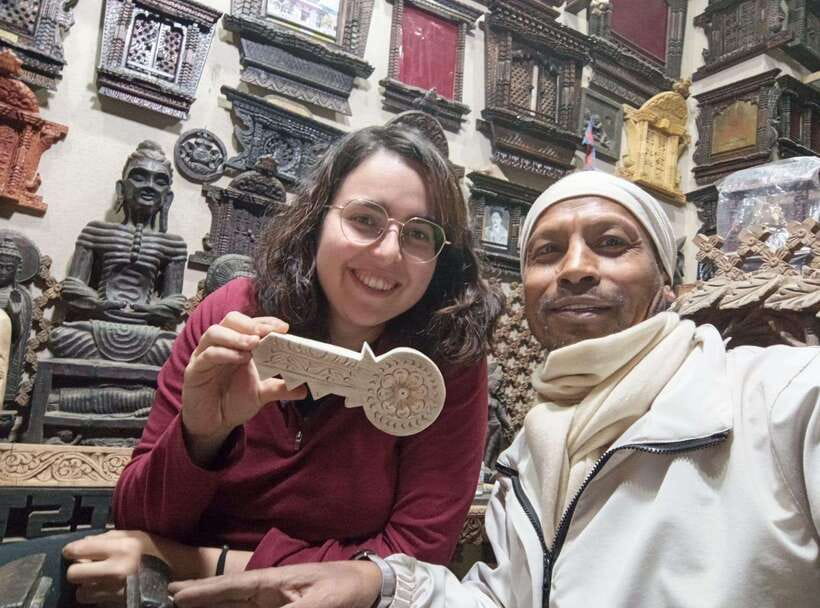
- Up to 4 participants, so hands-on guidance stays practical instead of rushed
- Chiseling and detailing practice on a pre-cut wooden block, not just watching
- Nepalese craft context, including how wood carving links to temples and architecture
- Symbol-focused designs inspired by Hindu and Buddhist motifs like lotus flowers and mandalas
- You take your piece home, so the class ends with something tangible
Why wood carving matters in Kathmandu, not just as a craft
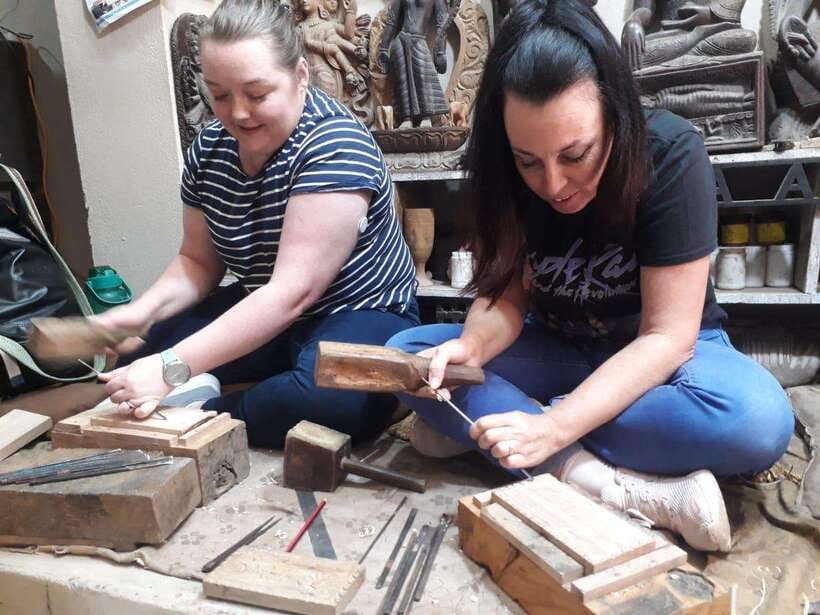
Wood carving is one of those skills that Nepal carries like a living language. In Kathmandu Valley, it connects directly to the carved details you see on old temples and palace architecture. Even if you start as a complete beginner, learning the background makes the cuts feel more purposeful.
The craft in Nepal stretches back to the Licchavi period, often dated to roughly the 4th to 9th century, when artisans began adorning temples and palaces with intricate wooden designs. Later, during the Malla dynasty (roughly the 12th to 18th century), the tradition flourished and produced the kind of wooden masterpieces that still catch visitors’ eyes today. What I like about this class is that it does not treat history like a lecture. You hear why carvings matter, and then you practice the same kind of careful work.
You also get a clear sense of who helped preserve and master the art in the Kathmandu Valley: the Newar community. If you are the type who notices landmarks, you might recognize the references they make, like the Kasthamandap (House of Wood), the 55-Window Palace in Bhaktapur, and the famous Peacock Window. Even though you are not touring those sites in this session, those names help you map the craft onto places you can later explore on your own.
More that starts in Thamel:
- Kathmandu: Wood Carving Workshop with Local Artisan (Thamel)
★ 4.9 · 17 reviews - Half Day Cooking Class in Thamel with Local Market Visit
★ 4.5 · 6 reviews - Kathmandu: Guided Food/ Drink Tasting walking Tour in Thamel
★ 5.0 · 4 reviews
Thamel workshop vibe, tools, and what happens when you arrive
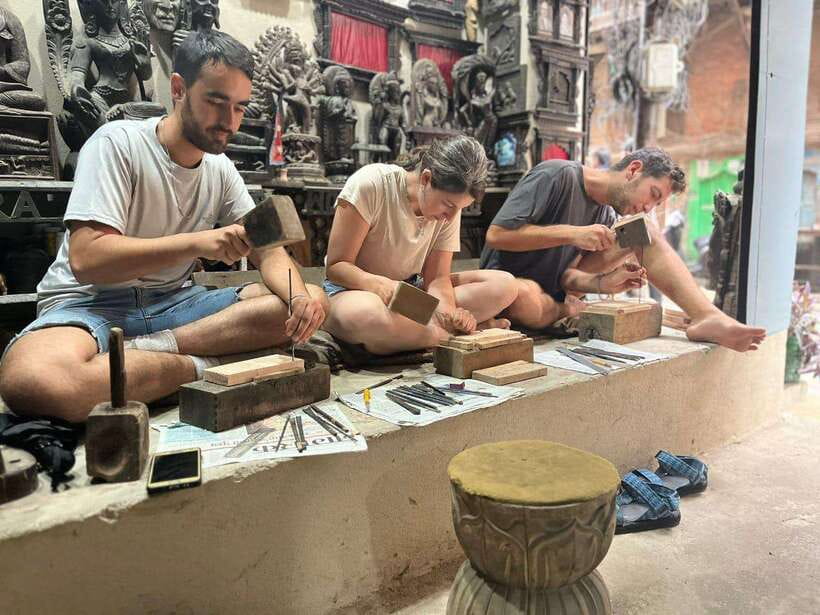
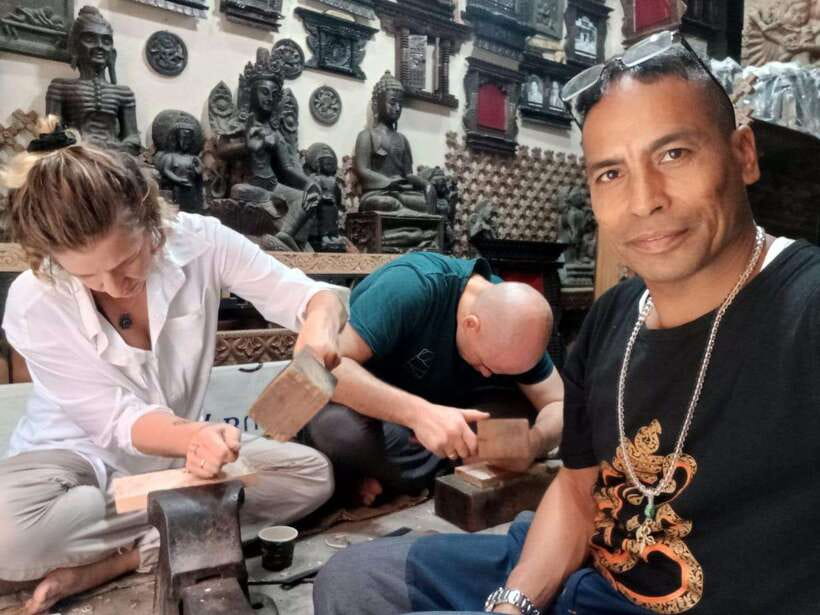
This class is based in Kathmandu’s Thamel area, and you meet at the meeting point provided for the activity. From there, the session takes place in a workshop setting described as calm and orderly, with an artisan guiding you in an English-speaking format.
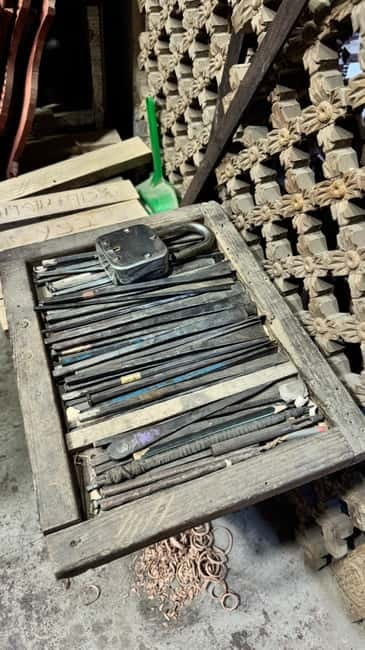
The best part for first-timers is that you are not sent into a room with a vague plan and a lump of wood. The class starts with an overview of the tools and materials. You’ll learn about traditional chisels and hammers, plus other carving instruments used to create lines, textures, and shapes. You also hear about the types of wood commonly used in Nepalese carving, including sal and teak. That matters because wood type changes how cleanly edges hold and how smoothly details can be shaped.
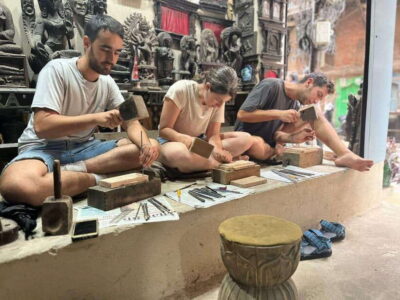
Then you move to the real work: carving on a pre-cut wooden block. That small setup detail is a practical win. It lowers the barrier for beginners while still letting you practice the important part, the chiseling, outlining, and refining that turns a flat block into something recognizable.
One more thing: smoking is not allowed. Plan your comfort around that, especially if you are a traveler who likes to take breaks outside.
Carving step by step: outlining, chiseling, and adding details
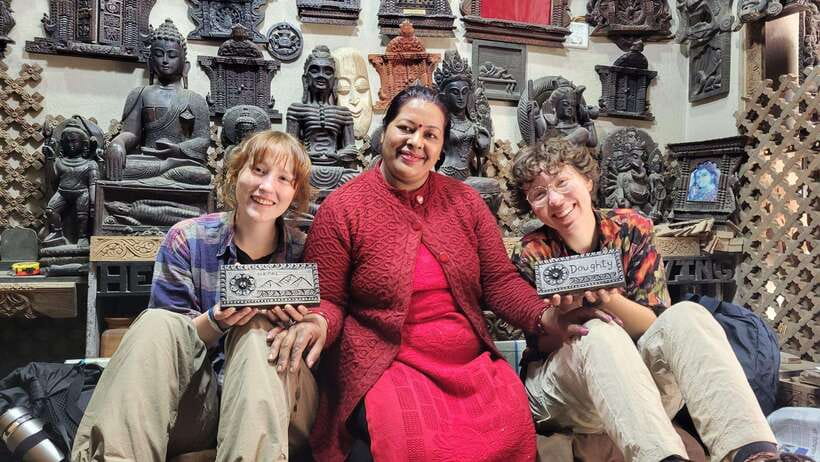
You’ll spend your time practicing the techniques that actually define a carving. The class focuses on three skills, and you’ll see why once you try them.
First comes outlining. This is where you set boundaries and guide everything that follows. Think of it like drawing with a chisel, not sketching with a pen. If you’ve ever tried to draw freehand and regretted every line, this stage will feel familiar, but it also makes you more patient.
Next is chiseling. Chiseling is about removing material in controlled steps. You are not trying to hack the wood away. You are learning how to take thin slices so the shape stays clean and the design does not lose definition.
Finally, you get to detailing. This is the part that often looks effortless in finished carvings, but it is where time and care show. The artisan guides you while you carve your design, with tips and corrections as you go. Since the group is limited to 4, those corrections can stay specific instead of general.
What makes this structure work for your time is that it stays focused. A 3-hour workshop is not a craft apprenticeship, so you’re not expected to master every possible technique. Instead, you get the core movements and a finished or near-finished souvenir by the end.
Your design will carry meaning, not just decoration
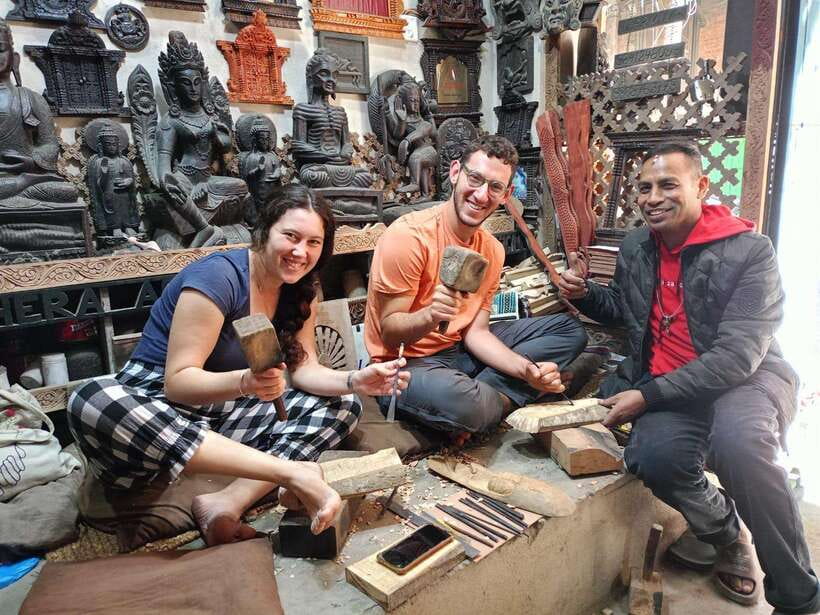
Nepalese carvings are packed with symbolism. This class helps you understand the motifs, so your piece is not just a pattern you copied, but a design with a story.
The class introduces iconography inspired by Hindu and Buddhist traditions. Common themes include lotus flowers, mandalas, and mythical creatures. You might also hear about how deities and spiritual symbolism show up in carved work, especially in religious architecture.
I like teaching moments like this because they change how you look at your own carving. When you know what a lotus stands for, or why a mandala motif repeats in a certain way, you stop treating the design as something purely decorative. You start noticing structure: symmetry, rhythm, and how small carved lines guide the eye.
Your instructor also demonstrates basic carving techniques while talking about these cultural elements. That pairing is what makes the session feel more authentic. You are not just copying shapes. You are building an understanding of why those shapes show up in Nepalese temples and traditional architecture.
More to compare around Kathmandu
- Kathmandu: Local Women-Led Nepali Cooking & Momo Class
★ 4.9 · 360 reviews - Kathmandu: Traditional Momo Making Class & Pickup
★ 4.8 · 60 reviews - Kathmandu: Local Women-Lead Nepali Cooking & Momo Class
★ 4.9 · 45 reviews - Kathmandu: Local Lead Nepali Cooking & Momo Making Class
★ 4.9 · 40 reviews
Small group attention: why it feels easier than you expect
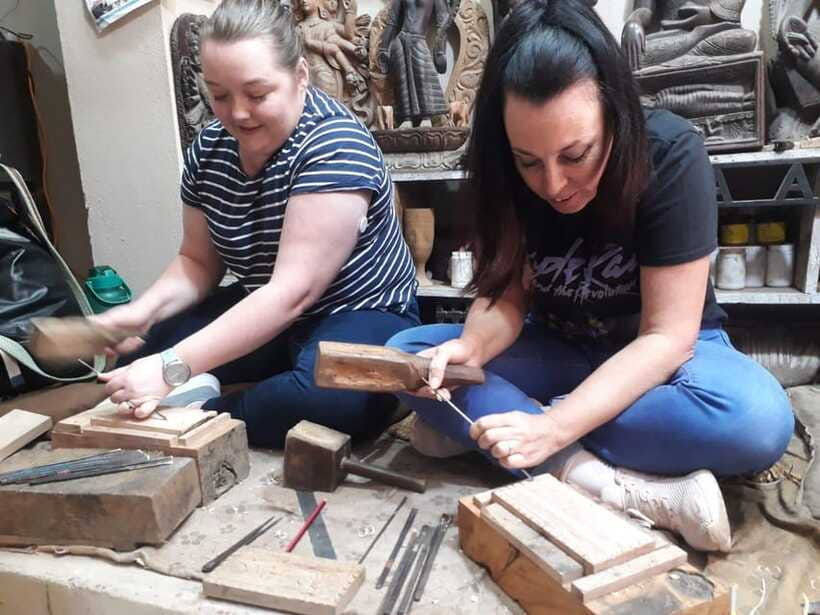
One of the best parts, based on strong word from people who bring kids too, is that the class style is patient and fun. You work with a skilled local artisan, and the group size is capped at 4 participants. That combination matters more than you might think.
In a larger group, you can end up doing the hardest work while the instructor is busy with everyone else. Here, the teaching stays personal enough that you can correct mistakes while you still have time to finish nicely.
The class is also described as suitable for all skill levels, including beginners with no prior experience. That is exactly what you want for a hands-on craft, because you are learning technique, safety instincts, and timing all at once. You do not want the lesson to assume you already know how to control pressure on a chisel.
If you are traveling with teens, this setup is a good option. One review highlighted a great experience for children aged 15 and 13, with two people helping guide the carving for their group. That’s a good clue that the instructors can adapt the pace and attention to match the learners in front of them.
What you take home, and how to keep it looking sharp
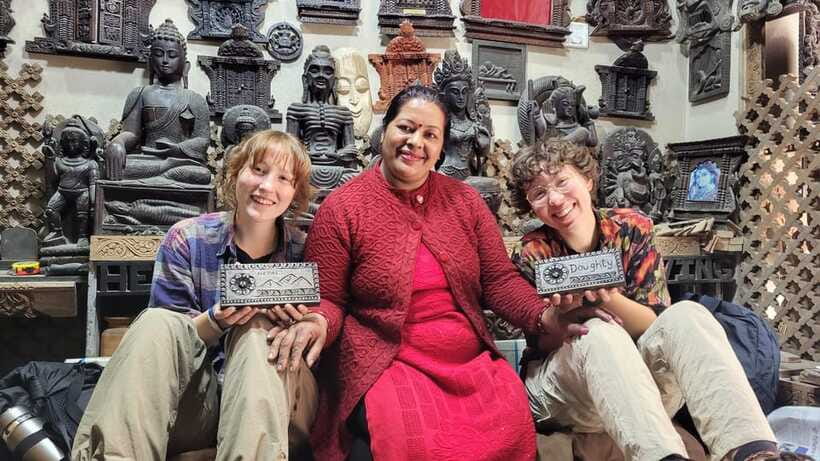
You create your own wooden artwork to take home. The class description gives a few possibilities, like a small figurine, a decorative panel, or a symbolic motif. The key point is that the piece is made by you during the session, so it becomes a souvenir with a personal story attached.
Because the class involves chisels and fine detailing, you’ll want to treat the finished piece with care when you pack it. Bring it home the same way you’d bring home a small framed item from an art shop. Wrap it well, keep it protected from pressure, and give it a safe spot in your luggage or carry-on.
Also, plan your photos at the end. Once you finish detailing, the carved textures usually show best under good light, and you’ll be glad you documented the final look before you start packing.
Price and value: is $45 for 3 hours fair?
At $45 per person for a roughly 3-hour session, this class can be good value because so much is included. You’re not only paying for instruction. You’re getting the artisan guidance, all necessary tools and materials, your own carved piece, and the mention that government taxes and Vats are covered.
Here is how I’d judge value for you, practically:
- If you want a souvenir you made yourself, $45 for a real craft session is often cheaper than buying a similar piece in a shop, especially once you count the learning part.
- If you love hands-on activities, the small group size and active practice make the time feel dense, not stretched.
- If you prefer purely passive sightseeing, this may not feel worth it because you have to concentrate and work for the outcome.
A smart way to decide is to ask yourself what kind of travel memory you want. Photos fade. A carved object sits on a shelf. It also reminds you of the technique and the symbols, not just the fact that you were in Kathmandu.
Who should book this and who should think twice
I’d book this if you are:
- An art fan who likes learning technique, not just buying finished work
- Curious about Nepalese culture and how it connects to temples and architecture
- Traveling with teens who can follow instructions and handle a hands-on craft
- Someone who wants a compact activity in Thamel that does not eat your whole day
I’d think twice if you:
- Strongly dislike working with sharp tools or precision work (chisels and hammers are part of the class)
- Want a mostly relaxing, sit-and-watch experience
For most people who enjoy creating something, this strikes a nice balance. You learn enough to appreciate the craft, and you leave with an object that proves you did the work.
Make the most of your 3-hour session
You can get more from the class with a couple of simple choices.
- Wear comfortable clothes you do not mind getting wood dust on. The class provides what you need, but you supply your comfort.
- Go in with realistic expectations. This is not about producing a masterpiece, it is about learning the moves and finishing something you’re proud to take home.
- Slow down during outlining. The cleanest carvings usually start with clear lines.
- Ask for corrections early. If something feels off, speak up. Small adjustments later can be harder than a quick fix at the start.
And if you are hoping to impress someone with your carving skills after, give yourself a day or two to practice the feeling of control. The lesson gives you the foundation, your fingers do the rest.
Should you book the Kathmandu wood carving class in Thamel?
If you want an authentic, hands-on Kathmandu experience with small group attention and a take-home souvenir, I think this is a solid choice. The craft context is built into the lesson, from the symbolism of lotus flowers and mandalas to the historical roots that connect to temples and palaces. Most importantly, you are not just watching, you’re carving, chiseling, outlining, and detailing under guidance.
Book it if you like learning a skill and carrying home a piece that feels personal. Skip it if you hate detail work or you only want passive activities.
If your schedule allows, this is one of those experiences where the time passes quickly because you are busy doing the thing, not just looking at it.
FAQ
How long is the wood carving workshop?
The workshop lasts about 3 hours.
How much does it cost?
The price is $45 per person.
Where do I meet for the activity?
You meet at the meeting point provided for the experience, in Kathmandu’s Thamel area.
What is the group size?
It is a small group, limited to 4 participants.
Is the instructor English-speaking?
Yes. The instructor speaks English.
What will I create and take home?
You will create your own wooden artwork during the session, which you take home afterward. The class focuses on techniques like outlining, chiseling, and detailing on a wooden block.
Are tools and materials provided?
Yes. The class includes the necessary tools and materials.
What should I wear or bring?
Wear comfortable clothes.
Is smoking allowed?
No. Smoking is not allowed during the activity.
What are my options for booking and cancellation?
You can reserve now and pay later. You can cancel up to 24 hours in advance for a full refund.
Latest Kathmandu write-ups
- 16 Days Island Peak Climbing With Everest Base Camp Private Trip★ 5.0 · 3 reviews
- 15 Days Round Annapurna Trek with Poon Hill from Pokhara★ 5.0 · 5 reviews
- Private Nepal round trip including Ghorepani Poonhill trek★ 5.0 · 3 reviews
- Everest Base Camp Trekking 16 Days★ 4.0 · 7 reviews
- 14 Days Luxury Annapurna Base Camp Trek★ 5.0 · 6 reviews
- Everest Base Camp Trek★ 5.0 · 32 reviews
- Everest Base Camp Trek★ 5.0 · 87 reviews
- Everest Base Camp Trek★ 5.0 · 97 reviews
Thamel, compared.
Wood Carving Workshop with Local Artisan (Thamel)
Read our review →
Half Day Cooking Class in Thamel with Local Market Visit
Read our review →
Guided Food/ Drink Tasting walking Tour in Thamel
Read our review →

About 3-hour Cooking Class Experience near Thamel
Read our review →Browse the lists this tour appears in