
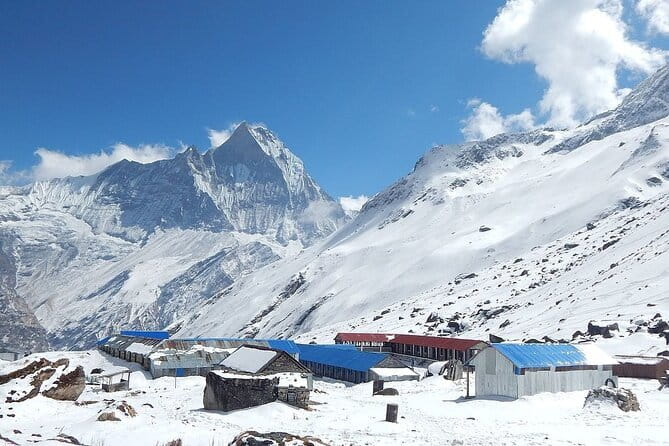
Reviewed · ANNAPURNA BASE CAMP TREK
Annapurna Base Camp Trek
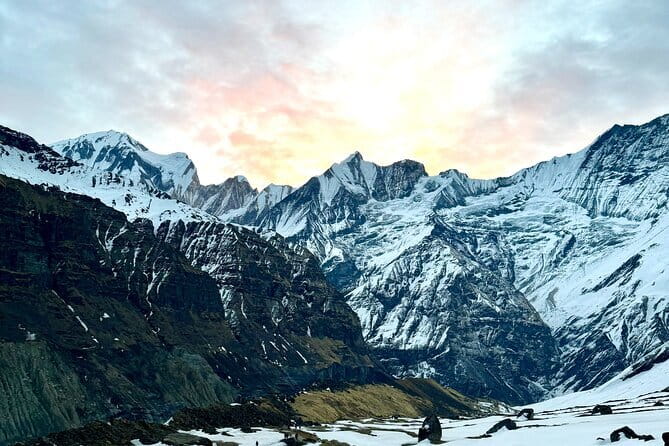
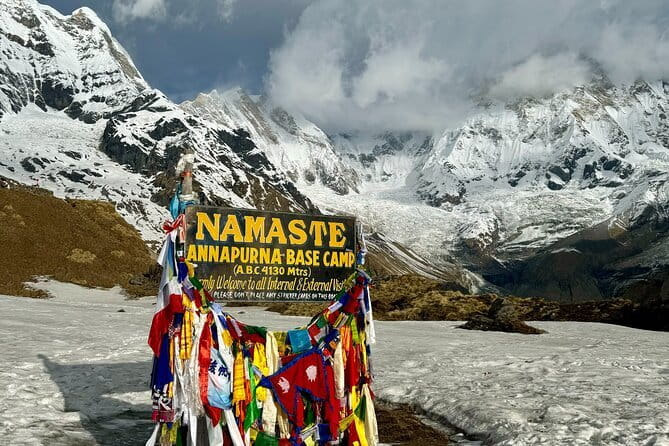
The Annapurna Base Camp trek is interesting because it blends classic Himalayan scenery with real village life, then finishes at a real high-altitude destination around 4,130 meters. I like that this trip keeps logistics simple, with transfers, hotels, and permits handled for you. I also like that the daily pace is broken into manageable chunks, so you get time to adjust and still enjoy the views.
The best part is the human touch. In the feedback I read, guides like Cecil and Sushil Gurung came up again and again for professionalism and safety, with porters named Samu Gurung, Sujan Gurung, and Bishal praised for making the trek feel easier. The main drawback to think about is the altitude and early starts, including a 1:15 am start time at the meeting point, so you need a moderate fitness level and a steady mindset.
Key things to know before you go
- Permits included: TIMS card and ACAP permit are part of the package.
- Food and teahouses included: all trek meals are covered, plus tea or coffee with meals.
- Real village and viewpoint days: Poon Hill and Chhomrong help you earn the big moments.
- Guides and porters are included: you get a licensed professional trekking guide and an expert local porter.
- Transfers are organized: airport and hotel pickup, plus Kathmandu to Pokhara by tourist bus and back.
- You still pay for extras: drinks beyond tea or coffee, plus tips, insurance, and personal expenses are not included.
Pasupatinath in Kathmandu, then a clean jump into trek mode
Most trekking trips rush you straight into mountains. Here, you start with Pasupatinath Temple, one of the most prominent Hindu sites in Kathmandu. It is a great reminder that Nepal is not only mountains. It is also religion, daily routines, and markets.
You’ll also benefit from taking care of the early “I am in a new country” stuff quickly, because your ground transfers are included. That matters on a trek like this, where you want your brain focused on what you’re doing today, not figuring out transport.
The pacing is important too. With a start time listed at 1:15 am, you should be ready for an early day energy even before you leave the city.
More routes into the Annapurna Sanctuary:
- Annapurna Base Camp Trek – 10 Days
★ 5.0 · 29 reviews - 14 Days Annapurna Base Camp Trekking | Best trek for visit Nepal 2020
★ 5.0 · 19 reviews - 13 Days Annapurna Base Camp Trek
★ 5.0 · 13 reviews
Pokhara lake day, why that stop makes the trek feel doable
After Kathmandu, you get the Pokhara transition, with a stop at the Pokhara lake area, an easy tourist-friendly place to breathe and orient yourself. Pokhara is where many people start imagining the mountains as real shapes rather than postcards.
You also get two nights in Pokhara at a hotel that includes breakfast, which is a practical win for your energy. A rest day with a normal meal plan helps you walk into the trek with fewer headaches and less crankiness.
Also note the basic rhythm: your trip uses tourist bus transport between Kathmandu and Pokhara, then returns the same way. That keeps the schedule simple and predictable, which is exactly what you want before climbing higher.
Birethanti and the Annapurna Conservation Area entrance
When you reach Birethanti, you’re essentially stepping into the Annapurna Conservation Area world. This is the point where the trip stops feeling like sightseeing and starts feeling like a trek.
What I like about this kind of entry day is how it sets expectations. You get that sense that trails here are not just for tourists, they connect villages and livelihoods. In real life, you’re sharing the path with people who live in these places, even when you’re a daypack tourist.
One consideration: conservation zones also tend to mean rules and permits are non-negotiable. The good news is that permits are included here, including TIMS and ACAP, so you don’t waste time or money sorting that out.
Ghorepani and Poon Hill, a short route with big payoff
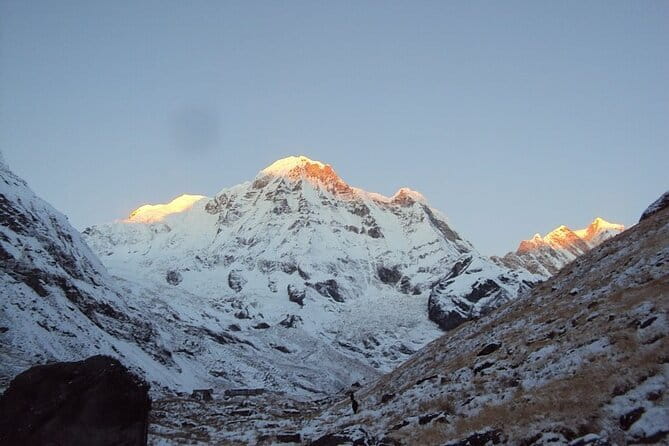
Then comes Ghorepani to Poon Hill, a famous viewpoint rhythm in the Annapurna region. Even if you never call yourself a morning person, you’ll understand why people do this trek segment. High points here tend to give clear, dramatic sky-and-peak views when conditions cooperate.
This day is also a good training day mentally. You learn how your body responds to a steady uphill effort, and you see what the “view rewards” look like before you commit to the higher days.
A small practical note: viewpoint days can feel quick on paper, but they can still be cold or windy depending on timing. If you’re the type who runs cold, pack for chill and layer up.
More to compare around Kathmandu
- Kathmandu: 7 UNESCO Sites with Lunch
★ 4.8 · 744 reviews - Everest Base Camp Helicopter Tour landing at Everest View Hotel
★ 5.0 · 668 reviews - Kathmandu: Local Women-Led Nepali Cooking & Momo Class
★ 4.9 · 360 reviews - Manaslu Circuit Trek
★ 5.0 · 292 reviews
Tadapani walking and Chhomrong, where the trek really starts to feel real
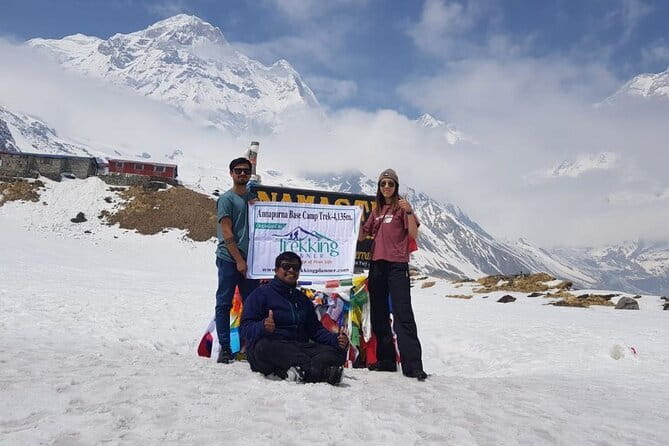
After Ghorepani, you have a walking day toward Tadapani, about five hours. This is a helpful length because it’s long enough to matter but not so long that you’re crushed before you get a break.
Then you move into Chhomrong and enjoy the day’s “beautiful walk” style route. Chhomrong is one of those places that feels like a milestone: you’re higher, the air changes, and the trail often feels busier with fellow hikers moving toward base camp.
What I like here is the mix of exertion and scenery. You’re not just walking in a straight line toward a single dot on the map. The route tends to shift from terraces and forests to more open areas as you gain elevation.
The only real drawback to consider is altitude creep. Even if your days are broken up, you should still take it slow on uphills and treat breathlessness like a signal, not a challenge. In this kind of trek, pacing keeps you safe.
Bamboo and the moderate climb, building stamina for base camp
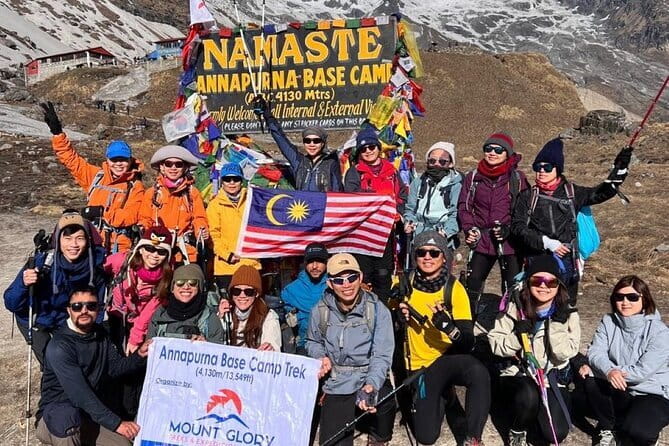
Next you tackle a day described as a moderate walk toward Bamboo. This part matters because it is where your routine starts to solidify: start early, walk at a steady pace, take breaks that actually refresh you, then settle into teahouse comfort.
I like that this trek includes tea house accommodation throughout, because it removes one of the bigger planning uncertainties. You’re not searching for lodging or guessing meal options at the end of the day.
You still need to plan for what teahouses mean in real terms. Rooms are simple, hot water might be limited, and power can be spotty. It is not a luxury hotel. It is functional mountain living.
Annapurna Base Camp arrival, the altitude moment you came for
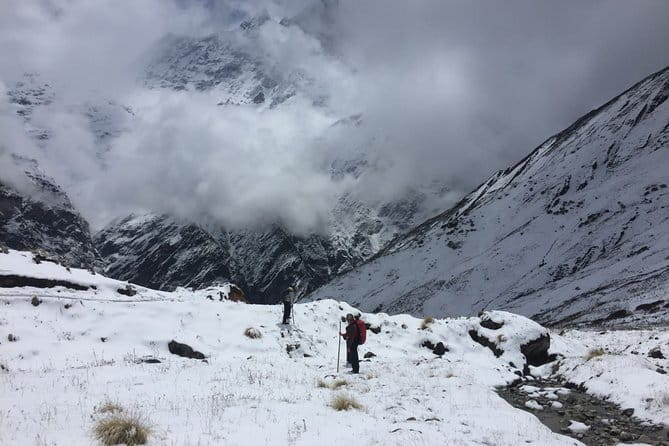
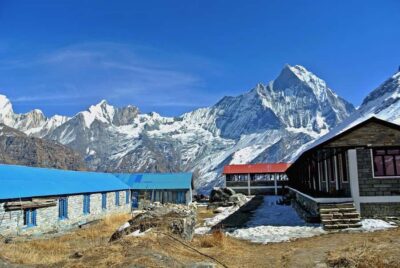
Now you get the big day: trekking to Annapurna Base Camp. This is the part people remember, because you’re hitting a real altitude environment. The trip overview highlights 4,130 meters, and reaching that height is the payoff for all the earlier steps.
This is also a day to respect your body. If you feel unusually tired, keep your pace gentle. Your guide and porter are there to help manage the load and keep you moving smartly.
A good benefit here is that meals are already built into the plan. The trek includes breakfast, lunch, and dinner with a cup of tea or coffee, so you can focus on hydration and keeping energy stable.
The view side is also not just one moment. The trek includes multiple viewpoints and a base camp experience that is more than a quick photo stop.
The hike within base camp territory and the view day
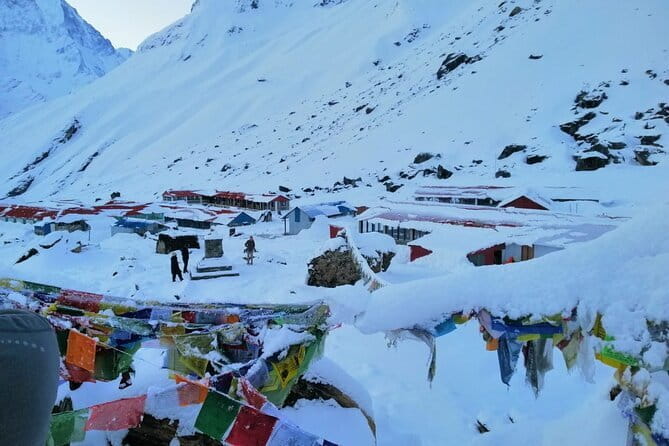
After arriving, there’s time for hiking around the area, including a day described as one of the most view-focused routes in the region. This is where the “finish” feels bigger than you expected, because you’re not rushing away immediately.
I like these structure choices. You get a chance to acclimatize before you push for extra viewpoints. And you get to enjoy how the light changes on peaks over the day.
If visibility is limited, don’t treat it like a lost cause. In this region, weather can shift, and teahouse breaks give you flexibility. You can wait out clouds for clearer windows rather than forcing a bad visibility walk.
Returning to Kathmandu by tourist bus, then going home with fresh legs
After the base camp days, you head back toward Kathmandu. The plan includes return by tourist bus, which is a simple way to get down without adding extra trekking fatigue.
Then you have time for the final departure to go home. Two nights in Kathmandu are included as well, at a hotel called Kathmandu Suite Home, with breakfast. That gives you a place to recover and reset before flights.
One practical value of having hotel nights covered: you’re less likely to end up paying extra for last-minute lodging. On this kind of trip, avoiding random decisions is a real cost saver.
Price and logistics, what $935 buys you (and what it won’t)
At $935 per person for a roughly 12-day trek, you’re paying for a lot of the “hard-to-handle” parts: airport and hotel transfers, Kathmandu to Pokhara round-trip bus, two hotel nights in Pokhara, two hotel nights in Kathmandu, and then all meals and teahouse accommodation during the trek.
You’re also paying for the permits and guide system. This includes TIMS and ACAP permits, plus a licensed professional trekking guide and an expert local porter.
That’s the value side. Your budget is more predictable because food and lodging in the mountains are handled. It also reduces the stress of coordinating gear expectations, trail rules, and day-to-day timing.
What’s not included is equally important for your planning:
- Extra meals and accommodation in Kathmandu beyond what’s included
- Extra drinks beyond the tea or coffee included with meals
- Travel insurance and evacuation insurance
- Tips for guide and porter
- Personal expenses
If you like spending your money on experiences rather than paperwork and last-minute logistics, this format usually makes sense. If you’re hoping to keep costs ultra-low by sourcing your own guide or scrambling for food, you may feel boxed in by the included structure.
Who should book this Annapurna Base Camp trek
This trek is a strong fit if you want an iconic route with real village connections, reliable meal coverage, and a guide team that prioritizes safety.
It also fits people with moderate physical fitness, because the daily structure mixes walking days with easier rhythm segments. You’re not stuck doing all-day slogs every day.
I’d especially recommend it if you value professionalism. The feedback around this company highlights guides like Cecil and Sushil Gurung for thoughtfulness and safety, with porters like Samu Gurung and Sujan Gurung praised for support. That’s the kind of “small stuff” help that can make the difference between a good trek and an exhausting one.
If you hate early starts, you might find the 1:15 am timing challenging. And if you’re not comfortable with altitude, you should take acclimatization seriously and talk to your doctor before committing.
Should you book this trek with Everest Trekking Routes Pvt. Ltd.?
If your priority is a well-run, guided Annapurna Base Camp trek with permits, transfers, meals, and teahouse lodging arranged for you, this looks like a sensible choice.
I’d book it if:
- You want to focus on the walking and the views, not logistics
- You like the idea of having permits and permits-related tasks handled
- You appreciate a guide and porter team that can support safety and pacing
I would rethink it if:
- You’re chasing a DIY-style budget
- You want lots of included comfort upgrades like unlimited hot drinks or Wi-Fi on the trek
- You have very limited time for recovery between travel days
For most people, the decision comes down to one question: do you want to buy certainty? Based on how the guides and porters are discussed, this trip seems built for exactly that.
FAQ
What is the duration and typical trek length?
The trek is listed as 12 days approximately.
Where does the tour start and what time does it begin?
The meeting point is Everest Trekking Routes Pvt. Ltd., Timila Marg, Kathmandu 44600, Nepal. The start time is 1:15 am.
What is included in the trek meals and lodging?
You get all meals during the trek (breakfast, lunch, and dinner with a cup of tea or coffee). You also get tea house accommodation during the trek.
Are permits included for the Annapurna region?
Yes. The package includes TIMS card and ACAP permit.
What transport is included between Kathmandu and Pokhara?
You travel Kathmandu to Pokhara and back to Kathmandu by tourist bus. Airport and hotel transfers use a private car/van/bus.
How many nights of hotel stays are included, and where?
The package includes 2 nights in Pokhara (hotel includes breakfast) and 2 nights in Kathmandu at Kathmandu Suite Home (includes breakfast). It also includes airport/hotel pickup and drop off.
Is Wi-Fi included during the trek?
No. On the trekking Wi-Fi is not included.
Can I get a full refund if I cancel?
Yes. Free cancellation is available, and you can cancel up to 24 hours in advance for a full refund. Cancellation closer than that is not refundable.
Latest Kathmandu write-ups
- 16 Days Island Peak Climbing With Everest Base Camp Private Trip★ 5.0 · 3 reviews
- 15 Days Round Annapurna Trek with Poon Hill from Pokhara★ 5.0 · 5 reviews
- Private Nepal round trip including Ghorepani Poonhill trek★ 5.0 · 3 reviews
- Everest Base Camp Trekking 16 Days★ 4.0 · 7 reviews
- 14 Days Luxury Annapurna Base Camp Trek★ 5.0 · 6 reviews
- Everest Base Camp Trek★ 5.0 · 32 reviews
- Everest Base Camp Trek★ 5.0 · 87 reviews
- Everest Base Camp Trek★ 5.0 · 97 reviews
Annapurna Base Camp Trek, compared.
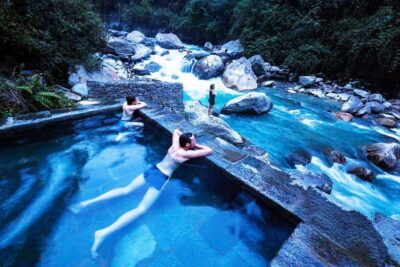
5 Day Annapurna Base Camp Trek & Natural Hot Spring
Read our review →
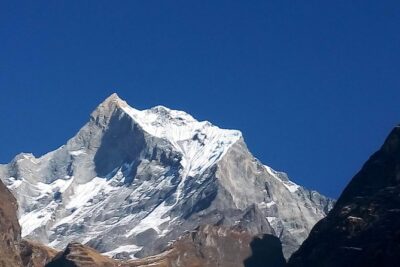
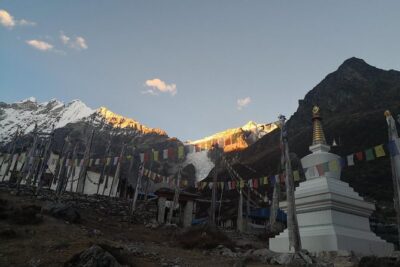
14 Days Annapurna Base Camp Trekking | Best trek for visit Nepal 2020
Read our review →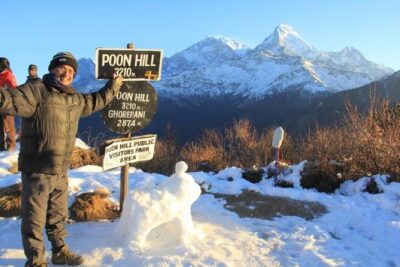
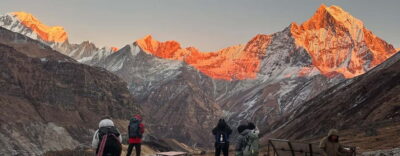
7-Day Annapurna Base Camp Trek & Natural Hot Spring
Read our review →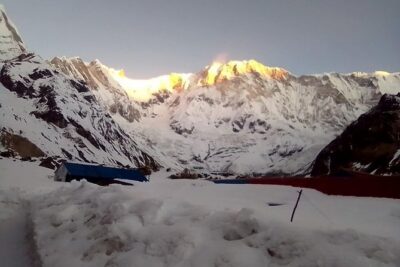
10 Days Annapurna Base Camp Trek from Kathmandu
Read our review →Browse the lists this tour appears in