
Reviewed · ANNAPURNA CIRCUIT TREK
Annapurna Circuit Trek
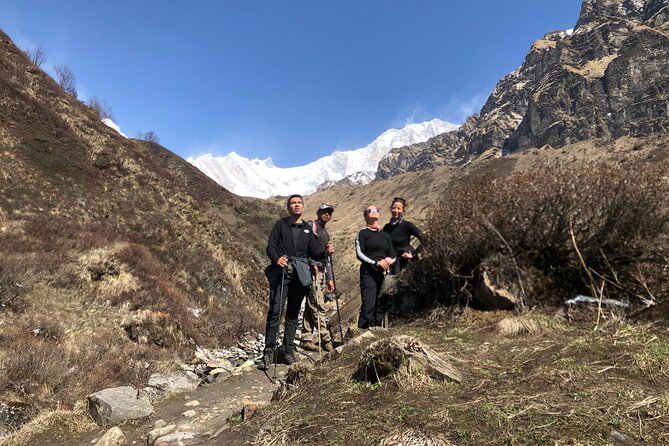
Annapurna Circuit Trek is interesting because the views keep stacking up while the terrain does a wild personality change, from warm lower valleys to crisp high routes. I love the built-in focus on mountain scenery every day, and I love how the pacing gives you a realistic rhythm for a 15-day trek.
You’ll also like that this itinerary is built around real trekking towns and meaningful altitude steps, not just a list of waypoints. I love that it includes tea-house stays and all your trek meals, so you can spend your energy walking instead of planning.
One consideration is the altitude, especially the day you cross Thorong-La Pass, which can feel long and serious even if you are fit. Plan for cold mornings and take acclimatization seriously, because the trek asks for it.
Key things I’d circle before you go
- Tea-house lodging with full trek meals (breakfast, lunch, dinner) means fewer daily decisions.
- A guided, permitted route with all mountain trekking permits handled for you.
- A true acclimatization pause at Manang Village before the higher camps.
- Thorong-La Pass day is the centerpiece of the whole trek at 5,416 m.
- Hot spring recovery at Tatopani after big altitude work.
- Private group feel so it is more coordinated and personal.
Peak views plus altitude swings: what this trek really feels like
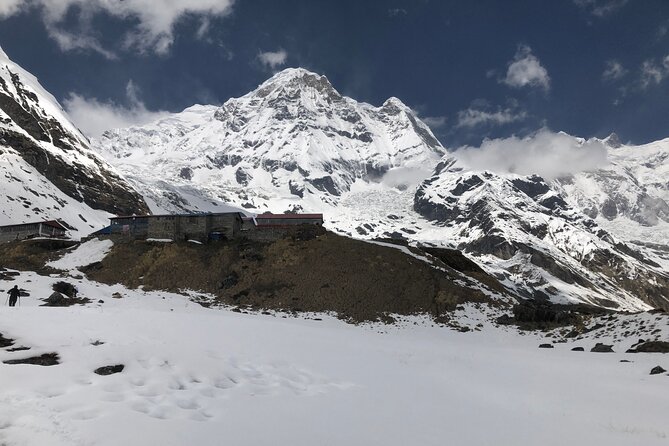
The Annapurna Circuit is famous for a reason. Each day seems to hand you another angle on the Himalaya, and the route changes height and vibe so often that your body keeps getting challenged in new ways.
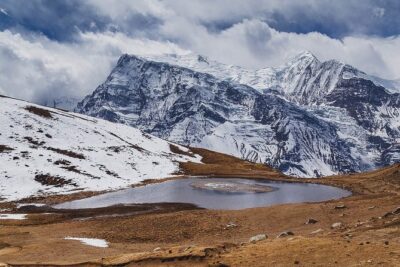
You’ll start low, with warm valley scenery and long approaches that build confidence. Then the trek steadily climbs into cooler alpine terrain, where your pace slows a bit, and even a short hike can feel like it deserves respect. By the time you’re near Thorong-La, you are not just “walking in mountains,” you are crossing a high gateway.
This itinerary also has a smart structure: it repeatedly uses climbs, a high camp, and then a step down or a rest. That helps you enjoy the day’s walking without feeling like you are constantly racing the clock.
More of the Annapurna Circuit:
- Annapurna Circuit Trek with Tilicho Lake
★ 5.0 · 368 reviews - Annapurna Circuit Trek
★ 5.0 · 94 reviews - Annapurna Circuit Trek
★ 5.0 · 67 reviews
Day 1 to Dharapani: Bulbule, Nagdi, Jagat, and the rhythm set-up
Your day begins early, with a start time of 6:15 am. You drive to Bulbule (840 m) and then hike to Nagdi (930 m) for about 1 hour, with the drive portion doing the heavy lifting for your legs. That first day is not about suffering. It is about getting your bearings, feeling the trail underfoot, and waking up gradually.
On Day 2, you trek to Jagat (1,300 m) in roughly 4 to 5 hours. This is where the scenery starts to look more “mountain route” and less like valley travel. Expect a steady uphill effort and a steady chance to hydrate and take breaks before you burn out.
Day 3 takes you to Dharapani (1,860 m) in about 4 to 5 hours. That altitude jump is noticeable. The air feels different, and your pace will likely slow. This is a good day to practice your personal strategy: short stops, consistent steps, and not trying to outwalk the thin air.
Why these early stops matter: they give you a gradual altitude ladder before the route starts climbing faster later. You’ll arrive at tea-house stays feeling like tomorrow is doable, not like you already “owe your body” a recovery day.
Chame to Manang Village: Chame, Pisang, and the big view zone
Day 4 goes to Chame (2,670 m) in about 5 hours. Chame sits higher and tends to feel more like a hub for trekkers. The air is cooler, and the trail often feels more “serious,” even when the hours are reasonable.
Day 5 takes you to Pisang (3,230 m), also around 5 hours. This is a climb that pushes you into the zone where every break matters. You’ll likely start thinking more about breathing than speed, and that is normal.
Day 6 brings you to Manang Village (3,450 m) in about 5 hours. You’re gaining height, but you’re also stepping into an area where acclimatization becomes a real topic, not just a word. The day’s value is that it gets you positioned for a calmer Day 7.
Day 7 is a rest day at Manang Village. This is one of the most important parts of the whole trek. A rest day here is not a bonus. It is altitude work, done smarter. Use it to conserve energy, adjust to the air, and let your body catch up. Even if you feel good, treat the day as part of the plan, not a day to “win back time.”
Potential drawback: rest days can feel like you are standing still. But for Thorong-La later, this is exactly what you want. Skipping it is when trekking plans turn into emergency improvisation.
Yak Kharka and Thorong High Camp: how the trek sets up your pass day
Day 8 heads to Yak Kharka (4,110 m) in about 4 hours. This is where your world starts shrinking a bit. Short distances can feel longer. You’ll feel the effort more in your breathing than your legs, and you’ll want to keep your steps smooth.
Day 9 goes to Thorong High Camp (4,600 m) in about 4 hours. This is the high “in-between” stage that helps you prepare for the pass crossing. You are not going all the way to the top of the map today, but you are living higher than you did most of the trek so far.
This is also a good time to get your routine down. Eat what you need, drink what you can, and keep your gear organized for an early and cold start later. If you’ve never trekked at altitude before, the biggest surprise can be how quickly the temperature and comfort levels change at the same altitude, depending on timing and wind.
More to compare around Kathmandu
- Everest Base Camp Trek – 14 Days
★ 5.0 · 1,499 reviews - Everest Base Camp Trek
★ 5.0 · 842 reviews - Private Kathmandu Sightseeing Tour | UNESCO World Heritage sites
★ 5.0 · 756 reviews - Kathmandu: 7 UNESCO Sites with Lunch
★ 4.8 · 744 reviews
Thorong-La Pass to Muktinath: the long day that deserves patience
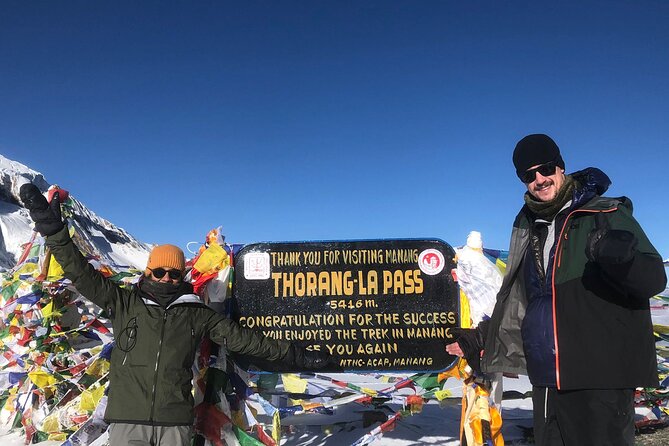
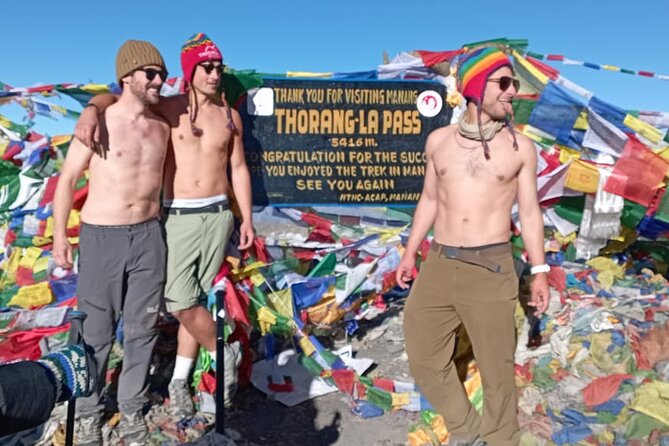
Day 10 is the day that anchors the whole Annapurna Circuit: you cross Thorong-La Pass (5,416 m) to Muktinath (3,800 m) for about 7 hours.
This is the high point, and it often feels like two treks inside one day. The ascent and the pass crossing require patience and steady breathing. Then the descent to Muktinath changes your focus, and your legs take over as the main story. You’ll likely feel tired at the end, even if you moved carefully.
What I’d recommend you do here: keep your effort consistent. Don’t sprint because you see others moving fast, and don’t slow so much that you lose momentum. It is better to arrive tired than to arrive empty.
After you reach Muktinath, you step into a lower altitude again. That drop matters. Your body gets a little help, and you get breathing room for the next phase.
Jomsom, Marpha, Lete, and Tatopani: villages plus a hot spring reset
Day 11 takes you to Marpha (2,670 m) via Jomsom (2,715 m) for about 6 hours. This part of the trek shifts your rhythm. You are still walking in mountain terrain, but the feel of the route can be different from the earlier stretches. Expect a day where you keep an eye on footing while enjoying the changing scenery as you move through the region’s villages.
Day 12 goes to Lete (2,480 m) in about 6 hours. This is a steadier step down compared to the pass day. It can feel like a relief, but you still want to walk like the trail will be there for you later, not only today.
Day 13 is to Tatopani (1,190 m) via the natural hot spring area for about 6 hours. This is one of those days that can make you smile halfway through, because the reward is built into the end. After cold nights and high effort, a hot spring moment (even if it is basic and timing-based) is a morale booster.
Practical note: hot springs feel amazing, but you still need to hydrate and take care of your body. Water and warmth help, but they do not replace proper recovery.
Ghorepani and Poon Hill, then Nayapul to Pokhara: the final climb payoff
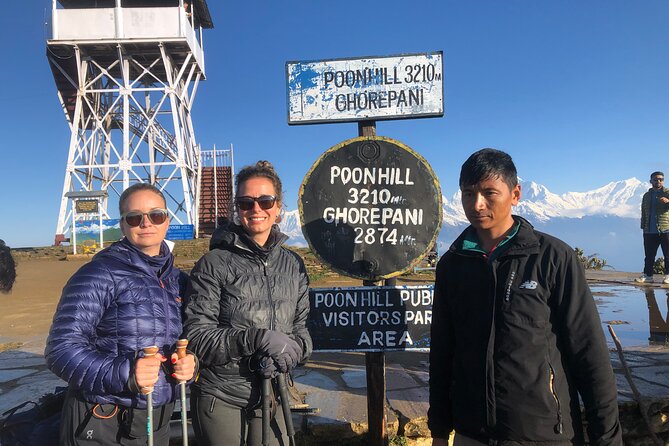
Day 14 takes you to Ghorepani (2,880 m) in about 6 hours. This is back at a decent height, so it is not a flat finish. It’s also part of why Poon Hill works so well as a closing highlight.
Day 15 starts with Poon Hill (3,210 m). After that, you trek to Nayapul (1,100 m) and then drive to Pokhara (860 m) for about 6 to 7 hours.
Poon Hill is a classic reason to do the Annapurna Circuit to the end. You get a final big viewpoint moment before you roll downhill into a more comfortable elevation. Then you get the payoff of finishing: walking ends, and the trip transitions into a drive back toward the city.
If you’re the type who needs a goal every day, this last day delivers. It is a “see it, do it, go home” loop.
Tea houses and meals: what is included, what costs extra
This trek is built around tea houses for mountain accommodation. That matters because it keeps you from having to manage camping logistics. You’re hiking with the expectation that each night ends in a predictable shelter setup.
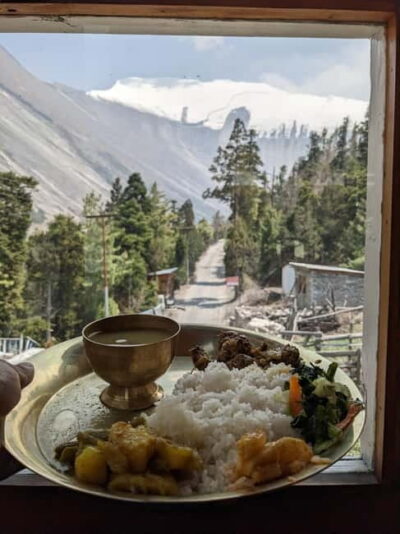
Food is included: breakfast, lunch, and dinner during the trek. That is a big value piece because it removes daily spending and reduces the stress of finding meals on the fly.
What is not included is also important for budgeting. Tea, coffee, beer, cola, mineral water, and hot water are extra. Wi-Fi, battery charges, and hot showers are not included either. In other words, plan to pay for small comforts as you go. If you want coffee or a warm drink at the end of a cold walk, keep a little cash aside.
Also, trekking equipment is not included. The trek can provide the route plan and guiding, but you still need your own gear.
Guides, safety, and the small touches that matter
The guide setup is one of the best practical reasons to choose a guided option like this one. You get an excellent guide whose package covers food, salary, insurance, and equipment. That means the guide is not an afterthought. The support is part of how the trek runs.
The private tour format also matters. This is a private activity, meaning only your group participates. You can expect a more controlled experience, less waiting around, and more consistency with timing.
From what I’ve learned from people who were helped by this team, the tone can be supportive and trustworthy. One porter story that stands out is Rishi, described as helpful, friendly, and someone who made trekkers feel safe. That is exactly what you want when you are dealing with altitude and long hiking days, especially the big pass day.
If you do add a porter yourself (porter is not included in the base price), choose someone who takes the job seriously and communicates well. A good porter can turn the trek from exhausting to manageable.
Price check: is $1,290 per person good value?
At $1,290 per person for about 15 days, the price becomes easier to judge when you look at what you get that would otherwise cost time and money.
Included:
- Bus transport
- Hotel pick up and drop off by taxi
- All trek meals (breakfast, lunch, dinner)
- Tea-house mountain accommodation
- An excellent guide
- All needed mountain trekking permits
That is a solid chunk of the big costs for this kind of trek. Permits alone are a “must,” and guiding plus meals plus lodging is where most DIY attempts quietly start adding up.
Not included costs to plan for:
- Your trekking equipment
- Travel insurance
- Porter
- Drinks like tea, coffee, beer, cola, mineral water
- Hot water, Wi-Fi, battery charges, hot showers
My take: the price feels fair if you want a guided, organized plan and you are comfortable handling your own gear and personal expenses. If you were hoping everything, including bottled water and charging, is rolled into the price, you might end up surprised. But that is pretty standard for tea-house treks.
What you need to bring and how to prepare
This trek is for people with moderate physical fitness. That means you should be able to hike for hours, handle steep stretches sometimes, and not panic when your pace slows at altitude.
Because trekking equipment is not included, plan for the basics: boots or shoes with good traction, layers for cold mornings, and a way to manage water. Since hot water and mineral water are extra, you should think ahead about hydration strategy.
Start time is set for 6:15 am. That usually means you will be getting moving early on trekking and transport days. Pack in a way that makes morning setup quick.
Altitude is the headline challenge, and the itinerary treats it like one. The rest day at Manang Village, then the climb to Yak Kharka and Thorong High Camp, sets you up for Thorong-La crossing. Follow the plan closely, especially on the pass day.
If cold nights are new to you, remember that hot showers are not included. Your comfort plan should assume “basic warm-up” more than “spa.”
Should you book this Annapurna Circuit Trek?
If you want a classic Annapurna Circuit experience with guiding, permits, daily meals, and tea-house lodging handled, this trek is a strong choice. The itinerary is built with a clear altitude rhythm, and the structure around Manang Village and the high camps makes the Thorong-La day more realistic.
I would book it if:
- you value an organized route and predictable logistics
- you’re okay budgeting for drinks, hot water, and charging
- you want private-group pacing instead of a crowded feeling
I might skip or look for another option if:
- you need everything to be fully included, including hot showers and Wi-Fi
- you are not comfortable handling your own trekking equipment
- you are not ready for an altitude-focused itinerary with a long pass day
FAQ
What is the start time for the trek?
The start time is 6:15 am.
Where does transportation happen, and do you do hotel pickup?
Transport is by bus, and hotel pick up and drop off are done by taxi.
How long is the Annapurna Circuit Trek?
It is listed as 15 days, approximately.
What is included in the price?
Included items are all needed transport by bus, hotel pick up and drop off by taxi, all food (breakfast/lunch/dinner) during the trek, mountain accommodation (tea houses), an excellent guide (including food, salary, insurance, equipment), and all needed mountain trekking permits.
Are meals included every day during the trek?
Yes. Breakfast, lunch, and dinner are included during the trek.
Are drinks, Wi-Fi, and hot showers included?
No. Tea, coffee, beer, cola, mineral water, hot water, Wi-Fi, battery charges, and hot shower are not included.
Do I need to bring my own trekking equipment?
Yes. Your trekking equipment is not included.
Is a porter included?
No. Porter is not included.
What happens if I cancel?
The experience is non-refundable and cannot be changed for any reason.
Latest Kathmandu write-ups
- Langtang Valley Trek★ 5.0 · 3 reviews
- Khopra Danda Trek★ 5.0 · 3 reviews
- Langtang Valley Trek from Kathmandu★ 5.0 · 3 reviews
- 5 night / 6 days Kathmandu Nagarkot Chitwan Pokhara tour★ 5.0 · 3 reviews
- Nepal Highlights Tour: 5 Nights 6 Days Kathmandu & Pokhara Tour★ 5.0 · 3 reviews
- Kathmandu Valley Private Day Tour★ 5.0 · 3 reviews
- Conquer the Himalayas: The Ultimate 16-Day Annapurna Circuit Trek★ 3.5 · 3 reviews
- Kathmandu Heritage Day Tour★ 5.0 · 3 reviews
Annapurna Circuit Trek, compared.
15-Day Private Annapurna Circuit Trek from Kathmandu
Read our review →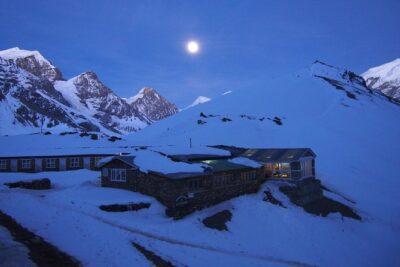
8 Days Private Guided Trekking in Annapurna Circuit with Pickup
Read our review →Browse the lists this tour appears in