
Reviewed · ANNAPURNA CIRCUIT TREK
Annapurna Circuit Trek
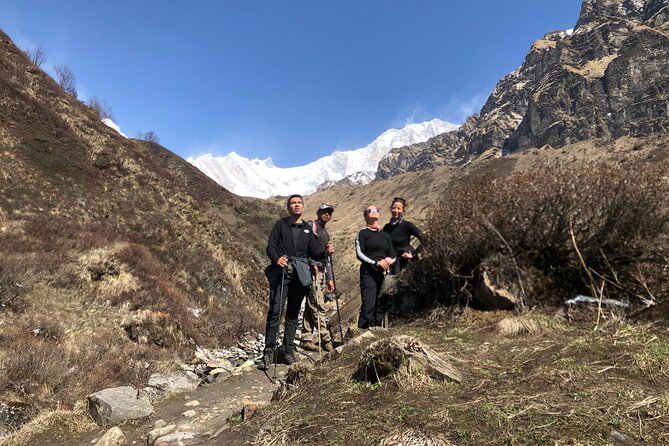
The Annapurna Circuit Trek is interesting because you move through Nepal’s climates like someone turning a dial, from lower valleys to high passes and big mountain views. One week you’re hiking through village trails and river valleys, the next you’re dealing with the cold and thinner air around Thorong La Pass.
I love the way this route pairs classic trekking with real cultural stops, including Tibetan Buddhist-influenced villages in the Manang area and sacred sites like Muktinath Temple. I also like the practical support built into the trip, especially the government registered guide and porter team, plus permits handled for you.
My one drawback to consider is the sheer altitude work. You’ll go up to 5416m at Thorong La Pass, so you need solid pacing and a realistic attitude toward cold mornings, long walking days, and acclimatization.
Key points you’ll care about most
- Permits handled: TIMS cards and the ACAP permit are included, along with the paperwork.
- Real acclimatization rhythm: staged climbs and a rest day in Manang help your body adjust before the high pass.
- Big day at Thorong La Pass: a long climb over to the pass and then a steep descent toward Muktinath.
- Tilicho Lake detour: a highlight route adds variety beyond the main circuit track.
- Hot springs and viewpoints: Tatopani’s hot springs and Poon Hill are built into the experience.
- Support that matters: a guide and porter carry luggage, and meals include choices at the lodge level.
Why this trek feels like Nepal in one continuous story
If you want a trek where the scenery actually changes, this is a strong pick. You start down in Kathmandu at about 1350m, then the trek legs steadily climb. Along the way, the scenery shifts from lower, warmer greenery to drier high terrain and massive mountain views.
What I like is that the trek is not only about getting to high altitude. You hike through communities that look and feel different as you go, with monastery-influenced villages and prayer-ritual life in the Manang region. Then you drop toward the Kali Gandaki corridor, where the cultural texture changes again.
Yes, it’s tough. But it’s also one of the most organized treks for a reason: there’s a logical progression in elevation, and the route hits a handful of famous places you’ll remember long after your legs have stopped complaining.
More of the Annapurna Circuit:
- Annapurna Circuit Trek with Tilicho Lake
★ 5.0 · 368 reviews - Annapurna Circuit Trek
★ 5.0 · 94 reviews - Annapurna Circuit Trek
★ 5.0 · 67 reviews
Price and value: what $1,175 buys you, practically
At $1,175 per person for about 14 days, the value comes from the amount of “invisible logistics” included. You’re not just paying for walking days. You’re paying for:
- Guide and porter support, including salaries, food, lodging, insurance, and equipment
- The permits and paperwork (TIMS and ACAP)
- Transportation support, including an air-conditioned vehicle, plus a tourist bus segment later
- Hotel stays in Kathmandu and Pokhara (B&B basis), plus mountain lodging on the trek
That’s the big story. If you tried to piece this together yourself, you’d spend time and money just on permits, scheduling, and finding the right level of guide and porter staffing.
What you should budget for separately is also clear. International airfare, Nepal visa fee, travel insurance, alcoholic drinks, soda or pop, snacks, and tipping and donations are not included, and WiFi is not included either. If you plan to drink wine with dinner or snack constantly, you’ll want to add money to your budget. Cold mornings also mean you might burn through extra layers and occasional extras.
Kathmandu start: prep time that keeps the trek calm
Your trip begins in Kathmandu with arrival and sightseeing, then time to prep. That matters more than it sounds. Trekking works best when you arrive with your gear sorted, your mindset set, and your body rested enough to start the mountain push.
You’ll also have hotel accommodation in Kathmandu on a B&B basis, so you can focus on the trek prep instead of hunting for a meal plan. Then, with pickup offered, you’re not stuck figuring out transfers the day you land.
One small tip: if you know you get cold easily, use the Kathmandu days to test your layering system. You want to walk into the higher villages already comfortable with your system, not doing trial-and-error at altitude.
From Kathmandu down to the first trekking towns
On day 3, you ride out from Kathmandu toward the first trekking start area. The transfer is long, about 9 hours to Jagat by local transport, then your first hiking days build slowly.
Your early trekking climbs take you up toward places like Danakyu or Dharapani and then Chame. Typical hiking here is about adjusting to the rhythm, reading trail conditions, and getting used to the way your body feels after a few hours walking at elevation.
This is also the time you’ll appreciate having a guide who keeps you on a good pace. With a porter team carrying luggage, you can focus on your own steps. A simple win is that your pack stays lighter, which helps on steep sections and keeps you from arriving at lodges overly worn out.
More to compare around Kathmandu
- Everest Base Camp Trek – 14 Days
★ 5.0 · 1,499 reviews - Everest Base Camp Trek
★ 5.0 · 842 reviews - Private Kathmandu Sightseeing Tour | UNESCO World Heritage sites
★ 5.0 · 756 reviews - Kathmandu: 7 UNESCO Sites with Lunch
★ 4.8 · 744 reviews
Chame to upper Pisang: seeing the route tighten around the mountains
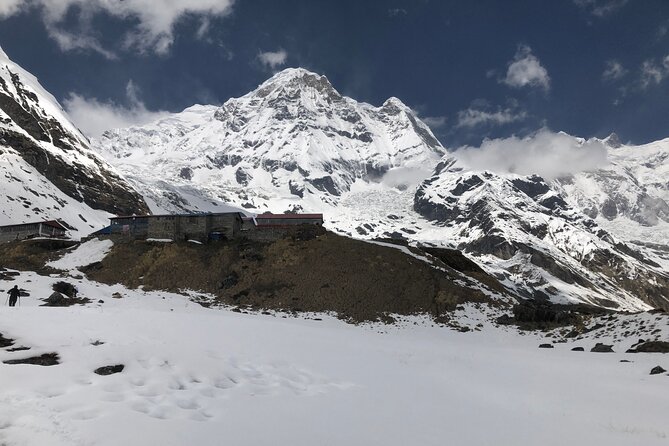
As you move forward, the trek climbs toward Chame and then into the upper Pisang area. This is where the feel of the walk begins to change. The air feels sharper, and the terrain starts to look more high-altitude than subtropical.
Your day up to the upper Pisang area is listed at about 5 hours to roughly 3300m, which is a good example of the trek’s style. You’re not doing everything at once. You’re walking far enough to get the body working, but not pushing into a punishing all-day stress.
This stage also matters for mental prep. After the first day or two, the novelty wears off and the real work starts. If you can handle these days with steady effort, you’ll be in a better place for the longer high pass day later.
Ghyaru and Manang: where acclimatization turns into good planning
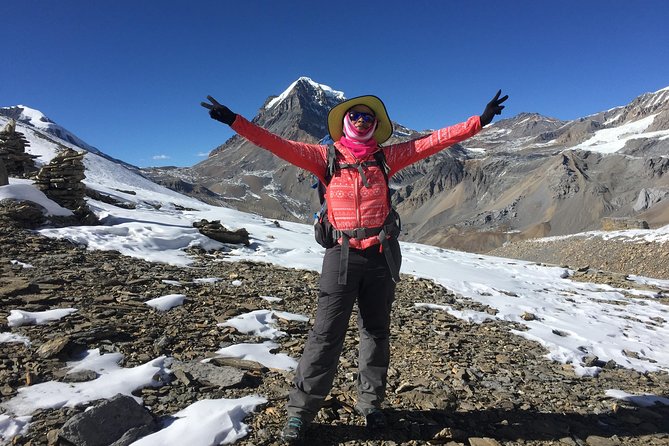
A standout part of this trek is how it uses Manang. You’ll hike up toward Ghyaru village and then trek to Manang, around 3540m, in about 6 hours. Then you get a rest day in Manang.
That rest day is a big deal. It’s not downtime for boredom. It’s time for your body to adjust, time to eat well, and time to sort out anything gear-related before the higher pushing begins.
Manang is often the psychological hinge of a circuit trek. After that, the terrain goes from “starting the trek” to “this is the real high mountain part.” If you’ve been pacing well up to that point, Manang will feel like a breather instead of a bottleneck.
The Tilicho Lake detour: a highlight that adds extra effort
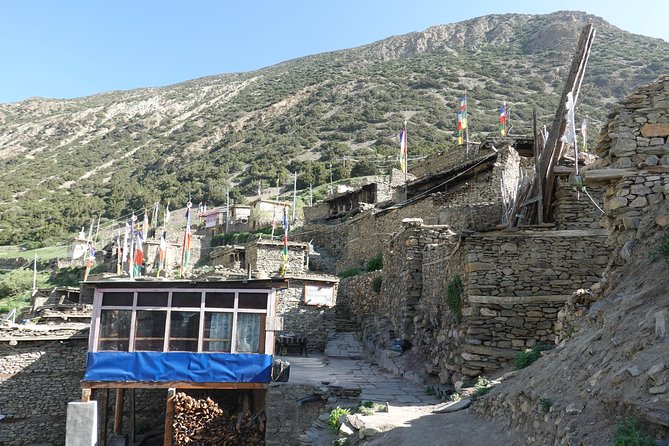
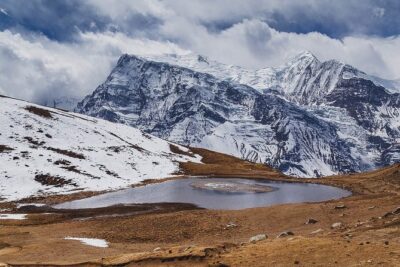
Tilicho Lake is listed as one of your stops. In plain terms, that means you get more than the main circuit flow. You’re adding another high-interest destination, which usually means more elevation work and more focus on weather windows.
The payoff is that you get a famous high-altitude lake experience in the broader Annapurna region. The tradeoff is energy. You’ll want to treat the days around the detour as “save what you can” days, especially if you still have Thorong La ahead.
If you’re sensitive to altitude, this is also where you should be careful with pacing. You want to stay ahead of fatigue, not fight it. Your guide can help with that by managing the speed and timing.
Ledar and Thorong Phedi: the slow rise into cold mornings
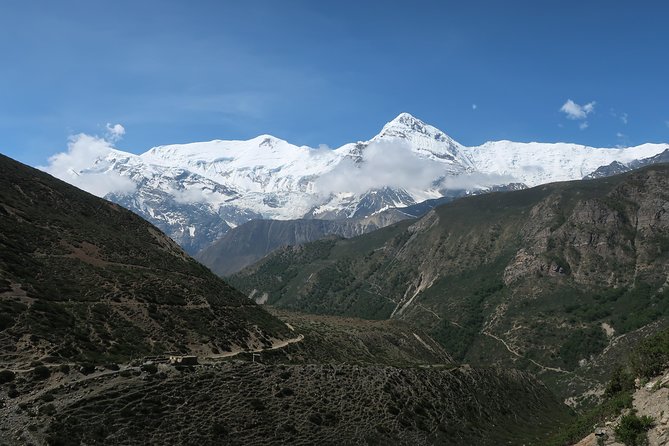
As you approach Thorong La, the itinerary shows a clear step-up plan. You hike up to Ledar (about 4200m, around 4 hours) and then to Thorong Phedi (about 4450m, around 3 hours).
This is classic acclimatization staging. You’re gaining altitude gradually and giving your body fewer shocks. Also, by the time you reach Thorong Phedi, you’ll have learned how your breath changes when the climb gets steeper or the air gets thinner.
Practical note: even when temperatures aren’t extreme, the wind and the shade can make cold mornings feel worse. This is where having the right layers and gloves matters. Bring what you already know works, not what you hope works.
Thorong La Pass day: the longest day, the biggest goal
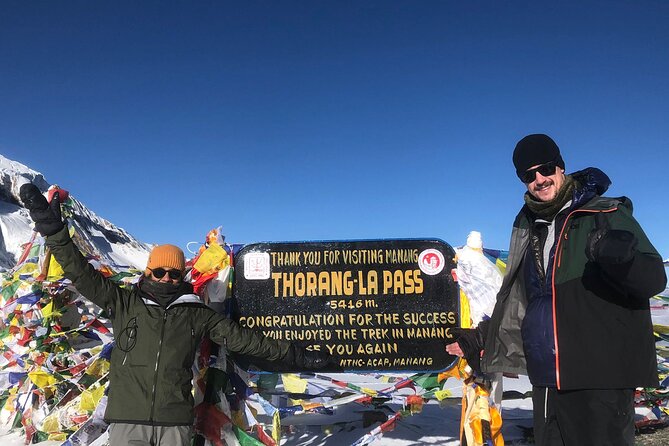
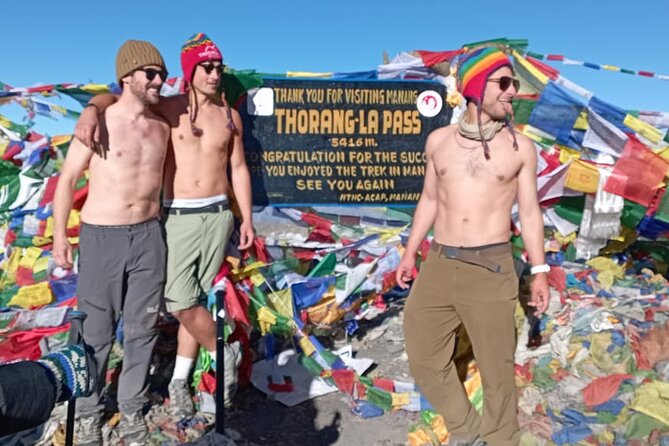
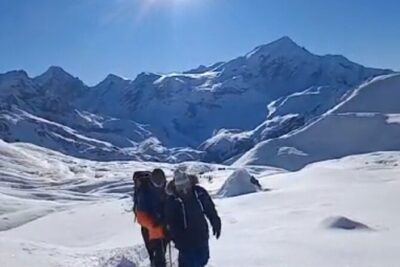
Day 11 includes the big one: Thorong-La Pass, listed at 5416m, with about 8 hours to reach the pass, then trekking down to Muktinath.
This is not just a “walk to a high point” day. It’s a full mountain day. Expect slow going at the top, then a serious descent after. Descents are often harder than people think because your knees and ankles take the hit, especially after a long ascent.
Muktinath is a great place to finish the hard climb. It’s also one of the most important cultural stops on the trek, with the temple site making the end of the day feel purposeful instead of purely physical.
If you want to do well here, the game is simple: start slow. Save energy early so you’re not cooked halfway up. Then after the pass, keep your steps controlled on the way down.
Tatopani, Marpha, and the Kali Gandaki mood shift
After the high pass and the descent, you move through the Kali Gandaki valley corridor, where the route passes places like Tatopani for hot springs and Marpha for its apple plantations and village feel.
Tatopani’s hot springs are one of those earned rewards. After days of cold air and long trekking effort, a warm soak can feel like a reset button. Just don’t treat it like a substitute for rest. Use it to recover, then go to bed early.
Marpha is a cultural breather too, known for its religious community feel, stone roads, and apple growing. It’s the kind of village where you can slow down, take in daily life, and remember this is not a theme park. People live here year-round, and your timing lets you experience it while you walk through.
Poon Hill and Ghorepani: sunrise style payoff, if your timing allows
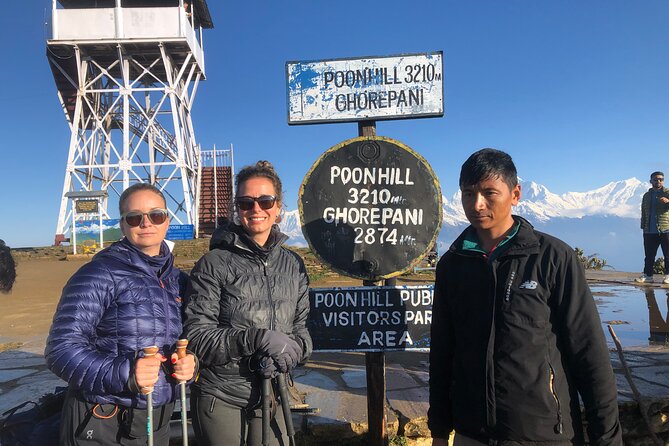
Poon Hill is included as a stop, along with Ghorepani and Gurunghe Hill. That usually means you have a viewpoint day where mountains show off in a way that feels almost unfair.
Poon Hill is the kind of place where sunrise and clear visibility are the difference between a good view and a memorable one. If skies are cooperative, you can catch sweeping views across mountain ranges like Annapurna and Dhaulagiri from this high viewpoint area.
This part of the experience can depend on how your trekking days align, since your itinerary includes the pass and then a later link toward Pokhara. If your schedule allows it, I’d treat this as a “wake up for it” day. The small inconvenience of early hours often pays back hard.
Transport, lodging, and meals: the small comforts that keep you going
This trek is built on a mix of lodge-style mountain stays plus city hotels.
- Kathmandu and Pokhara: hotel accommodation in B&B basis
- Mountain days: private or shared rooms listed by configuration
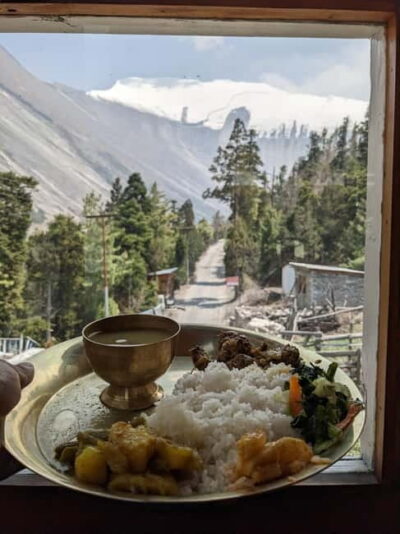
Meals are more flexible than many trekking programs. Coffee and/or tea come with each meal, and you can choose breakfast, lunch, and dinner from menus in each place. That choice matters when you’re tired and trying to eat enough to keep energy up.
One thing to watch: meals in Kathmandu and Pokhara are not included. Plan to eat on your own in those cities, and don’t assume every day is fully covered.
Also, snacks are not included, and soda or pop and alcohol are excluded. So if you rely on trail snacks, sports drinks, or afternoon treats, budget for it and pack what you can.
Transportation includes an air-conditioned vehicle, plus a tourist bus segment when you return toward Kathmandu. WiFi is not included on board, so treat the trip as a break from screens.
The guide and porter team: why Gyanu’s name still matters
The most praised element in the trip feedback is the guide. A guide named Gyanu was specifically mentioned for warmth, patience, and dedication, with his expertise making the experience feel smoother and more meaningful.
That matters because a good trek guide does more than explain trail routes. He also manages pace, helps with decision-making at tricky moments, and keeps the day moving when you feel tired. With the high pass ahead, that kind of steady leadership can be the difference between a stressful day and a controlled one.
Porters matter too. Knowing someone is carrying your luggage helps you walk with better form, and it reduces the chance that you turn every uphill into a battle.
Weather and altitude: how to think about the risk without panicking
This experience requires good weather, and that’s not a minor note. In the Himalayas, weather shifts fast, and high passes are sensitive.
You should also treat altitude as a real training variable. You’re going up gradually, with a rest day in Manang and staging before Thorong La. Still, the pass is high enough that you need to take symptoms seriously and follow your guide’s guidance.
If you start to feel more than ordinary exertion, speak up early. The best time to adjust is before you push past your limits.
Should you book this Annapurna Circuit Trek?
Book it if you want a classic circuit with key highlights like Thorong La Pass, Tilicho Lake, Muktinath Temple, Tatopani hot springs, and viewpoint time at Poon Hill, and you want those logistics handled. The inclusion of permits, a guide, porters, transport, and meals (with menu choices) gives this trek a strong value balance for the price.
Skip or reconsider if you’re not ready for long, high-altitude days and the cold reality of around 5416m. This is not a gentle nature stroll, even with acclimatization planning.
My practical recommendation: if you train for steady walking and you’re honest about your comfort with altitude, you’ll likely find this trek both challenging and deeply satisfying.
FAQ
How long is the Annapurna Circuit Trek?
It’s listed as 14 days (approx.).
What are the main highlights included on this trek?
Key stops and highlights include Thorong La Pass, Tilichol Lake, Tatopani Hot Spring, Muktinath Temple, and Poon Hill (with areas like Ghorepani and Gurunghe Hill also listed).
What kind of guide and porter support is included?
You’ll have a highly experienced Government Registered guide and porter to carry luggage. Guide and porter costs include salaries, equipment, food and lodging, and insurance.
Are meals included during the trek?
Yes. The trip includes coffee and/or tea with each meal, plus breakfast, lunch, and dinner where you can choose from menu options in each place. Meals in Kathmandu and Pokhara are not included.
Are permits included?
Yes. The trip includes TIMS cards and the ACAP permit, along with the necessary documents and paperwork.
What transportation is included, and is pickup offered?
Pickup is offered. The package includes an air-conditioned vehicle for included transfers, and the plan includes driving from Kathmandu toward Jagat, then to Pokhara, and returning with a tourist bus back to Kathmandu.
What is not included in the price?
Not included: alcoholic beverages, soda/pop, snacks, WiFi on board, international airfare, Nepal visa fee, travel insurance, meals in Kathmandu and Pokhara, personal expenses, and tipping and donations.
What fitness level is needed, and is the tour private?
You should have a moderate physical fitness level. It’s also described as a private tour/activity where only your group participates. Service animals are allowed.
Latest Kathmandu write-ups
- Langtang Valley Trek★ 5.0 · 3 reviews
- Langtang Valley Trek from Kathmandu★ 5.0 · 3 reviews
- Khopra Danda Trek★ 5.0 · 3 reviews
- 5 night / 6 days Kathmandu Nagarkot Chitwan Pokhara tour★ 5.0 · 3 reviews
- Nepal Highlights Tour: 5 Nights 6 Days Kathmandu & Pokhara Tour★ 5.0 · 3 reviews
- Kathmandu Valley Private Day Tour★ 5.0 · 3 reviews
- Kathmandu Heritage Day Tour★ 5.0 · 3 reviews
- Conquer the Himalayas: The Ultimate 16-Day Annapurna Circuit Trek★ 3.5 · 3 reviews
Annapurna Circuit Trek, compared.
15-Day Private Annapurna Circuit Trek from Kathmandu
Read our review →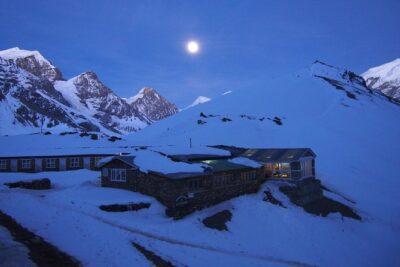
8 Days Private Guided Trekking in Annapurna Circuit with Pickup
Read our review →Browse the lists this tour appears in