
Reviewed · ANNAPURNA CIRCUIT TREK
Annapurna Circuit Trek
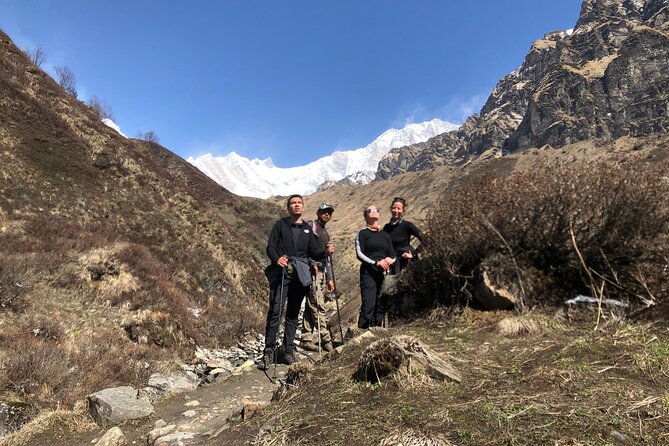
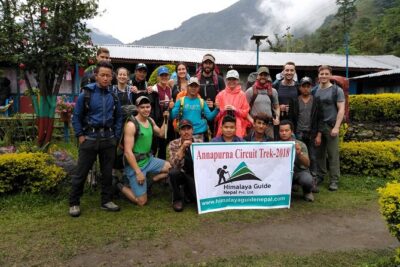
The Annapurna Circuit Trek is interesting because it strings together culture and big-altitude moments across changing valleys, not just one long climb. I love the payoff of crossing Thorong La at 5,416 meters, and I love stopping at Muktinath, a holy Shakti Peeth temple at 3,410 meters. With a guide such as Sudam (or others like Binod, Pasang, or Raju, depending on your group), the physical challenge feels more organized and less stressful.
One real consideration is weather. This trek depends on good conditions, and with a high pass involved you should expect some days to be slower and more weather-driven than the easy fantasy version.
Key highlights to know before you go
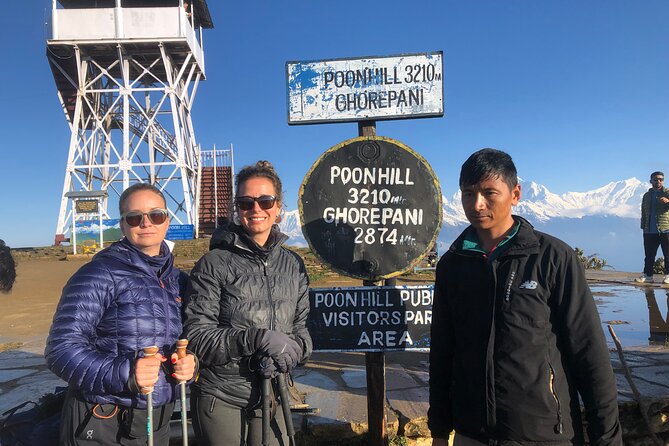
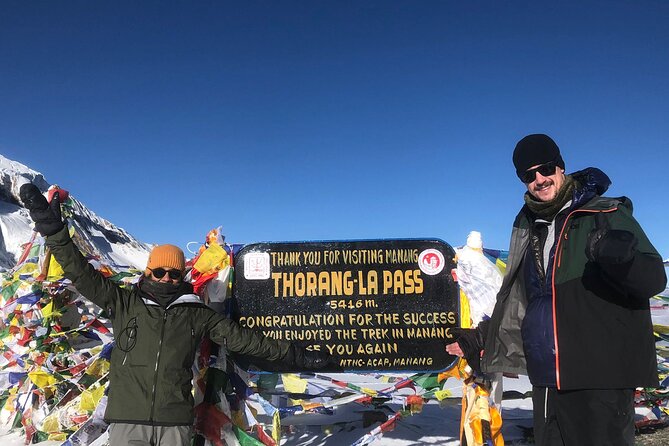
- Thorong La (5,416m): the trek’s highest point, and the moment that really defines the route
- Muktinath temple (3,410m), a Shakti Peeth: a spiritual stop with strong mountain views nearby
- ACAP permit and TIMS included: you get the official paperwork that keeps the trek legal and supported
- Poon Hill sunrise: a classic mountain-morning payoff built into the experience
- Kali Gandaki gorge: the world’s deepest gorge, one of the most striking natural passages on the circuit
- Small group size (max 10): usually means more personal attention from guides and porters
Starting in Kathmandu, then heading out by bus to Besisahar
Your trip begins in Kathmandu with an airport pickup and a transfer to a 3-star hotel. It is a helpful start because Kathmandu traffic can turn “easy” logistics into an energy drain. You also get Kathmandu sightseeing by car, so you can tick off the basics before the trek starts eating your days.
Then comes the scenic bus ride from Kathmandu to Besisahar. This is one of those underrated parts of the Annapurna Circuit. It is not the glamorous bit, but it sets the tone: you are moving from city noise toward trail rhythm. You also arrive with less guesswork about timing, since the transfer is handled for you.
A small note on the tone of this operator: in conversations with your team, you will likely hear a practical, organized approach. People associated with the company are repeatedly described as professional and flexible, and that shows up most during these early logistics.
More of the Annapurna Circuit:
- Annapurna Circuit Trek with Tilicho Lake
★ 5.0 · 368 reviews - Annapurna Circuit Trek
★ 5.0 · 94 reviews - Annapurna Circuit Trek
★ 5.0 · 67 reviews
Trek days through Manang and the way the villages change
Once you start trekking, the circuit becomes a string of villages with their own feel. The highlights in your route include places like Manang, Marpha, and Ghorepani. You will not just “walk through” these names. You will spend enough time in them to feel the gradual shift in altitude, weather, and culture.
Manang is often where many trekkers notice the altitude story getting real. Even without getting into exact daily elevations, you can expect more “breathe, pause, continue” pacing. This is a trek where you win by moving steadily, not by racing the guide at the front.
Marpha and Ghorepani bring a different texture. Think more village-life stops: tea houses, rest breaks, and short hikes that keep you moving while giving your body time to adjust. Ghorepani is also part of the run-up to Poon Hill sunrise, so it is where your timing starts to matter.
If you are the kind of traveler who likes variety, you are in the right place. One day you feel like you are in a mountain valley community, the next you are walking into views that make you stop more often than you planned. That is a good thing, just keep an eye on energy so the big moments do not cost you later.
Yak Kharka views and the Dhaulagiri perspective
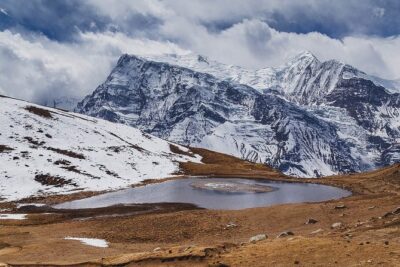
You will also catch major mountain views from spots such as Yak Kharka, Thorong La, and Muktinath. One mountain called out in particular is Dhaulagiri, which you can see from these points.
This matters because it changes how you experience the route. The Annapurna Circuit is not only about reaching a pass. It is also about learning how the mountains “reveal themselves” based on where you stand. Standing in the right places gives you new angles, and those angles feel different from just looking at a peak from far away.
So if you are deciding what matters most to you, consider this: the circuit gives you repeat opportunities to see huge ranges, not just one dramatic postcard view.
ACAP permit and TIMS: why the paperwork is part of the value
This trek includes an Annapurna Conservation Area Project Permit (ACAP) and a TIMS (Trekkers Information Management system) card. For many trekkers, permits sound like admin. Here, they are more like part of the trip’s backbone.
ACAP is the reason you can trek in a protected area with established rules and support. TIMS is also part of keeping trekker information organized. In plain terms, you get a trek that is set up to operate properly in a sensitive mountain environment.
Even if you never think about permits again once you start hiking, you feel the effect in how smooth things run. Your guide and team have the right authorization and the trek is structured around it.
More to compare around Kathmandu
- Everest Base Camp Trek – 14 Days
★ 5.0 · 1,499 reviews - Everest Base Camp Trek
★ 5.0 · 842 reviews - Private Kathmandu Sightseeing Tour | UNESCO World Heritage sites
★ 5.0 · 756 reviews - Kathmandu: 7 UNESCO Sites with Lunch
★ 4.8 · 744 reviews
Muktinath temple at 3,410 meters, a Shakti Peeth stop
A standout on the route is the Muktinath temple, at 3,410 meters, at the base area of Thorong La. This is one of the holiest temples in Nepal, and it is described as a Shakti Peeth, a source of primordial energy in the tradition.
This is not just a photo stop. The temple’s location gives it a “before and after” quality. You go from hiking into a place that feels like a spiritual arrival. The altitude also adds intensity, so it works best if you slow down a little and take in the moment rather than treating it like a fast roadside stop.
What you can also appreciate here is viewpoint variety. The route description specifically ties this area to mountain views too, meaning your temple time does not mean you step away from the scenery.
If you want a trek that mixes physical effort with spiritual and cultural meaning, this is one of the strongest reasons to choose the circuit route as your big Nepal hike.
Poon Hill sunrise: the sunrise that helps you start smarter
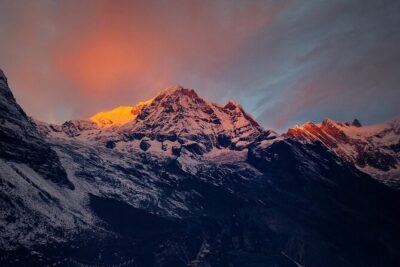
You will have mesmeric sunrise time from Poon Hill. This is the kind of segment trekkers talk about because it forces you to wake up early, then rewards you right away.
The practical value is that it breaks the day into two parts. You do the early effort, you see the mountain show, then you move on with the rest of the day already feeling “worth it.” It also helps you mentally reset after a long stretch of walking.
Because it is sunrise, timing is everything. The best advice is to treat it like an appointment: go to bed with your gear ready, eat enough the night before, and do not add extra stress by trying to pack perfectly at the last minute.
Thorong La at 5,416 meters, and what to do with the high-pass day
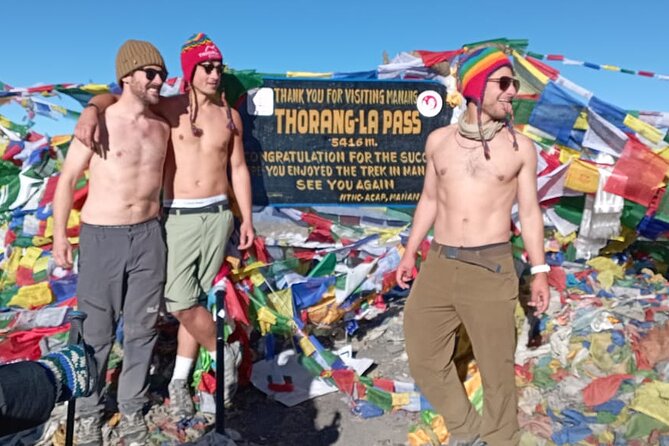
Crossing Thorong La, the highest point of the trek at 5,416 meters, is the big, undeniable event. This is where fitness and pacing really matter. Even if you are strong, altitude can slow you down. The trick is to stay consistent and not overreach.
Here is the approach that works best for most trekkers:
- Keep your pace gentle and steady
- Take short breaks instead of long stops
- Keep your focus on breath and footing, not on the view (the view will still be there)
Your guide support matters a lot on a day like this. In the feedback linked to this company, guides are described as professional, patient, and caring, and porters as hardworking. That kind of team dynamic is exactly what you want at the pass, when you need your day managed without drama.
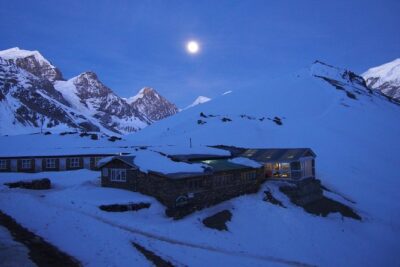
Also remember, you are in the Annapurna region and weather can shift quickly. Since this experience requires good weather, the high-pass segment can be sensitive. If conditions do not cooperate, you may be rescheduled, which is better than forcing an unsafe plan.
Kali Gandaki gorge: the world’s deepest gorge moment
On the way, you pass through the Kali Gandaki gorge, described as the world’s deepest gorge. Even without getting technical, you feel the scale. It is one of those “wait, look at that” places where the path is small and the terrain is huge.
This stop is valuable because it gives you a different kind of mountain drama. Instead of only peaks and ridgelines, you get a sense of how the earth shaped itself. It helps the trek feel like a journey through geography, not just altitude changes.
The return route through Tatopani, Tikhedhunga, Ulleri, and Nayapul
On your way back, the trek includes villages that also feel familiar if you have done other Annapurna-region routes. You will return through places like Tatopani, Ghorepani, Tikhedhunga, Ulleri, and Nayapul.
This return leg is important because it lets you re-enter village life in a more comfortable rhythm. You still hike, but you tend to get a better sense of repetition: you are not just going upward toward the pass, you are readjusting, walking back through the same kinds of communities that carried you earlier.
Tatopani is especially memorable for many trekkers because the name itself implies rest and recovery, and the circuit gives you time to settle again.
Eventually you reach Nayapul and then transition to Pokhara. Pokhara is a nice change of pace. After days of mountain time, it is a place where you can breathe, eat, and sleep without thinking about trekking layers for a while.
Pokhara downtime and Kathmandu meals you will want to budget for
You end with a valley visit in Pokhara. Your trip includes airport drop to the airport, and since lunch and dinner in Kathmandu and Pokhara are not included, you should budget meals there.
In practical terms:
- Plan to pay for lunch and dinner in Kathmandu and Pokhara separately
- Bring a little cash for small purchases and drinks since drinks are not included
- Keep one day flexible for hangout time after the trek, especially if your sleep schedule is a mess
This is normal. The trek cost is heavily weighted toward the structured trekking services and included permits. Meals are not that portion.
Value and price: what $1,074.88 includes, and why it can still make sense
The price is $1,074.88 per person for a trek that runs about 18 days. For a long, high-effort Nepal trek, this is not just a “walk and hope” package. You are paying for the parts that are hard to DIY reliably in the Annapurna region.
What you get included:
- Pickup from the airport and transfer to your hotel
- Accommodation in Kathmandu in a 3-star hotel
- Kathmandu sightseeing by car
- ACAP permit and TIMS card
- Drop to the airport
- The full program as per itinerary
- A maximum group size of 10, which often means better coordination
What is not included:
- Lunch and dinner in Kathmandu and Pokhara
- Any kinds of drinks (soft and hard)
So how do you judge value? You compare what you would pay if you had to independently handle permits, trek logistics, local coordination, and the early Kathmandu pieces. For most travelers, the included paperwork and the handled transfers are worth a meaningful chunk.
The other value factor is staff support. People linked to the company describe guides and porters as supportive, and they highlight flexibility. That can matter when weather, timing, or energy levels do not match your best-case plan.
Who this trek suits best, and who should think twice
This experience is aimed at travelers with moderate physical fitness. That does not mean it is easy. It means the operator expects you to be able to handle long trekking days, then follow pacing and altitude guidance.
This trek is a great fit if you:
- Want a route that mixes villages, viewpoints, and a major religious site
- Enjoy traveling with a small team (up to 10)
- Prefer a guided structure over building everything yourself
- Like the idea of seeing mountains from multiple angles, including Dhaulagiri views
You should think carefully if you:
- Have very limited hiking time in your background
- Know you struggle at higher altitudes
- Get anxious about weather-driven changes and want guaranteed “perfect day by day” conditions
Remember, this trek requires good weather. That is not just a technical note. It is part of why the mountains feel so dramatic when they cooperate.
Should you book this Annapurna Circuit package?
If you want the Annapurna Circuit with a setup that handles Kathmandu logistics, includes permits, and brings you to the core highlights like Thorong La, Muktinath, Poon Hill, and Kali Gandaki gorge, this package is a strong choice.
I would book it if:
- You like guided pacing and small-group support
- You value the inclusion of ACAP and TIMS
- You are willing to pay extra for meals and drinks in Kathmandu and Pokhara
- You can handle early mornings and a big pass day
If you are chasing comfort above all else, or you want a low-effort plan, you might be happier with a shorter trek. This one is about effort and reward, with weather acting as the final decision-maker.
FAQ
What is the duration of the Annapurna Circuit Trek?
It is listed as 18 days (approx.).
Where does the trek start and what country is it in?
The experience is based in Kathmandu, Nepal, and it includes a bus ride from Kathmandu to Besisahar.
Is airport pickup and drop-off included?
Yes. The package includes pickup from the airport, transfers to the hotel, and drop to the airport at the end.
What permits or cards are included?
The trek includes the Annapurna Conservation Area Project (ACAP) Permit and the TIMS (Trekkers Information Management system) card.
What is the highest point on the trek?
The highest point is Thorong La pass at 5,416 meters.
Which temple do you visit and at what altitude?
You visit Muktinath temple, at 3,410 meters. It is described as a Shakti Peeth.
Are meals included during the trip?
Lunch and dinner in Kathmandu and Pokhara are not included. Drinks (soft and hard) are also not included.
How big is the group?
The experience has a maximum of 10 travelers.
What is the cancellation and weather policy?
You can cancel for free up to 24 hours in advance for a full refund. The experience requires good weather, and if it is canceled due to poor weather, you will be offered a different date or a full refund.
Latest Kathmandu write-ups
- 10 days Annapurna Base Camp Trek★ 5.0 · 5 reviews
- Visit Swayambhunath and Bauddhanath Stupa with Guide★ 5.0 · 5 reviews
- Langtang Trek from Kathmandu 7 Days★ 5.0 · 5 reviews
- 7 Day Kathmandu Pokhara Tour★ 4.5 · 5 reviews
- Island Peak Climbing with Everest Base Camp★ 5.0 · 5 reviews
- Chandragiri Hill Cable Car Tour with Hotel Transfers from Kathmandu★ 4.5 · 5 reviews
- Everest Mountain Flight★ 5.0 · 5 reviews
- Kathmandu city day tour (4 world heritage sites)★ 5.0 · 5 reviews
Annapurna Circuit Trek, compared.
15-Day Private Annapurna Circuit Trek from Kathmandu
Read our review →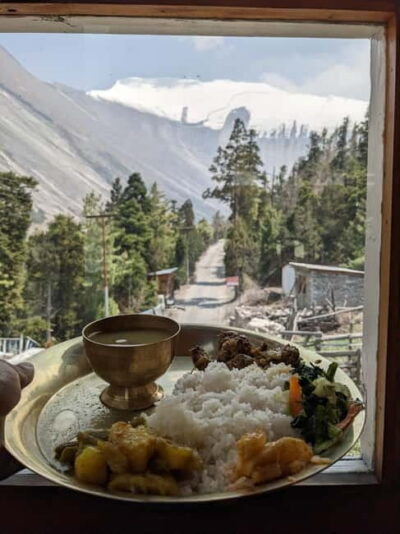
8 Days Private Guided Trekking in Annapurna Circuit with Pickup
Read our review →Browse the lists this tour appears in