
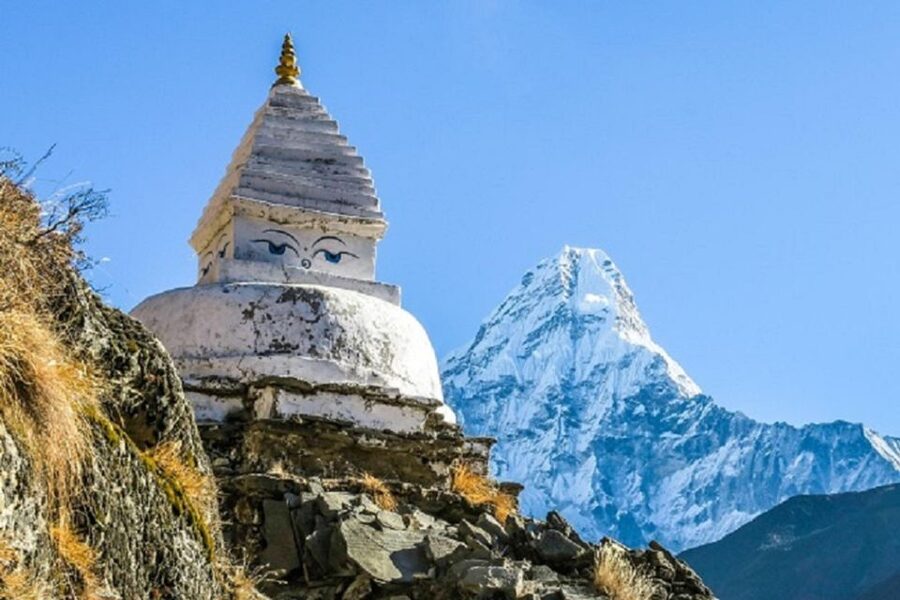
Reviewed · EVEREST BASE CAMP TREK
Everest Base Camp Trek: A short EBC Trek to Iconic Himalaya
A short Everest Base Camp trek is interesting because it compresses the classic pilgrimage into a tight, high-impact week, starting with a flight into Lukla and finishing with the big altitude payoff at Kala Patthar. One traveler I read about praised guide Ramesh for staying attentive, and coordinator Sobit for keeping the trip running smoothly.
I love the way this route builds in real acclimatization time at Namche Bazaar and Dingboche, rather than rushing straight up. And you get more than just Base Camp, you also get that iconic sunrise viewpoint that makes the whole effort feel worth it.
One possible drawback is the pace. This trek is designed for physically fit people who can handle 4 to 5 hours of walking per day at altitude, and if you are newer to high-elevation trekking, you should consider adding extra days for breathing room.
Key things to know before you go
- Lukla flight sets the whole tone: You trade Kathmandu streets for mountain air fast, then start trekking the same day.
- Acclimatization is built in: Namche and Dingboche give you structured time to adjust before higher climbs.
- Tengboche monastery adds culture: It is not just views, you also get spiritual and community life in the Khumbu.
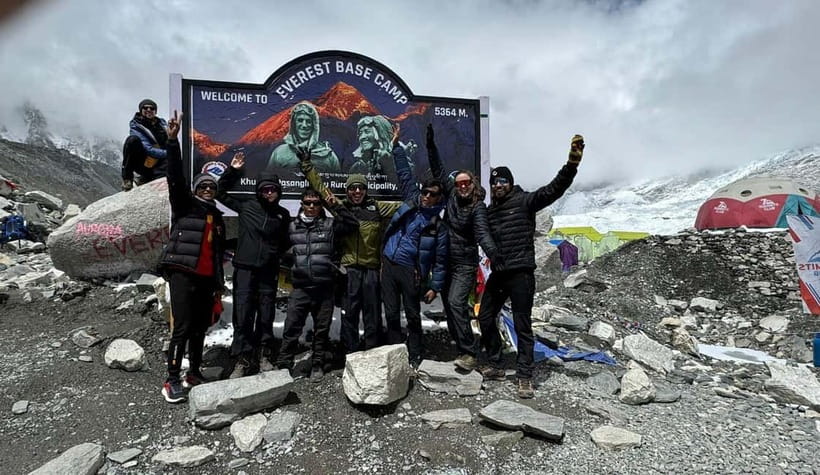
- Everest Base Camp on day 6: You reach the glacier front area after a steady climb, with Gorak Shep overnight.
- Kala Patthar is the sunrise moment: The early hike up high gives you the classic panoramic payoff.
- Flight disruption is possible: If Lukla departures shift to Ramechhap, you drive about 4 hours beforehand.
A Short Everest Base Camp Trek That Feels Focused, Not Rushed
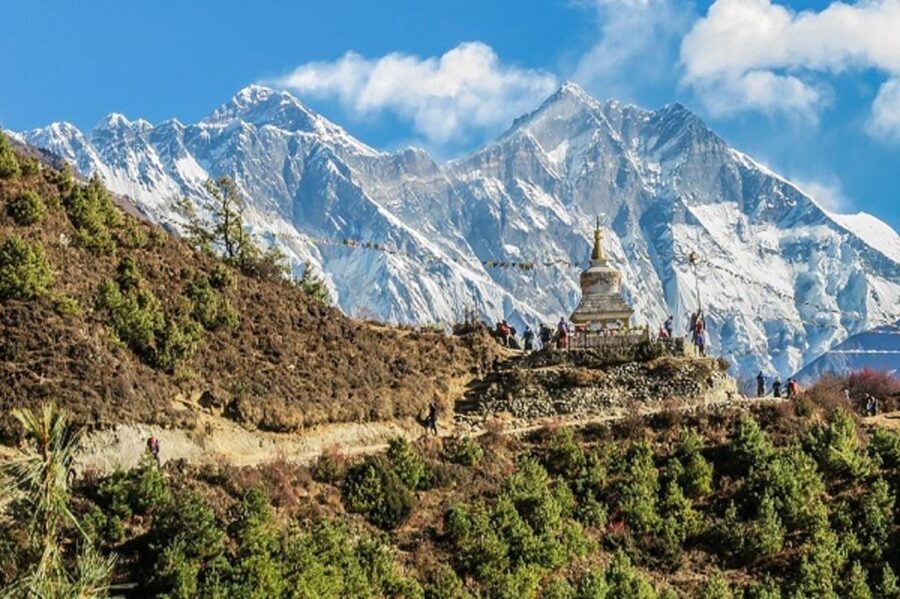
Everest Base Camp is famous for a reason. You are working your way to the foot of the tallest mountain on Earth, through Sherpa villages, across suspension bridges, and into the kind of high-altitude air that makes every step feel heavier. What makes a short 9-day version compelling is that it keeps the journey moving while still giving you key acclimatization stops.
In practical terms, you are getting the essentials. You fly into Lukla, walk through Namche Bazaar, pass by Tengboche, and climb toward the higher camps. Then you hit Gorak Shep and Everest Base Camp, and finish with the sunrise hike to Kala Patthar. That structure matters because it keeps the trip from feeling like a long series of sightseeing meals. Instead, it is a steady progression with clear goals each day.
If you want Everest, but you have limited time, this can be a smart fit. But it is not a casual stroll. You will be walking high, often for 5 to 8 hours, depending on the day and your group pace.
More ways to walk to Everest Base Camp:
- Everest Base Camp Trek from Lukla
★ 5.0 · 6 reviews - Guaranteed Helicopter Landing Everest Base Camp Kalapathar
★ 5.0 · 3 reviews - From Kathmandu: Everest Base Camp Landing Helicopter Tour
★ 5.0 · 3 reviews
Lukla to Phakding: The First Day Hits Fast and Feels Real
Most people imagine the trek starting with a heroic climb. Here, it starts with a morning flight from Kathmandu to Lukla, usually early enough that you feel like you are already behind on the adventure. Then you begin walking almost immediately.
Day 1 is a trek from Lukla to Phakding at about 2,610 meters, around 3 hours. This shorter first push is useful. It helps your legs find rhythm before the longer uphill days start piling up. It also gives your body a gentle introduction to altitude, rather than jumping into a full climb on day one.
Practical note: Lukla flights can be weather-sensitive. The operator also mentions that sometimes flights depart from Ramechhap instead of Kathmandu, with about 4 hours of driving beforehand. If that happens to you, you will lose a chunk of comfort and time, so build in slack on your overall schedule.
Namche Bazaar: Market Energy, Mountain Views, and Time to Breathe
By day 2, you move up to Namche Bazaar, around 3,440 meters. Expect roughly 6 to 7 hours of trekking. This is where the altitude starts to make itself known, not in a dramatic way for most healthy trekkers, but as that slow, steady reminder that you are working at height now.
What I like about Namche is how it functions like a hub, not just a waypoint. It is a Sherpa community with shops, guesthouses, and daily life that feels alive even though you are surrounded by huge peaks. You also get a built-in acclimatization day here, which is huge value. Instead of forcing extra distance, you get a chance to adjust to the elevation.
This is also where you should use your common sense. On an acclimatization day, you are not trying to crush miles. You want to move a bit, keep blood flow going, and help your body adapt. If you feel great, you can enjoy the viewpoints. If you feel even slightly off, you can take it easy and still benefit from the extra day.
Tengboche: The Monastery Stop That Adds Meaning to the Climb
Trek day 3 takes you from Namche to Tengboche, about 3,860 meters, usually 5 to 6 hours. The big win here is that you do not just get scenery, you get context. Tengboche is known for its monastery visit, and that adds a different tone to the trek.
Even if you do not know the religious details, you feel the difference. This is where you see a living culture shaped by the mountains, not a staged performance for tourists. The monastery stop also gives you a mental reset during a physically demanding trip.
Day 3 also acts like a bridge between the busier lower Khumbu region and the higher, more remote stretches. You arrive, you settle in, you slow down a little, then the trail keeps climbing again.
More to compare around Everest Region
- Kathmandu: 1-Hour Mount Everest Flight with Private Transfer
★ 4.7 · 98 reviews - From Kathmandu Budget: 15 Day Everest Base Camp Trek
★ 5.0 · 3 reviews
Dingboche and Lobuche: Acclimatization Becomes the Main Job
Day 4 moves you from Tengboche to Dingboche, about 4,410 meters, again around 5 to 6 hours. Then comes another acclimatization day, which the itinerary specifically includes. Dingboche sits at a higher elevation than Namche, so the second pause is not a luxury. It is part of making the final push to Base Camp safer and more comfortable.
The key thing to understand is that acclimatization days protect you later. If you rush through altitude without giving your body time, you can end up paying for it on steep or high segments. With this route, you get structured time to adjust, which makes the later days feel more doable.
Day 5 continues to Lobuche, roughly 4,910 meters, usually 5 to 6 hours. This is a tougher day simply because you are higher now and the air is thinner. It is also a day that helps set your expectations for the glacier zone ahead. You are moving closer to the area where ice and snow features become part of daily scenery.
Gorak Shep and Everest Base Camp: Where the Effort Turns into a Goal
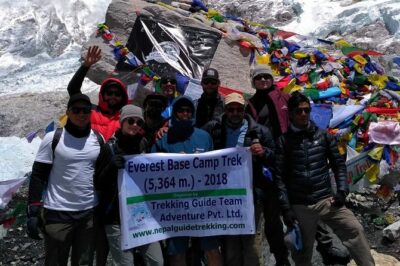
Day 6 is the heart of the trek. You hike to Gorak Shep, about 5,140 meters, and then continue up to Everest Base Camp around 5,364 meters. Plan for roughly 7 to 8 hours total, including time for the Base Camp portion.
This is also the day you feel the glacier environment more strongly. The Khumbu Icefall is in the picture, and it is described as an awe-inspiring glacial masterpiece for a reason. Even from the viewpoint areas, you get the scale of the glacier system, and you understand why this region has a special place in mountaineering history.
One thing I appreciate about reaching Base Camp during a shorter itinerary is that it keeps you mentally focused. You do not spend days lingering at the edge of the final goal. You arrive, you take it in, and then you rest in the right place for tomorrow’s big sunrise hike.
You sleep in Gorak Shep overnight. That matters because it sets you up for Kala Patthar at dawn, when the air is often cold enough to make you grateful for warm layers and the right gear.
Kala Patthar Sunrise: The Classic View, Paid for in Early Starts
On day 7, you hike to Kala Patthar, about 5,545 meters, aiming for sunrise, then descend to Pheriche at about 4,371 meters. The early start is not optional if you want the famous panorama, and the effort can feel intense because you are high and moving in cold conditions.
The payoff is the reason many people choose Everest at all. Kala Patthar is the sunrise viewpoint that gives dramatic, wide views of Everest and the surrounding peaks. This is where your weeks of effort, or in this case days of grinding, becomes something you can actually hold onto.
Then you descend, and that long downward day (about 7 to 8 hours) is its own workout. Downhills beat up knees, and altitude can make your legs feel unreliable. So move carefully. In the mountains, fast is not always smart.
The Return Legs: Namche Again, Then Lukla and Kathmandu
Day 8 takes you from Pheriche back to Namche Bazaar, usually around 6 to 7 hours. This part can feel bittersweet. You are heading down, but you are also carrying fatigue. Still, it is useful because Namche offers a more comfortable reset before the final flight.
Day 9 is the final trek from Namche to Lukla, about 6 to 7 hours, then fly back to Kathmandu. And yes, flights can be unpredictable in this region, so the itinerary advises you to allow at least one buffer day before international departure. I agree with that advice. Even well-run plans can be affected by mountain weather.
One more practical detail: the operator states they handle airport transfers related to trekking trips, and they need you at the Kathmandu airport about 1 hour before your flight for pickup coordination. That is the kind of detail that saves you stress.
Price of $681: When This Short Trek Adds Value
At $681 per person for 9 days, this kind of Everest Base Camp trek can be good value, mainly because a lot of the real costs are included. You are not just paying for walking. You are paying for a package built around altitude trekking needs.
Here is what stands out as meaningful inclusions:
- Guiding throughout the trek, so you have route leadership and support on high-altitude days.
- All meals on the trek (breakfast, lunch, dinner), with each meal featuring one item. That reduces daily decision-making and budgeting.
- Park and entry fees including Sagarmatha National Park, TIMS, and the Pasang Lhamu Rural Municipality entrance fee.
- Some trekking gear support, including a sleeping bag, down jacket, and duffduffle bag. Also trekking poles if you need to return after trekking.
- A cultural show and farewell dinner in Kathmandu, plus a t-shirt or cap and a trip certificate.
What is not included matters too. Drinks, tea and coffee, water, and personal expenses are not included. You also handle your personal adventure gear, plus any Kathmandu hotel before and after the trek unless arranged by request. The flight from Lukla back to Kathmandu is not included either.
If you total it up for yourself, you should focus on what you would otherwise pay directly in Nepal: meals, guide, trekking permits and fees, and the cost of renting or carrying gear. For many people, that is where the package becomes economical.
For others, the decision hinges on your existing gear and your appetite for daily logistics. If you already own the right warm layers and trekking essentials, you might find a cheaper option by self-arranging. But if you want a straightforward, supported trip where day-to-day running is handled, this price is a reasonable deal for the scope.
Who This Trek Suits Best, and Who Should Rethink It
This itinerary is designed for physically fit travelers. The key measurement is simple: you should be able to walk 4 to 5 hours a day, even at high altitudes. If you are newer to trekking, the operator specifically suggests adding a few extra days for a more comfortable pace.
It also helps to be honest about the type of experience you want. This trek is not just about getting to a photo spot. It is also about timing, acclimatization, and tolerating cold early mornings.
It is not suitable for wheelchair users, and it is also not recommended for babies under 1 year old or people over 95 years old. If you are in a borderline age or fitness range, you should discuss the plan directly with the operator before booking.
Gear You Actually Need, and What They Provide
You will be hiking in cold air and often chilly mornings, especially near the top viewpoints. The basics you should plan for include warm clothing, a warm jacket, gloves, socks, hiking pants, hiking shoes, and thermal clothing.
The helpful part is that the trek includes certain cold-weather gear support. You can receive a sleeping bag, a down jacket, and a duffduffle bag, and you may also get trekking poles if you need to return them after the trek. That can reduce what you have to carry from home and what you need to rent locally.
What they do not include is your personal gear and equipment beyond that. So you still need your own boots, layers, and personal items. Also, drinks and water are not included, so plan for those costs.
The Human Side: Guides, Coordinators, and the Porter Team
A big part of why Everest Base Camp feels manageable is the people. In the experiences shared, the guide and coordinator support got strong praise.
One traveler highlighted guide Ramesh for being fantastic and attentive, and Sobit as the trek coordinator. Another mentioned guide Palden and described the porter team as friendly and kind. That matters because in high-altitude trekking, you do not just need someone who knows the route. You need someone who notices when you are tiring, who can keep logistics calm, and who helps you stick to a steady rhythm.
If you want extra help, you can also arrange for a porter upon request. That is not just for comfort. It can help you conserve energy for uphill days, especially on the higher legs.
Languages and Group Support You Can Expect
The trek offers a live guide in English, Chinese, Korean, Russian, Traditional Chinese, and Japanese. That means you should be able to communicate clearly about pace, safety, and daily plans, which is especially important at altitude.
And because the itinerary includes multiple acclimatization stops, having a guide who can explain what to expect and why you are pausing for altitude matters. It keeps you from treating acclimatization days like free time you can skip.
Should You Book This Short Everest Base Camp Trek?
If you want the Everest Base Camp experience but you have limited time, this 9-day version is worth serious consideration. The built-in acclimatization at Namche and Dingboche, the monastery stop at Tengboche, and the push to Everest Base Camp followed by Kala Patthar sunrise create a complete arc from cultural Khumbu trekking to the high-altitude viewpoint payoff.
I would book it if you:
- Can walk 4 to 5 hours per day at altitude without needing constant rest breaks.
- Want a supported package with guide leadership, park fees handled, and meals included.
- Appreciate a clear plan with daily goals, rather than a slow trip that takes weeks.
I would hesitate if you:
- Are a true beginner and do not want to add extra acclimatization days.
- Are very sensitive to cold early mornings, since the Kala Patthar sunrise hike starts before daylight.
- Have tight international flight timing, because you need buffer for flight disruptions.
If you are somewhere in the middle, ask about adding 1 to 2 extra acclimatization days. That small schedule change often makes the trip feel less like a test and more like an adventure.
FAQ
How long is the Everest Base Camp trek?
The trek is 9 days.
What is the highest elevation on this trek?
The itinerary reaches Everest Base Camp at about 5,364 meters, and Kala Patthar at about 5,545 meters.
Where does the trek start and end?
It typically starts with a flight from Kathmandu to Lukla, then trekking progresses through the Khumbu region, and it ends back in Lukla before the flight to Kathmandu.
What is included in the price?
The package includes airport pickup and departure related to trekking trips, standard guesthouse or trekking lodge stays, all trekking meals, some seasonal fruit items, a special cultural show and farewell dinner in Kathmandu, an experienced trekking guide, entrance fees (Sagarmatha National Park and TIMS, plus the Pasang Lhamu Rural Municipality Entrance fee), and certain provided trekking gear like a sleeping bag and down jacket. It also includes a trip certificate and a service charge and taxes.
What is not included?
Not included are Kathmandu hotels before and after the trek, personal adventure gear and equipment, drinks and beverages (including tea and coffee), water, laundry and other personal expenses, and the Kathmandu to Lukla to Kathmandu flights. Anything not listed under inclusions is also not included.
Do you get acclimatization days?
Yes. The plan includes acclimatization days in Namche Bazaar and Dingboche.
How physically demanding is it?
You should be able to walk about 4 to 5 hours a day even at high altitude. The trek is designed for physically fit travelers, and beginners are advised to add a few extra days if needed.
What languages are available for the live guide?
The guide can be available in English, Chinese, Korean, Russian, Traditional Chinese, and Japanese.
What happens if flights do not depart from Kathmandu to Lukla?
The operator notes that sometimes the flight may depart from Ramechhap instead of Kathmandu. In that case, you drive about 4 hours from Kathmandu to Ramechhap before the flight to Lukla.
Latest Everest Region write-ups
- Kathmandu: 1-Hour Mount Everest Flight with Private Transfer★ 4.7 · 98 reviews
- Guaranteed Helicopter Landing Everest Base Camp Kalapathar★ 5.0 · 3 reviews
- From Kathmandu: Everest Base Camp Landing Helicopter Tour★ 5.0 · 3 reviews
- From Kathmandu Budget: 15 Day Everest Base Camp Trek★ 5.0 · 3 reviews
- Everest Base Camp Trek from Lukla★ 5.0 · 6 reviews
Everest Base Camp Trek, compared.
Everest Base Camp Helicopter Tour landing at Everest View Hotel
Read our review →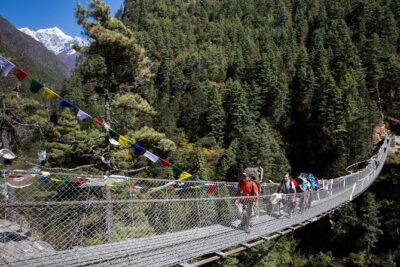
Everest Base Camp Trek 12 Days – Best Himalayan Adventure
Read our review →
Browse the lists this tour appears in