Reviewed · HIKING & TREKKING
Everest Three High Passes Trek – 20 Days
If you want a trek that mixes high passes, big-name Everest scenery, and the Gokyo lakes region in one long grind, this route is hard to beat. You tackle Kongma La, Cho La, and Renjo La at over 5,000 meters, then you swap the Khumbu drama for the wide, glacial scenery of Gokyo Valley. It is a serious adventure, not a stroll.
I really like the way this trip builds in altitude sense, with acclimatization days in Namche Bazaar and Dingboche before the big crossings. I also love the commitment to viewpoints, especially the early push toward Kala Patthar, where the first light on Everest is the main payoff.
The main drawback to plan around is that you are dealing with cold mornings and weather-sensitive flights to Lukla. That can make timing feel tight, and if bad weather forces extra nights in the mountains, you may face additional costs not covered in the base price.
Key highlights that make this trek worth the pain
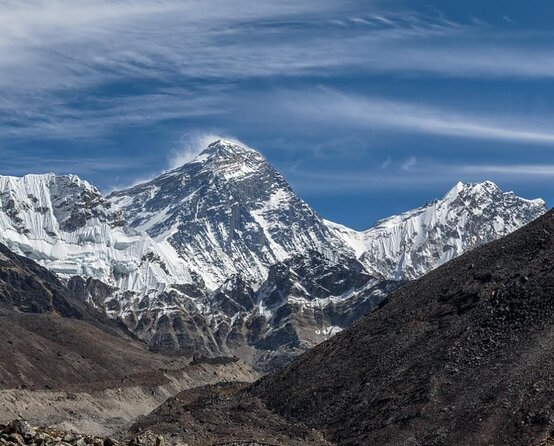
- Three high passes, three different ways to feel “high” (Kongma La, Cho La, Renjo La)
- Gokyo lakes plus Gokyo Ri for big views that go beyond Everest
- Acclimatization built into the route in Namche and Dingboche, not added later as an afterthought
- Everest Base Camp and Kala Patthar for the closest practical look at Everest during a trekking itinerary
- Sagarmatha National Park immersion with monasteries and Sherpa culture stops
- Team support that reduces stress including pickup, permits, and logistics, with guidance that stays hands-on
Kathmandu setup that actually helps you trek better
Your trek starts in Kathmandu, with a private airport pickup and a transfer to your hotel. You get two nights in a 3-star hotel with breakfast, and that matters more than it sounds like. When you are heading for high altitude, you want sleep, warm food, and time to sort the small stuff: correct passport details, trekking paperwork, and getting your group ready.
There is also a built-in social moment. On your first night, you will meet the other participants. That helps on a trip like this, because pacing decisions, shared questions about cold nights, and plain motivation all get easier when you are not doing it alone.
On the last night in Kathmandu, there is a farewell dinner with cultural performance. It is a nice way to close out the physical part without rushing into the airport mindset.
More to compare around Kathmandu
- Everest Base Camp Trek – 14 Days
★ 5.0 · 1,499 reviews - Everest Base Camp Trek
★ 5.0 · 842 reviews - Private Kathmandu Sightseeing Tour | UNESCO World Heritage sites
★ 5.0 · 756 reviews
The Lukla flight: short, scenic, and still the make-or-break
The jump from Kathmandu to Lukla is described as less than 30 minutes, with mountain and valley views on the way. It is one of those flights that feels like a movie trailer, because the landscape quickly shifts from city noise to Khumbu reality.
Practical note: the included flight coverage is set up for Kathmandu to Lukla, and it also mentions routing options involving Ramachap to Lukla. That tells you the operator expects weather and scheduling changes to happen, which is normal for this region.
If you are the kind of person who hates uncertainty, this is where you adjust your mindset. The trek itself is already tough, so you do not want to add stress about flight variables on top.
Namche Bazaar and Khumjung: acclimatization with real purpose
Namche Bazaar is where the trek starts turning into altitude work. The route includes a full acclimatization day, plus time to explore. You do not just rest. You learn the local rhythm and you build tolerance for higher air.
This part of the journey includes a hike to the Everest View Hotel and a visit around the Sagarmatha National Park area, plus a cultural stop in Khumjung including the Monastery and Hillary School. The point is not only photos. It is context. When you know what you are seeing, the trail feels less like a forced march and more like a place with meaning.
A smart planning tip for this stage: use the acclimatization day to move, but do not race. The trip specifically calls out high altitude as something you cannot ignore, so you want to treat this day like training, not sightseeing overload.
Tengboche to Dingboche: monasteries, views, and windy nights
Leaving Namche, you head toward Tengboche, with the trail passing through forest and settling into the monastery region. Tengboche is home to the largest monastery in the Everest region, and the plan includes reaching it in the afternoon. That timing is useful because you might catch a Buddhist religious ceremony, which is one of those moments you remember when you are later staring at a white mountain wall.
From Tengboche, the route continues through places like Debuche and Pangboche, with regular chances for mountain views, including Everest, Lhotse, and Ama Dablam as you walk. Then you arrive in Dingboche, which is a classic base for acclimatization.
Dingboche includes another full acclimatization day. You also do a day hike to Nagarjun Hill, with views of peaks including Makalu, Lhotse, Chalotse, Tawache, and Ama Dablam. Again, this is not random hiking. It is altitude strategy in a scenic package.
A different sort of day out of Kathmandu:
- Kathmandu: 7 UNESCO Sites with Lunch
★ 4.8 · 744 reviews - Everest Base Camp Helicopter Tour landing at Everest View Hotel
★ 5.0 · 668 reviews - Half day cooking class in Thamel kathmandu
★ 5.0 · 607 reviews - Everest Base Camp Trekking
★ 5.0 · 485 reviews
Chhukung Ri to Kongma La: where the trekking starts to feel like mountaineering
After Dingboche, the route goes toward Chhukung, with a strong view corridor and a trail that passes through glacier moraines and icy streams. You then climb to Chhukung Ri, with the plan calling for easy scrambling near the top. That is your first taste of hands-on terrain where legs alone do not do all the work.
Then comes Kongma La Pass at 5,535 meters. The itinerary describes this as the highest part of the trip and explains two route options near the pass. Either way, expect cairns and prayer flags at the top, then a descent that is noted as the hardest part of the day.
On the Kongma La day, the key is mental. You do not just need stamina. You need calm movement on steep and uneven ground. If you take time at the pass, check your footing, and keep your pace steady, you will feel more in control during the technical descent toward Lobuche.
Everest Base Camp and Kala Patthar: the cold morning payoff
The next stretch moves along the Khumbu Glacier and sets up the famous Everest approach. You pass views of major peaks, then continue toward Gorakshep and Everest Base Camp.
Base Camp itself is reached after walking through rocky dunes, moraines, and streams. Even if you have seen Everest photos a thousand times, the surprise is how big the surrounding geometry feels once you are on foot in the region. It is not just Everest. You also get the surrounding peak lineup, including Nuptse, Khumbuste, and Pumori.
Then comes the star move: Kala Patthar at 5,545 meters. The route specifically schedules the push early to catch first light on Everest, and it warns you to be ready for dark trekking and cold temperatures with the exact conditions changing by season. That is honest and important. This is not a warm sunrise walk.
If your legs are tired by this point, that is normal. Your job is to keep moving in a controlled way and accept that it is cold, it is slow, and it is worth it.
Cho La and Dzongla: steep, tricky ground, and big rewards
After returning from the Everest area to Lobuche, you trek toward Dzongla, with a route that includes Chola Tsho Lake sightings and crossing the Chola Khola on a bridge. This is one of those stretches where your eyes keep getting fed, but your legs keep working.
Then you work through the steep climb toward Cho La Pass at 5,420 meters. The description does not sugarcoat it: the incline is steep, the path can be tricky around a crevasse, and there can be scrambling over boulders. The top has cairns and prayer flags, and the view payoff is described as breathtaking in all directions.
The best way to get through Cho La is to treat it as a concentration day. You cannot shortcut the climb, and you cannot spend extra time fighting footing. Once you respect that, the pass starts to feel doable instead of scary.
Gokyo Valley and the lake system: where the trek becomes visually different
After the Cho La crossing, the route drops toward the Gokyo region, reaching the edge of the Ngozumpa glacier and then crossing to see the series of glacial lakes. You spend time exploring the area around Gokyo Village, including a full day to climb Gokyo Ri.
One of the best parts of this section is how the itinerary is built around seeing the lake system in layers:
- You reach multiple Gokyo lakes in sequence
- You climb Gokyo Ri for broad panoramic views
- You also visit the fourth and fifth lakes and viewpoints like Scoundrel’s Viewpoint
This is where the trek stops being only about Everest. You see Cho-Oyu, Gyachung Kang, and Lhotse, plus the huge glacier system, with Everest still in the mix depending on angles. For many trekkers, this part prevents the trip from turning into one long Everest obsession. It gives your brain a different kind of awe.
Renjo La to Thame and Namche: the traditional trader route feeling
After Gokyo, you head toward Renjo La Pass. The route describes a long day move that includes walking alongside Dudh Pokhari before descending toward the pass. Views are emphasized here, including the Rolwaling range area, and the pass itself is compared to the Gokyo Ri viewpoint in terms of what you can see from above, with the third Gokyo lake and Gokyo Village below.
Then you descend toward Angladumba Tsho Lake on stone stairways and loose scree, which is the kind of surface that tests your knees. After that, the route continues into a more traditional feel, using a descent route described as used for centuries by Tibetan traders, with crossings including the Bhote Koshi River before reaching Thame.
Thame is known for its gompa on a hill to the west, and from there you move gradually down through smaller villages to Namche Bazaar. That matters at the end of the trek, because the terrain becomes less about technical passes and more about finishing strong.
Back to Lukla and the Kathmandu wrap-up
The final trekking stretch heads back toward Lukla, with plenty of bridge crossings over the Dudh Koshi River and tributaries. The route description notes more level walking later on, through rhododendron and pine forests, and through Sherpa villages with prayer stones and flags.
When you reach Lukla, the plan is to stretch those sore legs and let the trek settle into your memory. Flights back to Kathmandu are scheduled for morning safety, and after you land, you return to Kathmandu for rest and a little shopping if you want souvenirs.
The tour includes a final airport transfer to the airport, approximately 3 hours before your scheduled flight.
Fitness, cold, and gear reality check
This trek is challenging, and the schedule shows it. You have multiple acclimatization days, but you still climb three passes over 5,000 meters, plus you do Everest Base Camp and Kala Patthar. That means your fitness needs to be real before you arrive in Nepal.
If you are prone to altitude problems, take the warning seriously. The itinerary calls out that high altitude can be harmful if you ignore resting. So you should plan a conservative approach to pacing, especially on the day you feel your breathing change.
On the cold side, the route explicitly warns about dark trekking and cold temperatures for Kala Patthar, plus possible chilly winds. Even without inventing a long gear list, the practical point is clear: you need to be ready for early, cold conditions at high altitude.
Price and what you actually get for $2,700
At $2,700 per person, you are not just paying for walking. You are paying for a full logistics package that covers a lot of the friction points that can derail treks.
Included highlights:
- Airport pickup and private transfer in Kathmandu
- Two nights in a 3-star hotel with breakfast
- Meals during trekking: breakfast, lunch, and dinner
- TIMS and the Khumbu Valley permit, plus all necessary paper work
- Domestic flights from Kathmandu to Lukla (and routing options involving Ramachap to Lukla)
- Lodges and tea houses during the trek
- An experienced guide and porter support (1 porter for 2 clients)
- Travel and rescue arrangements, plus medical supplies (a first aid kit)
- A duffle bag that is returned after the trek
- Company t-shirts
- Farewell dinner in Kathmandu with cultural performance
Not included costs you should watch:
- Nepal visa fee
- International airfare to and from Nepal
- Extra Kathmandu nights if you arrive early or leave late
- Meals in Kathmandu
- Any extra mountain expenses if you get stuck due to weather or flight delays
- Travel and rescue insurance
- Personal expenses like phone calls, laundry, battery recharge, hot shower if available, and bottled or boiled water
- Tips for guide and porter
Value take: the base price looks fair for a trek that includes permits, meals, lodge stays, and domestic flight logistics. The risk is not the walking cost. The risk is weather. If flights stall, you may carry additional costs not included in the package.
Also, this is a private tour/activity, so only your group participates. That can feel less chaotic when you are tired and cold and trying to keep the pace steady.
Who should book this trek, and who should reconsider
This trek fits best if you want:
- A demanding itinerary with real altitude days
- A blend of Everest-area icons and Gokyo lakes
- A structured route with acclimatization and guidance support
- A private group feel rather than a mixed crowd
I would reconsider if you:
- Know you struggle with cold early mornings
- Are not confident with steep, rocky passes and scrambles (especially Cho La)
- Do not have a strong buffer for schedule changes, since Lukla flights can shift
If you do go, take the planning seriously. Strong fitness, smart pacing, and keeping your cold-morning mindset ready will make this trip feel like a triumph instead of a constant fight.
Should you book with Himalayan Adventure Treks and Tours?
If you are the type who likes structure and hates logistical chaos, I think this operator is a solid match. Past experiences with the team highlight careful planning, friendly guidance, and real help when issues pop up, including support for a backpack that an airline misplaced during a hiking trip. That kind of problem-solving matters when you are far from home and moving through remote areas.
My call: book it if you are ready for the altitude and cold mornings and you have the fitness to handle three high passes plus Kala Patthar. If you are still building trekking stamina, I would train first. This trek rewards discipline, not wishful thinking.
Latest Kathmandu write-ups
- Langtang Valley Trek★ 5.0 · 3 reviews
- Khopra Danda Trek★ 5.0 · 3 reviews
- Langtang Valley Trek from Kathmandu★ 5.0 · 3 reviews
- 5 night / 6 days Kathmandu Nagarkot Chitwan Pokhara tour★ 5.0 · 3 reviews
- Nepal Highlights Tour: 5 Nights 6 Days Kathmandu & Pokhara Tour★ 5.0 · 3 reviews
- Kathmandu Valley Private Day Tour★ 5.0 · 3 reviews
- Conquer the Himalayas: The Ultimate 16-Day Annapurna Circuit Trek★ 3.5 · 3 reviews
- Kathmandu Heritage Day Tour★ 5.0 · 3 reviews
Hiking & Trekking, compared.