
Reviewed · GOKYO LAKES TREK
Gokyo Lakes, Gokyo Ri Trekking Package – 10 Days
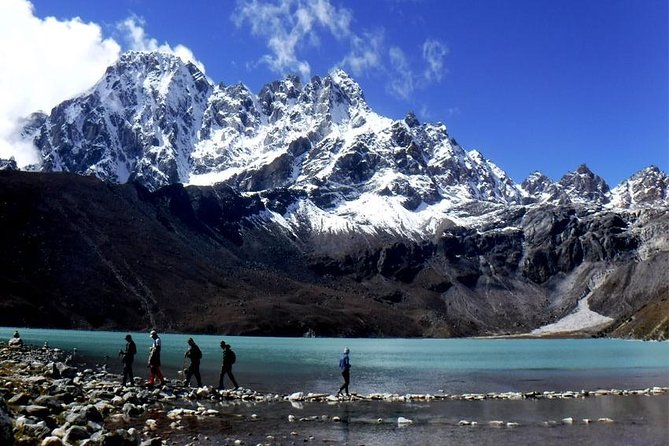
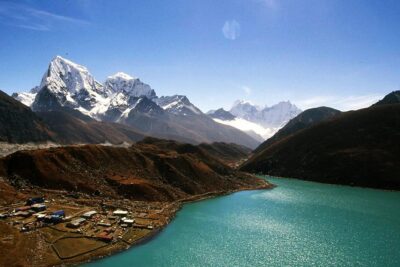
Gokyo Lakes and the climb to Gokyo Ri are interesting because the scenery does not feel like a copy of other Everest-route treks. You get that rare combo: big blue-green lakes, steep valley walls, and then a high viewpoint where multiple 8,000-meter peaks line up. It is the kind of trip where the days feel small, and the views feel huge.
Two things I really like about this package. First, the Namche Bazaar acclimatization day, with a hike that gives you altitude practice but still leaves you time to breathe and explore. Second, the main Gokyo Lakes day, where you walk from lake to lake and continue up toward the Ngozumpa Glacier, the longest glacier in Nepal.
The main drawback to consider is the physical load and the early timing, especially the steep push up to Gokyo Ri before sunrise. If you hate uphill days or you know you need more recovery time, you might find the schedule tight.
Key highlights worth noting
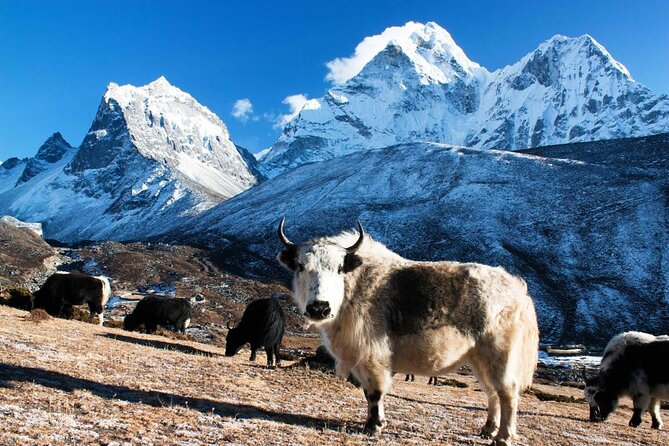
- Gokyo Ri sunrise: a steep 600-meter climb timed to catch glowing 8,000-meter peaks
- Three-lake experience: multiple viewpoints in one day, not just one quick stop
- Ngozumpa Glacier access: you reach the glacier area and see it while it still looks dramatic
- Wildlife chance: a real shot at spotting musk deer on the route toward Dole
- Small group feel: max 15 people, so the trek keeps a calmer pace
- Service that gets praised: people talk about reliable planning, including airport pickup and smooth in-country support
Why this trek works: blue lakes plus a big peak payoff
If you picture the Everest region as a straight line from one famous landmark to the next, Gokyo changes the math. The route heads away from the busiest path and into a quieter valley where the main characters are water, ice, and mountain walls. The lakes themselves are the headline, but the real wow factor is how quickly the scenery shifts from village trails to high-altitude stillness.
What makes the Gokyo approach especially rewarding is the pacing of the views. You do not get one dramatic moment and then move on. Instead, you earn the big scenes with gradual altitude, then stack them day after day: Namche views early on, then the tree-line shift, then the lakes, then finally the panorama from Gokyo Ri. By the time you reach sunrise at the peak, you are already tuned in to what the Himalaya looks like at higher elevations.
There is also a cultural layer that keeps things grounded. The trek starts with Lukla’s Sherpa villages, mani stones, and prayer wheels, then keeps drifting through small communities that still feel like real places, not just photo stops.
More of the Gokyo lakes:
- Gokyo to Everest Base Camp Trek
★ 5.0 · 113 reviews - Everest Base Camp – Cho La Pass – Gokyo Trek
★ 5.0 · 65 reviews - Everest Gokyo Valley Trek – 12 days
★ 5.0 · 27 reviews
Getting started in Kathmandu: practical comfort before the mountains
This package includes transportation to and from Tribhuvan Airport in Kathmandu, which matters more than it sounds like. When you land in Nepal, you are dealing with jet lag and paperwork, so having a smooth handoff reduces stress on day one. You also get a pickup option and a mobile ticket, which tends to simplify last-mile details.
Once you are in Kathmandu, there is also a post-trek celebration dinner. After days of trekking and early mornings, it is a nice reset to have a planned meal in the city instead of scrambling for plans on your last night.
The itinerary structure is built around getting you to the trail fast. That means you should plan to spend a lighter “first day energy budget” in Kathmandu and save your focus for the physical work ahead.
Lukla to Namche: the first taste of the Everest region
The trek kicks off with a flight from Kathmandu to Lukla early in the day. The plane route is part of the experience, since you get Himalayan views even before you start walking. After landing, you head through Sherpa villages and pass details like mani stones and prayer wheels, with mountain scenery appearing in fragments as you move downhill and uphill.
From Lukla you reach Phakding for your first proper rest stop. Then the route continues toward Namche Bazaar, which is the classic gateway town in this corner of the Himalaya. On the way, you cross several suspension bridges and follow the Dudh Koshi River bank, passing smaller villages and pine forests along the trail.
One specific thing to keep in mind: this route includes crossing the highest suspension bridge of the Everest region. That is a real mental milestone on day two, and it is also a good reminder to keep your balance steady and your pace calm.
Acclimatization day in Namche: Museum, Khumjung, and tea at altitude
On the acclimatization day, you wake up with mountain views and then shift into a slower rhythm. The goal here is not to race to another town. It is to let your body adjust to thinner air, and the plan gives you a hike that supports that.
You go toward the Sagarmatha National Park Museum and Khumjung Village. You also get the chance to see the supposed Yeti scalp at the monastery, plus major viewpoint time at places like Everest Viewpoint. If you enjoy learning while you move, this day tends to be a sweet spot: you get exercise, but you also get context for where you are trekking.
There is even a built-in stop for tea at the famous Everest hotel on the way. That small pause is more than a break. It is a chance to slow down your breathing, watch the light change on the peaks, and feel what “higher up” looks like in real life.
More to compare around Kathmandu
- Everest Base Camp Trek – 14 Days
★ 5.0 · 1,499 reviews - Everest Base Camp Trek
★ 5.0 · 842 reviews - Private Kathmandu Sightseeing Tour | UNESCO World Heritage sites
★ 5.0 · 756 reviews - Kathmandu: 7 UNESCO Sites with Lunch
★ 4.8 · 744 reviews
Leaving the main Everest trail: Mong La Danda, Dole, and musk deer odds
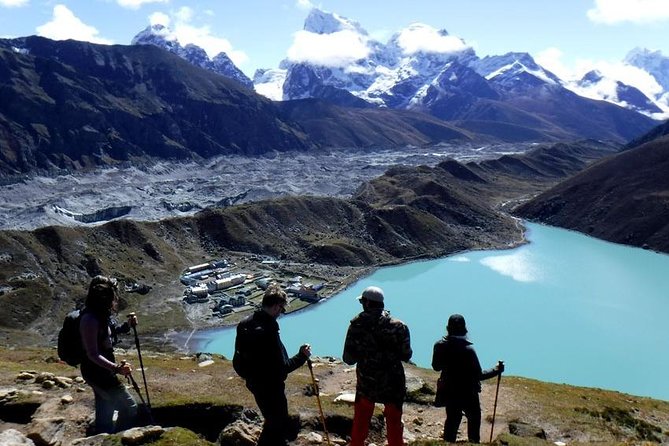
After Namche, the route splits where the Gokyo Lakes trek heads away from the Everest Base Camp path. This is one of the reasons many people prefer Gokyo: you trade some familiar crowd energy for a more focused route through the Gokyo Valley.
From the top of Namche Bazaar, you take the path toward Kyanjuma, and the trek includes a small but meaningful detail. The trail to Kyanjuma was built by Pasang Sherpa using donations given by trekkers. It is worth noticing moments like that, because it reminds you the trail is not just infrastructure. It is local involvement and ongoing community support.
As you climb, you get big views of peaks like Ama Dablam and Thamserku. Then you descend to Phortse Thanga for lunch and push onward toward Dole. Here is the wildlife note that stood out: between Phortse Thanga and Dole, you have the best chance to spot rare musk deer. You cannot control wildlife, but the timing and route are set up for that possibility, so keep your eyes open and your movements quiet.
By the time you reach Dole, you are in a small village with excellent mountain scenery and a helpful base for the next step upward.
Machhermo and the tree-line shift: quiet, river-side trekking
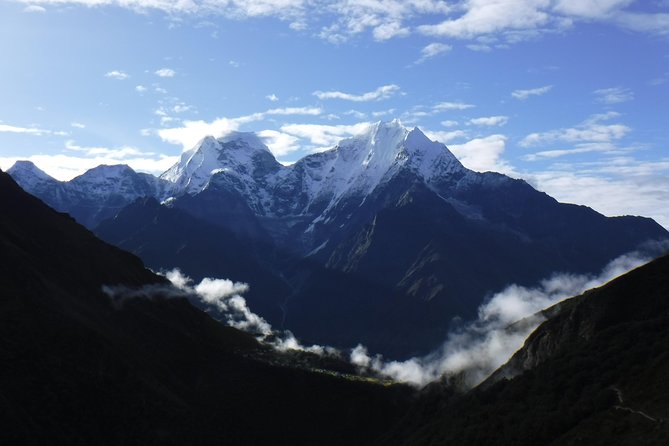
The Dole to Machhermo segment takes about four hours on a gradual uphill path. Early on, you can even catch views of Cho Oyu after a short climb from Dole. Along the way you pass smaller villages like Lafarma and Luza, which gives you rest breaks without turning the day into a checklist of constant stops.
Then comes the key change: you reach an area above the tree line. That shift matters visually and physically. Visually, the world becomes more open, so mountain views broaden. Physically, there are fewer natural shade spots and the air can feel colder once you gain elevation.
Machhermo itself is quiet and near a river. That can be a relief when you want a night that feels calm before the big lakes day. It also helps you mentally prepare for the higher altitude push that follows.
Gokyo Lakes day: tea first, then three lakes, then glacier reality
This is the day most people remember. You start early, and the route includes a tea stop along the way, which helps break the day into manageable segments. After that, you reach the first lake in about an hour, then see the second lake nearby. The third lake comes after another hour of hiking.
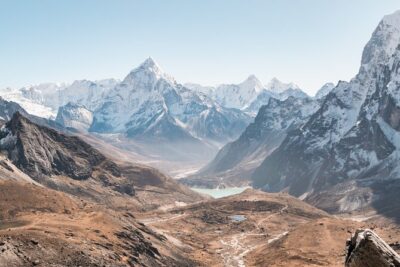
The lakes are described as blue-green, and that color contrast against the steep valley walls is exactly why this trek gets attention. The key is that you are not rushing. You walk from lake to lake, then you take in the stillness. Even lunch feels like part of the experience because you are eating with mountain and ice scenery right there in front of you.
One more specific advantage: from the third lake you get views of Cho Oyu, which adds variety to the panorama rather than repeating the same framing.
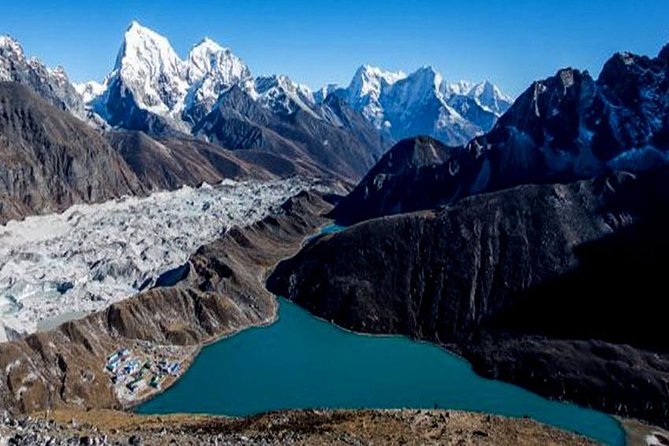
After lunch at the lakes, you walk up toward the Ngozumpa Glacier. It is the longest glacier in Nepal, and the route description notes it is melting rapidly because of climate change. I like that you are not only shown pretty scenery. You are also given a reminder that this high-altitude world is changing.
Then you continue on to Gokyo Village for your overnight, keeping you close to the next morning’s climb.
Gokyo Ri sunrise: the steep 600 meters that feels like a world view
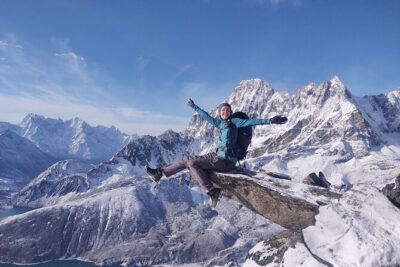
Getting to Gokyo Ri before sunrise is the main mission. The climb is steep, about 600 meters, and it is timed so you can see the peaks glowing as the light comes up.
From the summit, you get a lineup of major mountains: Everest, Cho Oyu, Lhotse, and Makalu. That is a lot of 8,000-meter perspective for one stop, and it is the moment that makes the earlier days feel worth it. It is also one of those experiences where you feel the effort in your legs, but your brain kind of goes quiet because the view is taking over.
After the sunrise moment, you head back to Gokyo Village for breakfast. Then you trek onward to Machhermo for the overnight, essentially converting your big peak day into steady progress rather than a one-off sprint.
The return to Namche and Lukla: mostly downhill, still never boring
On the way back, you start by heading down toward Namche Bazaar, passing through Dole again. The trail is mostly downhill, but there is still one uphill check: a 40-minute climb from Phortse Thanga to Mong La Danda. After that, it gets easier as you move through Kyanjuma.
Namche Bazaar returns as a final hub moment. You get time to explore and pick up souvenirs before leaving the Everest region. That little window is useful because it gives you a chance to buy what you missed earlier, without ruining your energy for the final descent.
Then you head down toward Lukla. The schedule includes crossing six suspension bridges and passing several Sherpa villages. You also stop for lunch in Phakding before continuing on toward Lukla. The last day is not just about distance. It is about saying goodbye to the mountains with less time to stare and more time to enjoy the trail rhythm.
Finally, you spend the last night in Lukla, so you are not rushing overnight travel on top of your final hiking day.
Price and logistics: what you get for about $1,686 per person
At $1,686.67 per person for about 10 days, value comes down to what is truly included and how smoothly it runs. From the package details, you get several concrete inclusions: transportation to and from Tribhuvan Airport, a first aid kit, service charge and government taxes, and a post-trek celebration dinner in Kathmandu. Meals are also mostly covered, with 10 breakfasts, 10 lunches, and 9 dinners listed.
Add to that the operational side you can infer from the way the trek is set up. This is a planned route with flights between cities and a structured schedule that hits Lukla, Namche, the Gokyo Valley, and the return. In feedback, people specifically praised reliability and the fact that the company arranged pickup from the airport and drop-off back to it.
There is also a human factor that shows up in the named support roles. In past experiences shared for this operator, a guide named Lhakpa was described as reliable and fun, while Kishwor in the office handled questions promptly and kept the itinerary running smoothly. Other guidance and porter teams mentioned include people like Sarki Sherpa, Pemba, Sushant, and Prem. Those names matter because they suggest you are not just getting a spreadsheet. You are getting staffed support during long days.
Is it perfect value? Not entirely. The package does not include personal shopping or extras, and it specifically lists that shower and electronic charging fees at guest houses are not included. Also, alcoholic drinks, chocolates, tea, and coffee are not included, so budget for small comforts.
Still, for a trek that hits Everest-region highlights and includes most core meals plus airport transfers, the price feels more justified than many “budget” Nepal offers that later nickel-and-dime essentials.
Who this trek suits, and what to watch for
This trek is for people with moderate physical fitness. You are hiking every day, with a standout steep push at Gokyo Ri before sunrise. If your workout routine includes long uphill hours and you feel comfortable with early starts, you are in the right zone.
Weather is another factor baked into how Nepal treks operate. This experience requires good weather, and the cancellation guidance says that if it is canceled due to poor weather, you will be offered a different date or a full refund. That is important because flights and mountain conditions can change quickly, especially in high-altitude areas.
Altitude is the quiet challenge throughout. Even with an acclimatization day in Namche, you are still gaining elevation, and the air gets thinner. The itinerary itself treats acclimatization seriously, including the museum and Khumjung hike day. Follow that rhythm and do not try to “win” the trek by rushing.
Finally, small group size helps. With a maximum of 15 people, you typically get a calmer pace and less crowd pressure on trails and viewpoints.
Should you book this Gokyo Lakes and Gokyo Ri trek?
I would book this if you want the Everest region without feeling locked into the busiest route, and if you are chasing a specific promise: multiple stunning lake scenes plus a real sunrise summit at Gokyo Ri. The itinerary design puts the hardest effort where it counts, and it gives you an acclimatization day that makes sense.
I would think twice if you know you struggle with steep, early climbs or if you want a lot of slack time. The schedule includes a steep push to the peak before sunrise and then keeps you moving the next day.
If that effort level fits you, this trek has a strong mix: real Sherpa village trekking, meaningful viewpoints, and that one clear moment where Everest-region peaks feel close enough to count.
FAQ
What is the duration of this Gokyo Lakes and Gokyo Ri trekking package?
It runs for 10 days approximately.
Do I get transportation from the airport in Kathmandu?
Yes. Transportation to and from Tribhuvan Airport is included.
Is pickup offered?
Yes, pickup is offered.
What meals are included during the trek?
Breakfast is included 10 times, lunch is included 10 times, and dinner is included 9 times.
What is the highest point on the route?
The trek includes reaching Gokyo Ri at 5,357 meters (17,575 feet).
How large is the group?
This experience has a maximum group size of 15 people.
Do you get a first aid kit?
Yes, a first aid kit is included.
Is international airfare included?
No. International airfare is not included.
What if weather is poor and the trek cannot run?
The experience requires good weather. If it is canceled due to poor weather, you are offered a different date or a full refund.
Latest Kathmandu write-ups
- Langtang Valley Trek★ 5.0 · 3 reviews
- Khopra Danda Trek★ 5.0 · 3 reviews
- Langtang Valley Trek from Kathmandu★ 5.0 · 3 reviews
- 5 night / 6 days Kathmandu Nagarkot Chitwan Pokhara tour★ 5.0 · 3 reviews
- Nepal Highlights Tour: 5 Nights 6 Days Kathmandu & Pokhara Tour★ 5.0 · 3 reviews
- Kathmandu Valley Private Day Tour★ 5.0 · 3 reviews
- Conquer the Himalayas: The Ultimate 16-Day Annapurna Circuit Trek★ 3.5 · 3 reviews
- Kathmandu Heritage Day Tour★ 5.0 · 3 reviews
Gokyo Lakes Trek, compared.

Landing Private Helicopter at Everest base camp & Gokyo for photo
Read our review →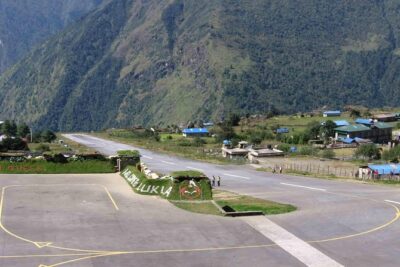
Browse the lists this tour appears in