
Reviewed · EVEREST BASE CAMP TREK
Everest Base Camp with Gokyo Lake 17 Days
This Everest Base Camp with Gokyo Lake trek is interesting because it mixes two big rewards: Gokyo Lake and the Everest viewpoint option at Kala Patthar, with the added challenge of the Cho La Pass crossing. It is not just a one-note hike. I especially like that you also get a good chunk of time in Khumbu villages, plus a monastery stop later on.
The main drawback to consider is the altitude workload. You will climb high, sleep high, and then do some big days around major passes, so you need moderate fitness and a steady pace.
What also makes this feel manageable is the “systems in place” approach: airport transfers in Kathmandu, city hotel, trekking permits handled, and a small group size capped at 18. Guides I have seen associated with this route include Pemba and Pasang, and that matters because friendly, clear guidance reduces stress when the trail gets steep.
Key highlights to know before you go
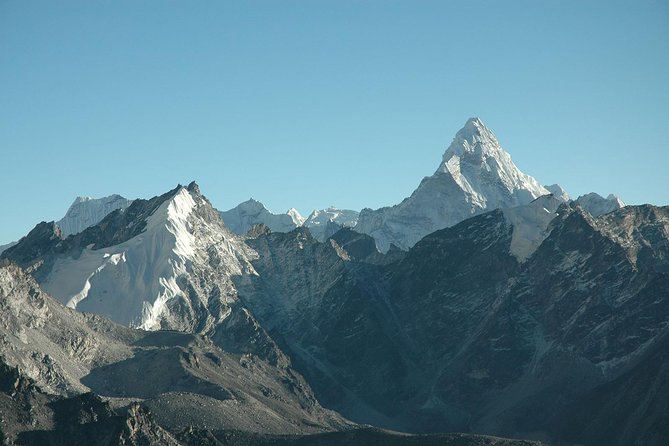
- Gokyo Lake plus a ridge day at Gokyo Ri for big views
- Cho La Pass (5,420m) to connect the Gokyo side to the Everest route
- Two Everest viewpoint options: Everest Base Camp or Kala Patthar
- Small group max 18 people, plus a guide and porter support setup
- Permits included: TIMS and the trekking permit for Sagarmatha National Park
- Meals and lodging covered during the trek, with tea or coffee
The big idea: Everest Base Camp and Gokyo, with Cho La in the middle
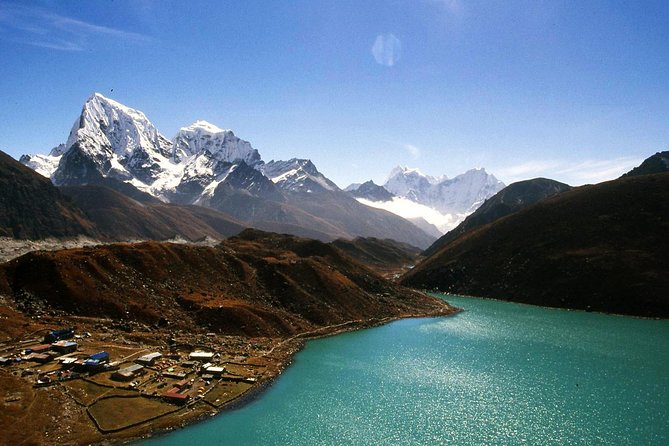
Most Everest treks promise the same headline. This one earns a second headline. You are still going to the Everest region, but you also spend meaningful time around Gokyo Lake, a set of high-altitude waters that feels almost otherworldly at elevation.
That lake chapter also changes the vibe. Instead of only chasing the Everest photo angle, you get long sightlines across the Khumbu area, plus a sunrise style climb opportunity later on. Then the route turns serious, with the Cho La Pass day that brings real altitude and a full-on mountain feel.
If you like trips that give you variety, not just repetition, this route fits. If you hate long travel days and steep climbs, you should think twice, because the itinerary is built around sustained effort at altitude.
More ways to walk to Everest Base Camp:
- Everest Base Camp Trek – 14 Days
★ 5.0 · 1,499 reviews - Everest Base Camp Trek
★ 5.0 · 842 reviews - Everest Base Camp Helicopter Tour landing at Everest View Hotel
★ 5.0 · 668 reviews
Kathmandu first: hotel comfort and time to get your bearings
You start in Kathmandu, with an arrival transfer to a three-star hotel for the first night. The package includes airport pick up and departure, plus local transport by A/C car and tourist deluxe bus during the Kathmandu portion.
This matters more than it sounds. Kathmandu can be loud and confusing after long flights. A real bed, breakfast, and a smooth transfer lets you focus on the only thing that needs focus: getting yourself ready for the flight to Lukla and the hike after.
Also, the experience includes a special cultural show and a farewell dinner program. That is a nice way to keep the trip connected to Nepal beyond just mountains and oxygen.
The Lukla jump: why your trip starts with an airplane
After Kathmandu, you fly to Lukla and begin trekking from there. Lukla sits at about 2,620m, so you start high, not at sea level. That is one reason this itinerary builds in acclimatization rather than rushing straight upward.
Expect the first trekking day to feel like a warm-up, but it is still work. The first leg goes to Phakding (about 2,620m to similar early-elevation terrain depending on your exact night). It is a gentler way to get used to the walking rhythm before the real climb days.
Route walkthrough: Phakding to Namche Bazaar for acclimatization that actually matters
You trek from Lukla toward Phakding, then continue to Namche Bazaar at about 3,420m. Namche is where the trip starts to feel like a true Everest base for hikers: you are higher, the air is thinner, and the town becomes your altitude checkpoint.
The itinerary then gives you a full acclimatization and exploration rest day at Namche. That day is not filler. A rest day at around 3,420m is exactly how you reduce the risk of pushing too hard too fast.
What you should do on that day is simple: keep moving lightly, drink water, and take it easy. This is the day where you decide if you will treat the trek like a sprint or like a long mountain partnership with your body.
More of the Gokyo lakes:
- Gokyo to Everest Base Camp Trek
★ 5.0 · 113 reviews - Everest Base Camp – Cho La Pass – Gokyo Trek
★ 5.0 · 65 reviews - Everest Gokyo Valley Trek – 12 days
★ 5.0 · 27 reviews - Landing Private Helicopter at Everest base camp & Gokyo for photo
★ 5.0 · 20 reviews
Namche upward: Dole and Machhermo as the “keep climbing” section
From Namche you climb to Dole (about 4,110m, roughly a 6 hour day) and then onward to Machhermo (about 4,410m, typically 3 to 5 hours). These are not just trail stops. They are pacing anchors.
The practical reason is altitude. You are gaining elevation in steps, not jumping randomly. That helps you adapt, and it also sets expectations for your energy level on the lake days ahead.
If you usually walk fast on flat ground, watch that habit here. At altitude, your body punishes “fast” more than it punishes “consistent.” Think steady, short strides, and fewer stops that are still purposeful.
Gokyo and Gokyo Ri: where the trek shifts from Everest grind to lake country
You reach Gokyo at about 4,760m. This is a key emotional moment on the route. Gokyo is where the itinerary’s theme becomes real: sacred waters of Gokyo Lake and some of the most memorable high-elevation scenery you can get on a trek.
Then comes a day hike to Gokyo Ri, followed by trekking onward to Thagnak (about 4,678m). A ridge day at Gokyo Ri is the kind of effort that pays you back hard. You will be high enough to feel the mountain scale, but not so high that everything becomes a slog.
Two tips that tend to work well on this section:
- Start early and keep your pace calm on uphill sections.
- Dress in layers. The wind can change quickly at elevation, and you want to stay comfortable without overheating.
Cho La Pass to Dzonglha: the serious crossing day
The trip then tackles Cho La Pass, around 5,420m, on the way to Dzonglha. This is the itinerary’s big “mountain math” day. You are at the high point of the route, and your legs and breathing need to be ready.
You can expect the day to feel longer and tougher than the numbers alone suggest. Pass days demand focus. The route quality, weather, and snow or trail conditions can shift your effort.
Plan mentally for this as the day where your form matters more than your speed. If you keep your breathing steady and don’t race, you will arrive at Dzonglha in better shape for the next descent and reset.
Lobuche, Gorak Shep, and the EBC options: choose your Everest moment
Next you trek to Lobuche (about 4,940m) and then onward to Gorak Shep (about 5,147m). From Gorak Shep, you get a morning option for either Everest Base Camp (about 5,365m) or Kala Patthar (about 5,550m), then continue on to Pheriche (about 3,950m).
This “choose your moment” structure is valuable. Base Camp is the classic goal, but Kala Patthar is the highest viewpoint option listed here and often feels like the more dramatic angle on Everest and the surrounding peaks, simply because of the elevation.
In practical terms, I would choose based on how you feel that morning:
- If your altitude symptoms are mild and you want the closest Base Camp experience, consider the Base Camp option.
- If you want the highest viewpoint effort and you are feeling strong, Kala Patthar makes sense.
Either way, after the high morning, the trek to Pheriche is a relief because you drop down to around 3,950m. That descent helps you recover before the final monastery and return days.
Tengboche and the way back: monastery day and the winding valley rhythm
On the way back, the itinerary includes Tengboche (about 3,860m) and then Monjo (about 2,635m). Tengboche is described as a major monastery stop, and this is where the trip connects back to Khumbu culture in a visible way.
After Monjo, you head back toward Lukla (around 2,840m), then fly back to Kathmandu. The last days feel different because you are not just climbing now. You are unwinding, walking out the rhythm you practiced earlier, and letting your body process the fact that you did it.
There is a payoff in that final pacing. It gives you time to enjoy the fact that Nepal’s mountain world is more than a single peak. It is villages, prayer spaces, and daily life at altitude.
“What you get for $1,480”: where the value really shows up
At $1,480 per person, the value comes from what is included, not from the headline number. This is not a bare-bones trekking-only deal.
Key inclusions that usually save real money and hassle:
- Permits: includes the TIMS card and trekking permit
- Guide and porter support: guide salary, accommodation, meals, insurance included; porter system for baggage (for two guests, one Sherpa porter)
- Lodging and meals during the trek: breakfast, lunch, dinner, plus tea or coffee
- Hotel in Kathmandu: three-star category, twin sharing with breakfast
- Local transportation: A/C car and tourist deluxe bus during trip days
- Gear support if needed: sleeping bag and down-jacket provided if you need them for the trek
- Trip extras: T-shirt and a trip achievement certificate, plus a cultural show and farewell dinner
What you do not get (and should plan for):
- International airfare to Nepal
- Travel insurance
- Tips
- Extra meals in Kathmandu and personal expenses
- Bar bills and entrance fees not covered
So you are paying for the trip machine: permits, staffing, and food. That is what you want on a high-altitude route where delays and confusion cost energy.
Meals, lodges, and gear: how to stay comfortable without overpacking
The itinerary includes full meals during the trekking days, with breakfast, lunch, and dinner, plus tea or coffee. That matters because at altitude, you do not want to play meal scavenger hunt. You want predictable fuel.
Lodging is covered too, with trekking lodge accommodations included during the trek. In the real world, lodge quality can vary. The good news here is that the package accounts for lodging rather than leaving you to improvise nights at elevation.
Gear-wise, the big question is warmth. The experience notes that sleeping bag and down-jacket support is available if you need it. That is a practical benefit if you travel light or if you do not already own solid cold-weather gear.
If you rent or use provided gear, still bring layers you trust, plus a hat and gloves. On high passes and early mornings, being slightly underdressed is not a fun kind of learning.
Fitness, pace, and altitude: the real decision point
The trek is listed for people with moderate physical fitness. That is believable because the itinerary keeps you moving up and down over many days, with pass work at high elevation.
Altitude handling is a core part of this route design. There is an acclimatization day in Namche, and there are also elevation steps that prevent nonstop climbing. You still need to play your part:
- Walk slower than you think you should.
- Drink water consistently.
- Keep a steady rhythm on climbs.
Also note the elevation markers built into the plan. You climb from Lukla up toward Gokyo at roughly 4,760m, then go to the Cho La Pass high point around 5,420m, and later reach 5,550m for the Kala Patthar option. That is high altitude. Give yourself time to feel normal.
If you have any medical concerns about altitude, talk to a clinician before you go. This is not a place to gamble.
Who this trek suits best
This fits best if you want:
- Everest Base Camp plus the Gokyo Lake experience in one trip
- A route that includes a pass day and a high-altitude viewpoint choice
- A guided, organized plan with permits, meals, and lodge stays handled
It may not be ideal if you want a relaxed, low-effort trek. The itinerary includes long days and big elevation swings. It is also not a solo self-guided hike. You are paying for support, and you will use it.
Also, it is a small group experience with a max of 18 travelers, so it is social without being chaotic.
Should you book this Everest Base Camp with Gokyo Lake trek?
If you want Everest, but you also want Gokyo Lake and the Cho La Pass storyline, this is a strong match. The value is in the included permits, staff support, and food plan. And the itinerary is built around real acclimatization and elevation management, not just checking boxes.
I would book if you are comfortable with high altitude walking and you can commit to a steady pace. I would pause if you have limited hiking ability or you know you struggle with elevation.
Final tip: pack for cold, keep your pace calm, and trust the altitude rhythm. This trip rewards people who treat it like a process, not like a race.
FAQ
How long is the Everest Base Camp with Gokyo Lake trek?
The duration is listed as approximately 14 to 19 days, depending on how the days play out.
What is included in the price?
The price includes airport pick up and departure, transportation, a three-star Kathmandu hotel with breakfast, trekking lodge accommodations, a guide and their support, porter support for baggage, trekking permits (TIMS card and trekking permit), full meals during trekking (breakfast, lunch, dinner) with tea or coffee, and a first aid medicine item. It also includes a T-shirt and a trip achievement certificate, plus a cultural show and farewell dinner.
Do I get meals during the trek?
Yes. Meals during trekking are included as breakfast, lunch, and dinner, with tea or coffee.
Do I need to bring a sleeping bag or down jacket?
The experience notes that sleeping bag and down-jacket support is available if you need it during the trek.
What is not included in the package?
Not included are extra meals in Kathmandu and personal expenses, bar bills, some tour entrance fees, international airfare, travel insurance, and tips for the trekking crew.
What is the cancellation policy?
You can cancel up to 24 hours in advance of the experience start time for a full refund. If you cancel less than 24 hours before, the amount paid is not refunded.
Latest Kathmandu write-ups
- Langtang Valley Trek★ 5.0 · 3 reviews
- Khopra Danda Trek★ 5.0 · 3 reviews
- Langtang Valley Trek from Kathmandu★ 5.0 · 3 reviews
- 5 night / 6 days Kathmandu Nagarkot Chitwan Pokhara tour★ 5.0 · 3 reviews
- Nepal Highlights Tour: 5 Nights 6 Days Kathmandu & Pokhara Tour★ 5.0 · 3 reviews
- Kathmandu Valley Private Day Tour★ 5.0 · 3 reviews
- Kathmandu Heritage Day Tour★ 5.0 · 3 reviews
- Conquer the Himalayas: The Ultimate 16-Day Annapurna Circuit Trek★ 3.5 · 3 reviews
Everest Base Camp Trek, compared.



Everest Base Camp Helicopter Tour landing at Everest View Hotel
Read our review →


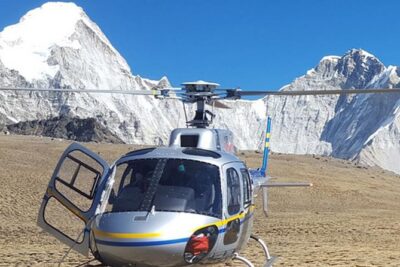
Everest Base Camp Helicopter Tour landing at Hotel Everest View
Read our review →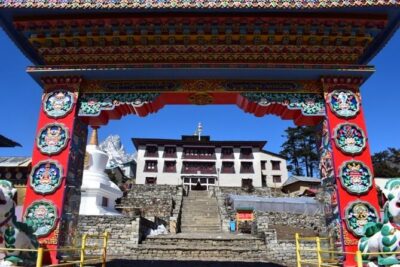
Browse the lists this tour appears in