
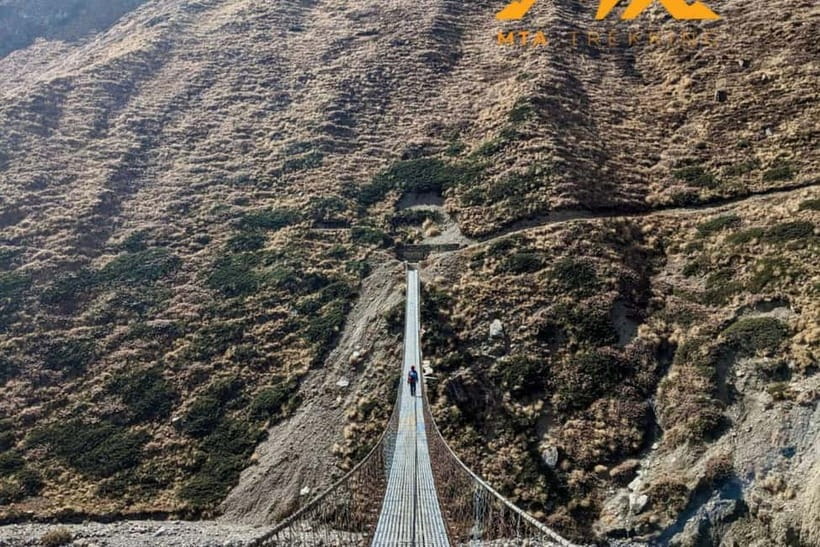
Reviewed · ANNAPURNA CIRCUIT TREK
Kathmandu: 8-Day Annapurna Circuit Trek via Thorong La Pass
Trekking the Annapurna Circuit to Thorong La Pass is interesting because it mixes big high-mountain effort with everyday village life and a real change of scenery, fast. I especially like the way the route highlights Upper Pisang mountain views and how it lands you at Muktinath, a sacred pilgrimage area that feels totally different from the trail.
The main drawback to consider is the challenge level. This itinerary can feel fast-paced for people who are not used to altitude, even with an acclimatization day in Manang. If you get altitude symptoms easily, you should think hard before booking.
Key points before you go
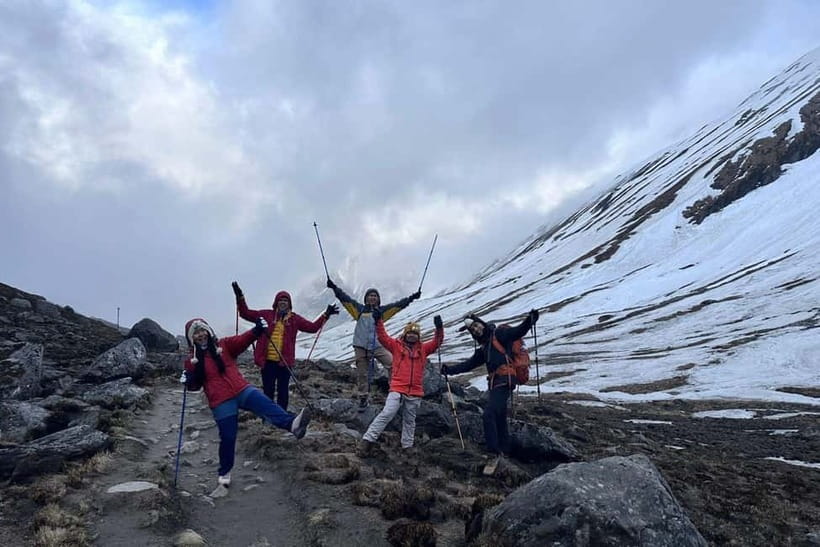
- Upper Pisang views: you’ll spend time in the Pisang area with strong views of nearby peaks
- Thorong La Pass at 5,416m: an early start helps you deal with wind and conditions
- Muktinath Temple time: pilgrimage stops and shrine exploring after the pass crossing
- Manang acclimatization day: a full rest day to slow down and adjust
- Kali Gandaki Gorge descent: dramatic canyon terrain after the high point
Thorong La Pass at 5,416m, and why the early start matters
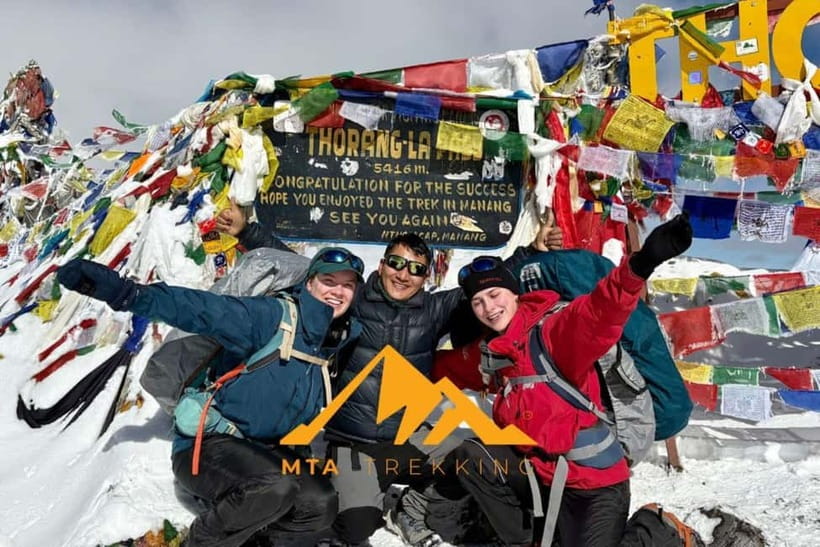
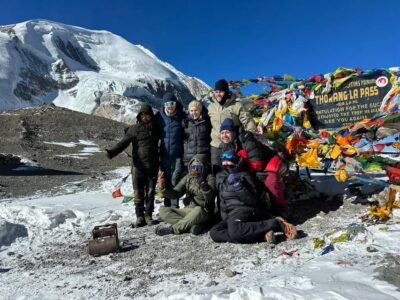
Thorong La Pass is the reason most people do this trek, and it shows. You’re going up to 5,416 meters, and the plan has you starting very early, around 4 AM, to avoid stronger winds on the pass. That timing is not a small detail. On this kind of day, early momentum helps you stay warm, keep your pace steady, and move through the sketchy part of the route before conditions shift.
I like that the crossing is done with a guide who focuses on safe movement. At this altitude, you don’t need constant speeches. You need good decisions, regular check-ins, and help interpreting what you’re seeing out there, especially when snow and prayer flags make everything look dramatic (because it is).
More of the Annapurna Circuit:
- Kathmandu: 10-Day Adventurous Annapurna Circuit Trek
★ 5.0 · 25 reviews - 13 Days Trekking in Annapurna Circuit
★ 5.0 · 4 reviews - 14 Days Annapurna Circuit Trek
★ 5.0 · 4 reviews
Getting from Kathmandu to Chame: a long travel day you can actually handle
Day 1 is a ground-transport double hit. You drive from Kathmandu to Besisahar first, then switch to a local jeep to continue to Chame. It is a 9 to 10 hour drive day, plus another 3 to 4 hours on the jeep leg, so it is not “light travel.”
The practical takeaway: start early in Kathmandu, pack snacks you can reach easily, and aim to arrive rested. Chame is where trekking really begins the next day, and teahouse beds here matter because your legs will be doing math tomorrow, not sightseeing.
You’ll also get a taste of Nepal that feels grounded and alive, not only tourist-focused: green hills, river valleys, and villages along the road.
Chame to Pisang: pine forests, apple country, and those classic mountain angles
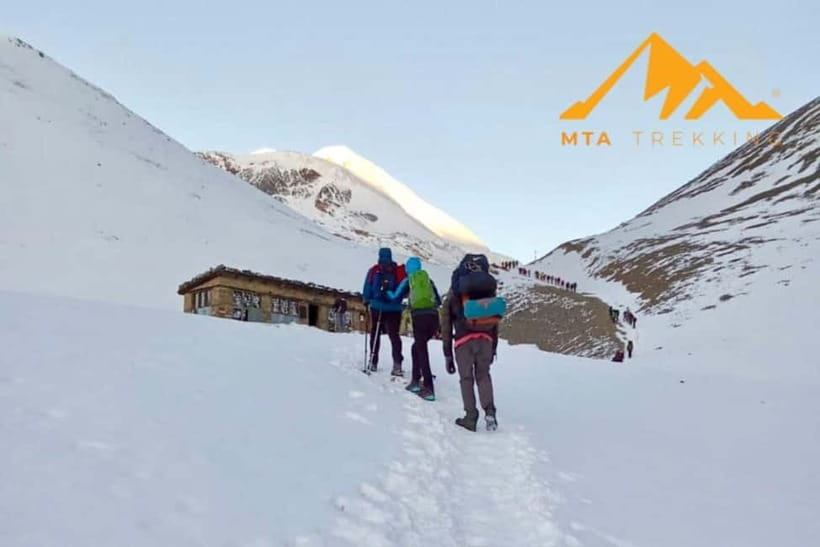
Day 2 starts in Chame with a trek through pine forests and apple orchards. It’s a nice warm-up. You’re moving, but the terrain is varied enough that your mind stays busy. After a suspension bridge, you climb up toward Dhukur Pokhari for lunch.
What I like about this day is that it gives you mountain payoff without instantly throwing you into the highest altitude stress. You keep earning your elevation.
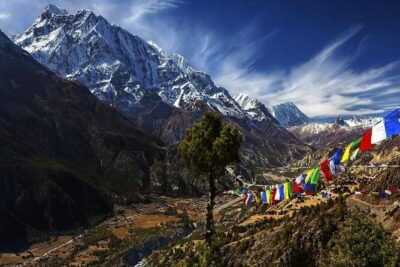
By the time you reach Pisang, you’re not just staying in a village. You’re stepping into a place known for views. The route description highlights scenery around Annapurna II, Annapurna IV, and Pisang Peak, and you also get time to explore both Upper Pisang and Lower Pisang before your teahouse night. That extra village wandering matters because it helps you feel the scale of the mountains, not just stare at them from one spot.
Pisang to Manang: Braga, monastery stops, and suspension bridges that keep you awake
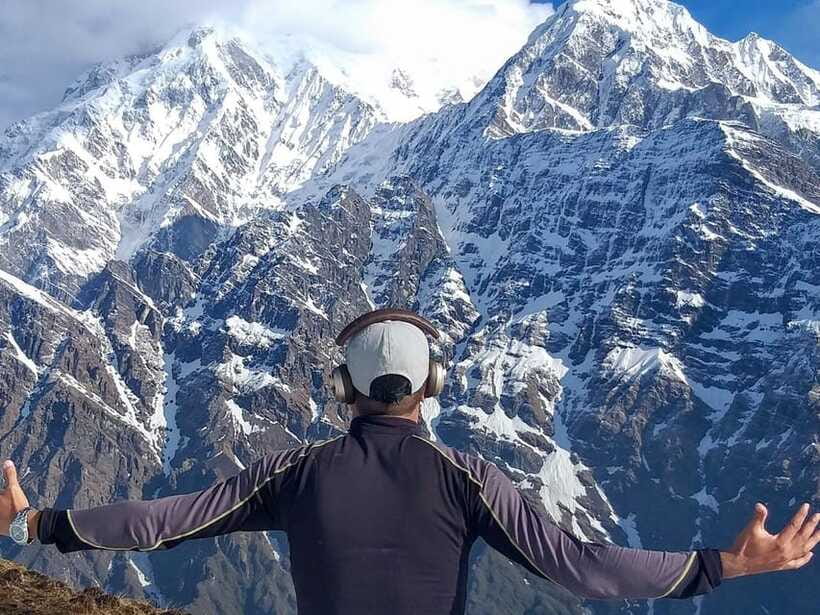
Day 3 is a steady trek from Pisang to Manang (about 5 to 6 hours). The trail moves through pine valleys, then you pass through Braga. There’s also mention of a hillside monastery you can visit if it is open, which is one of those small cultural moments that makes the trek feel more human.
Again, suspension bridges show up. They are not just cute engineering. They remind you you’re on a working route where local life continues alongside trekking.
When you arrive in Manang, you settle into a teahouse and shift from “walking day” mode to “adjusting day” mode. Manang is where the Annapurna region starts to feel more high, more dramatic, and more alpine in character.
More to compare around Kathmandu
- Kathmandu: 7 UNESCO Sites with Lunch
★ 4.8 · 744 reviews - Everest Base Camp Helicopter Tour landing at Everest View Hotel
★ 5.0 · 668 reviews - Kathmandu: Local Women-Led Nepali Cooking & Momo Class
★ 4.9 · 360 reviews - Manaslu Circuit Trek
★ 5.0 · 292 reviews
Manang acclimatization day: the best day to be boring on purpose
Day 4 is an acclimatization day in Manang. You’re building in time to reduce the risk of altitude sickness, and that is the right call. This is also the day when you can decide if you need shorter walks, slower meals, and more time taking it easy.
The plan includes time to explore at a relaxed pace: viewpoints, monasteries, and a cultural museum. There’s even an optional short hike concept tied to glacial lakes with views of Gangapurna and Tilicho peaks. I like that the options are there, but the day is still framed as rest and adaptation first.
Use this day for what it’s for. Walk a bit, breathe, look around, and then return before you feel tempted to overdo it. Even with this rest day, the trek is still demanding, and that matters if you are not young or not very altitude-fit.
Manang to Yak Kharka: steady climb, animal encounters, and fewer distractions
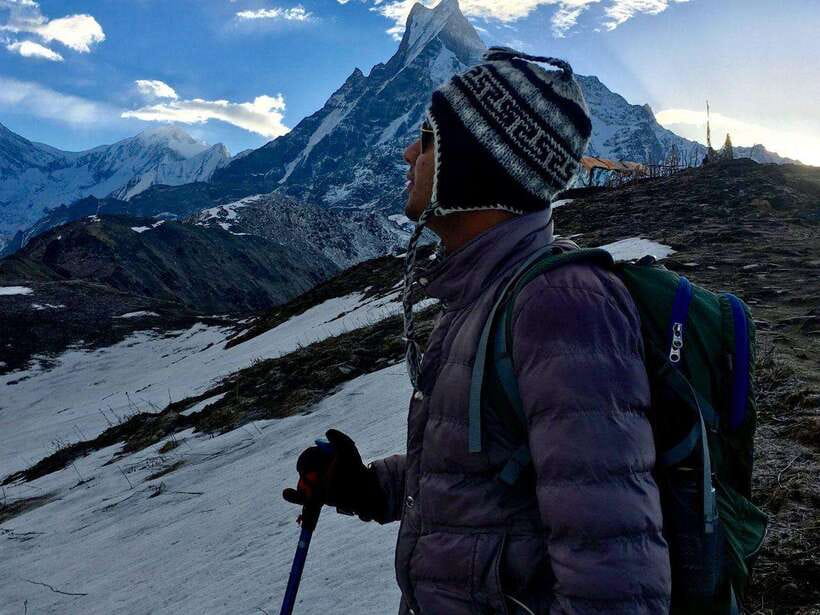
Day 5 moves from Manang to Yak Kharka (around 4 hours). The route climbs past Tengi and gives you chances to see locals moving through the area with pack animals. That’s part of what makes the Annapurna Circuit feel real. You’re not hiking through an empty museum. People live here and move here.
Lunch is suggested in Gunsang, with views of Annapurna II and Annapurna IV, then you continue through juniper forests to Yak Kharka. This day is not about rushing. It’s about keeping your rhythm.
I find Yak Kharka a good kind of stop: not flashy, but it sets you up for the next stage, where the trek starts to feel like it is building toward Thorong La.
Yak Kharka to Thorong Phedi: your pre-pass base camp moment
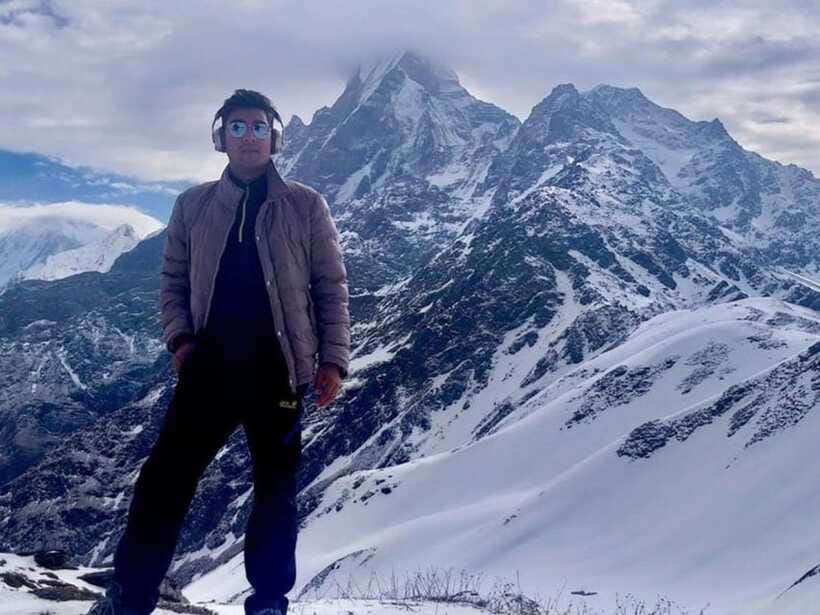
Day 6 takes you to Thorong Phedi (about 4 to 5 hours). This is the runway toward the big crossing. The trek moves across alpine pastures with roaming horses and mention of Himalayan griffons overhead.
It’s also where you start to notice conditions changing, even if you’re not looking for it. The air feels sharper. The ground can look more serious. You also cross another suspension bridge and then deal with rocky slopes near the end of the day.
You arrive at Thorong Phedi, described as the base camp for Thorong La Pass, and you rest there and prepare for tomorrow’s early crossing. This is where good sleep habits pay off. Keep your pack organized, avoid big risky energy moves, and focus on being ready at 4 AM, not “ready sometime after sunrise.”
4 AM over Thorong La to Muktinath: the pass, the gorge, and the pilgrimage switch
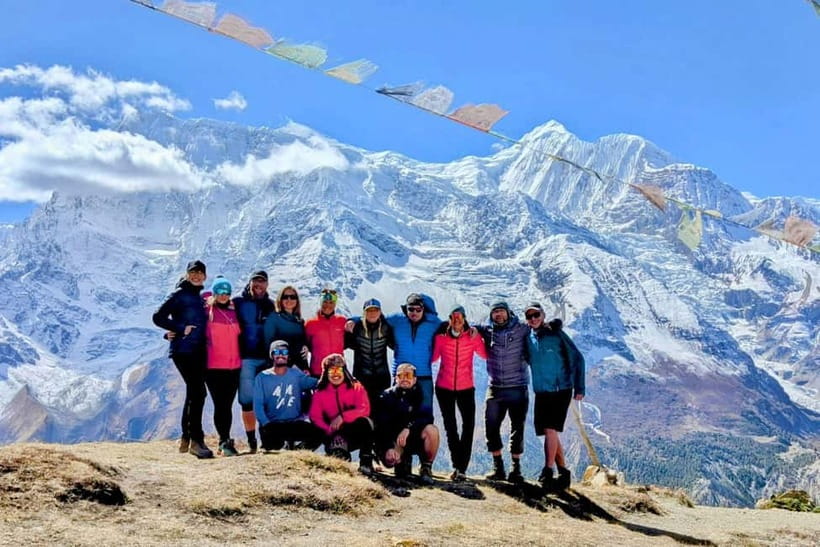
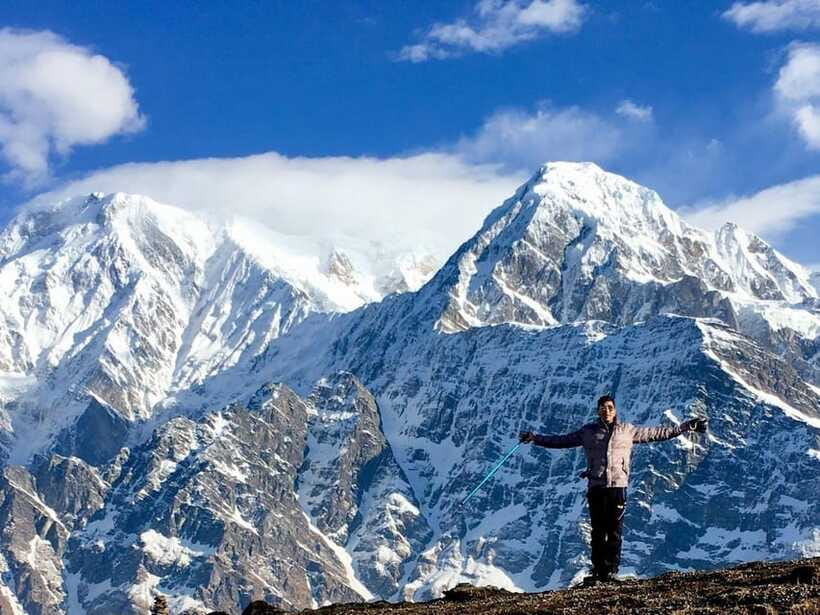
Day 7 is the big one, about 7 to 8 hours. You start around 4 AM to cross Thorong La at 5,416 meters, and the description specifically calls out avoiding strong winds. You’ll be watching for snow-capped peaks and prayer flags fluttering, which is both beautiful and slightly surreal because you’re so high and so exposed.
Your guide’s role is real here. At altitude, navigation and pacing become safety issues, not just logistics.
After you cross the pass, you descend into the Kali Gandaki Gorge, described as one of the world’s deepest. That descent changes the whole feel of the trek. You go from high open terrain to a dramatic canyon environment.
Then you reach Muktinath, a pilgrimage site for Hindus and Buddhists. This is a meaningful switch in tone. You go from climbing and wind and breath control into temples and shrines. Even if you’re not religious, it helps to see how many people come here for spiritual reasons, and it makes the day feel bigger than a sports challenge.
You spend the night at a teahouse after the crossing, which is exactly what you need, because your body will be working through the long day for a few hours after you stop moving.
Muktinath to Pokhara by local bus: long ride, big relief
Day 8 is about transitioning to comfort. You drive from Muktinath to Pokhara by local bus, about 9 to 10 hours. It’s a long ride after a high pass day, so plan for a quiet finish, bring anything you need for sitting comfortably, and take hydration seriously.
Once you arrive, you check into Hotel Orchid in Pokhara, described as a tourist standard luxury hotel. Then you get to do the fun part of recovery: explore the lakeside streets, eat what you want, and let your body settle.
This ending matters more than people think. A trek like this is not just movement, it is stress plus effort. A proper reset day in Pokhara helps you feel proud of what you did instead of just wiped out.
Value for $348: what this price really buys you, and what you should budget
This trek lists a price of $348 per person, and for that number you’re getting the skeleton of a smooth, managed trek: transportation tied to the itinerary, trekking permits and required paperwork (including TIMS fee(s)), guide services, and teahouse or lodge accommodation for 7 nights, plus one hotel night in Pokhara. You also get a farewell Nepalese typical dinner in lakeside Pokhara.
What makes this good value is that the heavy-lift logistics are handled. You are not trying to coordinate permits, transfers, and nightly sleeping arrangements yourself while also dealing with altitude.
Two things you should budget for separately:
- Porter support is optional, listed at $20 per day
- Many extras are not included, like mineral water, hot shower, and hot water, plus other drink items depending on your package
Also, meal inclusion depends on the package type. The plan says all meals are included during the trek for a Full Package, while standard packages do not include every meal. Before you commit, clarify which meal level you’re buying so you don’t get surprised by paying for lunch or dinner later.
Guides show up repeatedly in the feedback with praise for friendliness, attentiveness, and experience. Names that come up include Chakra, San Bhai, Shishir, and Ghanshyam, and the consistent theme is that you feel secure and supported, especially on the pass day.
Teahouses, food, water, and the packing checklist that actually helps
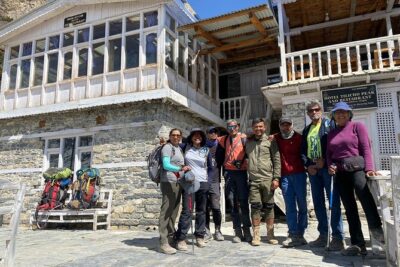
This is a tea house trekking route, meaning your nights are in tea houses or lodges during the trek. That’s great for comfort, but it also means you should pack like showers are a maybe, not a guarantee.
What to bring, based on the provided guidance:
- Warm clothing for cold mornings and high altitude
- Sunglasses and sunscreen for glare
- Comfortable trekking clothes that can handle sweat and cool air
- Travel insurance
- Your passport, with copies accepted, plus an ID card and copy
One gear point that deserves attention: you’re asked to bring your own sleeping bag for winter treks in November to December, or to contact the provider to arrange a rental. That’s not upselling. Cold nights up high are the difference between sleeping and suffering.
You also should plan around water and drinks. Mineral water and tea or coffee beyond breakfast are noted as not included, and hot water or hot showers may cost extra or be limited. Keep cash for small purchases and treat hydration like part of training.
Who should do this trek, and who should skip it
This route is not for everyone. The plan explicitly says it is not suitable for:
- Pregnant women
- People with altitude sickness
- People over 70 years
If you fall into the “not sure” zone, be honest about how you handle altitude and pace. Even with the Manang acclimatization day, the itinerary still moves between villages in a way that can feel busy for people who are slower walkers.
This tour is a strong match if you:
- Want a classic Annapurna Circuit experience that finishes at Muktinath
- Prefer organized logistics with an English-speaking guide
- Like culture as much as the views, since you get temple and monastery time
- Are comfortable doing early starts when conditions are best (like the pass day)
It might not be the best match if you want a slow, scenic meander with lots of extra buffer days.
Should you book this Annapurna Circuit via Thorong La Pass trek?
If you want the core Annapurna Circuit story, plus the big pass and a real pilgrimage finish, this itinerary is a solid choice. The value is strongest when you want permits, guides, teahouse nights, and ground transport arranged so you can focus on walking and adapting.
Book it if you can handle a demanding trek with an early 4 AM pass crossing, and you know you’ll take the Manang rest day seriously. Consider a different pace or extra help (like a porter, if you choose) if you expect fatigue to hit fast.
Finally, I’d base your confidence on the guide factor. The route descriptions and feedback stress that guides like Chakra, San Bhai, Shishir, and Ghanshyam keep things safe and supportive. If that matters to you, you’ll likely appreciate how this trek is run.
FAQ
How long is the Annapurna Circuit trek via Thorong La Pass?
The trek duration is 8 days.
What is the highest point on this trek?
The highest point is Thorong La Pass at 5,416 meters.
Are trekking permits and paperwork included?
Yes. Trekking permits, necessary paperwork, and the Trekkers’ Information Management System fee(s) are included.
Where do I stay during the trek and at the end?
During the trek, you stay in tea house or lodge accommodation for 7 nights. After that, you have 1 night at a tourist standard luxury hotel in Pokhara (Hotel Orchid).
Are meals included?
Meals are included for the Full Package during the trek (breakfast, lunch, dinner). For the Standard Package, meals are not included unless otherwise specified.
Do I need a sleeping bag?
For winter treks in November to December, you should bring your own sleeping bag. If you do not have one, you can contact the provider to arrange a rental.
Latest Kathmandu write-ups
- 16 Days Island Peak Climbing With Everest Base Camp Private Trip★ 5.0 · 3 reviews
- 15 Days Round Annapurna Trek with Poon Hill from Pokhara★ 5.0 · 5 reviews
- Private Nepal round trip including Ghorepani Poonhill trek★ 5.0 · 3 reviews
- Everest Base Camp Trekking 16 Days★ 4.0 · 7 reviews
- 14 Days Luxury Annapurna Base Camp Trek★ 5.0 · 6 reviews
- Everest Base Camp Trek★ 5.0 · 32 reviews
- Everest Base Camp Trek★ 5.0 · 87 reviews
- Everest Base Camp Trek★ 5.0 · 97 reviews
Annapurna Circuit Trek, compared.
10-Day Annapurna Circuit Trek via Thorong La Pass
Read our review →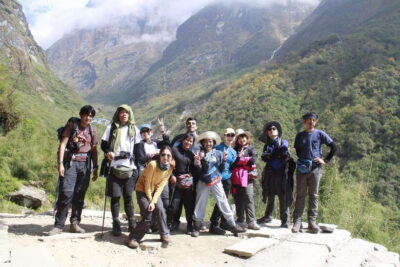
Annapurna Circuit Trek With Tilicho Lake :Best Trek in Nepal
Read our review →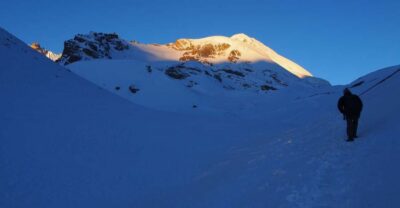
Browse the lists this tour appears in