
Reviewed · PEAK CLIMBING
Lobuche Peak Climbing on 21 Days
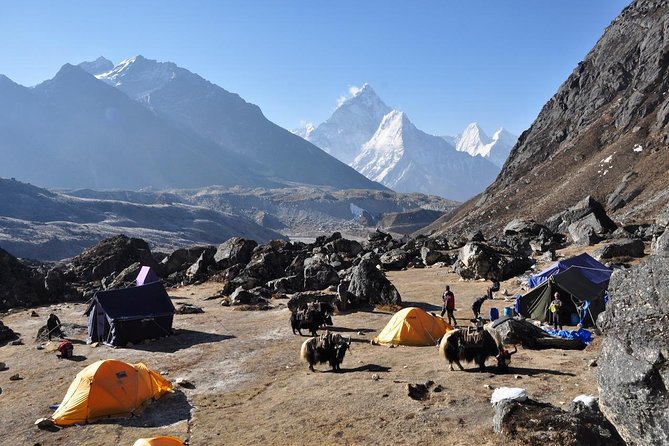
Lobuche Peak is interesting because it sits right in that sweet spot: a real mountaineering objective in the Everest region, but not so extreme that you cannot plan toward it. You also get a proper Himalayan acclimatization circuit before the summit push, with Everest views as a constant theme.
What I love most is the way this trip mixes classic trekking with a climbing goal you can actually train for. Sherpa culture is not tacked on as a photo stop, and the Sherpa communities along the way feel part of the journey, not just decoration.
One drawback to think about up front: you need more than hiking legs. The climb is for people who can use gear like ice axe and crampons, and the summit day is long even if the objective is described as attainable.
Key highlights before you pack
- A Group B trekking peak challenge with a clear training target, not a vague “maybe we’ll try”
- Full acclimatization rhythm before higher camps and the summit day
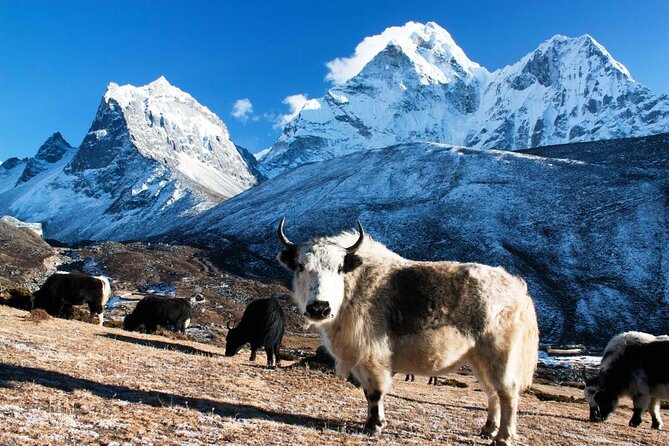
- Big Everest region panoramas including Everest, Lhotse, Nuptse, Ama Dablam, Thamserku, and nearby peaks
- Sherpa villages and monasteries where you see daily life close up
- Guide-led competence with strong organization, including named guide support like Karma
- Flight realism with an emergency day built in for the Lukla segment
Why Lobuche Peak Works as a trainee mountaineering mission
Lobuche Peak is officially classified as a group B trekking peak by the Nepal Mountaineering Association. That label matters, because it tells you what kind of seriousness to expect. This is not a casual hike. You’re training for a climb that asks for technique, not just endurance.
The best part is that the whole route is designed around getting you ready. You start lower around Kathmandu and work your way upward slowly, with rest and acclimatization days that make a noticeable difference. By the time you reach the high camps, your body has had time to adjust, and you are not trying to learn mountaineering fundamentals on summit day.
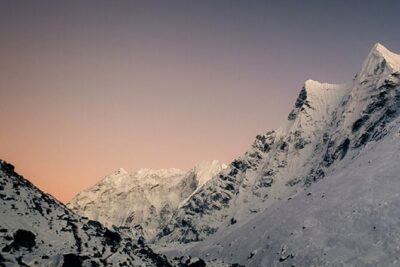
Also, the scenery is not limited to one dramatic moment. The Everest region is on your mind for weeks. From the trek you are set up to look toward Everest and its neighbors, including Mt. Lhotse and Mt. Nuptse, plus Mt. Ama Dablam and Mt. Thamserku. You’ll also see peaks that fit the same world, like Loboche, Kasum-Kangru, and Kwangde. In plain terms, you are surrounded by reasons to keep walking.
If you are new to a climbing-focused peak, treat this as a training mission, not a casual flex. You will be expected to handle gear such as an ice axe and crampons, so come with at least some comfort and a willingness to practice.
More trekking peaks with guided ascents:
- Mera Peak Climbing
★ 5.0 · 33 reviews - Island Peak Adventure
★ 5.0 · 15 reviews - Everest Base Camp Trek with Island Peak Climbing
★ 5.0 · 14 reviews
Kathmandu: where the trip gets built, not just started
You begin in Kathmandu at Tribhuvan Airport. Day 1 is arrival, transfer to your hotel, and a briefing. This matters more than it sounds. A good briefing helps you understand what the climb will ask of you, how the trekking pace is set, and what to prepare mentally for altitude.
Day 2 is preparation and packing. Then you head out by road to Ramechhap, about 5 hours and roughly 195 km. This is one of those Nepal logistics moments that can surprise people who expect everything to be quick. The upside is that you get a real transition day. You’re not jumping into high altitude right away, and you can settle into the rhythm of the trip.
If you like good planning, this itinerary’s Kathmandu phase feels structured. The trip also includes pickup offered, which can save you from the day-one scramble.
The Lukla gateway, Phakding, and Namche Bazar set the pace
Day 3 includes a short flight from Kathmandu to Lukla, about 20 minutes, followed by a trek to Phakding around 3 hours or more. That jump from the airstrip to trekking is classic Everest region travel. It’s also why day 2 matters. You arrive with less stress and more focus.
Phakding is a relief stop in both senses of the word. It is where you begin moving with altitude still manageable, and you get your rhythm for the long days ahead. Think of it as the warm-up act.
Day 4 is the trek to Namche Bazar, around 5 to 6 hours. Namche is not just a dot on a map. It’s where you lock into acclimatization mode. Your body starts working harder, and your pacing starts to become a skill. You’ll feel that shift.
Day 5 adds day hikes to an Everest view spot, plus Khumjung Village, around 4 hours. This is a smart setup. You’re getting views and local context without turning the whole day into a grind. Khumjung Village is also a cultural landing zone, giving you that close look at Sherpa life that the Everest region is famous for.
One practical point: on days like this, you want to keep your effort steady. You’re building endurance for the high camps, not winning a race in Namche.
The climb toward Machermo and Gokyo: acclimatization as real work
Day 6 treks to Phortse Tenga for about 5 hours. Day 7 goes on to Machermo, around 5 hours, topping out near 4,470 m. Then Day 8 is an acclimatization day in Machermo.
That acclimatization day is one of the key reasons this route feels “attainable” as a mission. You gain height gradually, then you pause. Your body gets time to adapt before you ask it to do more.
Day 9 treks to Gokyo around 4 hours, reaching about 4,790 m. Gokyo sits in a zone where the air feels sharper and the views start becoming more dramatic. This is also where the route becomes more “Himalaya at work,” meaning you are seeing how travel, living, and mountain weather all interact.
Day 10 hikes to Ngozumba Lake and returns to Gokyo Lake, about 6 hours. The main idea here is not just the lake. It’s the altitude exposure plus the walking practice at higher elevations. You learn what it feels like to move while slightly breathless, and you refine how you spend your energy.
Day 11 climbs Gokyo-Ri to about 5,360 m, then continues to Thangnak around 4,700 m, roughly 6 to 7 hours. That is a long day. Treat it like mountaineering training disguised as sightseeing. The climb upward teaches you careful movement. The descent teaches you patience with your legs.
More to compare around Kathmandu
- Everest Base Camp Trek – 14 Days
★ 5.0 · 1,499 reviews - Everest Base Camp Trek
★ 5.0 · 842 reviews - Private Kathmandu Sightseeing Tour | UNESCO World Heritage sites
★ 5.0 · 756 reviews - Kathmandu: 7 UNESCO Sites with Lunch
★ 4.8 · 744 reviews
Cho La and Dzongla: when the route turns serious
Day 12 is one of the big effort days. You climb over Cho-La around 5,330 m, then trek to Dzongla around 4,830 m, about 8 hours. Cho-La is the kind of pass that makes you think about footing, stamina, and timing. Even if you are not pushing speed, you still need to stay focused.
Day 13 climbs to Lobuche Lower High Camp around 5,400 m, about 4 to 5 hours. By this point, the trip is clearly shifting from trekking to mountaineering logistics. The camp location means you’re now in the area where your summit day will be planned around weather and conditions.
This is also where the gear requirement becomes very real. If you are not comfortable with tools, crampons, and controlled movement on steep or icy ground, that discomfort grows fast when you are tired.
The summit day on Lobuche East: long hours, real respect
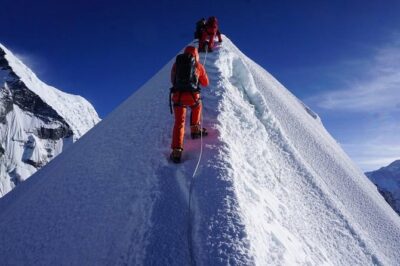
Day 14 is Lobuche East Summit at 6,119 m, then return to Lobuche around 4,910 m. The time estimate is about 10 to 12 hours.
This is the day you should understand deeply before you go. The summit day is long. Even with a guided plan, you need stamina for sustained effort. You also need a steady head. High altitude makes small mistakes bigger.
If you’ve trained for this kind of climb, you’ll appreciate that the trip doesn’t pretend it’s easy. The route sets you up with acclimatization steps, then asks you to perform. That is what makes it a trainee mountaineering mission, not a fantasy.
The pay-off is the views and the sense of completion that comes from doing hard things with a prepared route. When you’re moving back down toward Lobuche, you’ll feel the altitude drain from your brain. Not entirely gone, but enough that you can enjoy the mountain again instead of fighting it.
After Lobuche: Pangboche, Namche, and the Lukla return
Day 15 treks from Lobuche to Pangboche around 3,930 m, about 4 to 5 hours. That’s a welcome altitude drop. It also shifts the mind-set from summit mode into recovery. Your main job is to keep moving safely and not rush.
Day 16 is Pangboche to Namche, around 3,440 m, about 5 hours. Namche again becomes a reset point. You regain time to breathe and to appreciate the trip’s cultural texture. At this stage, you’re tired, but you’re also aware that you are coming toward the end.
Day 17 is Namche to Lukla, about 6 hours, reaching around 2,700 m. This is a longer descent day. Descents can be more punishing than climbs if you let your stride get sloppy. Take your time with each step.
Day 18 brings the flight from Lukla to Ramechhap (about 20 minutes), followed by the 5-hour drive back to Kathmandu, roughly 195 km. Then you have a celebration dinner. That dinner matters. It’s your moment to take the trip from “something happening” to “something you finished,” even if your body is still processing the altitude.
Day 19 includes city sightseeing, plus free time for shopping in the afternoon or evening. There is also an emergency day for the Lukla flight. That detail is not trivial. In the real world, flights can shift due to weather. Having a plan B day helps you keep your stress lower.
Day 20 is departure on an international flight home.
The Sherpa culture piece: practical, human, and not performative
The tour route is built to go beyond pure trekking lines. You’ll visit Sherpa villages and monasteries to understand culture and lifestyle up close. This is where you stop treating Nepal as scenery and start seeing it as a living place with skilled mountain communities.
I especially like how the trip frames Sherpa hospitality as something you experience, not something you observe from a distance. Places like Khumjung Village help you understand how people live with these mountains as neighbors, not backdrops.
And the human side shows up in the guiding. Reviews highlight Dream Himalaya Adventures’ support and the guide experience led by people like Karma. The common thread in that kind of praise is not just friendliness. It is competence plus joy for the mountains, which you feel on long days when motivation is wearing thin.
Price and value: what $2,700 buys you on this route
At $2,700 per person, you are paying for a serious chunk of logistics, guidance, and an itinerary built around acclimatization and a summit objective.
Here is how I think about value on a trip like this:
You are paying for:
- A multi-week route that gradually builds altitude tolerance before the climb
- The climbing-focused preparation that comes with a group B peak target
- A guided structure that helps you manage long days like the Cho-La crossing and the 6,119 m summit day
- Transport time that is unavoidable in Nepal, including the drive to Ramechhap and the Lukla segments
- A private group experience, meaning the plan is designed for your group instead of mixing into a bigger crowd schedule
You are not paying for:
- A casual, no-skill-required hike
- A short trip. This is a long rhythm, so the price reflects time in the mountains
If you want the lowest cost option, this may not be your best match. But if you want an organized Everest region climb with a genuine acclimatization path and an actual summit attempt, the price starts to look fair. You’re buying structure, not just travel.
Who this trip is for, and who should think twice
This trip suits you if you:
- Have moderate physical fitness and can handle long trekking days
- Are training for a peak climb and can use ice axe and crampons at least at a basic level
- Want big Everest region views and a route that includes culture, not just altitude points
- Appreciate a guided, organized plan with realistic flight contingency
Think twice if you:
- Are expecting a beginner-friendly summit without climbing gear confidence
- Get overwhelmed by long days, including a 10 to 12 hour summit day
- Are sensitive to altitude and need a very gradual, low-demand itinerary (this route is structured, but it still goes high)
It’s also a good match for people who like a trip that is both scenic and purposeful. You get awe-inspiring mountain moments, but you also get work, training, and progression.
Should you book Lobuche Peak climbing on this itinerary?
If your goal is Lobuche Peak with a route that does not rush you upward, I’d say yes, with a key condition: be honest about your climbing comfort. If you can handle ice axe and crampons and you’re ready for a long summit day, the structure is built to support you.
If you want a pure trekking vacation where your biggest challenge is sore calves, this is not that. This is mountaineering training with Himalayan scenery, and the days reward people who show up prepared.
FAQ
Where does the trip start?
The trip starts at Tribhuvan Airport in Kathmandu, Nepal.
How long is the Lobuche Peak climbing experience?
It’s listed as about 20 days. The tour name mentions 21 days, but the provided duration is approximately 20 days.
Is pickup included?
Pickup is offered.
Do I need trekking fitness or climbing skills?
The trip says you should have moderate physical fitness. It also notes that you must be proficient in using climbing gear such as ice axe and crampons.
What is the highest point on the itinerary?
The Lobuche East Summit reaches 6,119 m, with the climb returning to Lobuche around 4,910 m the same day.
What does the acclimatization look like?
You gain altitude gradually with multiple trekking days, including an acclimatization day in Machermo (4,470 m). There are also higher hikes like the Gokyo-Ri day.
Is there a contingency plan for Lukla flights?
Yes. Day 19 includes an emergency day for the Lukla flight.
What is the cancellation policy?
You can cancel for free, up to 24 hours in advance for a full refund. If you cancel less than 24 hours before the experience starts, the amount paid is not refunded.
Latest Kathmandu write-ups
- Langtang Valley Trek★ 5.0 · 3 reviews
- Khopra Danda Trek★ 5.0 · 3 reviews
- Langtang Valley Trek from Kathmandu★ 5.0 · 3 reviews
- 5 night / 6 days Kathmandu Nagarkot Chitwan Pokhara tour★ 5.0 · 3 reviews
- Nepal Highlights Tour: 5 Nights 6 Days Kathmandu & Pokhara Tour★ 5.0 · 3 reviews
- Kathmandu Valley Private Day Tour★ 5.0 · 3 reviews
- Conquer the Himalayas: The Ultimate 16-Day Annapurna Circuit Trek★ 3.5 · 3 reviews
- Kathmandu Heritage Day Tour★ 5.0 · 3 reviews
Peak Climbing, compared.
Everest Base Camp Trek with Island Peak Climbing
Read our review →
Browse the lists this tour appears in