
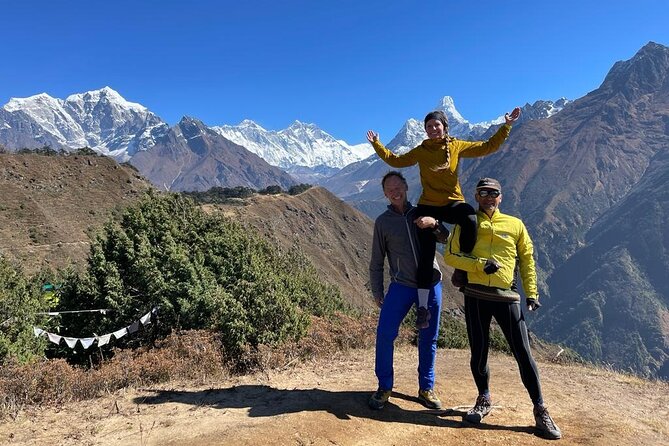
Reviewed · EVEREST BASE CAMP TREK
Island Peak Climbing with Everest Base Camp
Island Peak climbing with Everest Base Camp is interesting because it mixes classic high-altitude trekking with a real mountaineering goal. You get Himalayan views up close on the way to Sagarmatha National Park, then you pivot from trail to ropes, camps, and a summit push on Island Peak.
I like that the trip builds in acclimatization with multiple high points and a proper Namche rest day. I also like the way it pairs Everest Base Camp with Sherpa culture, from monasteries to villages, so it is not just sightseeing and suffering. Your guide team, including people like Gyeljen and Ngima from past departures, can make the difference when conditions turn serious.
The main drawback is the obvious one: altitude plus cold. Even with a smart pace, you should expect demanding days, windy ridgelines, and a summit day that asks for comfort with heights and snow and ice.
Key things that make this trip worth your attention
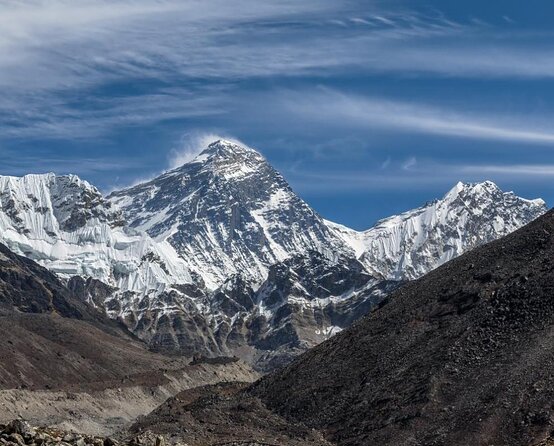
- Two big goals in one: Everest Base Camp plus Island Peak, with a mountaineering rhythm at the end
- Scenic Lukla flights: short flights on small aircraft with big mountain views before your first trek steps
- Good acclimatization pacing: Namche rest, Dingboche area time, and the “high then recover” pattern
- Everest Base Camp weather and drama: time at Gorakshep, then Kala Patthar for the sharpest viewpoints
- Real climbing layout: base camp, high camp above 5,400 m, then a technical summit route to 6,160 m
- Strong guide support in past trips: customer feedback highlights guides like Gyeljen, Ngima, and support staff such as Sudip and porter Pandesi
Why Island Peak and Everest Base Camp feel like two trips in one
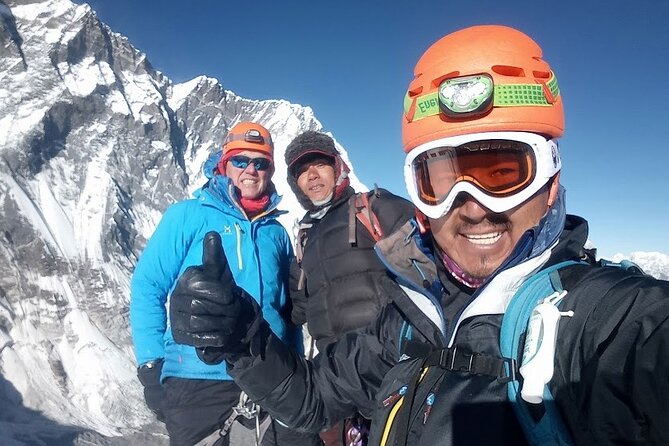
Most Everest area itineraries stop at the trekking. This one goes further, so your emotional arc changes. The early days feel like a focused hike through the Khumbu, with river valleys, forests, and Sherpa villages slowly pulling you upward. Then, when you reach Island Peak country, the tone shifts. You go from walking for views to climbing for a summit you can measure, at altitude, in snow and ice.
I also like that the trip is built around viewpoint days, not just checkpoints. You do the classic Namche viewpoint reset, then you hit Kala Patthar early in the morning, which is the kind of early start you either love or you suffer through. If you do not love early starts, this is the only place to prepare mentally, because the views are the point.
Finally, this is a private-style setup, meaning you are not stuck waiting for a dozen strangers. That matters on short connections like Lukla flight timing and on hard walking days where people move at different speeds.
More ways to walk to Everest Base Camp:
- Everest Base Camp Trek – 14 Days
★ 5.0 · 1,499 reviews - Everest Base Camp Trek
★ 5.0 · 842 reviews - Everest Base Camp Helicopter Tour landing at Everest View Hotel
★ 5.0 · 668 reviews
Price and value: what $2,899 per person covers (and what it does not)
At $2,899 per person for roughly 20 days, this is not a budget trek. But you are paying for four costly pieces that add up fast in Nepal:
1) A big mountain objective
Island Peak climbing means you need the climbing logistics, permits, and trained support. That typically drives cost more than pure trekking routes.
2) Guide and climbing Sherpa time
The included package lists a highly experienced English-speaking guide and a trained, government-licensed climbing Sherpa. You also get porter support (listed as two guests to one porter, with insurance, salary, food, accommodation, and equipment).
3) Food and lodging during the hard days
Meals and full board are included during the trek and climbing period, plus Kathmandu hotel nights. That turns the trip from “pay as you go” into a more predictable experience.
4) Permits and park access
The package includes trekking and climbing permits, plus all fees and taxes.
What is not included is also clear: your Nepal visa, international airfare, lunch and dinner in Kathmandu, and personal travel and health insurance (including emergency evacuation insurance). If you are price-shopping, do not compare this against a “tented Everest trek” that does not include permits or proper climbing support.
Kathmandu, arrival day, and the practical temple-valley orientation
Your trip starts the way you want it to in a place like Kathmandu: with someone meeting you at the airport, then a transfer to a city hotel. After that, you have time to recover and then explore on your own.
The next day begins with a group briefing. You get practical info about trekking and climbing, and you also get a tour around Kathmandu and its valley monuments, including UNESCO-listed temples and monasteries. This is not just sightseeing for the sake of it. Kathmandu time helps you understand what kind of trip you are walking into: Buddhist culture, prayer flags, monastery life, and the human side of the Himalaya.
A smart note here is that Kathmandu can be busy and a bit chaotic. Use your afternoon to prep your body, not just your camera roll. If you have any stiffness from flying, Kathmandu is when you loosen up before the pace ramps up.
Lukla flights: the short ride that sets the whole mood
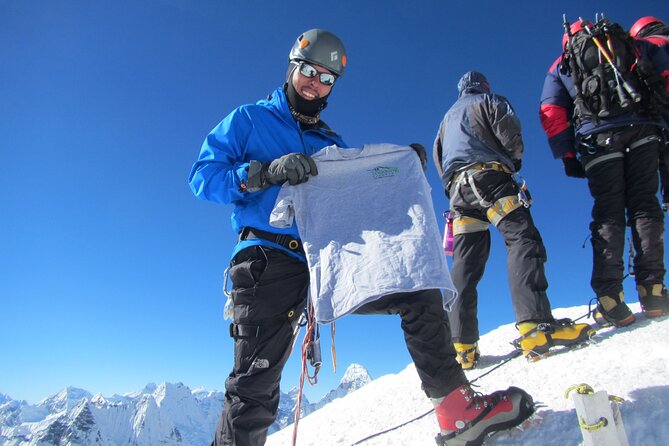
One of the big highlights in this route is the flight to Lukla on a small aircraft (often a Twin Otter or Dornier). It is about 30 minutes, and the experience is famous for what you see from the air, including snow-capped peaks and even a close feel for Everest from certain angles.
This is also where you need to respect reality. Lukla flights are weather-dependent. That is why you get a buffer day in Kathmandu later in the trip as a contingency for flight delays or cancellation due to bad weather.
When you land in Lukla, you start with a slow walk, crossing bridges and moving past Sherpa farm villages with terraces and vegetable fields. The first day on foot is a gentle landing into the Khumbu rhythm, before the longer uphills begin.
More trekking peaks with guided ascents:
- Mera Peak Climbing
★ 5.0 · 33 reviews - Island Peak Adventure
★ 5.0 · 15 reviews - Everest Base Camp Trek with Island Peak Climbing
★ 5.0 · 14 reviews - Mera Peak Climbing
★ 5.0 · 8 reviews
Phakding, Namche Bazaar, and the acclimatization pattern that actually helps
From Lukla, you head to Phakding along the Dudh Kosi River. This stretch matters because it trains your legs for what comes next without hitting you with a steep wall on day one.
Then you climb toward Namche Bazaar. The walk follows the river upstream, with bridges along the way, and you enter Sagarmatha National Park near Monjo. The trail has forest sections, and that’s key for beginners: shade, softer footing, and breaks from full sun.
Namche is also where the trip uses a classic acclimatization move: you take a rest day at altitude. In plain terms, you do not just “rest and hope.” You go for a hike to viewpoint areas, taking in views of Everest, Amadablam, and the surrounding ridgelines, then you spend time exploring the town and its shops. If you are there on a Saturday, there can be a colorful market vibe, which makes the rest day feel less like punishment.
What you gain from this rest day is oxygen adaptation. Even if you feel okay, your body is learning how to function above roughly 3,440 m, and that makes later climbs more manageable.
Tengboche Gompa and the Sherpa culture layer you will remember
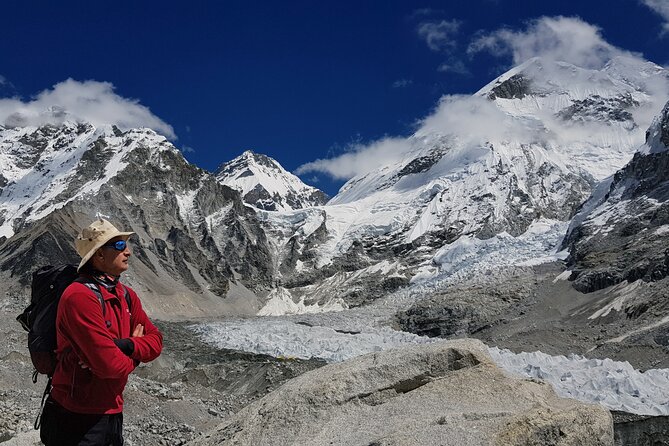
After Namche, you head toward Tengboche Gompa. This day has a mix: gradual trail sections, river crossings, then an uphill climb through rhododendron, pine, and fir forests. The trees soften the walk, then suddenly the views start opening up in a big way.
Tengboche is where Buddhist culture becomes part of the trekking. You visit the monastery and watch monks and priests during prayer time. The views are the headline, but the monastery visit gives you context for what you are seeing across the Khumbu: these routes exist inside living communities and spiritual traditions, not as empty scenery.
One small practical consideration: monasteries and high valleys can be windy. You want layers ready and gloves that work, not the thin ones you used in town. Cold wind is what turns an enjoyable viewpoint into an endurance test.
Pheriche, Dingboche, and the Himalayan Rescue Association stop
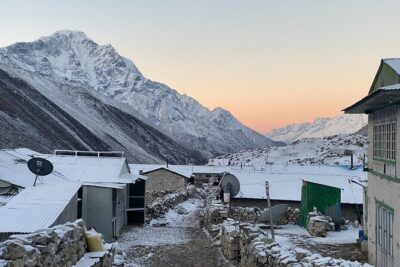
As you keep climbing, the route passes Pangboche, the last permanent Sherpa farm village before the higher climbing zones near Island Peak and Everest Base Camp. From there, you reach Pheriche in a windy valley.
Pheriche is set at over 4,200 m. That altitude can affect sleep and appetite, so the lodge time matters. Dingboche is next, where you get a valley full of mountain views, including Amadablam and other peaks such as Lhotse and Taboche and Cholatse. The trip also includes a chance to visit the Himalayan Rescue Association (HRA) office and its small medical post area.
That is not a sightseeing stop. It is reassurance. Knowing that basic medical support exists in the region can ease anxiety, especially for first-time high-altitude trekkers.
If you are prone to altitude discomfort, watch your pacing here. You should feel tired, not wrecked. And if you get a headache, do not ignore it. This route gives you enough days to adjust your effort if you listen early.
Lobuche and the Khumbu Glacier memorials: the emotional weight of the route
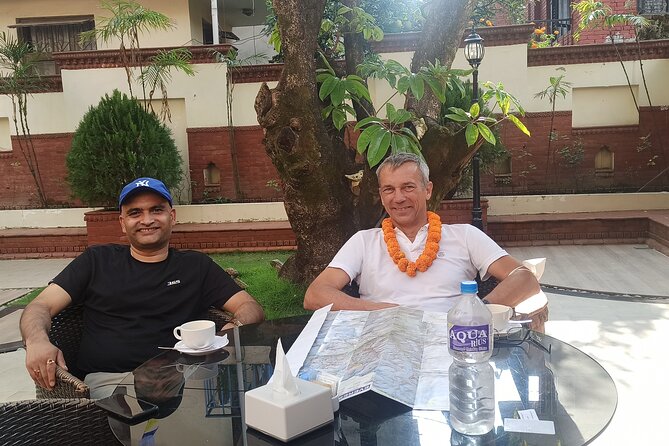
From Dingboche to Lobuche, the trail heads along the valley end and then climbs to Thugla (Dugla), where you join the main Everest Base Camp direction. This is one of the points where views get sharp and wide, including Taboche, Cholatse, Lobuche, Pumori, and Amadablam.
Then you walk past the terminal debris areas of the Khumbu Glacier. There are memorials for climbers who died on the mountain. It can feel heavy, and that’s normal. This is not a “happy postcard” moment. But it also puts the entire adventure into perspective, which makes the summit and base camp days hit harder.
Practically, this is also where the wind and cold can feel more intense. Keep moving, keep your layers on, and do not let your hands go cold while you take photos.
Everest Base Camp at Gorakshep, plus Kala Patthar for the close-up Everest moment
Everest Base Camp is the core trekking highlight in this plan. You reach Gorakshep and then continue to base camp, usually with a few hours and some short steep sections. The route includes walking over glacier and moraine areas, so footing and pacing matter.
At Everest Base Camp, you spend time taking in the massive Khumbu Icefall and the surrounding glacier structure. Even if you already know what the Icefall looks like from photos, being there changes scale. It is a physical place, with sounds and movement you cannot get from a screen.
Then you do Kala Patthar early in the morning. This climb takes you to above 5,545 m, and it is the highest viewpoint in the trekking portion. The big prize is Everest at close distance, plus wide views over the surrounding peaks.
This is also where you manage expectations. It can be cold enough that your face and fingers complain, and cloud cover can sometimes blur visibility. Still, the early timing gives you the best odds.
After Kala Patthar, you descend back toward Gorakshep for breakfast and continue down to lower places such as Dingboche. That downhill helps you reset before the next phase of climbing.
Chhukung to Island Peak base camp: where trekking becomes mountaineering
After the Everest viewpoint days, you head toward Chhukung, which is the last human settlement before Island Peak and Everest Base Camp country. From Pheriche, you walk uphill into the Imjatse valley, reaching Chhukung and then doing a day hike up toward Chhukung Peak for panoramic views.
That day hike is more than a bonus view. It helps your body transition from pure trekking altitude to the kind of steep effort you will need for Island Peak. The weather can shift quickly here, so again, layers matter.
Then the plan moves into tent camping for several nights until the climb is done. You reach Island Peak base camp at Parshya Gab, set up camps, and spend an afternoon practicing climbing skills with your expert guide. This matters because Island Peak is not just “walk to the top.” You need to move safely on snow and ice, use crampon-style thinking, and follow line choices that avoid trouble spots.
From base camp, you climb to a high camp above 5,400 m. The high camp is reached via open gully terrain between ridges, and you are under a hanging glacier area in this section. The details matter because this route includes objective hazards like crevasses and serac-adjacent concerns, and your guide is there to manage that risk.
Summit day on Island Peak: what the route asks from you
Island Peak summit day starts very early, before dawn. The climb route is described as broad open gully climbing on snow-covered glacier, with guidance that focuses on avoiding crevasses and dangerous sections. You also cross a gully with some stone and icefall danger, then climb a steep snow and ice ramp.
The ascent includes the feeling of a long grind: you gain height steadily, with moments where you are focused on technique, not scenery. Then you move above about 100 meters (300 ft) to reach the main summit area, and that is where the views are the payoff.
This is where you should respect what your body can do. The route is categorized with a PD grade in the French and Swiss Alpine Climbing System. In practical terms, that means it is serious. You should expect technical travel on snow and ice, not a casual glacier stroll.
When you stand on top, Everest views are part of the reward, and the Khumbu reaches out in every direction. Then you descend back toward base camp and continue the route down.
Coming back down through Namche and Lukla, plus your Kathmandu buffer
After the summit, the route turns back down through the Imjatse valley. You pass Dingboche, then Tengboche for lunch, and continue to Namche for an overnight stop. This part is a mix of walking down and short ups, and it is an underrated phase. Your legs will feel it after the summit, even if the altitude feels lower.
Then it is on to Lukla. The last big travel day includes a long descent toward Monjo and then to Phakding, followed by up and down to reach Lukla for your final night in the Everest region.
From Lukla you fly back to Kathmandu. You get a free afternoon to decompress, which is smart because your body will be tired in a way that sleep alone may not fully fix.
And you also have a spare Kathmandu day reserved in case weather disrupts the Lukla schedule. That flexibility is not just a nice perk. It is a practical insurance against the one part of the journey you cannot control.
Who this trip is best for, and who should think twice
This experience fits best if you have moderate physical fitness and you want a serious but guided step up from trekking into climbing. The plan is structured for acclimatization, but it still demands endurance, snow and ice comfort, and a willingness to start early.
You should also like the blend of cultures. Monasteries like Tengboche matter here. You are walking through Sherpa villages, seeing monasteries and observing prayer life, and that adds meaning to the days.
If you are mainly chasing an easy vacation with big photos and minimal effort, this is not the right match. The itinerary includes long walking days, an early-morning viewpoint push, multiple high-altitude transitions, and a summit on snow and ice.
One more note from past customer feedback: the reason people get excited about this trip is often the field team. Names like Gyeljen and Ngima come up in high praise for making Everest Base Camp and Island Peak feel smooth, organized, and unforgettable, with support staff such as Sudip and porter Pandesi also credited in positive ways. That kind of team attention is what you want if you are nervous about the high-altitude part.
Should you book Island Peak with Everest Base Camp?
If you want one Nepal trip that gives you both the classic Everest trekking experience and a true mountaineering summit, this is a strong option. The value is in the combination: trained climbing support, permits, full board during the hard days, and the acclimatization structure that helps you arrive ready.
Do book if you are comfortable with altitude, willing to start early, and excited by snow and ice climbing. Do not book if you want a low effort trek or if climbing and technical conditions would stress you out more than motivate you.
If you decide yes, plan your packing and training around cold, early mornings, and steady hiking. Then show up with a calm attitude for the summit day, because Island Peak rewards focus as much as courage.
FAQ
How long is the trip?
It runs for about 20 days.
Where does the experience start?
It starts in Kathmandu, Nepal.
Does it include flights to Lukla and back?
Yes. The plan includes scenic flights to Lukla and a return flight back to Kathmandu.
Is Everest Base Camp included?
Yes. You trek to Everest Base Camp, with time at Gorakshep and a base camp visit.
Is Island Peak climbing included?
Yes. The trip includes climbing Island Peak, with camp setup and a summit day above 6,160 m.
Do you stay in hotels in Kathmandu?
Yes. The package lists a 3-star hotel in Kathmandu, plus lodge or guesthouse stays during trekking and tent camping during the climbing phase.
What kind of physical fitness level do you need?
The experience notes that travelers should have a moderate physical fitness level.
Are permits and park access included?
Yes. Trekking and climbing permits are included, along with all fees and taxes.
Is porter support included?
Yes. Porter support is included, listed as two guests to one porter, with insurance, salary, food, accommodation, and equipment.
What is not included in the price?
Not included are your Nepal visa fees, international airfare, lunch and dinner in Kathmandu, and personal travel and health insurance including emergency evacuation insurance.
Latest Kathmandu write-ups
- Visit Swayambhunath and Bauddhanath Stupa with Guide★ 5.0 · 5 reviews
- 10 days Annapurna Base Camp Trek★ 5.0 · 5 reviews
- Langtang Trek from Kathmandu 7 Days★ 5.0 · 5 reviews
- 7 Day Kathmandu Pokhara Tour★ 4.5 · 5 reviews
- Kathmandu city day tour (4 world heritage sites)★ 5.0 · 5 reviews
- Everest Mountain Flight★ 5.0 · 5 reviews
- Chandragiri Hill Cable Car Tour with Hotel Transfers from Kathmandu★ 4.5 · 5 reviews
- Annapuran Base Camp Trek★ 4.5 · 5 reviews
Everest Base Camp Trek, compared.
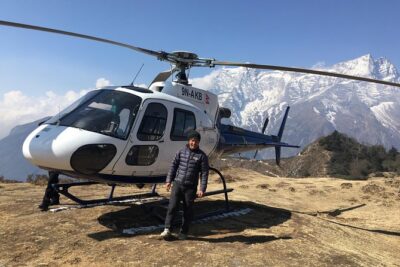
Everest Base Camp Helicopter Tour landing at Everest View Hotel
Read our review →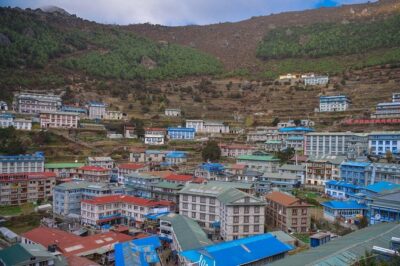
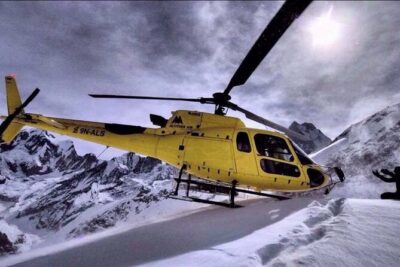
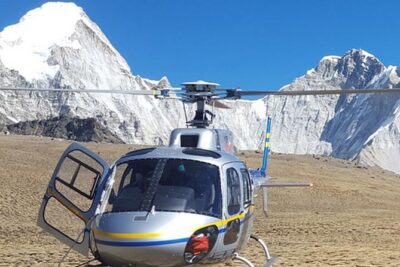
Everest Base Camp Helicopter Tour landing at Hotel Everest View
Read our review →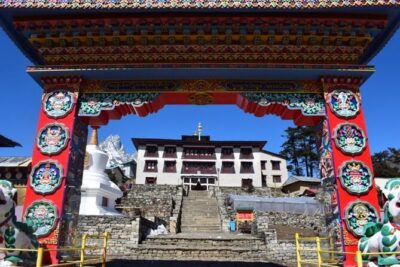
Browse the lists this tour appears in