
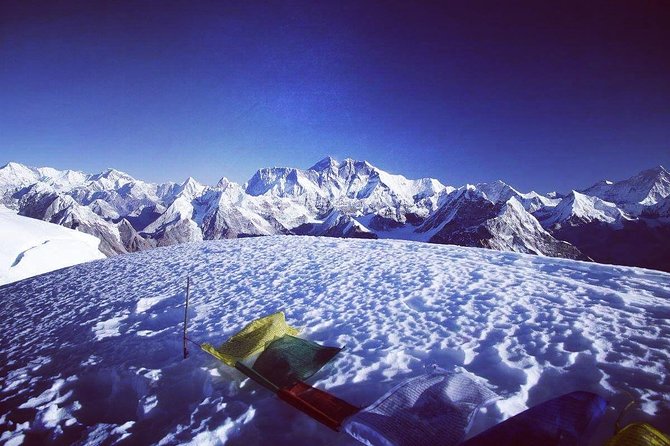
Reviewed · PEAK CLIMBING
Mera Peak Expedition – 20 Days
Mera Peak is interesting because it targets one of Nepal’s most famous high objectives, yet it can be a realistic first 6,000m climb if you train and follow the plan. The route takes you through the quieter, more human Hinku Valley, with terraced green fields, forests, streams, swinging bridges, and yak country. I especially like the way this trip blends trekking days in local lodges with two nights of camping at your high points. One thing to consider: the whole schedule depends on weather, including the Lukla flights, so you should expect some flexibility.
I also like that you are not managing the logistics yourself. You get an English speaking, government trained Sherpa guide, a full support team for the camping stretch, and even basics like a first aid kit plus snacks and fruit on trek. My only caution is the fitness requirement. You will be hiking steep trails and spending time at altitude, and the itinerary includes long days that are not just scenic strolls.
Key highlights you’ll feel on the ground
- Hinku Valley trekking through green terraced fields, dense forest, streams, and yak pastures
- Two camping nights at Mera Peak Base Camp and High Camp, not just lodge trekking
- A true acclimatization structure with a dedicated day in Khare and prep at High Camp
- Certified Sherpa leadership plus a porter system designed for lighter loads (one porter for two trekkers)
- Permits and fees handled including Sagarmatha National Park, TIMS, and the Mera Peak permit
- Classic Kathmandu start and cultural welcome with an authentic Nepali dinner and live cultural program
Mera Peak and the Hinku Valley, a quieter Everest region feel
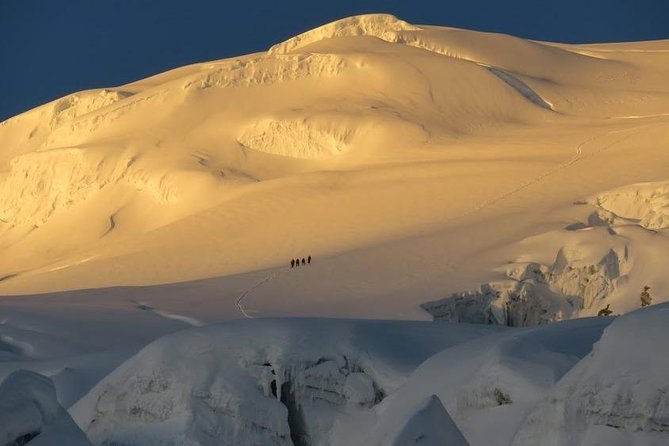
This trip is built around an obvious headline number, Mera Peak at 6,476m. But the best part for many people is what comes before the summit. The trekking section moves you through the Hinku Valley, a remote corner of the Everest region that still feels less crowded than the big, well-trodden routes.
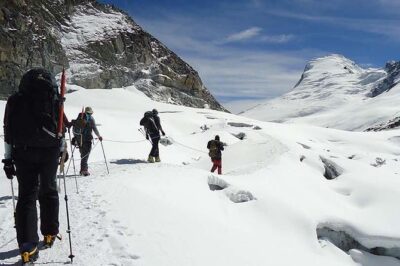
You start with Kathmandu, then fly to Lukla. After that, the days are about slow elevation gain, changing scenery, and small moments that add up. You’ll pass through terraced fields, forested stretches, and rushing streams, then transition into higher pastures where Sherpa guesthouses become a comfortable rhythm point. The route includes yak country, swinging bridges, and views of the highest mountains doing their slow reveal as you gain altitude.
If you want one “main event” to work toward, plus a trek that feels like real travel through places, not just a hallway to a summit, this combo fits well.
More trekking peaks with guided ascents:
- Mera Peak Climbing
★ 5.0 · 33 reviews - Island Peak Adventure
★ 5.0 · 15 reviews - Everest Base Camp Trek with Island Peak Climbing
★ 5.0 · 14 reviews
Is Mera Peak an “easy” first climb, and what easy really means
Mera Peak is described as the highest permitted trekking peak in Nepal and technically an easier climb than many other 6,000m trekking peaks. That does not mean it is casual. It means the climbing style and route profile are typically more approachable for people who train, accept altitude, and follow guide instructions.
Here’s what makes it workable for first-timers on paper:
- You’ll do staged altitude exposure: trek to Khare, acclimatize, then go up to Base Camp and High Camp.
- The summit push is planned with rest and preparation built in.
- You’ll have experienced Sherpa leadership and support staff, including a full camping setup for the high points.
Here’s the reality check you should keep in your head:
- High altitude affects everyone. Even if the technical climbing is considered easier, thin air is still thin air.
- You’ll spend multiple days at high elevations and one long day that includes the ascent and descent (more on that soon).
- You need “strong physical fitness,” which the trip calls out directly. Training matters more than motivation.
If you are a beginner climber who wants a step into Himalayan summits without jumping straight into the hardest, most technical 6,000m options, this is a sensible target.
Kathmandu to Lukla, then the steady trek toward Khare
Your timeline starts in Kathmandu, and that first week matters because your body and mind need to adjust before the high stuff begins.
Day 1 is arrival in Kathmandu. Day 2 is a preparation day in Kathmandu. That usually means you’re getting ready on the human side, like fitting the trek plan to your pace and finalizing what you need before the flights and trail time.
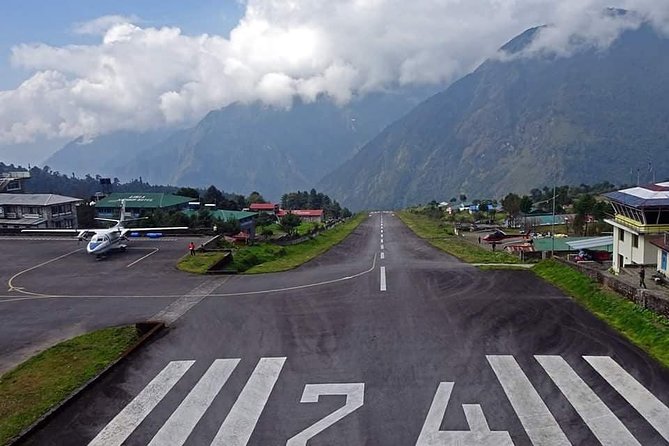
Day 3 begins the big transition: you fly from Kathmandu to Lukla, then trek to Paiya for about 3 to 4 hours. This first trek day is where you get into the rhythm. You’ll feel the switch from city logistics to trail time fast.
Day 4 takes you onward to Pangoma, 5 to 6 hours. This is the point where the trek starts to feel like an actual journey instead of day trips stitched together.
Day 5 is Nigmsa (around 2,745m), 4 to 5 hours. Day 6 is Chhetra Khola (3,122m), 7 to 8 hours. Notice that day 6 is a longer hiking day. It is a good time to remember your “easy pace” promise to yourself. Altitude climbs faster than your motivation does.
Day 7 reaches Kothe (3,600m), 6 to 7 hours. Day 8 goes to Thangnak (4,356m), about 5 hours. Day 9 heads to Khare (5,045m), about 4 hours. From a planning view, this is a classic staircase: more effort as you go, but with enough day-to-day structure to keep you moving without rushing.
Khare is your key forward base for acclimatization. Day 10 is an acclimatization day in Khare and also a preparation day. That stop is valuable because it gives your body time to adapt before you commit to Base Camp and High Camp.
Why these trekking days matter
These days do two jobs at once. They put you in the right terrain and they teach your pace. If you try to hike too fast early, the summit day usually pays for it later. A plan like this gives you a chance to arrive at Khare feeling tired in a normal way, not wrecked.
More to compare around Kathmandu
- Everest Base Camp Trek – 14 Days
★ 5.0 · 1,499 reviews - Everest Base Camp Trek
★ 5.0 · 842 reviews - Private Kathmandu Sightseeing Tour | UNESCO World Heritage sites
★ 5.0 · 756 reviews - Kathmandu: 7 UNESCO Sites with Lunch
★ 4.8 · 744 reviews
Base Camp and High Camp, the two camping nights that change the climb
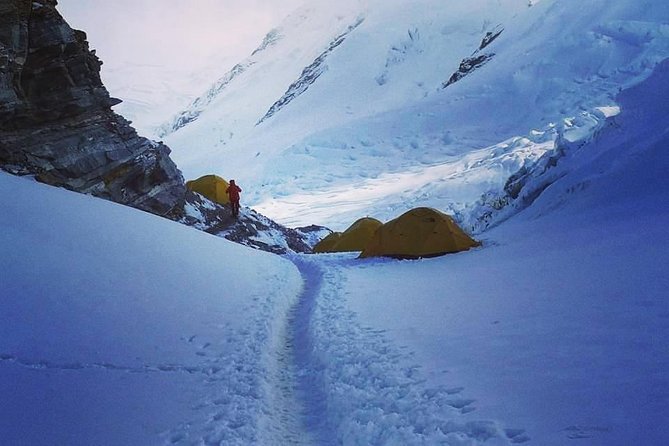
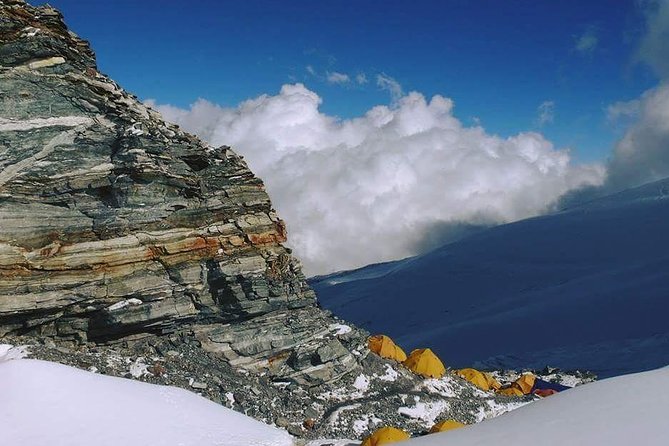
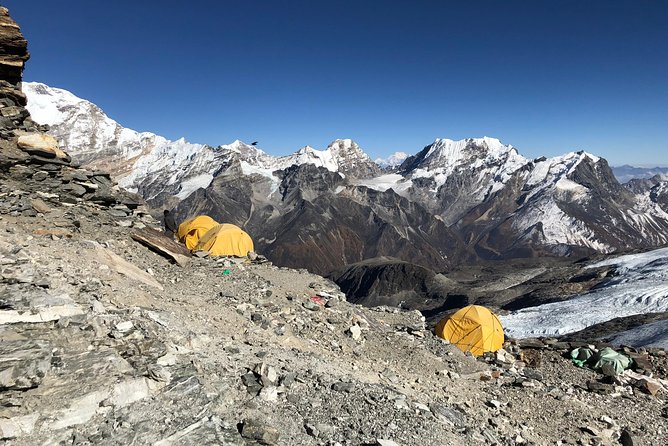
Day 11 takes you to Base Camp (about 5,350m), around 4 hours. Day 12 moves you to High Camp (about 5,780m), also around 4 hours. Then Day 13 is the main summit day, plus the descent back to Khare.
Camping days are where this itinerary becomes more than lodge trekking. You’re switching to meals during camping and spending two nights higher up. The trip includes camping gear for you: sleeping tents and mattresses, a kitchen tent, and kitchen equipment. It also includes trekking cook, kitchen staff, and camping support roles.
That matters because it reduces the mental workload. You are not fighting with gear, cooking, or comfort on top of altitude stress. At these heights, “less to manage” is not a luxury. It is part of safety.
Base Camp is your launchpad. High Camp is where you shift into summit mode. You’re still hiking, still moving, still respecting altitude, but the camp setup makes the high part of the schedule feel organized instead of chaotic.
Summit day on Mera Peak, then back to Khare (a long one)
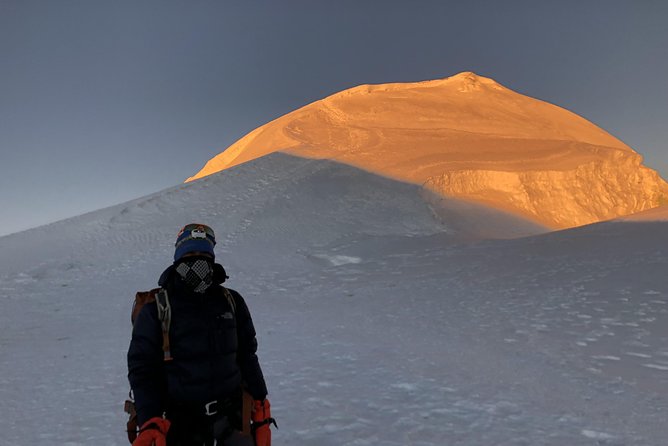
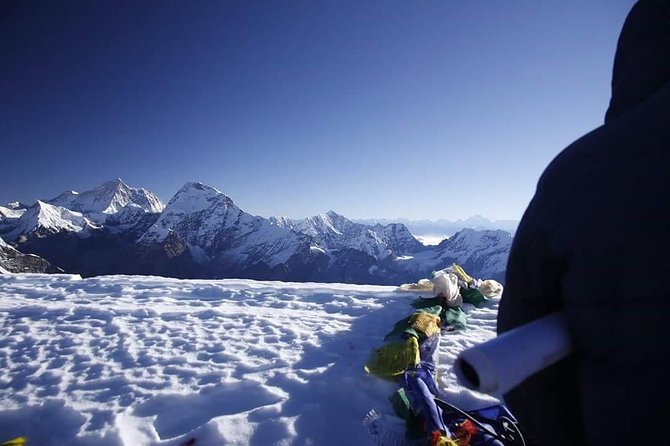
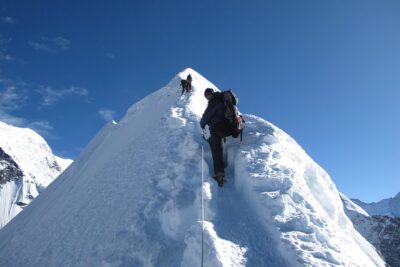
Day 13 is ascent of Mera Peak to 6,476m, then descent to Khare. The total day is listed as about 9 to 10 hours. That time range matters because a summit day is not just “walk to the top.” It’s a long, cold, oxygen-thin workday.
The itinerary’s strength here is that you do not jump straight to the summit without the two camp stages. You arrive at High Camp prepared and then you spend the day executing the plan with guide support.
The descent back to Khare is also part of why this structure works. It’s easier to keep energy for the push when you trust that the day after the summit is not another immediate high crawl. Khare gives you a place to recover before the final return.
Day 14 is a reserve day. You may think of this as a “just in case” buffer, and that’s exactly what it is. Weather and physical recovery both can influence timing at these altitudes, so having a backup day is a practical feature, not marketing fluff.
The return through Kothe, Thuli Kharka, and back to Lukla
After the summit and recovery, the route eases back down.
Day 15 is trekking to Kothe again (about 3,600m), around 7 hours. Day 16 moves you to Thuli Kharka / Chhatrwabuk (about 4,200m), roughly 6 to 7 hours. Day 17 is back to Lukla (listed around 2,800m), about 7 to 8 hours.
Day 18 is your flight from Lukla back to Kathmandu, followed by transfer to your hotel. Then Day 19 is a free day in Kathmandu, and Day 20 is departure.
These final trekking days have their own payoff. You are already “over” the hardest part, but you still get the joy of watching the valley levels drop and the trail feel more human again. It is a different kind of satisfaction than the summit, more about settling your body and enjoying normal life again.
That free day in Kathmandu is smart. Even with a comfortable hotel and the chance to shower and sleep well, returning from a high point can leave you a little spacey. A buffer day helps you recover without rushing to the next commitment.
Price and value: what $3,300 covers, and what you still need
The price is $3,300 per person for about 20 days. At this level, you are paying for a lot of infrastructure and coordination, not just guides and trekking.
Based on what’s included, the biggest value drivers are:
- Flights Kathmandu to Lukla and back, including airport tax and excess baggage handling in both directions
- Permits and fees including Sagarmatha National Park, TIMS, and the Mera Peak climbing permit
- Mountain leadership with an English speaking experienced Sherpa guide who is government trained and licensed
- Full camping setup for the Base Camp and High Camp nights, plus meals during camping
- Support staff and porter system, including porters with a ratio of one porter for two trekkers during climbing trips
- Kathmandu accommodations, including four nights on twin share bed and breakfast
- Food and small extras during the trek, such as energy supplies and fresh or canned fruits
- First aid medicine kit and official climbing certificates issued by the relevant Nepal government body
What you should budget separately:
- Your travel insurance
- Nepal entry visa fee
- Lunch and dinner in cities, with a suggested budget of $10 to 14 per meal in tourist restaurants
- Beverages on trek and in cities, including soft drinks, mineral water, boiled water, and beer
- Tips for the guide, porters, and driver, which are customary
Is $3,300 “cheap”? It’s not a budget trek. But for a guided, permitted, flying-in high peak climb that includes two nights of camping at altitude plus real staffing, it is a reasonable value. If you tried to assemble similar logistics yourself, the cost often rises once you add flights to Lukla, permits, certified leadership, and the camping infrastructure.
Your guide team, porters, and why the support system matters
This trip clearly leans on a structured team. You get an English speaking experienced and certified Sherpa guide, plus trekking cook, kitchen staff, and other support staff during camping days. You also get a porter arrangement designed to keep loads manageable: one porter for two trekkers.
That porter ratio is one of the most practical “value” points on the whole plan. Lighter loads help you stay steady when altitude is doing its job on your breathing.
From the names that appear in trip feedback, you may meet Ngima, the company director, during arrival. Lead guides include Mingmar, and some porters mentioned include Tshiring and Tjeet. You might also see references to Dawa and Ngawa within the team. Names can vary by season and grouping, but the takeaway is consistent: a local, experienced leadership structure is part of the package.
Also, there is an included authentic Nepali welcome dinner in Kathmandu with a live Nepalese cultural program. That’s not just a nice touch. After your flight and your first day in Nepal, it helps you settle into the country’s rhythm fast.
Logistics that make the trek smoother: pickups, private transfers, and mobile tickets
You start in Thamel, Kathmandu, where pickup is offered and you can use the meeting point conveniently. The tour includes private vehicle transfers for airport to hotel and hotel to airport, using options like car, van, Hi-ace, or coaster.
You also get a mobile ticket, and confirmation is provided at booking time.
This matters more than people think. When you’re heading for Lukla, timing and smooth transfers help you avoid stress. You want to show up to the airport feeling calm, not sprinting through Kathmandu.
Weather realities and how flexible you must be
This experience is weather dependent. The trip specifically says it requires good weather, and if it’s canceled due to poor weather you’ll be offered a different date or a full refund.
That means you should plan like a grown-up about the mountains:
- Keep your expectations realistic around Lukla flight schedules.
- Build a buffer into your overall trip timing if you can.
- Make sure your fitness and altitude preparation are solid before you commit to summit day.
The good news is the itinerary itself includes a reserve day after the summit and recovery phase. That shows someone planned for the mountains, not just for a perfect calendar.
Should you book this Mera Peak expedition?
Book it if you want:
- A well-structured path toward a 6,476m summit
- A trek through the quieter Hinku Valley with real remote scenery, not just main-route marching
- A first Himalayan climbing experience that is designed to be more approachable than many other 6,000m trekking peaks
- Included permits, flights to Lukla, and a full support and camping system
Think twice if:
- You are not confident in your fitness for long hiking days and altitude exposure
- You hate any possibility of schedule changes due to weather and Lukla flight conditions
- You want a strictly lodge-only trek with no camping at high altitude
If you train, respect the pace, and embrace the fact that the “hard part” starts before the summit, this is a strong, practical way to climb Mera Peak. And after you’re done, you’ll have the kind of story that starts with Kathmandu, passes through Hinku Valley, and ends at one of Nepal’s most iconic trekking summits.
FAQ
Where does this tour start and end?
It starts in Thamel, Kathmandu, Nepal, and ends back at the meeting point.
How do the flights work for this Mera Peak trip?
The trip includes round-trip airfare between Kathmandu and Lukla, with airport tax included.
What kind of guide and support team is included?
You get an English speaking experienced and certified Sherpa guide (government trained and licensed), plus trekking cook, kitchen staff, Trek Sherpa, and other support staff during camping days. The package also includes porters on a one porter for two trekkers basis in climbing trips.
Are permits and fees included?
Yes. The included permits and fees cover Sagarmatha National Park fees, TIMS permits, and the Mera Peak climbing permit, along with all required permits or official documentation.
What are the main things not included in the price?
Not included are your Nepal entry visa fee, personal travel insurance, lunch and dinner in cities (budget is suggested), beverages (such as soft drinks, mineral water, boiled water, and beer), and tips for the guide, porters, and driver.
What happens if the trip is canceled or needs changes?
This experience is non-refundable and cannot be changed. If it is canceled due to poor weather, you will be offered a different date or a full refund. If it is canceled because a minimum number of travelers is not met, you will be offered a different date or a full refund.
Latest Kathmandu write-ups
- Visit Swayambhunath and Bauddhanath Stupa with Guide★ 5.0 · 5 reviews
- 10 days Annapurna Base Camp Trek★ 5.0 · 5 reviews
- Langtang Trek from Kathmandu 7 Days★ 5.0 · 5 reviews
- 7 Day Kathmandu Pokhara Tour★ 4.5 · 5 reviews
- Island Peak Climbing with Everest Base Camp★ 5.0 · 5 reviews
- Chandragiri Hill Cable Car Tour with Hotel Transfers from Kathmandu★ 4.5 · 5 reviews
- Everest Mountain Flight★ 5.0 · 5 reviews
- Kathmandu city day tour (4 world heritage sites)★ 5.0 · 5 reviews
Peak Climbing, compared.
Everest Base Camp Trek with Island Peak Climbing
Read our review →
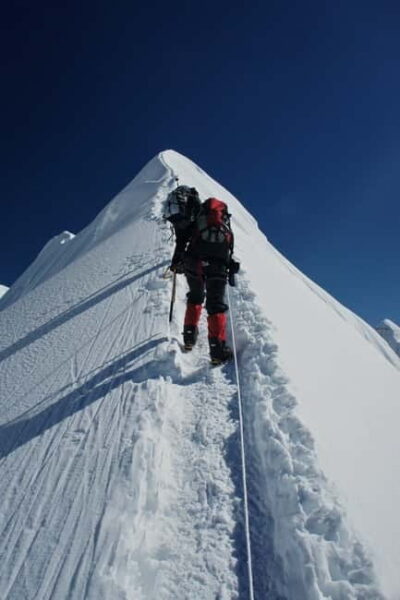
Island Peak Climbing | Summit 6,189m with Expert Guides
Read our review →
16 Days Island Peak Climbing With Everest Base Camp Private Trip
Read our review →Browse the lists this tour appears in