
Reviewed · PEAK CLIMBING
Mera Peak Climbing
Mera Peak is interesting because it sits in the Everest region and still feels reachable for people who train for high altitude. You get big mountain payoffs too, with views of several 8000-meter peaks like Everest (8848m), Cho Oyu (8201m), Makalu (8485m), Kanchenjunga (8586m), and Lhotse (8516m). I love that it mixes mountain drama with real trekking days, including exploration around the Hongu and Hinku valleys.
The other two things I like are how clearly the trip is set up for a guided climb, and how safety habits are built into the plan. One drawback to consider up front: weather can shut down route plans, and you should expect adjustments if storms hit.
You also get a team dynamic that matters in the mountains. In past trips, guides and Sherpas like Gelchen Sherpa, Sonam Sherpa, Ming-ma, Dandee, Samdu, and Dende have been mentioned as key to smooth decision-making when conditions were rough. Still, you are going to need your own discipline on altitude, hydration, and food, or things can go sideways fast.
Key things to know before you go for Mera Peak
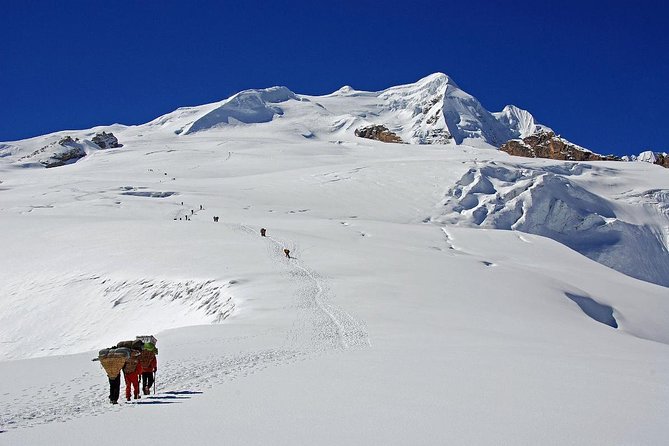
- Everest-region views from an officially permitted trekking peak, with multiple 8000-meter mountains in sight.
- Hongu and Hinku valleys for a wilder feeling trek, not just a corridor path.
- Tea house plus camping style, so you get variety in comfort and logistics.
- A strong altitude approach shared by the operator, including guidance on water, symptom response, and tools like Diamox and a Gamow bag if needed.
- Small group size with a maximum of 15 travelers, which usually means less chaos on summit push logistics.
- Practical human support, including responsive pre-trip communication credited to Prakash Devkota, and on-route guidance by local Sherpas.
Why Mera Peak feels like a summit sampler of the Everest region
Mera Peak is Nepal’s highest of the permitted trekking peaks. That one sentence tells you a lot. It is high enough to feel like a true Himalayan climb, not just a long hike with bragging rights. But it is also part of a system where climbers can use established techniques, with a guide leading the way.
The views are the headline. Your trip highlights call out a sweep across the Everest region, including Everest, Cho Oyu, Makalu, Kanchenjunga, and Lhotse, plus other peaks. Even if you are not a mountaineering nerd, you will recognize how special that is. Most summits give you one hero mountain. Here, you’re in a cluster.
That view payoff matters because it changes how you experience the hard parts. When the cold bites and your breathing gets sloppy, it helps to know exactly what you’re trying to see from above. In real life, that mental anchor often matters more than people expect.
More trekking peaks with guided ascents:
- Island Peak Adventure
★ 5.0 · 15 reviews - Everest Base Camp Trek with Island Peak Climbing
★ 5.0 · 14 reviews - 16 Days Island Peak Climbing With Everest Base Camp Private Trip
★ 5.0 · 3 reviews
Kathmandu setup: permits, briefing, and why 4 nights in town help
You start in Kathmandu, with 4 nights stay in Kathmandu with a bed and breakfast plan included. That’s not filler time. It gives you space to adjust after arrival, handle paperwork, and make sure your gear is actually climb-ready before you leave the city’s comfort behind.
The operator also includes Mera Peak climbing permits. Permits sound boring, but they matter because they keep you in the legal, managed system for this trekking peak. It also reduces one of the most stressful parts of planning a climb: chasing the right paperwork at the wrong time.
A helpful practical detail is that pickup is offered. That can save you from a chaotic day of taxis, phone charging problems, and the classic Kathmandu moment where you realize you guessed your meeting point incorrectly. And yes, you get a mobile ticket, which generally reduces the amount of physical paper you need to keep track of.
Trek into the Hongu and Hinku valleys, where the route feels less crowded
One of the more interesting highlights is the trekking around the Hongu and Hinku valleys. Those names matter because they signal something different from the most packed trekking corridors. You’re aiming for a more wild-feeling area, with fewer signs of everyday life and more of that “we’re really moving through the mountains” feeling.
For many climbers, this is the part that makes the trip feel like more than just a summit. The body also needs it. Your lungs and legs learn the pace before the real high-altitude work. If you rush too hard, altitude will punish you. If you let the trekking days do their job, the climb stage becomes less of a shock.
The trip is described as using both tea house and camping accommodations. That mix can be great for balance: tea houses can be simpler and more predictable, while camping can feel more remote and flexible. The tradeoff is that camping nights generally mean more to manage, so you’ll want to pack for cold and sleep quality, not just for warmth on your feet.
The climb and acclimatization game: how to make the summit push safer
This is a high-altitude experience, even if it is marketed as a trekking peak climb. Your own choices during the climb matter. The operator’s guidance is blunt and useful, and you should take it seriously.
Here’s the core of the altitude and health approach you’re given:
- Drink enough water, with guidance toward 2 to 3 liters a day of lukewarm water.
- Avoid alcohol and smoking.
- Eat light food rich in calories so you fuel without feeling too heavy.
- Add ginger and garlic in your food.
- If possible, travel to low altitude based on how you’re feeling and discuss your condition with your guide.
- If sickness is mild, stay where you are, don’t panic, sleep sufficiently, and drink enough water.
- If it doesn’t improve after acclimatizing, start descending rather than forcing it.
- If it’s serious, start to descend immediately, using Diamox pills.
- A Gamow bag is mentioned as a high-pressure inflatable option to restore oxygen and air pressure. Also, make sure you check whether the operator provides all altitude gear.
That last part is the one people forget. It’s easy to assume the bag and gear are included because they’re mentioned in guidance. But you should confirm directly what’s provided, because included gear is listed generally as “all necessary climbing gears,” while altitude gear can be treated separately in real-world operations.
From a practical point of view, the best summit attempts are the ones where the plan can change. One of the accounts shared about the trip describes an original route becoming impossible because a pass was closed after heavy snowstorms near the end of October. That tells you something important: weather does not care about your calendar. Choose a team that can reroute and keep you safe.
More to compare around Kathmandu
- Kathmandu: 7 UNESCO Sites with Lunch
★ 4.8 · 744 reviews - Everest Base Camp Helicopter Tour landing at Everest View Hotel
★ 5.0 · 668 reviews - Kathmandu: Local Women-Led Nepali Cooking & Momo Class
★ 4.9 · 360 reviews - Manaslu Circuit Trek
★ 5.0 · 292 reviews
Guides, Sherpas, and the human part of climbing decisions
A big reason this trip earns strong recommendations is the guide support. You should expect competent technical leading, but what stands out is the decision-making and communication around health and conditions.
In past trips, people credited leaders by name, including Prakash Devkota for responsive planning and coordination, and Sherpa guides like Gelchen Sherpa, Sonam Sherpa, Ming-ma, Samdu, and Dende for making climbs feel manageable even when things were not ideal. That matters because altitude problems are rarely dramatic in the early minutes. They creep in. A good guide notices early signs and responds.
If you’re trying to judge a climb operator, don’t just look for “summited.” Ask how they handle the moments that decide whether you summit or turn back. The guidance you’re given here is a good sign because it treats altitude sickness like a real medical issue, not a stubbornness test.
Also, because this trip has a group limit of 15 travelers, you can benefit from a more controlled feel. Smaller groups can mean fewer mixed pace problems and less time wasted trying to herd people on tight schedules.
Gear and packing: what you’re covered for, and what you must bring
Your included list is clear about permits, guide support, food and accommodation style, and climbing gear in general. It includes all necessary climbing gears. But it also says personal climbing gears are not included.
That split is where trips often go wrong, because “necessary” for the company might not match what you think is personal. Before you buy anything last minute, confirm which items you still need to provide yourself. If you cannot get a clear list, ask for a packing list in writing.
Even with no extra details given, plan like this:
- Bring the basics for cold and wind, because summit pushes often turn ugly fast.
- Expect layers, and plan for wet conditions.
- Don’t skimp on foot comfort, since trek and climb days punish feet you didn’t prep properly.
- If you need medication for altitude, talk to a doctor before you go. The trip mentions Diamox as part of serious altitude response, but that is not a casual supplement.
One more gear-minded note: the guidance mentions a Gamow bag. You should ask whether your organizer supplies it and whether any altitude gear is shared or carried by specific support staff. If it’s not clearly included, you’ll want the answer before you’re far from any medical help.
Price and Logistics: is $3,000 per person good value?
At $3,000 per person, this is not a budget trek. But it also is not just a hike with a view. For that price, you get:
- 4 nights in Kathmandu with bed and breakfast
- Mera Peak permits
- Tea house plus camping combined food and accommodation during the trek
- An experienced trekking and climbing guide
- All necessary climbing gears (with the key caveat that personal gear is still on you)
- Pickup offered
- Mobile ticket
What you are paying for is risk management plus mountain labor. Permits, local expertise, and guide leadership cost real money. The gear and guide staffing also help reduce the odds of wasted summit attempts.
What’s not included matters for budgeting:
- International airfares and departure tax
- Personal climbing gears
- Personal expenses
- Tips to guides/porters
So the value question is simple. If you want a guided, gear-supported climb with permits handled and a team that is used to weather and altitude realities, the price can feel reasonable. If you are the kind of traveler who wants total independence and already owns everything and knows the route deeply, you might find cheaper options. But if you are paying for safety, coordination, and local competence, this is aiming at that goal.
Who this Mera Peak climb suits best, and who should rethink it
This tour is described as needing strong physical fitness. That’s a real qualifier. Mera Peak is high and the trek component is not short-changed. You’ll want a health base that includes stamina, strength, and the ability to keep moving even when you feel tired or unwell.
It is also best for people who want a guided structure. Solo travelers can do it if you’re comfortable in a group setting, but the big win here is not being stuck doing logistics alone. In the past, a solo female guests mentioned choosing this kind of group structure for feeling safe and not having to worry about planning.
Who might not love it?
- If you dislike following medical-style instructions closely.
- If you want a fixed route no matter what weather does.
- If you are not ready to carry some of the responsibility for symptom response and descent decisions.
Practical tips to follow on your actual climb days
Here are the survival habits you should treat as non-negotiable, because they are specifically part of the guidance you’re given:
- Hydrate early and steadily, using the recommended approach of lukewarm water and a target around 2 to 3 liters a day.
- Keep food light but energy-dense. High calories with less volume helps when appetite is low.
- Avoid alcohol and smoking. At altitude, your body needs all the help you can give it.
- If you feel sick, use the plan before you panic. Sleep, drink water, and stay put for mild symptoms.
- If it is serious, take the instruction literally: start descending immediately.
- Ask your guide directly what triggers a turnaround for you personally, because altitude sickness doesn’t read your personality.
- Confirm whether your team provides the altitude gear mentioned, especially a Gamow bag, so you know what is actually on hand.
And one more real-world trick: keep your expectations flexible. The Everest region can shut down passes. A good operator handles the pivot. You should still be mentally ready to accept it.
Should you book this Mera Peak climbing tour?
Book it if you want:
- A guided, permit-handled Mera Peak climb with climbing gears included
- The chance to see multiple 8000-meter peaks from one region
- A trek that includes Hongu and Hinku valleys
- A team that uses an altitude response plan with Diamox and discusses Gamow bag options
Consider passing or shopping around if:
- You expect the route to stay exactly as planned, rain or snow doesn’t matter to you, and you will be frustrated by reroutes
- You are not sure you can realistically meet the fitness requirement
- You have not confirmed what personal gear you must bring and what altitude equipment is provided
If you do book, do it like a climber, not like a tourist. Train. Pack smart. Listen to the altitude guidance. If the mountains say descend, you descend.
FAQ
Where does the Mera Peak climbing start from?
The start point is Tribhuvan Airport, Kathmandu, Nepal.
How long is the experience?
The duration is listed as 18 days 2 hours 5 minutes (approx.).
What is included in the price?
Included items are 4 nights in Kathmandu (bed and breakfast), Mera Peak climbing permits, tea house plus camping combined food and accommodation during the trek, an experienced trekking and climbing guide, and all necessary climbing gears.
What is not included?
Not included are international airfares and departure tax, personal climbing gears, cost of personal expenses, and tips to guides/porters.
Is pickup offered?
Yes, pickup is offered.
Is a mobile ticket provided?
Yes, mobile ticket is listed as a feature.
What is the minimum age requirement?
The minimum age is 18 years.
What fitness level do I need?
Travelers should have a strong physical fitness level.
How many travelers are in a group?
The tour has a maximum of 15 travelers.
What is the cancellation policy?
You can cancel for a full refund if you cancel up to 24 hours in advance of the experience start time.
Latest Kathmandu write-ups
- 16 Days Island Peak Climbing With Everest Base Camp Private Trip★ 5.0 · 3 reviews
- 15 Days Round Annapurna Trek with Poon Hill from Pokhara★ 5.0 · 5 reviews
- Private Nepal round trip including Ghorepani Poonhill trek★ 5.0 · 3 reviews
- Everest Base Camp Trekking 16 Days★ 4.0 · 7 reviews
- 14 Days Luxury Annapurna Base Camp Trek★ 5.0 · 6 reviews
- Everest Base Camp Trek★ 5.0 · 32 reviews
- Everest Base Camp Trek★ 5.0 · 87 reviews
- Everest Base Camp Trek★ 5.0 · 97 reviews
Peak Climbing, compared.
Everest Base Camp Trek with Island Peak Climbing
Read our review →
Island Peak Climbing | Summit 6,189m with Expert Guides
Read our review →
16 Days Island Peak Climbing With Everest Base Camp Private Trip
Read our review →Browse the lists this tour appears in