
Reviewed · PEAK CLIMBING
Mera Peak Climbing
Mera Peak is interesting because it sits in that sweet spot between high-altitude trekking and real mountaineering practice. You get a non-technical peak experience, plus a serious summit payoff: big views of Everest, Cho Oyu, Lhotse, Makalu, and Kangchenjunga from 6,476m. I especially like the NMA-certified climbing guide setup and the way the trip runs like a system, with tented camping above Khare and full meals so you can focus on the climb. The main thing to consider is that Lukla flights can be weather-sensitive, so you should expect some timing risk even with a buffer day built in.
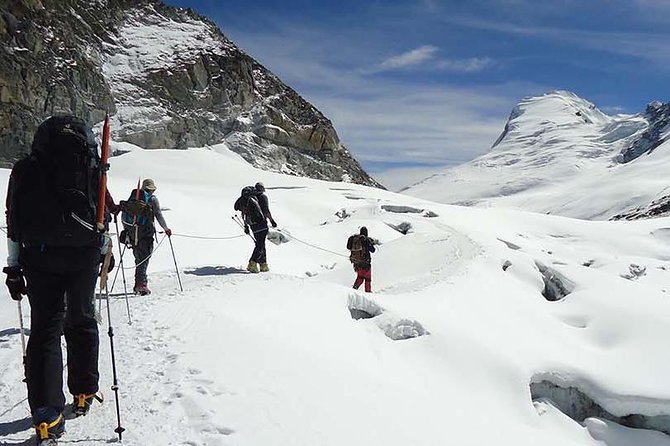
What makes this plan work is that the trekking builds you up in the right places, then introduces glacier movement with practice before you rope up for the summit push. You also get cultural stops that feel real, not just photo stops, from Patan’s temple squares to the monastery calm around Lungsumgba Gompa. If you’re fit, patient at altitude, and open to learning crampon and ice-axe basics, this is a strong first peak.
Key points worth your attention
- Real glacier practice before the summit, with gear and technique coaching on ice
- Trek-to-climb pacing, including slow movement for acclimatization and a high camp approach
- Big Himalayan panorama focus, including Everest, Cho Oyu, Lhotse, Makalu, and Kangchenjunga
- Full logistics support above Khare, including kitchen and dining tents plus toilet tents
- Strong local guidance culture, with praise for responsive staff and clear communication (including CEO Mr. Himal)
- Lukla flight reality, meaning you’ll want to stay flexible and use the spare day
Why Mera Peak feels like your gateway into mountaineering
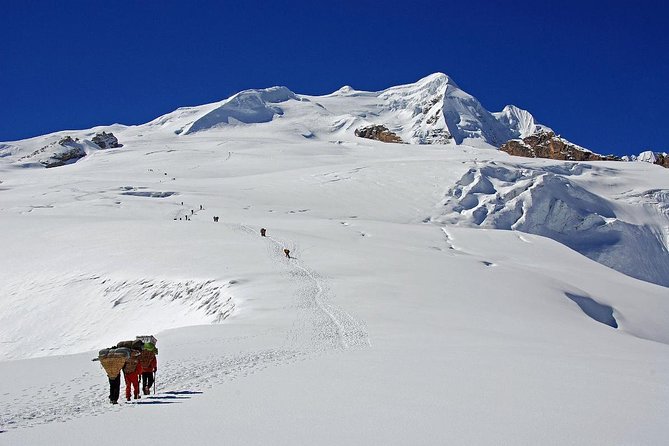
Mera Peak is often marketed as “non-technical,” and that matters for your expectations. This is not a rock-climbing style summit. It is an ice and snow experience where you’ll walk on gradients that can still feel demanding at altitude. You’ll learn the basics of moving on crampons and using ice tools, then you’ll apply those skills on summit day.
The summit view is the big reason people want this peak. From the top at 6,476m, you get the jaw-dropping panorama of five of the world’s highest mountains: Cho Oyu (8,201m), Lhotse (8,516m), Everest (8,848m), Makalu (8,463m), and Kangchenjunga (8,586m). Even if you’ve seen these mountains from lower viewpoints before, seeing them from the Mera ridge line is different. The air is thin, colors change fast, and the horizon looks sharper.
And yes, you’re trekking too. The route moves through Sherpa villages, monasteries, riverbanks, and valleys like Hinku and Hongu, then transitions into alpine terrain with glaciers, moraines, and snow climbing.
More trekking peaks with guided ascents:
- Mera Peak Climbing
★ 5.0 · 33 reviews - Island Peak Adventure
★ 5.0 · 15 reviews - Everest Base Camp Trek with Island Peak Climbing
★ 5.0 · 14 reviews
Price and logistics: what $1,199 covers, and what you should budget for
At $1,199 per person for about 19 days, this trip is priced like a full-service climbing operation, not just a trekking class. Much of the value sits in the work behind the scenes: guides, permits, food, camping infrastructure above Khare, and climbing equipment.
What’s included on this plan:
- Trekking permits: Makalu Barun National Park entry permit and a local area permit
- Kathmandu hotel: 3-star accommodation for 2 nights with breakfast
- Teahouse lodging during the trek up to Khare (basic lodges)
- Tented camping above Khare, with organized kitchen and dining setup plus toilet tents
- Full-board meals during the trek and climb (breakfast, lunch, dinner)
- Boiled drinking water during the climbing phase
- Guiding and support: an NMA-certified climbing guide, a licensed English-speaking trekking guide, and a cook and assistants for the camping phase
- Group climbing equipment: ropes, ice axes, crampons, harnesses, karabiners
- Cold-weather gear: down jacket, sleeping bag, and duffle bag
What is not included:
- Mera Peak climbing permit (issued by the Nepal Mountaineering Association)
- Domestic flights (Kathmandu to Lukla and back), including airport taxes
- Meals in Kathmandu beyond breakfast
- Helicopter rescue (covered by your travel insurance, not by the trip package)
- Hot showers and charging fees at teahouses
- Kathmandu city tour
- Porter for solo travelers
For me, the biggest “hidden cost” on peak climbs is always flights, then permits. If you plan your total budget before you book, you’ll feel a lot calmer when you’re packing.
Kathmandu time that actually helps your trip
You start with an arrival transfer and hotel in Kathmandu. You can rest from jet lag, then if you have spare energy, Thamel market is an easy place to shop for last-minute basics.
Day 2 adds real culture that also helps you get oriented:
- Patan Durbar Square: Newari architecture, carved wood, temples, and the Krishna Mandir. You’ll also spot the Patan Museum if you want context beyond the streets.
- Swayambhunath (Monkey Temple): a Buddhist site with panoramic city views from a hilltop, prayer flags, and the famous all-seeing eyes.
- Boudhanath Stupa: one of the world’s largest stupas, surrounded by monasteries and prayer wheels. The clockwise walking ritual makes the area feel slow in the best way.
- Pashupatinath Temple: Nepal’s major Shiva temple on the Bagmati River. The cremation ghats mean you should keep a respectful distance and expect an intense spiritual atmosphere.
This day matters because it puts you in Nepal’s rhythm before you head to the mountain circuit. You’ll also have time to double-check gear and charging needs before you head toward Lukla.
The Lukla jump-off: a dramatic start, then Kari La views
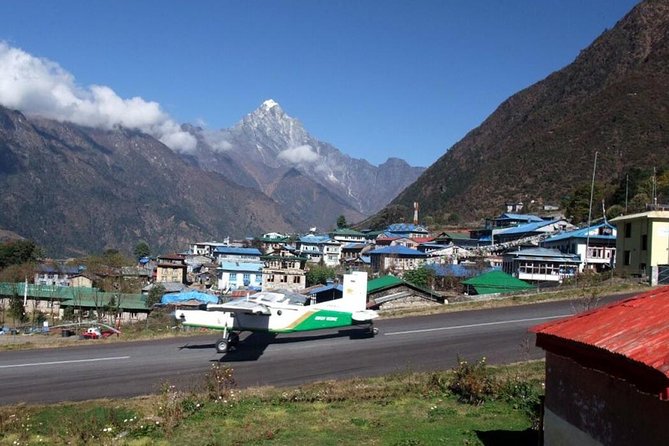
The adventure begins with a domestic flight from Kathmandu to Tenzing-Hillary Airport in Lukla at 2,800m. The flight is short, but it is famous for its scenery and its hillside landing.
Once in Lukla, you meet the rest of the trekking crew and do more packing arrangements. Then you start walking through jungle and down toward Surke, with lunch around Pakhapani. This is a gentle way to start the acclimatization process, even though you’re already at significant altitude.
Kari La pass comes next, on a day that includes a big panorama payoff. You cross Kari La after a careful bridge crossing and a slippery trail. From the top, you can see peaks including Everest, Lhotse, Nuptse, Makalu, Thamserku, Mera Peak, and more in the Mahalangur range. It’s a clear “mountain map” moment, so take photos, but also just look. On these routes, the overview helps you understand what you’re going to walk toward.
Then you work your way through rhododendron and bamboo forests to Pangom (Pangkongama) for the night.
More to compare around Kathmandu
- Everest Base Camp Trek – 14 Days
★ 5.0 · 1,499 reviews - Everest Base Camp Trek
★ 5.0 · 842 reviews - Private Kathmandu Sightseeing Tour | UNESCO World Heritage sites
★ 5.0 · 756 reviews - Kathmandu: 7 UNESCO Sites with Lunch
★ 4.8 · 744 reviews
Trekking days that build strength the smart way
After Kari La, the days settle into a rhythm: forest sections, steep downs, village teahouses, and views that keep changing as you gain and lose elevation.
A few moments that stand out:
- Crossing Mani walls and rhododendron-pine trails: you’re not just hiking through generic countryside, you’re passing spiritual landmarks that are part of everyday life.
- South face views of Mera Peak and Naulekh Peak from the trail near Narjing Dingma: it’s motivating because you can start to picture the climb as a real line, not just an idea.
- Chalem Kharka and Surkie La: you head higher, then angle north along the ridge. The Hongu valley opens up, and you can see the Kangchenjunga massif marking the Sikkim border area.
One of my favorite “character” parts of the trek is the combination of passes and valleys:
- Panch Pokhari: five sacred lakes at a high, exposed-feeling spot. It’s a pilgrimage site for Buddhists and Hindus, and it can feel surreal in its stillness.
- The route then heads toward Khola Kharka and contours around the Hinku Valley. This is where the trek starts to feel more alpine and less jungle.
You’ll also hike through stretches where vegetation becomes sparse and you’re walking among rocky, grassy ground with nomadic meadows (kharkas). That shift matters. It’s your brain learning that conditions can change fast, and you need to keep moving calmly.
Hinku Valley into Khare: when the mountain starts getting serious
As the trek continues, you transition into the upper Hinku system. The route passes places like Kothe and Gondishung, including a visit to the 200-year-old Lungsumgba Gompa. The gompa sits by a huge rock, and climbers burn incense and pray for good weather and a successful ascent. It’s a small moment, but it helps you feel that this isn’t just a sport.
Then you walk toward Khare by following the lateral moraine of Dig Glacier, moving past views of peaks like Charpate Himal. You’re walking near the edge of big glacier terrain, and that changes your sense of terrain underfoot. The walk climbs through moraines and toward glacier snouts, then rises more steeply to Khare.
Khare is important because it is where your climb phase begins to take over.
Glacier training above Khare: what you practice, and why it matters
This is one of the strongest parts of the plan, and it’s also the part most beginners need. You don’t just walk to ice. You practice.
After breakfast, you prepare your gear and head up toward Mera Peak base camp or training areas near Khare. Then you work with the climbing guide for several hours on:
- crampon usage
- ice-axe technique
- movement on ice with safer habits
The goal is simple: you should know how your feet and tools should feel before the summit push. On days at altitude, you’ll be tired. If you’ve already practiced how to place crampons and move efficiently, you’ll make fewer mistakes when cold and thin air slow you down.
Then you return to camp and finish final preparation with your equipment and packing.
Acclimatization and high camp: slow steps, cold threats
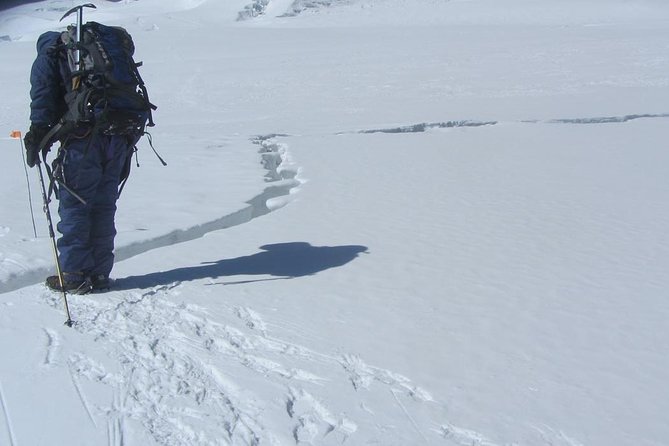
On the acclimatization day, the route climbs to the crest of a moraine above Khare, then up a steep snow slope toward a boulder-strewn bowl below the Mera Glacier lower tongue. The trekking still feels strenuous, mainly because of altitude and cold.
Even though this day is described as no technical climb, don’t let that word trick you into thinking it’s easy. You’re above 5,000m, and “every step comes with a struggle” is exactly the kind of truth you’ll feel up there.
You move toward Mera High Camp. This part can become hazardous if it has recently snowed, because there can be crevasses. From there, you climb to a rock band marked by a large cairn, then set up high camp.
This is also when the group pacing matters. The plan emphasizes keeping your speed slow to allow better acclimatization. That’s not just comfort. It’s survival and summit odds.
Summit push on Mera Peak: rope up, then focus on steps
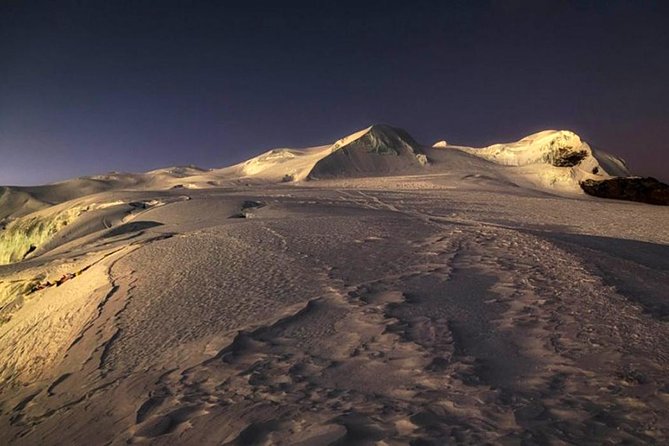
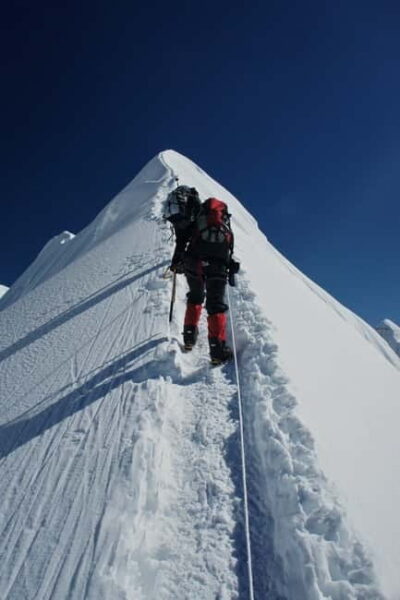
Summit day is a long, cold grind. You wake very early and get ready with crampons, headlights, and rope up before the walk begins.
The route is described as a gradual uphill, non-technical trail. That’s good news, but thin air makes “gradual” still feel like work. From high camp, a well-acclimatized group takes about 3 to 4 hours to reach the central summit. By around 8 to 9 in the morning, you should be at the summit of Mera Central.
From the top, you take in the same high-altitude panorama you heard about before you came, this time up close and personal. Then you start the descent as conditions allow.
Two practical tips that matter on summit day:
- Headlights and rope-up steps mean you should be organized, not fumbling with gear in the dark or cold.
- Your goal is steady movement, not sprinting. If you sprint early, you pay later.
Spare day strategy and the return through Hinku
The trip builds in a spare day specifically for summit timing. If weather changes or if someone has not acclimatized well enough, you can delay the summit attempt. If the summit works on the first try, this day can become extra ice climbing, another night near Lukla, or time to return.
That flexibility is huge on peaks. Weather and body response are not always predictable, and a spare day protects the overall experience from getting wrecked by one rough morning.
After summit success, you descend through the Hinku Valley to Kothe for an overnight teahouse stop. You’ll get the joy of eating something comforting and relaxing with local food and drinks, then you start working your way back to Lukla.
The return route includes walks through forests and higher passes again, including a day that goes from Thuli Kharka with red rhododendron forest scenery. You reach Zatrwa La pass, then descend toward Chutanga and eventually Lukla.
What you carry, what they provide, and what to pack
This trip is unusually helpful for gear because it includes:
- down jacket
- sleeping bag
- duffle bag
- group climbing gear like ropes, ice axes, crampons, harnesses, and karabiners
So you can travel lighter than some peak programs. You still need to bring personal items. Based on how the trek runs, prioritize:
- layers for cold mornings and snow work
- gloves that work for both trekking and handling gear
- a hat that fits under your hood
- sturdy boots you already trust
- sunscreen and lip protection, because you’re on snow and high altitude
Also keep in mind the teahouse reality. Hot showers and charging fees cost extra. Plan to charge when you can, not when you want.
Who this climb fits best, and who should think twice
This plan is designed for people who are fit, adventure-loving, and willing to learn. It describes Mera Peak as a good introductory peak for stepping into mountaineering. That checks out logically: you get training on ice, a guided summit approach, and non-technical walking sections.
You’ll get the best experience if you:
- handle long walking days and steep sections
- can move slowly when you feel tired
- want a structured learning curve instead of guessing with gear
- prefer a team that handles logistics so you can focus on walking, breathing, and learning technique
You might want to think twice if:
- you’re mainly looking for a relaxed trek with minimal cold exposure
- you hate the idea of rope-up conditions and glacier hazards even with guidance
- you are not prepared for altitude pacing and potential flight delays in and out of Lukla
Should you book this Mera Peak climb?
I’d book it if you want your first real peak experience with training, clear guiding, and strong organization. The practical value is high because it includes permits for the trek area, full meals, teahouses up to Khare, tented camping above Khare, and the climbing gear plus key cold-weather items. And the summit experience is supported by a guide-led ice practice day, plus slow acclimatization pacing and a built-in spare day.
I would not book it without a realistic attitude about logistics. Lukla flights can get delayed or canceled due to weather, and that can stress people who rely on strict schedules. If you can stay flexible, use the spare day, and accept the mountain’s timing, this becomes a memorable learning climb.
FAQ
What is the duration of the Mera Peak climbing trip?
The trip runs for about 19 days, starting in Kathmandu and ending back in Kathmandu after the Lukla flights.
Where do you start, and how do you reach the trek?
You start in Kathmandu, then fly to Lukla from Kathmandu for the trek to begin. You also get ground transfers within Kathmandu.
How high is Mera Peak?
The summit of Mera Peak is listed at 6,476m (21,247ft).
Are trekking permits included?
Yes. The plan includes the Makalu Barun National Park entry permit and a local (Rural Municipality) area permit for access to restricted areas.
Is the Mera Peak climbing permit included?
No. The Mera Peak Climbing Permit, issued by the Nepal Mountaineering Association (NMA), is not included.
Are domestic flights included in the price?
No. Domestic flights between Kathmandu and Lukla, including airport taxes, are not included.
What kind of accommodations will you have during the climb?
You get a 3-star hotel in Kathmandu for two nights. During the trek up to Khare, you stay in teahouses, then above Khare you use fully organized tented camping.
Does the itinerary include a spare day for the summit?
Yes. There is a spare day set aside to postpone the summit attempt if needed due to bad weather or acclimatization concerns.
Latest Kathmandu write-ups
- 10 days Annapurna Base Camp Trek★ 5.0 · 5 reviews
- Visit Swayambhunath and Bauddhanath Stupa with Guide★ 5.0 · 5 reviews
- Langtang Trek from Kathmandu 7 Days★ 5.0 · 5 reviews
- 7 Day Kathmandu Pokhara Tour★ 4.5 · 5 reviews
- Island Peak Climbing with Everest Base Camp★ 5.0 · 5 reviews
- Chandragiri Hill Cable Car Tour with Hotel Transfers from Kathmandu★ 4.5 · 5 reviews
- Kathmandu city day tour (4 world heritage sites)★ 5.0 · 5 reviews
- Everest Mountain Flight★ 5.0 · 5 reviews
Peak Climbing, compared.
Everest Base Camp Trek with Island Peak Climbing
Read our review →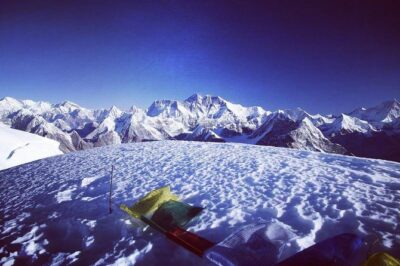
Island Peak Climbing | Summit 6,189m with Expert Guides
Read our review →
16 Days Island Peak Climbing With Everest Base Camp Private Trip
Read our review →Browse the lists this tour appears in