
Reviewed · EVEREST BASE CAMP TREK
14 Days Everest Base Camp Trek
Everest Base Camp is interesting because it combines a classic trekking route with real-world mountain logistics, not just a hike. You start with the famous Lukla mountain flight, then settle into a high-altitude rhythm through Sherpa villages, monasteries, and old prayer-stone paths. I especially like the all-inclusive setup (guides, porters, permits, meals) and the built-in acclimatization days that help you handle the altitude better.
One thing to think about: this is not a walk on a track at sea level. You need strong physical fitness, and weather can affect the flights and timing, especially around Lukla and your return to Kathmandu.
Key highlights to know before you go
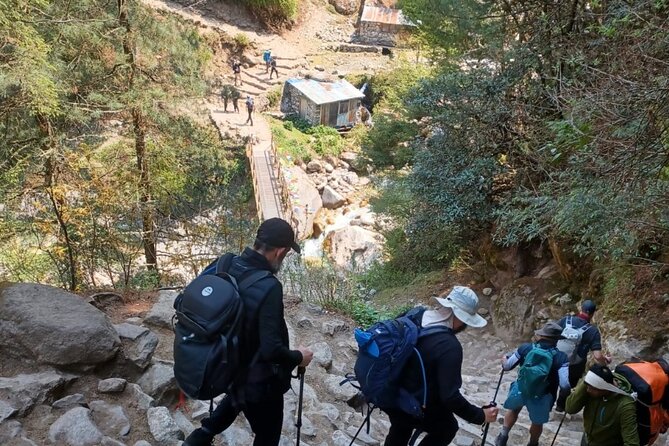
- A guide and porter team, with a porter carrying up to 15 kg, so you can focus on your breathing and your steps
- Domestic flights included (Kathmandu to Lukla and back), which saves days of rough approach trekking
- Acclimatization built into the schedule, including a rest day in Namche and a high viewpoint day from Dingboche
- Everest Base Camp at 5,365 m plus a second big viewpoint climb to Kala Patthar
- Safety items are provided, including an oxygen cylinder, emergency medicine, and a first-aid kit
- Most meals are covered, and you’ll sleep in teahouses during the trek
Why this Everest Base Camp trek feels manageable (even when it gets hard)
If Everest Base Camp is on your list, you’re probably picturing huge views and that moment when the Khumbu Icefall feels close enough to touch. What’s less romantic, but just as important, is how you get there. This trek is designed to reduce decision-making on your end. You get airport and hotel transfers in Kathmandu, flights to Lukla, a guide, porters, the trekking permit, and meals for most days. That means you spend your energy trekking, not organizing.
The pace also gives you a fighting chance. The itinerary includes a rest day in Namche Bazaar and a full viewpoint outing from Dingboche before pushing toward Lobuche and Everest Base Camp. That matters because altitude does not care about your enthusiasm. You want a schedule that helps your body adjust in stages.
Your biggest trade-off is that it’s still a serious high-altitude trek. Even with acclimatization, you’ll be walking many hours on consecutive days, with changing trail conditions and thin air. If you’re not ready for that physical demand, you’ll feel it more than you need to.
More ways to walk to Everest Base Camp:
- Everest Base Camp Helicopter Tour landing at Everest View Hotel
★ 5.0 · 668 reviews - Gokyo to Everest Base Camp Trek
★ 5.0 · 113 reviews - Everest Base Camp Trek
★ 5.0 · 97 reviews
Day 1 to Day 2: Kathmandu handoff and the Lukla mountain flight
Day 1 is straightforward: you land at Tribhuvan International Airport, and a representative meets you based on your flight details. Then it’s a private-vehicle transfer to your Kathmandu hotel. You’re in triple or double sharing accommodation, and the goal is simple, sleep, eat, and get your gear sorted for the trek start.
Day 2 is where the Everest journey becomes real. You transfer from your hotel to Tribhuvan International Airport, then take a flight to Lukla. This is described as a mountain flight, and that’s exactly what you should expect: small-aircraft flying near steep terrain where conditions can feel intense. It’s included, and that’s a major value point because it compresses what could be days of approach travel into a short segment.
Once you land, you trek toward Cheplung village, aiming for a guesthouse night in Phakding. This first trekking day is shorter than the later pushes, around 4 hours here, and it’s built for transition. You’ll also get a sense of the region’s Sherpa-country terrain and the mountain views beginning to show up. Meals are included for the day’s guesthouse stay, so you don’t need to hunt down food options after landing and walking.
Practical tip: even though the trek starts gently, don’t treat it like a warm-up vacation stroll. Your body is already switching gears from flights and city life to breathing harder at elevation.
Day 3 and Day 4: Namche Bazaar, Sherpa culture, and an altitude reset
Day 3 climbs you into Namche Bazaar, the busy hub of the Everest region and a former trading rendezvous for Nepali and Tibetan merchants. The day includes a route through Jorsale Village and the Sagarmatha National Park area, with suspension bridges and pine and cedar forests along the trail. This is also where you’ll notice cultural details like old Mani stone walls carved with prayers.
The walk is about 7 hours, and the key is how the day builds elevation. You’re walking toward one of the most important acclimatization points on the whole route. When you reach Namche, overnight is in a trekking teahouse, and you’ll eat as part of that stay.
Day 4 is a reset day, and I really like that the itinerary protects you here. You explore Namche Bazaar, and you also head for sightseeing around Syangboche Airport, listed at 3,700 m. Then you get time for two culture-focused stops: the Everest Photo Gallery and the Sherpa Culture Museum, plus a short visit that pairs nicely with your rest day.
The practical benefit of this day is simple: it reduces the chance you’ll rush into higher elevations feeling wiped out. The schedule explicitly mentions altitude sickness and vertigo concerns, and that’s your cue to take the slower day seriously. Even if you feel great, don’t pack this day with extra miles.
Also, enjoy the way viewpoints work on this kind of rest day. You may get clear sightlines and a calmer body, which makes it easier to appreciate the mountains around you instead of just surviving the walk.
Day 5 to Day 7: Tengboche monastery, Dudh Koshi valley, and the route toward Dingboche
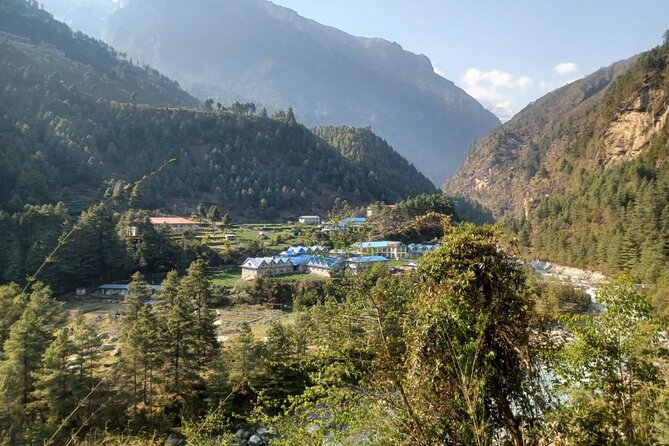
Day 5 shifts you toward spiritual landmarks and big mountain backdrops. You trek toward Dudh-Koshi Valley at Phungki-Thanka and then visit Tengboche Monastery at 3,860 m. The itinerary highlights that the monastery sits with views of Everest, Ama Dablam, and other peaks. Whether the weather is perfect or not, monasteries like Tengboche are usually the kind of stop where you feel the place become more than scenery.
You’ll overnight at a guesthouse with breakfast, lunch, and dinner included. The day is about 6 hours walking, and it includes the transition from the Namche area into the higher Khumbu feel.
Day 6 continues the climb toward Dingboche. You pass through Teach Debouche via the Imja Khola and head up toward Pangboche, described as lying between copious Mani stones. Then you reach Dingboche, also known as the Summer Valley, and you’re met with broad views of Lhotse, Ama Dablam, and Island Peak. This day runs about 6 hours.
Day 6 is a turning point because you start feeling the long-range geography of the Everest region. You’re not just moving from village to village now. You’re moving through an area where peaks frame your trail and the air changes how you move and speak.
Day 7 is where the altitude strategy gets real. You hike to Nangkartseng Hill, around 5 hours mentioned, for panorama views listed in the itinerary: Lobuche East (6,119 m), Lobuche West (6,145 m), Kangtega (6,685 m), Taboche Peak (6,367 m), Thamserku (6,608 m), and Ama Dablam (6,856 m). The plan also notes that you might see Mt. Makalu if weather is favorable.
After lunch, you get time to relax. I like that this day includes both the effort and the recovery. You’re being trained for the push toward Lobuche and Everest Base Camp, and a viewpoint day works as a controlled way to “test” your body without going all the way yet.
More to compare around Kathmandu
- Kathmandu: 7 UNESCO Sites with Lunch
★ 4.8 · 744 reviews - Kathmandu: Local Women-Led Nepali Cooking & Momo Class
★ 4.9 · 360 reviews - Manaslu Circuit Trek
★ 5.0 · 292 reviews - Kathmandu: Food and Drink Walking Tour
★ 4.9 · 292 reviews
Day 8 to Day 10: Lobuche, Khumbu Glacier, Everest Base Camp at 5,365 m
Day 8 is about reaching Lobuche after crossing a trail segment that includes Thukla, a small lunch town. It’s about 5 hours, then you continue down to the Khumbu Glacier area before arriving in Lobuche. The itinerary describes views of Nuptse, Pumori, Mahanlangur himal, with prayer flags around chortens and Mani stones. That detail matters because it’s one of those days where the visual texture of the trek changes. You start feeling closer to the glacial environment that defines the Everest Base Camp approach.
Day 8 overnight is in a guesthouse with all meals included. This is one of those days where you’ll likely notice how much cold you can feel even when the sun is out. Keep an eye on how you sleep and how you snack. Staying warm and steady helps for the big day ahead.
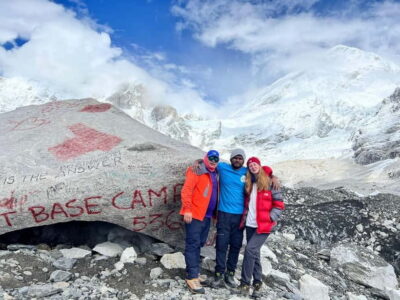
Day 9 is the big one, described as a difficult day walk along the Khumbu Glacier and up to Everest Base Camp at 5,365 m. This is the closest you can get to Everest without mountaineering equipment, and the itinerary emphasizes the view of the Khumbu Icefall from Base Camp. Expect a long day, around 9 hours, and a day where energy management matters as much as stamina.
After reaching Base Camp, you return back to Gorakshep for the night. This is a practical rhythm: you go up to the high target, then come back to sleep at your base for the next viewpoint day. That keeps the plan realistic. You’re not asked to do everything in one go without a recovery break.
If you’re the type who wants photos, this is where you’ll spend time pausing. But do it with care. When you stop moving at altitude, your body cools down faster than you expect.
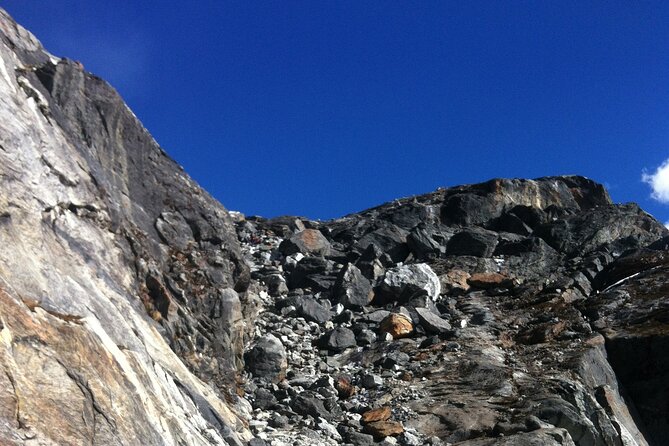
Day 10 is Kala Pattar, one of the best viewpoints on the route. The itinerary describes it as a cardinal day for views of Everest plus Nuptse, Chagatse, Lhotse, and Pumori. Then you walk back to Gorakshep and descend to Pheriche, listed as 4,210 m. This is about 8 hours total.
I like that you get the major second viewpoint day right after Base Camp because it gives meaning to the whole sequence. But it also means your legs will feel it. You’ll want to keep your descent steady, not rushed, because steep downhills can beat up your knees.
Day 11 to Day 13: Returning via Pangboche and the final flight to Kathmandu
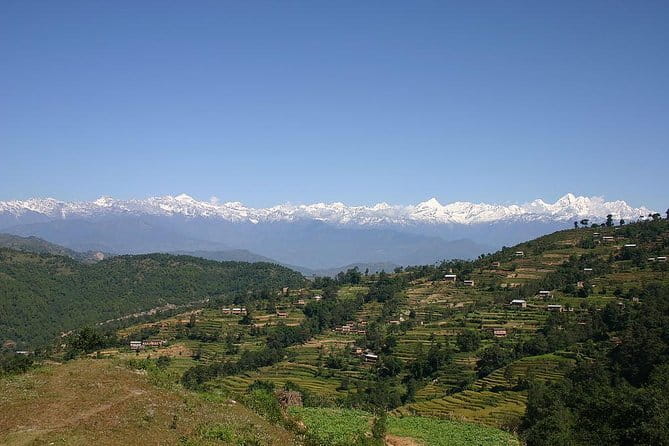
Day 11 starts with descending toward Pangboche, following Phungki Thanka along the Imja River via Kyangjuma back to Namche Bazaar. It’s about 7 hours. The overall feel here is lighter than the push days, but it’s still trekking. You’re moving through familiar regions with a new appreciation after seeing Base Camp and the wider peaks.
Overnight is in a guesthouse with meals included.
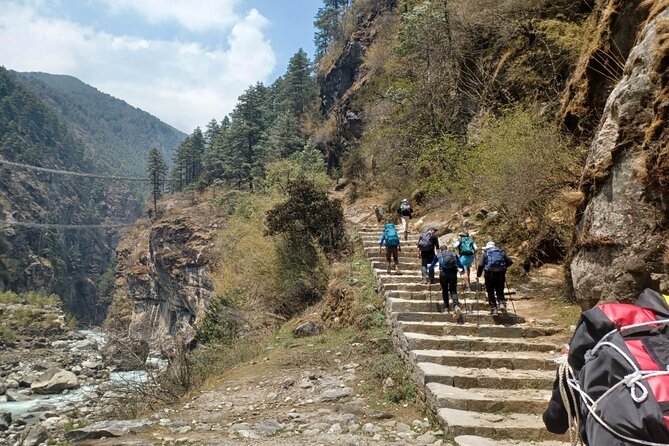
Day 12 finishes your trekking loop by heading to Lukla. You’ll walk along steps crossing suspension bridges above the Dudh Koshi then end at Lukla. The itinerary frames the day as mind relaxing, with views of plains, rhododendron forests, and snow-covered peaks. It’s about 7 hours. At this stage, it’s normal to feel a mix of relief and sadness. You’re leaving the mountains you’ve gotten used to.
Overnight is again in a guesthouse with breakfast, lunch, and dinner included.
Day 13 is your transition back to city comfort. You fly from Tenzing-Hillary Airport back to Kathmandu, a scenic flight noted as 35 minutes. You’ll be dropped at your booked hotel, then transferred back to the starting hotel. The itinerary also mentions that if you want to extend your trip, Kathmandu offers options like Chitwan jungle safari, river rafting, shopping tours, mountain biking, and other activities.
Even if you have other plans, I suggest you give yourself downtime that evening. Your body has been working at altitude for nearly two weeks. Let it come back to normal gradually.
Inclusions and value: what you’re paying for in the real world
At $1,499 per person for 14 days, you’re not only paying for the mountain dream. You’re paying for a system that reduces your workload and smooths the rough edges.
Here’s what stands out as genuinely valuable:
Flights and transfers included
You get airport and hotel transfers in Kathmandu, then the return flight between Kathmandu and Lukla. Those flight segments are often the biggest headache on the Everest route, so including them is a strong value signal.
Guide, porters, and permit handled
You get an English-speaking local guide, plus a porter who carries up to 15 kg per person. The trekking permit is included as well. That means you’re not trying to navigate paperwork while also trying to manage stamina.
Food and lodging simplify daily decisions
Breakfast, lunch, and dinner are included on days listed as part of the accommodation stays, with a structure of breakfast and dinners throughout the trip and lunches on the trekking days. Teahouse accommodations are included from Day 2 to Day 12.
Safety gear is included
You’re provided a high-altitude sub-zero sleeping bag that’s hygienically cleaned, plus an oxygen cylinder, emergency medicine, and a first-aid kit. There is also complete medical and life insurance for the porters and guides.
Two things to be honest about for planning:
- Water and drinks are not included. You’ll want to budget for what you drink.
- Travel insurance is not included for you. The trip includes insurance for guides and porters, but you should still consider your own coverage for medical and evacuation situations since those are explicitly listed as not covered in the provided inclusions.
If you’re comparing costs, the right question is not just “is $1,499 cheap.” It’s “does it reduce the expensive, risky parts of planning?” Here, a lot of the key logistics are handled: flights, porters, permits, meals, lodging, and safety basics.
Your guide and porter make the trek, not just the route
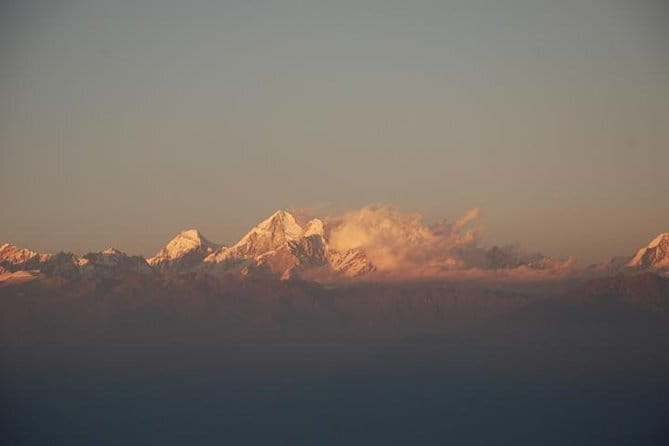
The Everest Base Camp trail can be emotionally intense even when the weather cooperates. That’s why the guide dynamic matters. In the experiences connected to this trek provider, guides like Bishal are repeatedly credited for being helpful and encouraging, taking care of details, and making the day-to-day feel manageable. Another named guide from the same ecosystem is Abhishek, described as young, enthusiastic, and effective as a solo trek guide.
Even if your guide is different, your job is to work with the team you’re given. Listen on acclimatization days. Don’t ignore instructions about pacing and resting. A good guide keeps you moving at the right intensity, and porters help you move lighter and safer.
Also take the porter weight limit seriously. Up to 15 kg per person is generous, but it’s not unlimited. Pack efficiently so your load stays in that zone.
Who should book this trek, and who should think twice
This trek is built for people with strong physical fitness, because you’ll be walking many hours on most days and reaching high elevations. If you’re comfortable with long uphill and downhill days, you’ll enjoy the rhythm.
This is also a good fit if you want a guided, structured experience. The tour is private, meaning only your group participates. That can feel less hectic than mixed group treks, especially in crowded parts like Namche Bazaar.
Think twice if any of these apply:
- You struggle with consistent uphill walking for multiple days
- You’re not comfortable planning around altitude and weather
- You’re trying to do this trek without considering hydration and cold-weather gear needs (water and drinks are not included, and the trek includes a sub-zero sleeping bag but not necessarily other personal cold items)
If you’re a solo traveler who wants a guided team and a clear plan, this can work well. If you’re bringing family members, make sure everyone has the fitness for the higher walking days and viewpoint climbs.
Should you book this Everest Base Camp trek?
I’d book it if you want the iconic route, but you also want the parts that usually go sideways handled for you. Included flights to Lukla, a guide and porter support system, teahouse stays, most meals, permits, and safety items add up to more than convenience. It’s practical risk reduction: less planning stress, fewer missing details, and a schedule that respects acclimatization.
I would pause before booking if you are unsure about your fitness level or you’re sensitive to altitude. This itinerary includes rest and acclimatization, but it still reaches Everest Base Camp at 5,365 m and includes a major viewpoint day at Kala Pattar followed by descent.
FAQ
What is included in the price?
The trek includes Kathmandu to Lukla flights and the return flight, airport and hotel transfers in Kathmandu by private vehicle, teahouse accommodation during the trek, Kathmandu hotel accommodation for Day 1 and Day 13, an English-speaking local guide, a porter (up to 15 kg), the trekking permit, most meals (breakfast, lunch, and dinner across the listed trekking days), TIMS card, a sub-zero sleeping bag, and an oxygen cylinder with emergency medicine and a first-aid kit.
Are meals included during the whole trek?
Meals are included for the trek days listed in the plan. Breakfast is included for the 14-day period as stated, and dinners and lunches are included across the specified trekking days.
Is water included?
No. Water or any kind of drinks are not included.
Do I need a visa for Nepal?
A Nepal entry visa is listed as $40 for foreign trekkers, and it is not needed for Indian citizens.
What kind of insurance is provided?
The inclusions mention complete medical and life insurance for porters and guides. Travel insurance is not included for you, and medical and evacuation expenses in unforeseen circumstances are listed as not included.
Is there oxygen or emergency support?
Yes. The trek includes an oxygen cylinder, emergency medicine, and a first-aid kit.
What happens if weather cancels the trek?
This experience requires good weather. If it’s canceled due to poor weather, you’ll be offered a different date or a full refund. The trek also requires a minimum number of travelers, and if that minimum isn’t met, you’ll be offered a different date or a full refund.
Latest Kathmandu write-ups
- 16 Days Island Peak Climbing With Everest Base Camp Private Trip★ 5.0 · 3 reviews
- 15 Days Round Annapurna Trek with Poon Hill from Pokhara★ 5.0 · 5 reviews
- Private Nepal round trip including Ghorepani Poonhill trek★ 5.0 · 3 reviews
- Everest Base Camp Trekking 16 Days★ 4.0 · 7 reviews
- 14 Days Luxury Annapurna Base Camp Trek★ 5.0 · 6 reviews
- Everest Base Camp Trek★ 5.0 · 32 reviews
- Everest Base Camp Trek★ 5.0 · 87 reviews
- Everest Base Camp Trek★ 5.0 · 97 reviews
Everest Base Camp Trek, compared.
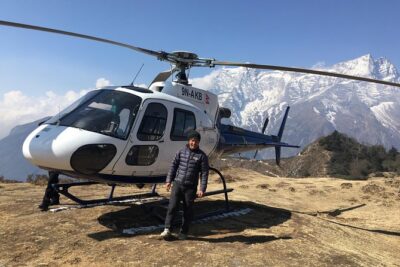
Everest Base Camp Helicopter Tour landing at Everest View Hotel
Read our review →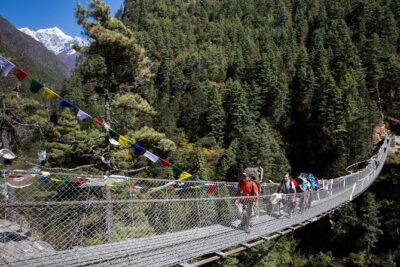
Everest Base Camp Trek 12 Days – Best Himalayan Adventure
Read our review →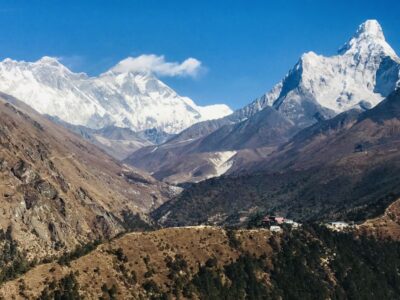
Browse the lists this tour appears in