
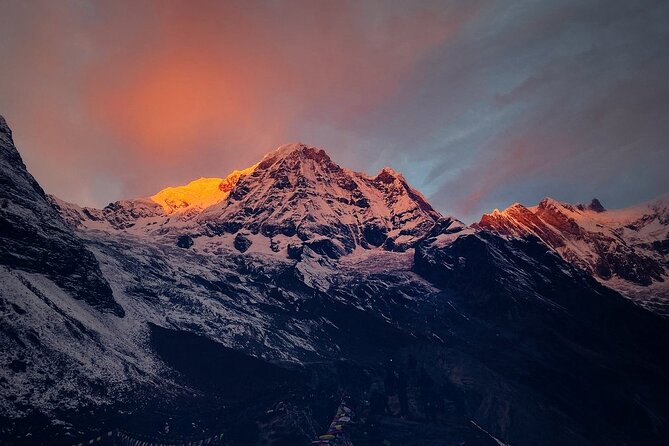
Reviewed · ANNAPURNA CIRCUIT TREK
Annapurna Circuit Trek with Tilicho Lake
This trek is interesting because you are not just looping the Annapurna Circuit. You also tack on a high-altitude side mission to Tilicho Lake, then pivot back toward Thorong La and the classic Annapurna views. If you like your mountains with temples, villages, and big walking days, this route has that mix.
Two things I really like: the included permits (ACAP and TIMS) and the way the itinerary builds in acclimatization before the hard stuff. One drawback to consider is that this is a challenging mountain trek with an early start on Thorong La day, so you need to be comfortable pushing your body at altitude.
Key Takeaways Before You Go
- Tilicho Lake detour: a serious altitude highlight, reached via a focused hike from base camp
- Small group size (max 15): more personal attention from a licensed leader
- Meals and permits included: tea house/lodge lodging plus breakfast, lunch, and dinner on trek
- Acclimatization built in: Manang exploration and Gangapurna Lake help you adjust
- Hot springs payoff: Tatopani gives you a real chance to soak after Thorong
- Safety via guidance: you hike with a guide so navigation stress stays low
Why Tilicho Lake Turns the Annapurna Circuit Into Two Trips
If you have ever done the Annapurna region, you know the trails are never really “just a trail.” They are a moving line through culture and altitude. This version keeps that energy but adds a detour to Tilicho Lake, which feels like a different goal inside the same overall journey.
Tilicho Lake is the kind of stop people remember because it is not a quick viewpoint. The day includes a steady climb, and the plan is to start early to avoid the wind that can show up later. That small detail matters. When conditions are right, you get a clearer shot at the high-mountain mood that Tilicho is famous for.
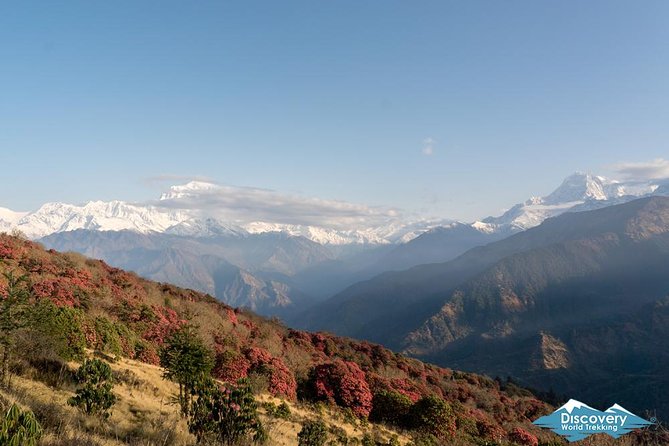
The best part is how the trek keeps variety. You start in farmland and river valleys, climb through forest, move into the drier high Manang area, then go higher for the ice-lake feeling, and finally swing down toward temples and hot springs.
More of the Annapurna Circuit:
- Annapurna Circuit Trek
★ 5.0 · 94 reviews - Annapurna Circuit Trek
★ 5.0 · 67 reviews - Annapurna Circuit Trek
★ 5.0 · 49 reviews
The Team, the Group Size, and Why Logistics Matter on Trek Days
You will be hiking with a government-licensed leader, plus support from porters. The experience is designed so you can focus on walking and not spend your brain power on planning every transfer and finding the right route.
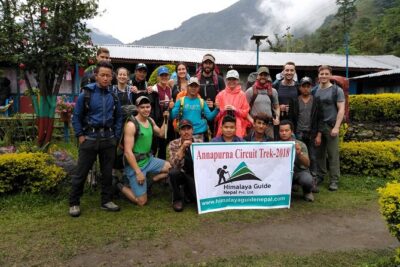
Small group matters here. With a maximum of 15 people, you are less likely to feel like a number. In the reviews, people specifically called out the guides and porters by name, including Hari Gurung, Dev, and Suresh, along with porters Damar, Sangkar, Bikesh, Asis, and Monis. Your exact crew can vary, but the consistent theme is strong day-to-day care, not just “here’s your map, good luck.”
Practical note: the trek also includes rescue-arrangement assistance if you run into complicated health conditions. That does not remove risk, but it does reduce the chaos if something goes wrong, especially at altitude where help can be harder to coordinate.
Price and Value: What You Really Get for $1,093
On paper, $1,093 can look like a lot for a trek. But when you break down what is included, it becomes more sensible. You are not only paying for guiding. You are paying for the structure that makes the trek run smoothly.
Here is what tends to drive value the most:
- Tea house/lodge accommodation plus meals (breakfast, lunch, dinner during the trek)
- Permits for the Annapurna Conservation Area (ACAP) and the TIMS card fee
- Porter and guide support, including meals, insurance, salary, and lodging for staff
- Overland transport segments (including Kathmandu-area pickup and transfers listed in the plan)
- Pokhara hotel night with breakfast before the trek finishes
- Dietary extra requirements catering, meaning you are not left figuring it out on your own
For me, the biggest value piece is the meal plan plus included permits. On trekking days, that combination can easily become the difference between “I’m enjoying this” and “I’m stressed about money and logistics.”
One thing to watch: the trek is also non-refundable and tied to weather and minimum travelers, per the experience terms. That is not unusual in Nepal, but it does mean you should plan for flexibility if you are traveling on a tight schedule.
Entering the Annapurna Region: Besishar to Chame (Days 1 to 4)
Day 1 starts with a long drive from Kathmandu, about 6 to 7 hours, covering roughly 190 km to Besishar. You also stop at Sandup Choeding Gompa. This is a good way to ease into the journey. You are not thrown straight onto steep trail. You get scenery, villages, farms, and river views, then you begin walking the next day.
Day 2 focuses on the Dharapani Temple area. The trek includes a suspension bridge and then a steep climb that leads you toward the Manang region, reaching the village named Tal. Expect waterfalls and a mix of sandy river features as the trail threads through the area.
Day 3 brings you deeper into the Annapurna Range rhythm. You follow a path alongside rivers through pine, fir, oak, and maple, reaching Chame, the district headquarters of Manang. Chame is where the trek starts to feel more “high-country” than “valley hike,” and the air usually gives you that hint before you even measure altitude.
Day 4 is about a big view moment. You hike through a steep, narrow valley for your first clear look at Paungda Danda, a curved rock face rising 1500 m from the river. From there you also get sightlines toward Annapurna II to the south and Pisang Peak to the north east. This is the day where many people start realizing this circuit is a set of viewpoints stitched together by work.
More to compare around Kathmandu
- Everest Base Camp Trek – 14 Days
★ 5.0 · 1,499 reviews - Everest Base Camp Trek
★ 5.0 · 842 reviews - Private Kathmandu Sightseeing Tour | UNESCO World Heritage sites
★ 5.0 · 756 reviews - Kathmandu: 7 UNESCO Sites with Lunch
★ 4.8 · 744 reviews
Manang Acclimatization and the Road to Upper Trails (Days 5 to 7)
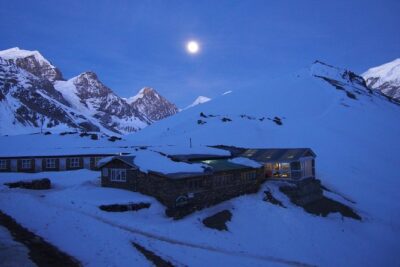
Day 5 continues upward on the upper trail through Upper Pisang via Geru, and you spend time looking at the north face of Annapurna II, III, IV, Gangapurna, Tilicho, and Pisang Peak as you ascend. This is where the trek’s “cold and dry” shift becomes real. The itinerary specifically notes that as you go up, the air turns colder, drier, and harsher.
That is why Day 6 is important. Instead of pushing toward Thorong La too fast, you spend the day acclimatizing around Manang. You hike up to Gangapurna Lake and a base camp, and you spend time admiring Annapurna III, Tilicho, Pisang, and Chulu Peaks. You also roam Manang village and monasteries. If you are the type who enjoys culture between viewpoints, this is a good break day.
Day 7 is described as a slightly easier day. You take an upper route that follows a path down toward a river, cross it, and walk through coniferous forests. After around three hours, you reach the Tibetan settlement of Khangsar. This transition is useful. It gives you time to reset after acclimatization and sets you up for the Tilicho approach.
Tilicho Base Camp and the Walk to the Ice Lake (Days 8 to 10)
Day 8 starts with an easy path through a landslides area, where you can see impressive rock formations. Then you continue up to Tilicho Base Camp, aiming for views of Tilicho Peak and surrounding snow-covered mountains. This is where your pacing matters most. You want enough energy for the next day.
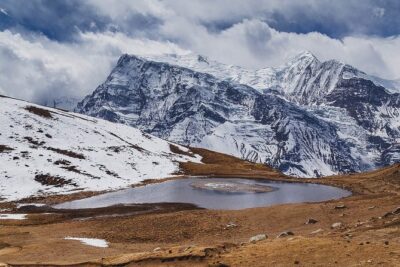
Day 9 is the Tilicho Lake day. You start early to avoid afternoon wind. Then you do a steep, consistent climb of about 2 to 3 hours to reach the lake. Tilicho is often called the highest lake in the world and is referred to as the great ice lake by a leader from a French expedition team. Even without getting lost in history, you can feel the meaning of those phrases when you are standing at the water’s edge and the mountain scale is all around you.
Day 10 turns the page. You descend to the uninhabited Khangsar area, pass Tare gumba, described as a thousand year old monastery, and then follow a rock wall out of Khangsar. The route includes a descent to a bridge in the Thorong Khola valley, a river crossing, and then hiking up toward a plateau to reach a yak camp. This is a classic “work for the view” day. It can feel long, but it positions you for the Thorong La push.
Thorong La, Muktinath, and Tatopani Hot Springs (Days 11 to 13)
Day 11 heads uphill to Thorong Phedi, a small busy settlement with amazing mountain and valley views. On the way you get viewpoints toward Mt Gundang, Mt Syagang, Thorung Peak, and Mt Khatungkan. The best advice I can give you here is mental preparation. If you treat Thorong La as something you handle step by step, you usually do better than if you try to “power through” from fear.
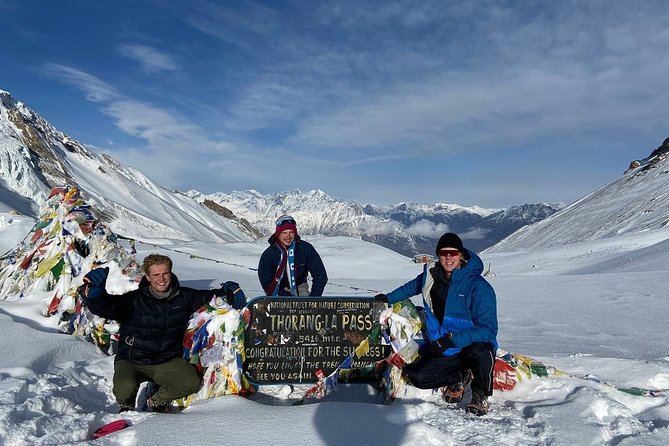
Day 12 is the big day. You cross Thorong La pass, one of the highest passes in the world and the highest point of the trek. You wake early, around 3 am, to complete the challenge. It is the most challenging part of the trip in the itinerary, and that matches the feel of any high pass day. You are not just walking. You are managing cold, effort, and altitude at the same time.
Then Day 13 provides a relief arc. You visit Muktinath Temple before continuing by car ride to Tatopani. Tatopani is famous for natural hot springs, and this is where the trek finally gives you a recovery tool you can actually feel. After a hard pass, a soak can do more than clean you up. It can reset your whole mood.
Ghorepani, Poon Hill Sunrise, and Your Return to Kathmandu (Days 14 to 16)
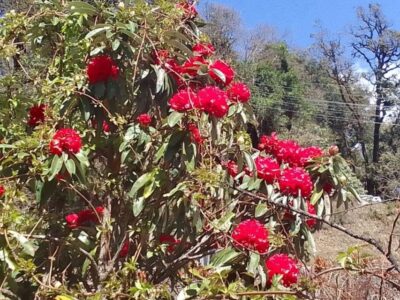
Day 14 brings you up to Ghorepani through villages of Sikha and Chitre, described as home to ethnic Thakali people. You pass terraced farmland and then go through forests filled with rhododendron, birch, and magnolia. You also stop at the Ghorepani Community hospital, which is a reminder that this trek route links you into real local life, not just postcards.
Day 15 is sunrise and photos. You ascend to Poon Hill, at about 3,210 m, early morning to view sunrise over the Annapurna and Dhaulagiri massif, plus Machhapuchhre (Fishtail), Manaslu, and surrounding rice terraces. Poon Hill is a favorite spot for photographers, and it is easy to see why. This is one of those days where even tired legs feel less heavy once the sky starts turning.
Day 16 is your exit. After breakfast, you drive back to Kathmandu by tourist bus. There is also an optional flight return, described as a 225 minute option, but it is not included in the package. You finish in Kathmandu, with the overall trek completed.
What This Trek Feels Like Day-to-Day: Early Starts, Altitude, and Pacing
This trek is best suited to active travelers, and the itinerary shows why. You have steep segments, multiple long walking days, and at least one early-morning push on the scale of 3 am. If you are the kind of traveler who hates waking up early, you will still be able to do this trek, but you will want to mentally commit to the routine.
Acclimatization is handled with intention. Day 6 gives you time around Manang and Gangapurna Lake before Thorong. That is not random. It helps your body adjust so you can enjoy the high highlights like Tilicho and Thorong La, instead of simply surviving them.
Also, the trek design reduces navigation anxiety. The experience emphasizes hiking safely with a guide. For many people, that is what makes the trek feel smoother. You do not spend energy on wrong turns or uncertain routes, which can matter a lot when you are already tired.
Who Should Book This Trek (and Who Might Want Another Option)
You should book this trek if:
- You want a guided Annapurna Circuit with the Tilicho Lake detour
- You like the idea of included meals and permits so you do not juggle extra logistics
- You are active and ready for high passes, steep days, and early mornings
- You want small-group support and a team approach with porters
You might think twice if:
- You need a very relaxed walking pace, because Thorong La day is a serious commitment
- You are not comfortable with cold, dry high-altitude air, especially after the Manang climb stages
If you are unsure about your fitness, the itinerary points to moderate physical fitness as the expectation. That is a fair baseline. You should also be honest with yourself about early starts. On pass day, your alarm clock becomes a key part of the schedule.
Should You Book This Annapurna Circuit With Tilicho Lake?
If you want one guided package that covers the big logistical pieces, this trek makes sense. The value comes from the combination of meals, permits, and staff support. Add Tilicho Lake and Tatopani hot springs, and you get real variety, not just one long grind.
I would book it if you are excited by the high points and you can handle early mornings without turning them into a battle. If you prefer self-guided travel and you dislike structured itineraries, then another approach may fit better.
The bottom line from both the route and the service design is simple: this is a strong choice for active walkers who want their Annapurna journey planned, supported, and safely guided from start to finish.
FAQ
How long is the trek?
The itinerary is listed as 16 days (approx.).
What is the starting location for the trek?
The experience starts in Kathmandu, Nepal, with pickup offered.
What does the price include?
The price includes accommodation (Pokhara hotel one night plus tea house/lodge during trek), meals during the trek, permits (ACAP and TIMS), local overland transport segments, and coverage for the guide and porters including meals, insurance, salary, and lodging.
Are permits included?
Yes. The Annapurna Conservation Area Permit (ACAP) fee and the TIMS card fee are included.
Is Tilicho Lake part of the trek?
Yes. The itinerary includes a hike to Tilicho Lake after Tilicho Base Camp.
What kind of travelers is this trek for?
It is best suited to fit, active travelers and is described as a challenging mountain trek. Moderate physical fitness is expected.
Do I have to worry about getting lost?
The experience is designed to be done safely with a guide, and it emphasizes reducing the risk of getting lost.
Is transportation included?
Yes. Local overland transport is included, with drive segments such as Kathmandu to Besishar, public transportation from Muktinath to Tatopani, and a tourist bus from Pokhara back to Kathmandu. There is also an optional flight from the Kathmandu area, but that flight is not included.
What about meals and lodging during the trek?
Tea house or lodge accommodation is included, along with breakfast, lunch, and dinner during the trek.
Are there hot springs on the route?
Yes. After visiting Muktinath Temple, the plan includes Tatopani, which is famous for natural hot springs.
What is the cancellation policy?
The experience is non-refundable and cannot be changed for any reason. It may be offered a different date or a full refund if canceled due to poor weather or if the minimum number of travelers is not met.
Latest Kathmandu write-ups
- Visit Swayambhunath and Bauddhanath Stupa with Guide★ 5.0 · 5 reviews
- 10 days Annapurna Base Camp Trek★ 5.0 · 5 reviews
- Langtang Trek from Kathmandu 7 Days★ 5.0 · 5 reviews
- Island Peak Climbing with Everest Base Camp★ 5.0 · 5 reviews
- 7 Day Kathmandu Pokhara Tour★ 4.5 · 5 reviews
- Everest Mountain Flight★ 5.0 · 5 reviews
- Kathmandu city day tour (4 world heritage sites)★ 5.0 · 5 reviews
- Chandragiri Hill Cable Car Tour with Hotel Transfers from Kathmandu★ 4.5 · 5 reviews
Annapurna Circuit Trek, compared.
15-Day Private Annapurna Circuit Trek from Kathmandu
Read our review →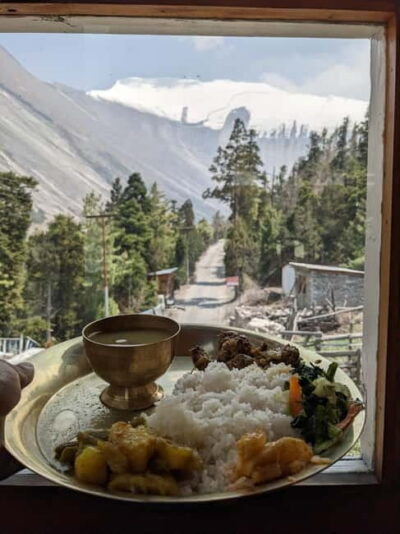
8 Days Private Guided Trekking in Annapurna Circuit with Pickup
Read our review →
10-Day Annapurna Circuit Trek via Thorong La Pass
Read our review →Browse the lists this tour appears in