
Reviewed · ANNAPURNA CIRCUIT TREK
Annapurna Circuit Trek
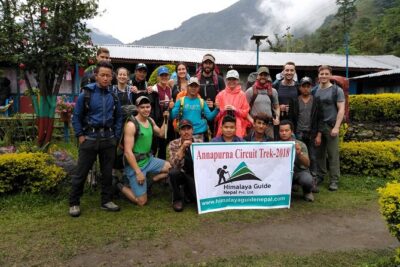
Nepal has a way of making you slow down, and this trek does it in stages. You start with classic Kathmandu sights, then you move into a long rhythm of stone villages, high passes, and big mountain views, capped with an early sunrise at Poon Hill. In recent trips, guides such as Ganesh Khanal, Nimesh, Madan, Ram, and Janu are repeatedly praised for keeping the group calm and moving at the right pace. That matters most when the air thins out on the trek.
What I like most is the way the trip balances effort and comfort. You get a licensed English-speaking guide, a porter (for two clients), and included lodging in Kathmandu and Pokhara, then tea-house style guesthouses during the trek. I also like that the “big moment” days are built around reality, like starting very early for the Thorong La crossing and then giving you time to recover with hot springs in Tatopani. A possible drawback: the trek demands solid high-altitude resilience, and weather can affect timing around Thorong La, so you should be ready to be flexible.
Key highlights worth centering
- Small group size (max 15 travelers) for a more manageable pace and easier coordination.
- Thorong La logistics: the pass day starts around 4 am to help you reach the top by late morning.
- Tatopani hot springs: a full rest day to soak after descending into the Kali Gandaki gorge area.
- Two major view days: sunrise attention in Manang-side acclimatization walks, plus the classic early hike to Poon Hill.
- Real support, not just a guide: a porter for two clients and included sleeping bag plus down jacket for the trek.
- You also see Nepal off the trail: Kathmandu Hindu and Buddhist sites, then Pokhara’s caves and falls.
Kathmandu, Pokhara, and the trek build-up that actually helps
This is not a “fly in, vanish for three weeks, return somehow” kind of trip. You spend the first part of the journey in Kathmandu, with guided visits that help you understand what you are seeing before you ever hit the high passes. You arrive at Tribhuvan International Airport, meet your airport representative outside the terminal, and transfer to your hotel in a private tourist vehicle.
Then, you get a pre-trek meeting in the office (either on Day 1 or Day 2). This is where the paperwork gets sorted, and it is also where you learn the names and roles of your trek leader and guide. Bring your passport, three copies of passport-size photos, and a readable copy of your travel insurance policy, then clear any due balance and sign the trip form plus the non-liability disclaimer. Even if you normally hate admin while traveling, doing this early makes the trek smoother because you do not have to scramble later for documents or final checks.
You have plenty of guided structure for Kathmandu:
- Pashupatinath Temple on the Bagmati River, with viewing from the eastern bank since inside access is restricted to Hindus.
- Boudhanath Stupa, one of the holiest Buddhist sites in the city, with pilgrims walking around and spinning prayer wheels.
- Bhaktapur Durbar Square, including famous temples like Nyatapola and the Palace of 55 Windows area.
I like this mix because it gives you both Hindu and Buddhist context in one concentrated block. And since entrance fees and guided sightseeing are included, you do not need to budget extra just to see the key monuments.
More of the Annapurna Circuit:
- Annapurna Circuit Trek with Tilicho Lake
★ 5.0 · 368 reviews - Annapurna Circuit Trek
★ 5.0 · 94 reviews - Annapurna Circuit Trek
★ 5.0 · 49 reviews
The trekking rhythm starts in Marsyangdi Valley
After Kathmandu, you shift into travel mode. You take a public bus from Kathmandu to Besisahar (about 6 hours), then a local shared 4WD to Syange (about 2 hours). This first transfer day matters more than it sounds. Nepal road travel can be slow and bumpy, and starting early in the sequence helps you avoid losing trekking days to transport delays.
From there, your trek begins gently and gradually:
- Day walking to Tal along the Marsyangdi River, with a slightly ascending start and waterfalls along the route.
- Danakyu, where you leave the river valley behind and get broader countryside views, including sightlines toward Annapurna II and Pisang Peak.
- Chame, the Manang district headquarters, with a move from earlier trail sections into a town that has more services.
The practical takeaway: the earlier days set your pacing habits. If you tend to go out too fast when you feel good, this section is where a good guide will help you find a sustainable stride. It also keeps the group energy up before the higher and colder stretch begins.
Upper Pisang to Ngawal, then the Manang acclimatization reality check
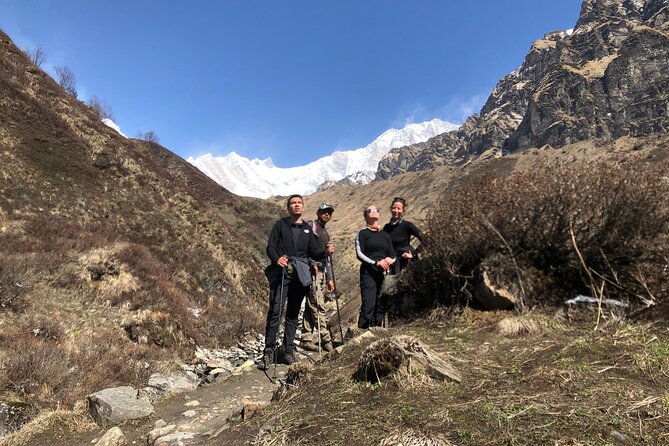
As you climb toward higher villages, the trek starts offering more “vertical drama,” especially when you reach the Upper Pisang area. You walk through forest and river scenery, and you get first strong views of rock faces like Paungda Dada, curved like a bowl. Then you reach Upper Pisang, and Annapurna II becomes a more constant companion.
Next comes Ngawal, with an early morning sunrise moment. The trail to Ngawal is about 400 meters higher than the lower route, but it also brings you opportunities for high-altitude flora and fauna, plus gorges and strong mountain views.
Then you settle into Manang, one of the more active places on this trek. You do two Manang-focused things:
1) A rest and acclimatization day, with light walks and visits such as a monastery.
2) A hike option toward Gangapurna Glacier Lake during that acclimatization walk.
This is where I think the “small-group guided” element can really pay off. Acclimatization is not theory. It is how you feel that day, and how you manage effort at altitude. A well-run trip will keep this day from turning into a scramble. Your goal here is getting comfortable enough to handle the ascent toward higher camps.
Yak Kharka to Thorong Phedi: where the altitude starts to bite
After Manang, you move toward Yak Kharka. Expect a steady climb of around 500 meters, reaching about 4,000 meters. The walk has a noticeable shift as yaks and thinner vegetation appear. If you are looking for the first day where altitude feels real, this is often the one.
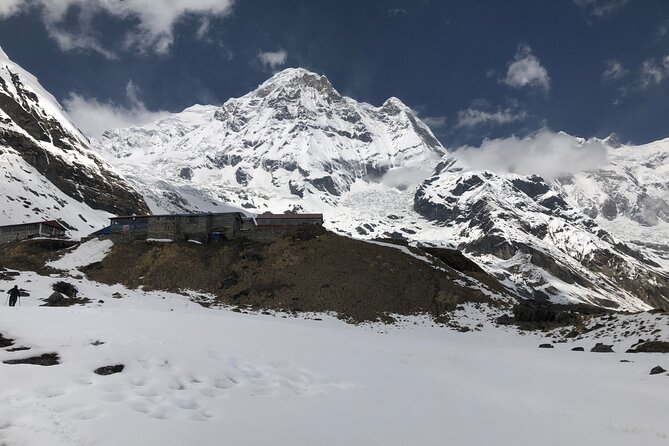
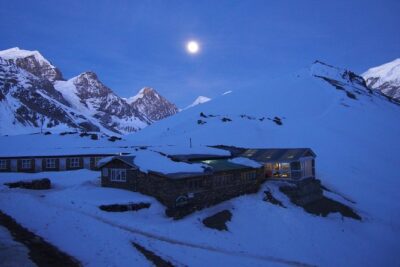
Then it is up to Thorong Phedi via a climb and a crossing at about 4,310 meters. You reach Thorong Phedi at about 4,450 meters, where guesthouses are built for the pre-pass crowd.
This section matters because it is the “setup” phase for Thorong La. If you are the kind of person who gets anxious before big physical days, it helps that this stage has shorter, more planned segments. It gives you time to hydrate, eat, and stay warm.
More to compare around Kathmandu
- Everest Base Camp Trek – 14 Days
★ 5.0 · 1,499 reviews - Everest Base Camp Trek
★ 5.0 · 842 reviews - Private Kathmandu Sightseeing Tour | UNESCO World Heritage sites
★ 5.0 · 756 reviews - Kathmandu: 7 UNESCO Sites with Lunch
★ 4.8 · 744 reviews
Thorong La pass: expect an early start and a weather-sensitive day
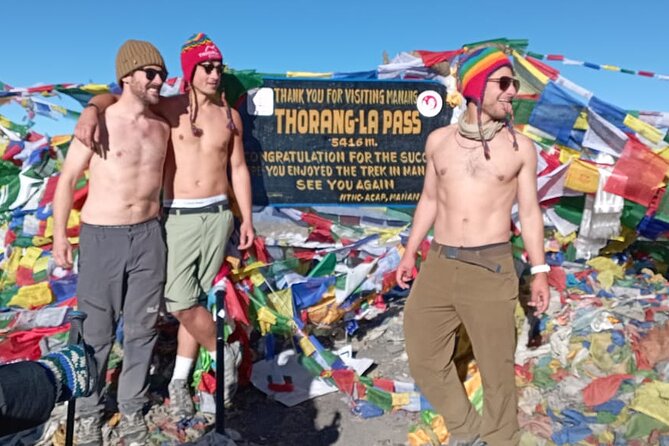
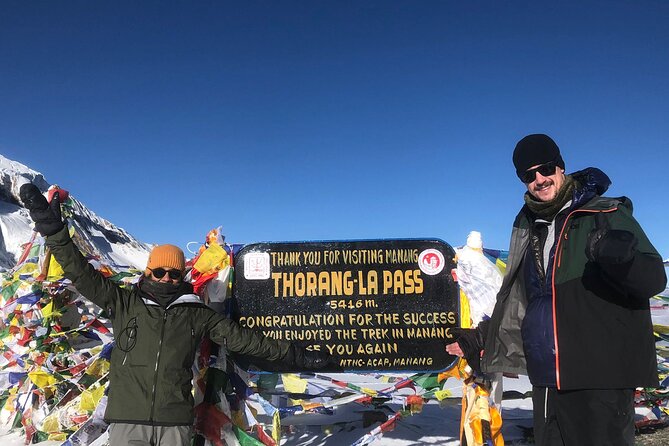
The Thorong La crossing is the heart of this itinerary. Your day starts before sunrise, around 4 am, aiming to reach the pass area by 9 to 10 am. The big reason for the early start is practical: at higher elevations, weather, wind, and snow can change fast. Strong winds are specifically called out as a challenge, and snow can make crossing tougher.
The climb is steep at points but follows a route that is easy to follow. You pass chortens and prayer flags, and once you reach the top you are rewarded with stunning views from the pass.
After the pass, you walk to Muktinath, a holy town. Muktinath’s name points to nirvana, and it is a culturally significant stop that shifts the scenery feel from green valleys into something much drier.
If you are prone to rushing when you are excited, this is the day to resist. The pass day is not just about strength. It is about breathing, pacing, and keeping your energy controlled until you actually see the pass.
Jomsom and the Kali Gandaki descent toward Tatopani
After crossing over to the other side of Thorong La, the terrain changes. You move into drier land that looks more desert-like, then trek along the Kali Gandaki River. You descend through sections with close views of stupas and older traditional houses tied to Mustang civilization.
Jomsom is a large town with more facilities. It also functions as the headquarters for the Mustang district, with district government offices. Even if you just pass through, it adds a sense of how populated and connected the region is beyond the trekking trails.
Then you arrive at Tatopani, known for hot springs. This is where the itinerary makes a very smart move for your body. You spend a rest day relaxing in the natural hot springs and even include time for a shower, dip, and local food. It is also specifically tied to recovery after a long trek and descent.
Ghorepani and Poon Hill: the sunrise payoff with less pressure than Thorong La
From Tatopani you move to Ghorepani, about a 7-hour walk with a significant climb of around 1,620 meters. This is a big day, but the payoff begins the next morning. Along the way, you pass Magar and Gurung villages, and the area gives you classic views such as Annapurna South, Himchuli, and Tukuche.
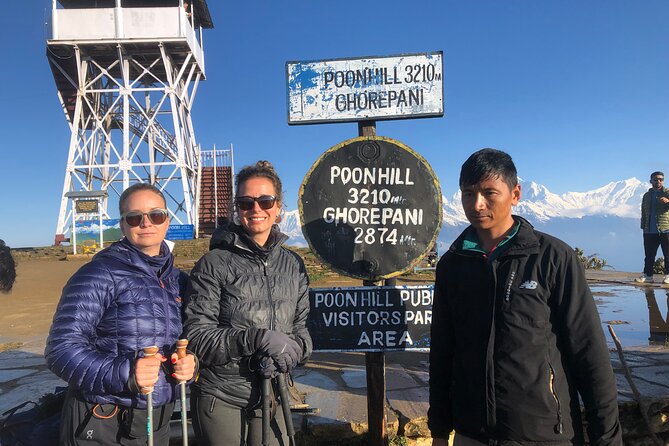
Then comes Poon Hill. You head out very early, hike for about an hour to reach around 3,210 meters, and the goal is unobstructed sunrise over the Himalayas when weather cooperates. You stay about an hour, then return to Ghorepani for a hot breakfast before continuing down toward Tikhedhunga.
This section is a nice change of pace after the pass. You still work, but you are not facing the same high-risk timing. It is a good place to enjoy being on foot without the same kind of “one day can break the plan” pressure as Thorong La.
Pokhara: temples, caves, falls, and river gorge views
After trekking, you reach Nayapul (around 1,010 meters) and transfer to Pokhara by car about an hour. Pokhara is your decompression zone, and this tour gives you guided time there with several short sightseeing stops.
You visit:
- Shree Bindhyabasini Temple in the old bazaar area, dedicated to Goddess Bhagwati.
- Devi’s Fall, locally known as Patale Chhango, where a stream drops into a deep gorge.
- Gupteshwor Mahadev Cave, a cave system almost 3 km long, including crawling sections. It has special value to Hindus.
- Seti River Gorge viewpoints, tied to the Seti Gandaki River and the rushing white water carved into the gorge.
- Tibetan Refugee Camp (Tashi Ling) where woolen carpets and handicrafts are produced and traded.
I like that these are short stops, not one long museum crawl. You can keep your energy level after the trek and still get a full cultural and nature mix.
Back to Kathmandu and a proper send-off
On the way back, you drive to Kathmandu in the morning. If you want to extend your trip after the trek, the operator mentions options like Chitwan jungle safari, river rafting, Kathmandu shopping, and mountain biking.
In the evening, you get a farewell dinner at a traditional Nepalese restaurant with cultural performances. It is a nice way to land the story in one place, especially if you have spent days eating and sleeping in tea houses.
Finally, you wrap up with an airport drop to Tribhuvan International Airport.
Price and logistics: what you are really paying for
At $2,240 per person for an about 22-day program, this is not a budget trek. But when you look at what is covered, the value becomes easier to judge.
Included highlights that reduce your risk and cost:
- Licensed English-speaking trekking guide
- One porter for two clients
- ACAP and TIMS permits
- Down jacket and sleeping bag provided for the trek (returned afterward)
- All accommodations in Kathmandu (3-star hotels: 3 nights) and Pokhara (2 nights), plus guesthouse lodging for 16 trek nights
- Transport throughout, including public bus and shared vehicles for sections of the route
- Most meals, with breakfast 21 times, lunch 16 times, and dinner 17 times
Also, a small-group cap of 15 travelers can be a hidden value. In practice, it means less chaos at guesthouses and during pass-day timing. You also get airport transfers and guided sightseeing with entrance fees.
What is not included is also clear: your travel insurance (especially for emergency high-altitude rescue and evacuation), international airfare, Nepal entry visa, and tips. Alcohol and drinks are not included either. If you budget tips, that helps avoid the last-day surprise.
One more detail: you get a free Ace the Himalaya duffel/kit bag and sun hat, plus a mobile ticket. That is small, but it is one less thing to buy or bring.
Who this trek fits best
This tour is built for people with moderate physical fitness who want guided structure and strong logistical support. If you are comfortable walking day after day, and you can handle cold and altitude, it is a great way to experience the Annapurna Circuit without needing to manage permits, transport timing, and daily navigation yourself.
It may not be ideal if you hate early mornings or if you know you struggle with altitude. The Thorong La day is early and weather-sensitive, and the trek includes climbs to high elevations like Thorong Phedi and the Thorong La pass. If you have doubts, talk with a clinician about altitude risk and plan your acclimatization mindset accordingly.
Based on repeated praise for guides and porters, it also seems to suit solo travelers who want a team feeling. People name guides like Aamod, Madan, Ram, Janu, Ganesh Khanal, and Nimesh, and they also mention porters by name in their comments about attentive support and readiness for the pass conditions.
Should you book this Annapurna Circuit trek?
I’d say yes if you want a guided, well-supported circuit that combines high pass trekking with real sightseeing time in Kathmandu and Pokhara. The mix of permits handled, a porter assigned, and provided cold-weather gear means you can pack more intelligently and focus on walking.
I’d pause or ask extra questions before booking if you are sensitive to early starts, if you are unsure about altitude comfort, or if you dislike having your schedule influenced by wind and snow around the Thorong La crossing. In the mountains, conditions win, and this trek is honest about that.
If you do book, do the boring prep well: follow the pacing your guide sets, hydrate consistently, and make your kit altitude-ready. Get your passport copies sorted for the pre-trek meeting, and keep your insurance documentation readable. Those little steps make the trek feel less like a scramble and more like a plan.
FAQ
What meeting time and location are used for the start of the trip?
The start meeting point is Tribhuvan Airport in Kathmandu, Nepal, with a listed start time of 8:00 am.
How many days is the Annapurna Circuit trek?
The duration is listed as 22 days approximately.
What is the maximum group size?
The tour lists a maximum of 15 travelers.
Are permits and trekking gear included?
Yes. The trip includes ACAP and TIMS permits, and it provides a down jacket and sleeping bag for the trek (to be returned).
What kind of transportation is included during the journey?
Included transport covers airport transfers, a public bus from Kathmandu to Besisahar, shared 4WD segments from Besisahar to Syange and from Jomsom to Tatopani, a tourist vehicle from Nayapul to Pokhara, and a tourist bus from Pokhara to Kathmandu.
What is included for meals during the trek?
Breakfast is included 21 times, lunch is included 16 times, and dinner is included 17 times. Meals in Kathmandu and Pokhara are not included (lunch and dinner).
Latest Kathmandu write-ups
- Visit Swayambhunath and Bauddhanath Stupa with Guide★ 5.0 · 5 reviews
- 10 days Annapurna Base Camp Trek★ 5.0 · 5 reviews
- Langtang Trek from Kathmandu 7 Days★ 5.0 · 5 reviews
- Island Peak Climbing with Everest Base Camp★ 5.0 · 5 reviews
- 7 Day Kathmandu Pokhara Tour★ 4.5 · 5 reviews
- Everest Mountain Flight★ 5.0 · 5 reviews
- Kathmandu city day tour (4 world heritage sites)★ 5.0 · 5 reviews
- Chandragiri Hill Cable Car Tour with Hotel Transfers from Kathmandu★ 4.5 · 5 reviews
Annapurna Circuit Trek, compared.
15-Day Private Annapurna Circuit Trek from Kathmandu
Read our review →
8 Days Private Guided Trekking in Annapurna Circuit with Pickup
Read our review →Browse the lists this tour appears in