
Reviewed · EVEREST BASE CAMP TREK
Everest Base Camp Kalapathar Trek 14 Days
Everest Base Camp plus Kalapathar is interesting because in two weeks you trade Kathmandu temples for high-altitude walking in Sagarmatha National Park, then chase sunrise views from Kalapathar above 5,545 m. It is a classic Khumbu Valley route with village stays and big-peak moments that feel close in a way photos never do.
I love the way this trek starts with culture in Thamel and Swayambhunath, then gets you onto the trail fast with the short Kathmandu-to-Lukla flight. I also like the careful acclimatization pauses at Namche, Dingboche, and the overnight rhythm that keeps the route from feeling rushed. The main consideration is altitude and the early long days, especially Kalapathar and the return push to Lukla.
Key takeaways before you go
- Kalapathar sunrise focus: an early climb to the top viewpoint above 5,545 m for Everest-at-close-distance views
- Acclimatization built in: Namche rest day, plus view breaks at Dingboche and other high points
- Tea house trekking style: included tea house accommodation through the trek, so you are not planning beds day to day
- Organized logistics: round-trip Lukla flights, permits, private vehicle transfers, and a professional guide
- Route that values time on feet: days are long enough to feel like an expedition, but not rushed between key milestones
Why This Everest Base Camp and Kalapathar Route Works in 14 Days
This trek makes sense for first-timers because it balances two things you cannot compromise on in the Himalaya: time at altitude and time on the trail. You start in Kathmandu, fly to Lukla, then work your way through the Khumbu Valley step by step, with rest and view days where they actually matter.
What I like most about this exact 14-day shape is how it threads the big goals together. You get the Everest Base Camp moment, then you do not rush past it. You also get Kalapathar, which is the viewpoint people remember, and it happens early enough in the day that you can still make the most of the light and the cold air.
One more thing: you are not just “walking to a peak.” You move through Sherpa villages and monastery stops, and you spend enough time in Namche to understand why it is the practical hub for the whole region.
More ways to walk to Everest Base Camp:
- Everest Base Camp Trek – 14 Days
★ 5.0 · 1,499 reviews - Everest Base Camp Trek
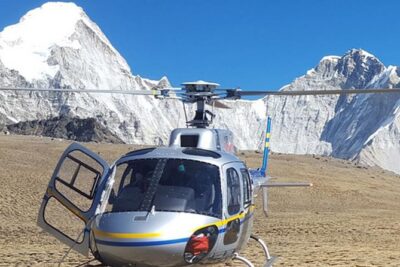
★ 5.0 · 842 reviews - Everest Base Camp Helicopter Tour landing at Everest View Hotel
★ 5.0 · 668 reviews
Price and Logistics: What the $1,990 Includes, and What You Still Need to Plan
The price is $1,990 per person for a 14-day private trek with Eco Holidays Nepal. What makes that number feel reasonable is that several high-cost and high-friction items are handled for you: necessary permits, round-trip flights Kathmandu to Lukla and back, and a professional trekking guide during the trek.
You also get tea house accommodation during the trek, plus key trekking gear support like a sleeping bag and a duffel bag. On a trip like this, that matters, because even if you already own gear, it is one less thing to worry about at the last minute.
Meals are also part of the deal: breakfast is included 12 times, lunch 10 times, and dinner 11 times. Still, your day-to-day spending can add up in the higher villages. The tour does not include soft or hard drinks, WiFi, showers, and other personal items.
Two practical notes on value:
- If you would otherwise pay for permits and Lukla flights on your own, this bundling usually saves time. More importantly, it reduces stress when weather or flight timing shifts.
- Because it is private (only your group), you are paying for control. You are not squeezed into a crowded group pace.
Your remaining budget is mostly personal expenses plus anything you choose to buy along the way. And one item to be clear about: a porter is not included if needed. If you think you will want extra help carrying your load, factor that in early.
Day 1 Kathmandu Check-In in Thamel, With Your Trek Already in Motion
Day 1 is straightforward: you arrive at Kathmandu International Airport, then you get picked up and transferred to a hotel in the heart of Kathmandu, around Thamel. This is not just a place to sleep. Thamel is where you will feel the city version of “trek prep,” because shops, gear questions, and last-minute details cluster here.
The main value of Day 1 is mental. After a flight, you do not want a complicated plan. You want food, a bed, and a guide or organizer who has your basics handled.
Day 2 Swayambhunath Temple and a City Guide Before the Real Altitude Starts
On Day 2 you go to Swayambhunath Temple in the morning. Then a city guide takes you around other World Heritage sites, with time in the afternoon to prepare for the trek.
A temple morning before your first climb sounds like a detour, but it is actually useful. Kathmandu culture sets the tone for the rest of the trip. You will start seeing the same themes again later on the trail: prayer, community, and the way people live close to the mountains without treating them like a distant fantasy.
Practical detail: the Swayambhunath admission ticket is not included. So keep a little cash aside for it.
More to compare around Kathmandu
- Private Kathmandu Sightseeing Tour | UNESCO World Heritage sites
★ 5.0 · 756 reviews - Kathmandu: 7 UNESCO Sites with Lunch
★ 4.8 · 744 reviews - Half day cooking class in Thamel kathmandu
★ 5.0 · 607 reviews - Everest Base Camp Trekking
★ 5.0 · 485 reviews
Day 3 Lukla Flight, Then Down to Phakding Along the Dudh Kosi River
Day 3 is your first real pivot: after an early breakfast, you fly from Kathmandu to Lukla. The flight is short, about 30 minutes, but it matters because it drops you into the Khumbu trekking world immediately.
Once you land in Lukla, the route begins with a downhill walk toward the Dudh Kosi River. You reach Phakding village for overnight, following Sherpa farm villages along the way.
What to expect here:
- You get a feel for trail rhythm right away, with easy-to-moderate terrain.
- The river corridor helps orient you, and it gives you a sense of movement even before the big climbs start.
This day is also where you can start testing your pace and your clothing system. You are going from airport humidity and city air to cooler, thinner mountain conditions.
Day 4 Phakding to Namche via Monjo, Sagarmatha National Park Entry, and Namche Evenings
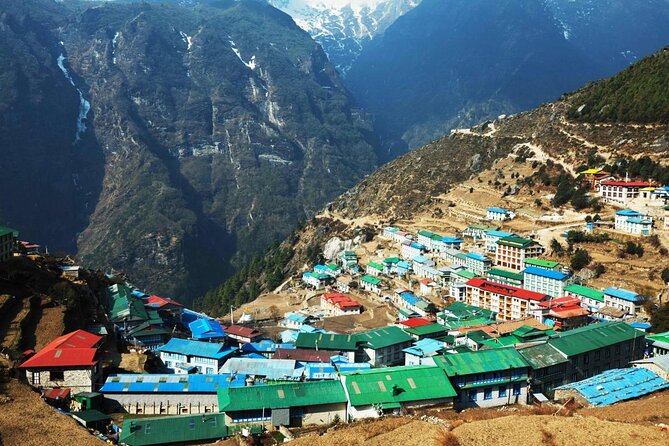
Day 4 follows the river and includes bridge crossings as you head to Monjo village. The views here can be striking, including Thamserku and Kongde peaks.
Then you enter Sagarmatha National Park and continue to Namche Bazzar. Once you arrive, you transfer to a lodge and have time to browse around Namche, with shops and restaurants. The plan also includes a stop at the Irish Pub area, which is basically your “grown-up break” in the middle of a trekking town.
The real reason Namche is the key stop is acclimatization and logistics. It has the supplies, the community, and the infrastructure that make the higher villages work.
Day 5 Namche at 3,440 m, the Museum Stop, and Why Rest Day Actually Matters
Day 5 is your rest day at about 3,440 m. You still walk, but it is not a grinding day. The plan includes short excursions to viewpoints above Namche to help your body adjust.
You also visit the park museum, which focuses on information about the Khumbu area, Sherpa culture, and mountaineering history.
This is one of the best ways to make the trek feel richer without adding physical strain. When you learn a bit about the region, Everest stops feeling like a distant headline. You start seeing it as part of a long local relationship with mountains.
If you are nervous about altitude, this day helps. You get a chance to notice how your breathing changes, how your sleep feels, and how your appetite behaves.
Day 6 Tengboche Gompa: Forest Trails, Big Views, and a Monastery Visit
On Day 6, you walk for hours to Tengboche, one of the most famous places in the region. The route passes through a forest setting, and Tengboche is known for broad views, including Everest and close views of Amadablam.
You visit Tengboche monastery as well, with a shorter stop for the monastery visit.
This day is special because the environment shifts. In lower elevations you are moving through farming and settlement energy. At Tengboche you start to feel the spiritual and cultural center of the Khumbu trekking route.
Also, you are usually not far from the point where you feel the altitude more strongly. So pace is your friend. You want steady steps, not hero moves.
Day 7 Pangboche and Dingboche View Time, Including Island Peak and Amadablam
Day 7 reaches Pangboche, described as the last permanent village on the route to Everest Base Camp. From there you climb to Dingboche, which is exposed and open compared with earlier sections.
You get viewpoint time, with views mentioned including Island Peak and Amadablam.
This is a day for working with your body, not against it. Dingboche’s setting can feel exposed, and that can change how the air feels on your face. Use the view stops to slow down and breathe.
Day 8 Thugla, Prayer Flags, and the Walk Toward Lobuche Base Camp
Day 8 moves from the area around Dingboche through prayer flags and Buddhism monuments to Thugla, then onward to Lobuche for overnight.
The plan includes super views in the Thugla area, with peaks mentioned like Amadablam, Cholatse, and Taboche.
Then you stay in Lobuche, sometimes referred to as “Lobuche Base Camp” in this route plan.
Expect a strong sense of “we are getting close” energy here. The valleys tighten visually, and the terrain feels more dramatic. But you are still building toward base camp and you should avoid burning out early.
Day 9 Everest Base Camp Day at Gorakshep, With the Icefall Area Close
Day 9 is the main highlight: you push through the morning to Everest Base Camp. The plan describes being close to the Khumbu Icefall and glaciers, with Everest towering overhead in the dramatic, close-up way that only the base camp approach can deliver.
After that, you return to Gorakshep for overnight.
This is the day where your legs might feel tired, but your brain is wired. You will want time at base camp, not just a quick photo stop. Even if you are moving slower than expected, it pays off here.
And once you are back at Gorakshep, keep your energy for the next day’s big climb.
Day 10 Kalapathar Sunrise Above 5,545 m, Then Down Toward Pheriche and Back to Pangboche
Day 10 is the Kalapathar day. You start with an early climb to Kalapathar, described as the highest point of the adventure at above 5,545 m. The reward is the magnificent view, with Mt. Everest close distance.
Then you descend to Gorakshep for breakfast. After breakfast you continue walking toward Thugla, and from there the route goes downhill to Pheriche, with a possible lunch stop. The plan continues for another few hours to reach Pangboche village for overnight.
This is one of the toughest sequences in the trek, not because the mileage is the only factor, but because it stacks altitude, cold, and early start time. If you have been saving energy for this, now is when it gets used.
Day 11 Pangboche to Namche via Thayangboche: The Return Loop With View Stops
Day 11 is a walking day that takes you from Pangboche to Namche. You return via Thayangboche, with time around Thayangboche before you arrive for overnight in Namche.
This return loop is valuable for two reasons:
- It lets your body process the altitude lessons you just learned, while you still keep a steady rhythm.
- It gives you a second look at the places that felt unreal on the way up.
If you are feeling better than you expected, this is still the time to keep your pace honest. The mountains do not care about good feelings.
Day 12 Namche to Lukla: Long Walk, Then Overnight in Lukla Before Kathmandu
Day 12 is described as a long walk back from Namche to Lukla. You stop for overnight in Lukla.
This is the day where you really appreciate having flights already arranged. The route is not short, but it is purposeful. You are positioning yourself for the Day 13 flight back to Kathmandu.
Also, it is smart to plan your energy and hydration here carefully, because your final flight depends on getting to Lukla.
Day 13 Fly Lukla to Kathmandu, Then Recover in Thamel
On Day 13 you fly from Lukla to Kathmandu. Then you transfer to your hotel and get the rest of the day to enjoy your memories of the trek, with Thamel as the base.
This is a good day to do two simple things:
- Eat like a normal person again (slowly, if altitude is still in your system).
- Take time to look back at what you just did, instead of immediately planning the next thing.
Day 14 Time to Leave Nepal, After 14 Days in the Everest Region
Day 14 is the exit day. You fly to your respective country.
It is an abrupt ending, which is why Day 13 matters. If you let yourself rest in Kathmandu, you finish the trek with closure instead of a blur.
Guide, Company, and Group Style: What You Can Expect Day to Day
One of the standout strengths of this operator setup is that the trekking plan is handled like a system. People talk about things being organized and ready, including flights, permits, and in Kathmandu the initial hotel transfer around Thamel.
In guides named from past departures, you might see support from professionals like Anup, Sagar, Bikram, and Balaram. And the regional coordination credit goes to Dhruba, who is described as the owner who helps with arranging key items.
Two practical takeaways:
- Having a guide who keeps the route and pacing steady makes a huge difference on high-altitude treks. You want calm problem-solving, not uncertainty.
- The English level can vary by guide. If you rely on detailed explanations, ask early how your guide prefers to communicate. Even when the language is limited, a friendly, service-first attitude is clearly part of the experience.
Finally, this is a private tour/activity, meaning only your group participates. That can matter a lot on treks, because you can keep a pace that works for your group without being forced into someone else’s idea of fast.
Practical Tips for Your Everest Base Camp and Kalapathar Adventure
You will feel altitude changes on this trek, even if your fitness is solid. The itinerary builds acclimatization days at higher points, including Namche at 3,440 m and the structured rhythm around Dingboche and later villages. Still, treat every walking day as a workout for both legs and breathing.
Gear-wise, you are not going in totally empty-handed. The included equipment lists a sleeping bag and duffel bag. Porter support is not included if needed, so plan how you want to carry your essentials.
Food and drinks are mostly handled for you in the included meals. Breakfast, lunch, and dinner counts are provided in the package. Soft and hard drinks are not included, so budget for extras if you plan to buy drinks at tea houses or shops.
Also, plan for limited comfort in the mountains. WiFi and showers are not included. It is worth showing up with realistic expectations, so you do not get cranky about something that is not part of the deal.
Should You Book This 14-Day Everest Base Camp Kalapathar Trek with Eco Holidays Nepal?
If your goal is Everest Base Camp plus Kalapathar, and you want the trip organized end-to-end, this is a strong match. You get the essential parts built in, permits, Lukla flights, guide support, tea house accommodation, and a pace that includes real acclimatization pauses.
Book it if:
- You want a private group experience.
- You like the idea of culture time in Kathmandu and a museum stop in Namche before the hard altitude days.
- You want Kalapathar included as a true highlight, not an optional side trip.
Skip it or think twice if:
- You know you struggle with early mornings and long walking days. Kalapathar and the return to Lukla are the two most demanding stretches in the plan.
- You are counting on porter help, since porter is not included if needed.
FAQ
What is included in the trek price?
The price includes necessary permits, round trip flights Kathmandu to Lukla and back, a professional trekking guide during the trek, tea house accommodation during the trek, sleeping bag and duffel bag equipment, private vehicle transport, route map and an Eco Holidays Nepal t-shirt, plus meals (breakfast 12 times, lunch 10 times, and dinner 11 times).
Are flights to Lukla included?
Yes. The package includes round trip flights from Kathmandu to Lukla and from Lukla back to Kathmandu.
Do I get a sleeping bag and duffel bag?
Yes. Necessary equipment like a sleeping bag and duffel bag are included.
Is a porter included?
A porter is not included if needed. You would need to arrange porter support separately.
Is this a private tour?
Yes. This is a private tour/activity, so only your group participates.
Can I cancel for a full refund?
Yes, free cancellation is available. You can cancel up to 24 hours in advance of the experience for a full refund. If you cancel less than 24 hours before the start time, the amount paid is not refunded.
Latest Kathmandu write-ups
- Langtang Valley Trek★ 5.0 · 3 reviews
- Khopra Danda Trek★ 5.0 · 3 reviews
- Langtang Valley Trek from Kathmandu★ 5.0 · 3 reviews
- 5 night / 6 days Kathmandu Nagarkot Chitwan Pokhara tour★ 5.0 · 3 reviews
- Nepal Highlights Tour: 5 Nights 6 Days Kathmandu & Pokhara Tour★ 5.0 · 3 reviews
- Kathmandu Valley Private Day Tour★ 5.0 · 3 reviews
- Kathmandu Heritage Day Tour★ 5.0 · 3 reviews
- Conquer the Himalayas: The Ultimate 16-Day Annapurna Circuit Trek★ 3.5 · 3 reviews
Everest Base Camp Trek, compared.



Everest Base Camp Helicopter Tour landing at Everest View Hotel
Read our review →


Everest Base Camp Helicopter Tour landing at Hotel Everest View
Read our review →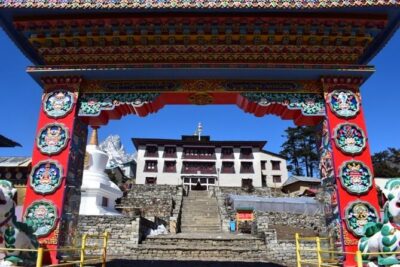
Browse the lists this tour appears in