
Reviewed · EVEREST BASE CAMP TREK
Everest Base Camp Trek With Local Expert Sherpa Guide
Everest Base Camp is one of those trips that feels both physical and kind of spiritual, because the trail keeps reminding you how small you are against the mountains. I like that this itinerary builds in real acclimatization time in Namche Bazaar and Dingboche, not just a rushed march upward. I also like the way it’s staffed with a certified local Sherpa guide and a 1 porter for 2 people setup to keep you moving. One consideration: you’re still aiming for a high-altitude destination, with Everest Base Camp around 5,550 meters, so you need a solid fitness level and you should respect altitude.
What makes this trek practical is the structure. You start in Kathmandu with a 3-star hotel plus a welcome dinner and half-day sightseeing, then you fly the Kathmandu-Lukla-Kathmandu route. On the trail, you’re in lodge accommodations (twin sharing), and the day-to-day rhythm is designed around hikes plus recovery time. If weather turns on you, the whole Everest region can get unpredictable, so you should stay flexible.
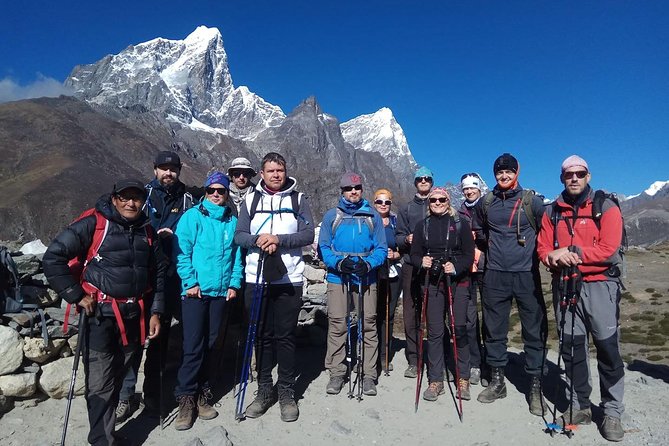
You’ll likely walk with an expert Sherpa lead such as Pasang Sherpa, Pema Sherpa, Mingmar Sherpa, Tanshi, or Ming-Ma Aprehs, depending on your group and dates. That matters because good guidance is not just about route finding, it’s about pace, altitude sense, and keeping your days organized.
Key things that make this Everest Base Camp trek worth your attention
- Certified local Sherpa guide plus organized porter support (1 porter for 2 people)
- Flights Kathmandu-Lukla-Kathmandu included, which cuts down travel stress
- Acclimatization stops in Namche Bazaar and Dingboche for a steadier altitude climb
- Everest Base Camp visit plus Kala Patthar, with Kala Patthar listed at 5,645 meters
- Lodge stays during the trek with twin-sharing included
- Permits and admin handled (TIMS card plus Everest trekking permit fee)
Kathmandu first: how this trek starts before you ever lace up boots
Most Everest treks fail or succeed long before the first steep trail. This one starts in Kathmandu, meeting at Tribhuvan Airport at 7:45 pm. That late start works well if you want a smooth transition from the airport day into hotel life, rather than scrambling for transport.
You get an air-conditioned vehicle and a 3-star hotel in the city with breakfast. The welcome dinner is more than a nice meal. It’s your first real chance to get oriented, meet your team, and get a feel for the pace and expectations before you’re hiking at altitude. You also get half-day sightseeing in Kathmandu on the second day with a tour guide, which is a smart way to balance the intensity coming later.
If you’re the type who likes to have your logistics solved in advance, this is a good match. And if you’re the type who hates meetings, you’ll still appreciate that your admin stuff is handled early, including the TIMS card and the Everest permit fee.
More ways to walk to Everest Base Camp:
- Everest Base Camp Trek – 14 Days
★ 5.0 · 1,499 reviews - Everest Base Camp Trek
★ 5.0 · 842 reviews - Everest Base Camp Helicopter Tour landing at Everest View Hotel
★ 5.0 · 668 reviews
The Lukla flight and the real start of your trekking days
This route includes internal flights Kathmandu-Lukla-Kathmandu (both ways, with taxes). That’s a big value piece because ground travel from Kathmandu to the start of the Everest region can be long and tiring.
Once in Lukla, the trekking portion begins and you’ll spend about 12 days hiking trails. The trek duration is listed at roughly 17 days total, with trekking trails starting from Lukla and additional days built around acclimatization and recovery. Translation: you should expect a mix of walking days and slower days that help you adapt to altitude.
Practical tip: treat the first hiking days as a warm-up, not a race. On Everest routes, the temptation is to prove how fit you are. Altitude punishes that mindset.
Namche Bazaar acclimatization: where your body learns the rhythm
Namche Bazaar is one of those places that turns the dial from travel to mission. This itinerary includes an excursion and acclimatization day there, which is exactly what you want at this stage. Namche also helps you break the climb into manageable chunks, so you’re not just shooting upward day after day.
Why it matters: acclimatization isn’t just about hitting a higher elevation. It’s about training your breathing, your recovery, and your sleep. On lodge treks, a lot of your progress happens when you’re not hiking, especially at night.
Even if you feel fine during the day, you can still pay for it later. That’s why having a scheduled acclimatization block is more than a nice-to-have. It protects your trip from getting derailed by altitude issues.
Dingboche acclimatization: the quiet work before the big views
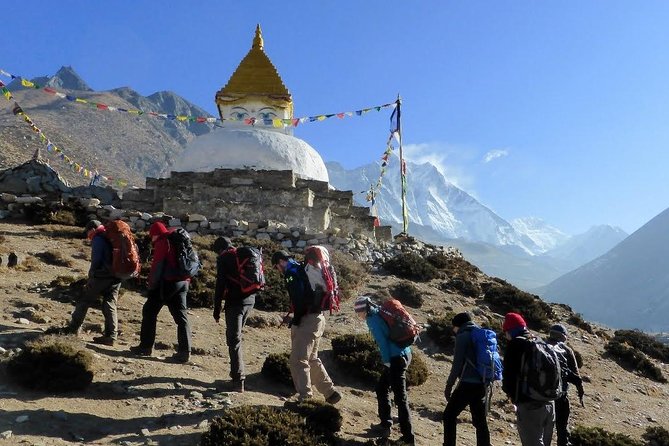
The itinerary also includes acclimatization time in Dingboche, another key stop where many hikers slow down and start respecting the mountain more. Again, the point is not just sightseeing. It’s time for your body to adjust before you go higher.
This part of the trip tends to feel slightly different. Days can feel longer even when the hiking is steady, because altitude affects your appetite and your energy. That’s where good Sherpa pacing helps. The certified guide is there to keep you moving at a sustainable rate and to help you manage effort.
If you’re bringing friends or family, this is also where group harmony matters most. If one person pushes ahead and another lags behind, the whole group can feel stressed. With a structured plan and a guide, you get more consistent pacing.
More to compare around Kathmandu
- Private Kathmandu Sightseeing Tour | UNESCO World Heritage sites
★ 5.0 · 756 reviews - Kathmandu: 7 UNESCO Sites with Lunch
★ 4.8 · 744 reviews - Half day cooking class in Thamel kathmandu
★ 5.0 · 607 reviews - Everest Base Camp Trekking
★ 5.0 · 485 reviews
On the trekking trail: lodges, your pace, and why porters change everything
You’ll be staying in quality lodge accommodation during the trek, twin sharing. Lodges on Everest routes are not luxury hotels, but the included setup helps smooth daily life. You’ll have a bed waiting, and your sleeping arrangements are already organized.
The porter situation is a big deal: you get strong and honest porters with a ratio of 1 porter for 2 people. That means less weight on your back, which usually translates into better endurance at altitude. It’s not about doing less work. It’s about doing the same work with less strain, so your hiking stays more comfortable.
Also included for you: a duffel bag, a trek map, and a group medical kit. Those are the kinds of details that matter when you’re tired and you just want the plan to work.
One more practical note: communication and charging power are limited on trek. Phone and internet and battery charging bills are listed as not included, so plan for minimal digital life.
Everest Base Camp and Kala Patthar at 5,645m: the payoff scene by scene
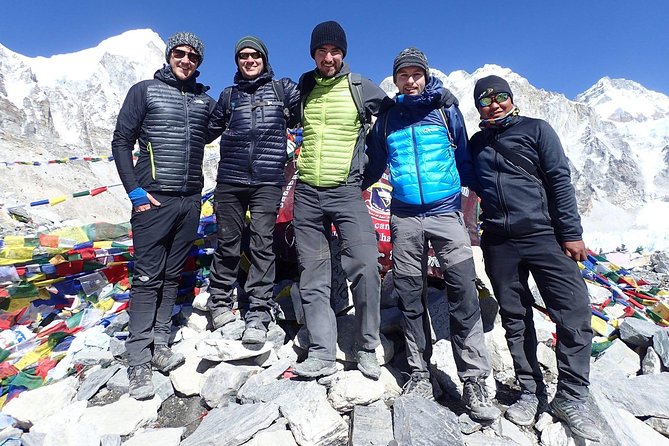
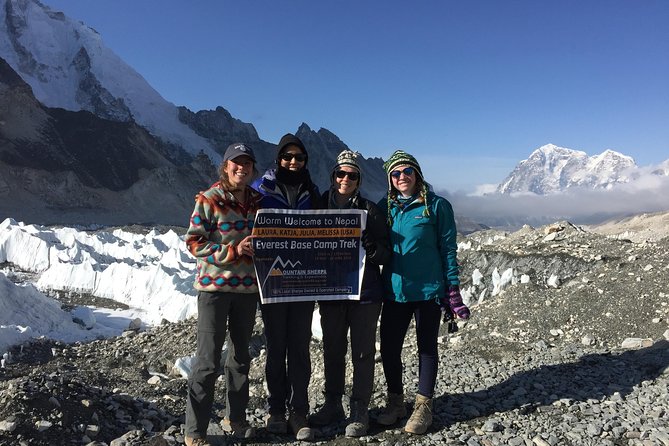
The highlight is reaching Everest Base Camp and then doing Kala Patthar for views. Your materials list Kala Patthar at 5,645 meters and Everest Base Camp around 5,550 meters. Those numbers are not decoration. They’re the reason this trek needs acclimatization and careful pacing.
Base Camp is a place where the scale hits you all at once. You’re not just looking at a mountain. You’re looking at a staging area, a working environment shaped by extreme weather and extreme effort. Even if you’re not climbing, it feels real.
Kala Patthar is the kind of stop people remember for years. At that elevation, you can feel every breath, but the payoff is the reason you trained and planned for the journey. Expect the day to be physically demanding, even if you’ve been hiking well.
Important consideration: altitude days can feel mentally tiring too. The mountain has a way of making everything slower. Build in patience. Your guide and team will help you keep your pace steady.
Team support: what the Sherpa guide actually adds to your trip
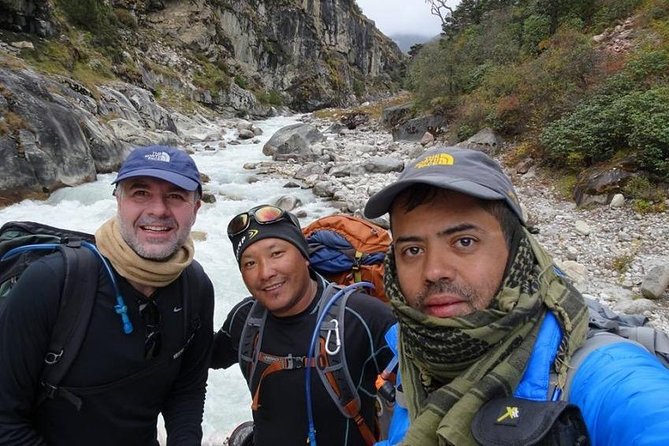
You’re traveling with an expert local Sherpa guide certified by the Nepal Government, plus porters. That’s a lot of structure, and it tends to improve safety and reduce stress.
Here’s what that support likely means for you in practical terms:
- You get help with route timing and acclimatization logic.
- You get a leader who understands how groups handle altitude, fatigue, and changing conditions.
- You don’t have to manage permits and TIMS paperwork yourself.
The guide names in the team network include Pasang Sherpa, Pema Sherpa, Mingmar Sherpa, Tanshi, Ming-Ma Aprehs, and Rinji Sherpa, depending on your departure. If you want to get a sense of who you might travel with, you can ask your operator before you commit to dates.
Also included: guide and porter pay, meals, and insurance. That doesn’t remove responsibility from you, but it does mean the core human staffing is part of the plan.
Price and value: what $2,170 is really paying for
At $2,170 per person, the price isn’t just buying hiking. It’s buying the parts that are hardest to handle cleanly on Everest routes.
What’s included that typically drives the cost:
- Domestic flights Kathmandu-Lukla-Kathmandu with taxes
- City-side support: air-conditioned vehicle, 3-star hotel with breakfast, welcome dinner, and half-day sightseeing
- Trek-side lodging: quality lodge accommodation in twin sharing
- Certified Sherpa guide plus porter support (1 porter for 2 people)
- Admin and safety essentials: TIMS card and Everest trekking permit fee, plus a group medical kit
- Basics that reduce friction: duffel bag, trek map, company t-shirt
What’s not included (so you can budget without surprises):
- International airfare and Nepal visa
- Travel and health insurance (most recommended) and emergency helicopter rescue insurance
- Lunch and dinner in Kathmandu (listed as $5-$10 per meal)
- Alcoholic drinks, water, and deserts on the trek
- Gratuities for guide and porter after the trek
- Phone, internet, and battery charging bills on trek
Value take: you’re paying for a lower-stress, better-managed trip. If you’re the kind of traveler who prefers self-navigation, this may feel like overkill. If you want the Everest experience without juggling permits, flights, and daily logistics, this package is priced like a “do the thinking for me” service.
Fitness, altitude, and weather: the non-negotiables
The tour info is clear: you should have strong physical fitness. It also notes the camp altitude and the idea that the route is not very difficult for many hikers, but that doesn’t mean it’s easy on the body. Walking at altitude is not the same as walking at sea level.
Altitude reality check:
- Everest Base Camp is around 5,550 meters
- Kala Patthar is listed at 5,645 meters
That means you can be fit and still feel awful if you ignore pacing. The acclimatization days in Namche and Dingboche are the backbone of making this work.
Weather reality check: this experience requires good weather. If it’s canceled due to poor weather, you’ll be offered a different date or a full refund.
Should you book this Everest Base Camp trek with Mountain Sherpa Trekking?
If you want the classic Everest Base Camp experience but you care about organization, staffing, and altitude planning, I think this is a strong choice. The combination of Lukla flights, acclimatization in Namche and Dingboche, and certified Sherpa guidance plus structured porter support is exactly what makes this trek feel manageable, even though the destination is not.
Book it if:
- You want a plan that handles flights, permits, and day-to-day logistics.
- You like having time built in for acclimatization.
- You’re okay with lodge life and the limited connectivity of trekking.
Consider a different style if:
- You’re looking for a fully self-guided trek.
- You want more flexibility to swap dates, since this experience is listed as non-refundable and non-changeable.
If you’re ready to respect altitude, hike steadily, and let the Sherpa team set the pace, this is the kind of Everest trip that can turn into a real life memory, not just a checklist photo.
Latest Kathmandu write-ups
- Langtang Valley Trek★ 5.0 · 3 reviews
- Khopra Danda Trek★ 5.0 · 3 reviews
- Langtang Valley Trek from Kathmandu★ 5.0 · 3 reviews
- 5 night / 6 days Kathmandu Nagarkot Chitwan Pokhara tour★ 5.0 · 3 reviews
- Nepal Highlights Tour: 5 Nights 6 Days Kathmandu & Pokhara Tour★ 5.0 · 3 reviews
- Kathmandu Valley Private Day Tour★ 5.0 · 3 reviews
- Conquer the Himalayas: The Ultimate 16-Day Annapurna Circuit Trek★ 3.5 · 3 reviews
- Kathmandu Heritage Day Tour★ 5.0 · 3 reviews
Everest Base Camp Trek, compared.

Everest Base Camp Helicopter Tour landing at Everest View Hotel
Read our review →
Everest Base Camp Helicopter Tour landing at Hotel Everest View
Read our review →
Browse the lists this tour appears in