
Reviewed · EVEREST BASE CAMP TREK
Everest Base Camp Trekking
Few travel plans feel as close to a real-life mountaineering story as the Everest Base Camp route. You start with a road transfer to Ramechhap, fly into the dramatic airstrip at Lukla, then hike the Khumbu valley step by step toward Everest Base Camp. It’s not just about the destination, it’s how the days slowly turn the region into your own personal high-altitude classroom.
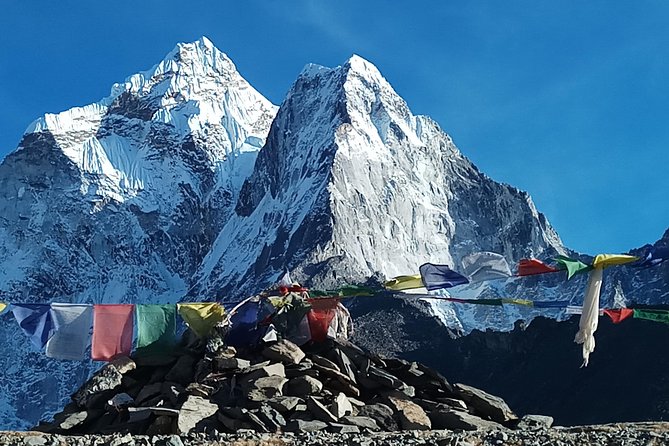
I love that you get the big, jaw-dropping viewpoint moment at Kala Patthar (about 5,550 to 5,600 m) and also plenty of human-scale culture stops like Tengboche Monastery and Namche’s Sherpa Culture Museum. This trek mixes sweeping mountain drama with small details you remember later, like Mani stones, prayer flags, and those prayer wheels at Phunke Tenga.
The main drawback to think about is that Everest country is serious about cold and altitude, and the Lukla flights can be weather-dependent. If your body runs out of steam or the weather turns, your schedule can get shaken, even with a well-run plan.
Key things I think make this Everest Base Camp trek worth your time
- Ramechhap as the jump-off: You take a road ride from Kathmandu to reach an alternative gateway during peak periods.
- Lukla flights, but with realism: Arrival is part of the adventure, and timing can shift with weather.
- A true acclimatization day in Namche Bazaar: You don’t rush straight upward.
- Tengboche is a cultural anchor: Expect monastery time, plus the calm feeling of stepping into the spiritual heart of Khumbu.
- Kala Patthar for the best summit views: This is where the Everest summit look is most likely to land for you.
- Private group with a government-licensed guide: Your trip stays focused, and you get real support on the trail.
What This 12-Day Everest Base Camp Trek Feels Like, Day by Day
This trek is built around a simple rhythm. Day 1 gets you into position. Then you gain altitude in increments, not straight lines. Some days are longer and more demanding, but the pacing gives your body a chance to adjust, especially once you hit Namche Bazaar.
You’ll also notice the itinerary follows the logic of the Khumbu Valley. The early part is mostly river crossings, forests, and village trails. Then the scenery gets barer and tougher as you head toward Lobuche, Gorak Shep, and the glacier country. Finally, you reach Base Camp and then work your way back down the same corridors of suspension bridges and ridgelines.
The best part for me is that you’re not just ticking boxes. You spend time in places that matter to the people who live here. That’s why the Namche day, Tengboche day, and the monastery or museum stops aren’t filler. They change how you experience the mountains.
More ways to walk to Everest Base Camp:
- Everest Base Camp Trek – 14 Days
★ 5.0 · 1,499 reviews - Everest Base Camp Trek
★ 5.0 · 842 reviews - Everest Base Camp Helicopter Tour landing at Everest View Hotel
★ 5.0 · 668 reviews
Kathmandu to Ramechhap to Lukla: The Start That Sets the Tone
Your trip begins with a road transfer from Kathmandu to Ramechhap, about five hours, early in the morning. This matters because it’s a practical alternative gateway during peak trekking season. You’re not stuck guessing how you’ll get to the air route, and the transfer gives you a chance to settle in before the flight day energy hits.
Then comes the flight to Lukla, landing at the Tenzing-Hillary Airport. Lukla’s runway is famously short and the approach is dramatic, high in the mountains. Your arrival can feel like the first mini-adventure of the trek. The tradeoff is that the weather can make flights unpredictable, so you should keep your flexibility hat on.
One more smart note: the package includes private transportation plus domestic flights Kathmandu to Lukla and back. That removes a lot of stress for first-timers who might otherwise wrestle with scheduling and last-minute connections.
Phakding to Namche Bazaar: Suspension Bridges, Mani Stones, and Your First Big Payoffs
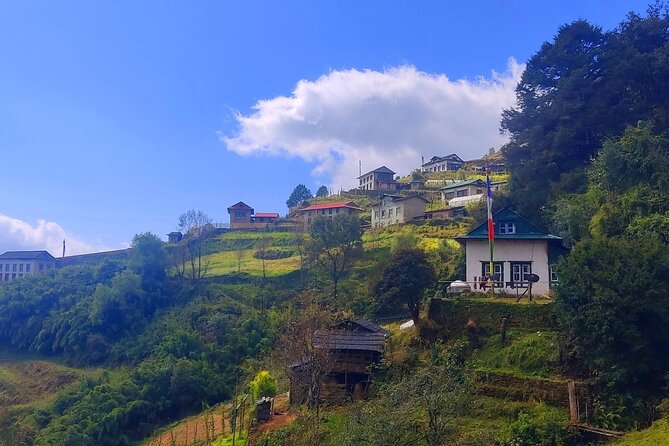
From Lukla, you trek to Phakding along farmland and traditional Sherpa villages. This is a gentle start that helps you find your hiking rhythm. You’ll cross suspension bridges and pass Mani walls with carved Buddhist prayers. For many people, these early spiritual details set a different tone than generic sightseeing.
Phakding sits beside the Dudh Koshi River, and that river is your constant companion for the early days. It’s loud, it’s cold-looking, and it visually reminds you you’re in real glacier country. You’ll also get a feel for how the Sherpa trail network works, with small hamlets and frequent crossing points.
Next is the stretch toward Namche Bazaar via Monjo and Jorsale. This portion is shorter on paper, but it transitions from easy-going forest and river trails into a steady climb. In Monjo, you pass into Sagarmatha National Park territory and the permit check happens there. That’s one of those boring-sounding logistics steps that actually matters, because it’s the gate that turns a walk into a fully protected trek.
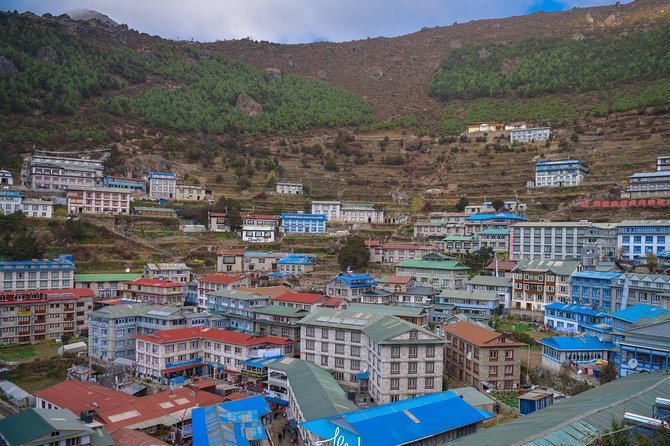
Along the trail, you’ll see mani stones and prayer flags again, plus waterfall views. The day ends in Namche Bazaar, a lively hub in a mountain amphitheater. You’ll enter through a Kani gate and nearby chorten, and once you arrive you get that special feeling that you’re no longer in the lower valley. You’re in the gateway to the Everest region.
Namche Acclimatization Day: Sherpa Culture Museum and Smart Side Hikes
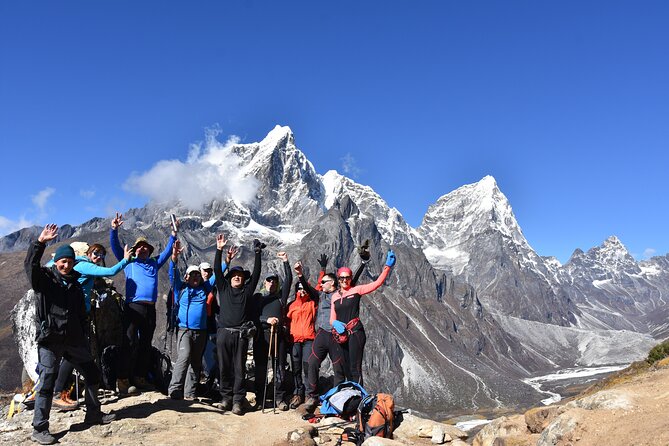
Day 3 is your intentional “stop climbing so fast” day. You stay in Namche Bazaar, which is useful because Namche naturally gets lots of sunlight during the day. That warmth matters when you’re trying to sleep well and keep your energy up for altitude gains.
You also get time to explore. There’s a historic museum focused on Sherpa culture and the mountains, which is a good place to understand how local life links to high-altitude expeditions. If you want your trek to feel meaningful, not just hard, this is where you build context.
The itinerary also gives you a clear choice for acclimatization hikes. You can go for views from Everest View Hotel, or you can walk toward Khumjung and Khunde. That route includes monasteries, daily village life, and the famous Yeti scalp display at Khumjung Monastery. Even if you don’t care about the legend angle, it’s still a memorable cultural stop.
Then you return to Namche for rest. That rest day structure is a big value here. It reduces the “we rushed and paid for it later” risk.
More to compare around Kathmandu
- Private Kathmandu Sightseeing Tour | UNESCO World Heritage sites
★ 5.0 · 756 reviews - Kathmandu: 7 UNESCO Sites with Lunch
★ 4.8 · 744 reviews - Half day cooking class in Thamel kathmandu
★ 5.0 · 607 reviews - Everest Base Camp Trekking
★ 5.0 · 485 reviews
From Namche to Tengboche: Monasteries, Water-Powered Prayer Wheels, and the Spiritual Heart of Khumbu
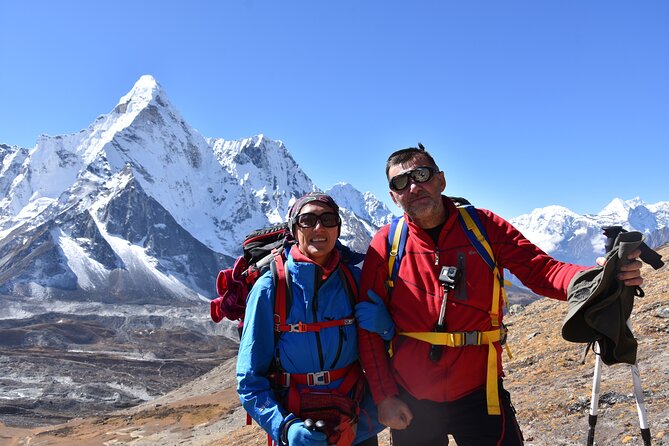
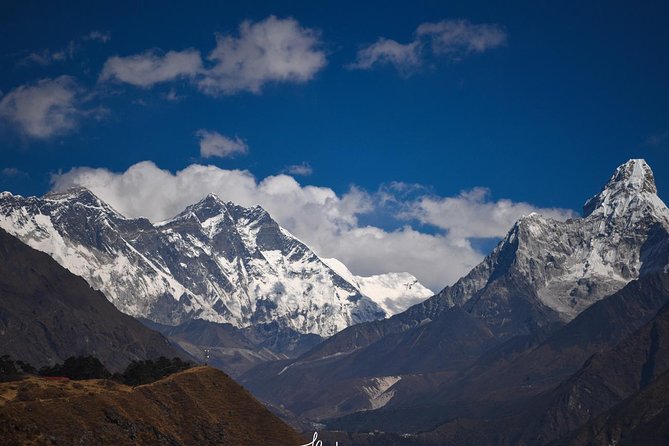
On the way out of Namche, you follow the route toward Phunki Thanga and the memorial stupa for Tenzing Norgay Sherpa. From there, the trail climbs gently through rhododendron and pine forests to a viewpoint. You’re treated to panoramic mountain scenes that include Ama Dablam, Lhotse Shar, Taboche, Kangtega, and Thamserku.
Then you drop toward Phunke Tenga, pausing near a line of seven water-powered prayer wheels. Locals connect spinning those wheels with the recitation of the mantra Om Mani Padme Hum, so you’re not just passing scenery, you’re participating in a tradition that’s older than tourism.
Next comes Tengboche, after crossing a suspension bridge and hiking through meadows and forest. Tengboche’s star attraction is the Tengboche Monastery. It’s described as the largest and most significant monastery in the Everest region, and it sits against big mountain backdrops. Even if you’re not a monastery person, the feeling here is calm. It breaks up the physical grind with a slower, more reflective pace.
This is also the kind of stop that can change how you feel on later harder days. You’ll carry that sense of place with you.
Tengboche to Dingboche and Beyond: Imja Khola Views and Learning the Rhythm of Higher Altitude
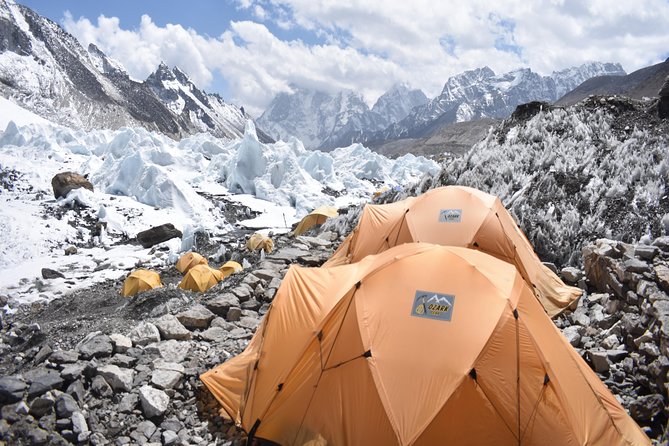
Day 5 starts with prayer ceremonies at Tengboche, then time to explore the monastery. If you’re into art and craft, the fine paintings around the monastery walls are highlighted as key examples of Khumbu traditional artistry.
From Tengboche you head toward Deboche, where the views of Ama Dablam and other peaks build gradually. Then you cross a bridge and hike west of the Imja Khola. Along the way, you’ll pass large black overhanging rocks that once sheltered porters and ponies when there were fewer lodges. That small historical detail helps the trail feel less like a straight hiking corridor and more like a living route with memory.
You then reach Dingboche. This village is known for a long stone wall described as the unintentional creation of years of stone deposition. The story is that farmers separated rocks from fields and later piled them into a wall. It’s the kind of local explanation that makes you appreciate how people shape their environment at every altitude.
Your next day is also around Dingboche, giving you time at altitude without pushing the highest peaks immediately. That pacing is important. Lobuche and glacier territory will demand more, so it helps to arrive with less exhaustion.
Dingboche to Lobuche: Moraine Walking and the Moment the Scenery Changes
The move from Dingboche to Lobuche is where the hiking starts to feel more rugged. The route is mostly along the moraine, and the trek can be split into two trail segments: ridge walking and then continuing from Dughla onward.
Views can be tricky here. The haze can cover mountain scenes most of the time, and you might not get that crisp panorama every hour. The key is to keep moving steadily. You’re also higher now, so even when elevation gain is not huge, the thin air makes each step feel heavier.
This is where the trek begins to take on that “end of the road” feeling. Your sense of distance from civilization grows, not because anything dramatic happens, but because the trail environment turns quieter and emptier.
Lobuche to Gorak Shep and Kala Patthar: The Highest Payoff for Your Effort
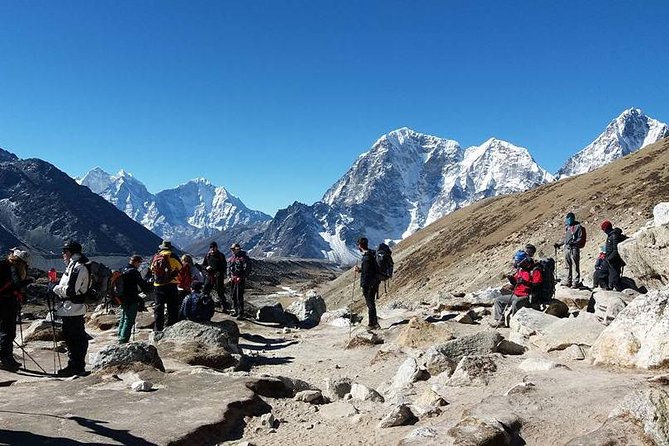
You start early from Lobuche toward Gorak Shep, which sits around 5,140 m. The terrain is desolate and shaped by glacial activity. The path ascends gradually along the lateral moraine of the Khumbu Glacier. Even if the elevation gain isn’t extreme, the thin air can make steady walking feel like a workout.
This day also gives you serious mountain views, including Pumori, Nuptse, and the icy ridges of Mount Everest as they come and go in the distance.
Then you hike to Kala Patthar around 5,550 m for one of the most famous viewpoints in the region. The important detail is that Kala Patthar offers the clearest and closest view of the Everest summit. From Base Camp itself, you cannot see the summit directly. So if Everest summit spotting is a goal, this is the day for it.
The climb is described as a steep and steady push over loose rock and dusty switchbacks, and at the top you get a 360-degree panorama. Everest dominates, flanked by Lhotse, Nuptse, Pumori, and Ama Dablam. Afterward, you descend carefully back to Gorak Shep for the overnight.
Everest Base Camp Day: Why the Foot of the Icefall Hits Hard
The Base Camp day begins with an early start, going from Pheriche toward Everest Base Camp. The trail can be slippery, sometimes along narrow snow bluffs, so you’ll want to take your time and keep sure footing.
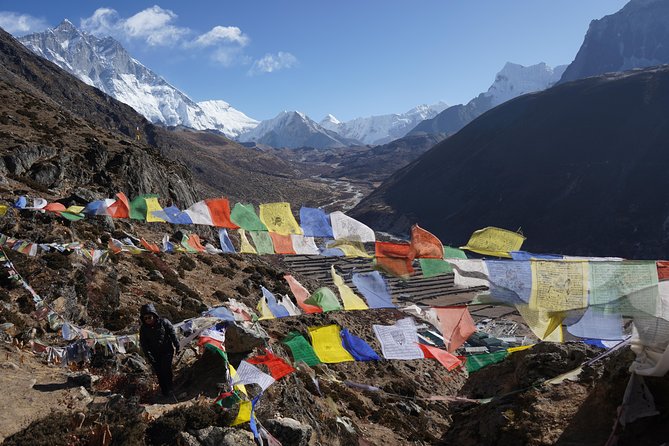
Reaching Everest Base Camp at about 5,364 m is the emotional center of the trek. Base Camp sits at the foot of the Khumbu Icefall, and even without a direct summit sightline, the surrounding scale is massive. During the climbing season, expedition tents fill the area, creating a dramatic scene on the glacier.
What I like about how this is described is the human side of it. Standing there is presented as raw and emotional, the feeling of being on the edge of human ambition. It’s not just a photo stop. It’s a place where the miles you walked turn into a real, physical sense of achievement.
Then you turn back down, heading to Pheriche afterward, because the trek still has the return climb in reverse to get you back safely.
The Return: Tengboche, Namche Bazaar, and the Slow Relief of Going Down
Your return route keeps the same major anchors. From Pheriche you go back toward Tengboche, with monastery views again. Then you continue down to Namche Bazaar, which functions as your main buffer point before your final push to Lukla.
These downhill days can feel easier, but they can also feel harder on the body. Descents require control, and altitude fatigue can linger.
Eventually you reach Lukla again, hiking the route you used on the way in. Then you fly back to Kathmandu as early as possible, followed by time in Kathmandu around Thamel and a stay at Hotel Chhimeki on arrival.
Price and Value: What the $1,300 Really Buys (and What It Does Not)
At $1,300 per person for about 12 days, this trek is priced like an organized high-stakes trip, not a DIY adventure.
Here’s what you get included:
- Private transportation
- Domestic flights Kathmandu to Lukla to Kathmandu
- Sagarmatha National Park permit and Khumbhu Pasang Lhamu Rural Municipality Tax
- A licensed trekking guide
- Trekking gear rental: duffle bag, sleeping bag, down jacket (returned after trek)
- Accommodation during the trek
- Kathmandu hotel stay
- Meals across the trip: breakfast, lunch, dinner for 12 days
What you should budget for outside the package:
- Drinks, and any extra night accommodation or meals
- Personal costs like laundry and electronics charging
- Travel insurance and any rescue-operation costs
- Airport or departure tax, plus Nepal visa and international airfare
- Hot and cold showers
- Tips for your guide
For value, the biggest wins are the included permits, the guide, the gear rental, and the domestic flight logistics. Those are the items that usually balloon in cost and stress if you try to piece things together alone.
Also, this is listed as a private tour with only your group participating. That can be a big value if you want a more focused pace and easier communication on weather and route decisions.
Guides, Safety, and the Human Factor (Why It Shows Up in Real Reviews)
The strongest repeated theme in the feedback you shared is that the trip feels safe and well organized. Guides are praised not just for knowledge, but for kindness, humor, and pushing you gently when altitude makes the body complain.
Names that come up in the feedback include Moti and Lakbar as a guide and porter pairing, plus guides like Ram, Bhim, Him, and Tika Dhakal. In the stories, people describe feeling safe from the start and well taken care of, with guides who balance professionalism and good morale.
That matters because Everest region trekking is partly physical and partly mental. You’re managing breathing, timing, and discomfort. A guide who keeps the vibe steady can make the difference between trudging and actually enjoying the day.
Best Months for Everest Base Camp and How Weather Changes Everything
The best months for this trek are listed as March, April, May, September, October, and November. That’s a smart seasonal range because you’re targeting periods when weather conditions are more likely to cooperate.
That said, your itinerary depends on good weather. Lukla flights can be unpredictable due to weather, and this region can shift quickly. The operator notes that if the experience is canceled due to poor weather, you’ll be offered a different date or a full refund.
So your real job as a traveler is picking a time that matches your flexibility. If you can shift your dates, you’ll have a better shot at fewer disruptions.
Should You Book This Everest Base Camp Trek?
I’d book this if you want an organized Everest Base Camp trek with the heavy logistics handled for you: flights to Lukla, permits, a government-licensed guide, and gear rental for the core cold-weather items. I also like that the itinerary builds in an acclimatization day in Namche, and includes the Tengboche Monastery time and Kala Patthar, so you get both culture and summit-style viewpoints.
I would hesitate if you know you struggle with cold, if you can’t handle the physical demands of higher altitude, or if your schedule is rigid and you cannot flex for weather.
If you’re in that in-between group, this is still a solid option. Just go in with realistic expectations. You’re not buying a guaranteed view every hour of every day. You’re buying a structured route toward the Everest experience, with people who focus on safety and keeping the whole machine running.
FAQ
What months are best for this Everest Base Camp trekking trip?
The best months listed are March, April, May, September, October, and November.
How long is the Everest Base Camp trek?
The duration is listed as 12 days, approximately.
What’s included in the $1,300 price?
Included are private transportation, domestic flights Kathmandu to Lukla and back, Sagarmatha National Park permit and Khumbhu Pasang Lhamu Rural Municipality Tax, a government-licensed trekking guide, trek accommodation, a Kathmandu hotel, and meals including breakfast, lunch, and dinner for 12 days. Trekking gear rental (duffle bag, sleeping bag, down jacket) is also included.
Do I get permits and a licensed guide?
Yes. The package includes permits (Sagarmatha National Park permit and Khumbhu Pasang Lhamu Rural Municipality Tax) and a trekking guide licensed by the government.
What are the key high-altitude viewpoints on this trek?
Kala Patthar is highlighted at about 5,560 m for a close Everest summit view, and Everest Base Camp is listed at 5,364 m. The summit is not visible directly from Base Camp, which is why Kala Patthar matters.
If weather is bad, what happens?
The experience requires good weather. If it’s canceled due to poor weather, you’ll be offered a different date or a full refund.
Latest Kathmandu write-ups
- Langtang Valley Trek★ 5.0 · 3 reviews
- Khopra Danda Trek★ 5.0 · 3 reviews
- Langtang Valley Trek from Kathmandu★ 5.0 · 3 reviews
- 5 night / 6 days Kathmandu Nagarkot Chitwan Pokhara tour★ 5.0 · 3 reviews
- Nepal Highlights Tour: 5 Nights 6 Days Kathmandu & Pokhara Tour★ 5.0 · 3 reviews
- Kathmandu Valley Private Day Tour★ 5.0 · 3 reviews
- Conquer the Himalayas: The Ultimate 16-Day Annapurna Circuit Trek★ 3.5 · 3 reviews
- Kathmandu Heritage Day Tour★ 5.0 · 3 reviews
Everest Base Camp Trek, compared.



Everest Base Camp Helicopter Tour landing at Everest View Hotel
Read our review →


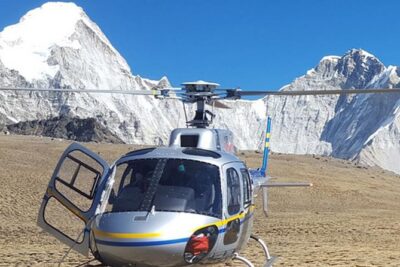
Everest Base Camp Helicopter Tour landing at Hotel Everest View
Read our review →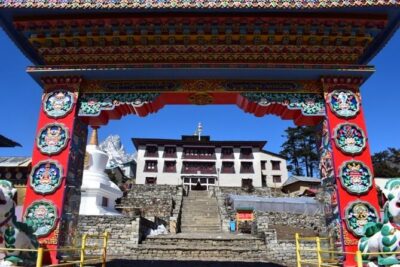
Browse the lists this tour appears in