
Reviewed · EVEREST BASE CAMP TREK
Everest Base Camp Trekking
Everest Base Camp trekking is interesting for one simple reason, you get world-class mountain drama while your logistics stay mostly out of your hands. I like that permits and Sagarmatha National Park fees are included, and I also like the focus on safety support with a guide trained in wilderness first aid and altitude sickness. One consideration, this is a trek through remote villages, so expect basic teahouse comforts and plan around what is not included, like hot showers.
This trip is built as a private trek, so you are not being rushed through someone else’s schedule. You also start early from Thamel in Kathmandu, with the meeting point at 1:15 am, and you will feel those long, thin-air days right from the first flight into Lukla.
Key Things to Know Before You Go
- Permits, TIMS, and park fees are included, so you are not hunting documents mid-trip
- Private trek setup means you can go at your pace while still having expert support
- Teahouse lodging plus most meals are covered, which helps you travel lighter
- Acclimatization in Namche Bazaar is built into the schedule, not treated like an afterthought
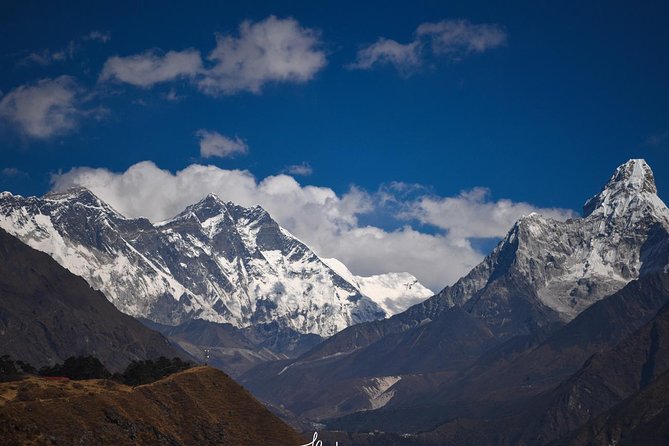
- Everest Base Camp and Kalapatthar are both in the plan, so you get both the camp moment and the big skyline view
- Guides and porters are arranged with safety training and first aid supplies, which matters at altitude
Why This Everest Base Camp Trek Feels More Manageable Than DIY
I get why people DIY this trek. It can look simple on paper. In real life, the paperwork and the day-to-day logistics add stress, especially when altitude is already doing its own work on your body.
This version is designed to reduce that stress. You have the trekking company managing the stuff that tends to go wrong when you are on your own: permits, park fees, the teahouse bookings, and the daily meal plan. That means you can focus on the point of the trip, walking into the Everest region and taking in the views as your energy allows.
The other thing I like is the people side. The trek includes an experienced guide plus porters. You are also told the guide is trained in wilderness first aid and altitude sickness, and there are group medical supplies along the way. That doesn’t remove risk, but it does help you feel more “taken care of” if something turns.
More ways to walk to Everest Base Camp:
- Everest Base Camp Trek – 14 Days
★ 5.0 · 1,499 reviews - Everest Base Camp Trek
★ 5.0 · 842 reviews - Everest Base Camp Helicopter Tour landing at Everest View Hotel
★ 5.0 · 668 reviews
A realistic note on comfort
You get teahouse accommodation and daily meals chosen from the menu during the trek. But things like hot water, hot and cold drinks, and hot showers are not included. In the Everest region, that is normal, but it is still worth planning for.
Price and What You’re Actually Paying For
At $1,998 per person for about 12 days, it is not a budget trek. But when you break it down, a lot is included that normally costs time or extra money if you arrange things yourself.
Here’s what you get for the price:
- Airport and hotel transfers in Kathmandu by private vehicle
- Permits and fees: Sagarmatha National Park fees, and the TIMS card fee, plus government taxes and paper work
- Teahouse lodging during the trek
- Daily meals: breakfast (2 is specifically listed), plus lunch and dinner chosen from the teahouse menu
- Guide and porters, with food, accommodation, salary, equipment, accidental insurance, and medicine
- Group first aid supplies
- A pre-departure dossier and information
- Small welcome touches like a trek certificate, plus an included gift package (T-shirt and pashmina, and a duffel bag if you need it)
What is not included is also clear, and that clarity matters:
- Your Nepal entry visa fee (visa on arrival)
- International airfare
- Personal gear
- Tips for staff
- Travel insurance
- Drinks and snacks, plus laundry and camera charging
The value question
The best value here is the combination of administration handled and real support on the trail. If you already know how to run a trek and book teahouses confidently, you might be able to DIY it cheaper. But if you want fewer moving parts while walking in a high altitude environment, this price starts to make sense.
Also, check the insurance situation carefully. The trip notes that travel insurance is essential and should include emergency evacuation coverage while trekking up to 5500+ meters. That’s not optional in practice.
More to compare around Kathmandu
- Private Kathmandu Sightseeing Tour | UNESCO World Heritage sites
★ 5.0 · 756 reviews - Kathmandu: 7 UNESCO Sites with Lunch
★ 4.8 · 744 reviews - Half day cooking class in Thamel kathmandu
★ 5.0 · 607 reviews - Everest Base Camp Trekking
★ 5.0 · 485 reviews
Kathmandu: The Early Start That Sets the Tone
You meet in Thamel, Kathmandu at 1:15 am. That’s early, like “coffee before your brain is fully online” early.
From there, your logistics are handled through the company’s transfer system, including private vehicle airport and hotel connections. Once you are moving, you’ll do the classic Everest-region transition: get to the airport, fly to Lukla, then start hiking.
If you are the type who likes calm mornings, you might find this schedule a little rude. But the payoff is that you get going while your energy is still fresh and the day is still young.
Day 1: Flight to Lukla, Then Phakding Teahouse Life
You fly from Kathmandu to Lukla, about 25 minutes, and then trek to Phakding in about 3 to 4 hours. You sleep in a teahouse.
This first day is where you learn your trekking rhythm. You are not trying to smash distance. Instead, you are testing your legs, your pack weight, and your ability to move steadily over uneven ground.
And because teahouses are included, you are not making decisions late in the day. Your arrival is basically “walk, eat, sleep,” which is exactly what you want when altitude is waiting for you.
Day 2: Namche Bazaar Hike and Your First Big “Wow”
The trek from Phakding to Namche Bazaar takes about 3 to 4 hours. You stay overnight in a teahouse.
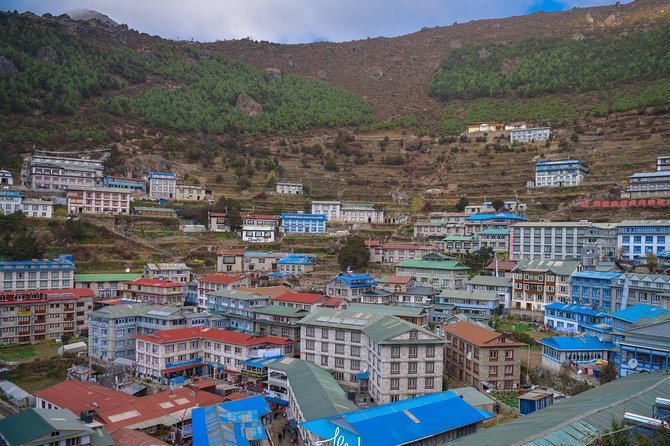
Namche is where the Everest journey starts to look real. It is also where you will get your first taste of the Sherpa community and mountain-adjacent life, not just the scenery.
The advantage of this day is momentum. You move up, you arrive at a hub, and the accommodations are already sorted.
Day 3: Acclimatization in Namche Bazaar (Don’t Skip This Part)
Acclimatization is scheduled at Namche Bazaar. On this day, you are there specifically to help your body adjust.
I love plans like this because it means the trip is not just “walk higher, feel worse.” A proper acclimatization day improves your odds of having a smoother stretch ahead.
Also, Namche is a good place to walk around slowly and keep your mind on normal human tasks, like eating, hydrating, and taking breaks.
Day 4: Trek Toward Deboche and the Tengboche Area
You trek from Namche Bazaar to Deboche in about 4 to 5 hours, then sleep in a teahouse.
This is one of those days where culture and views overlap. The Everest region is not only geology. You pass through Sherpa villages and you get the feeling of a living mountain community.
Deboche is also a good signpost day. You are moving away from Namche’s bustle and into a more monastery-and-trail rhythm.
Day 5: Dingboche, Still Climbing, Still Listening to Your Body
You go from Deboche to Dingboche in about 5 to 6 hours, staying in a teahouse.
Dingboche is usually where altitude starts to feel more serious for many people. This is not the day to chase speed. It is the day to keep your breathing steady and treat every steep bit like a math problem, one step at a time.
The teahouse setup helps here too. Lodging is planned, and meals are chosen from the menu, so you can focus on the next step rather than finding the next option.
Days 6 to 8: The Slow Push Toward Lobuche, Gorakshep, Everest Base Camp, and Kalapatthar
After Dingboche, you move toward Duglha in about 3 to 4 hours. Later you reach Lobuche with a 6-hour trek segment.
Then comes the big summit-style day, but without the summit. This is where the schedule is worth reading carefully.
Gorakshep to Everest Base Camp: the signature walking day
You trek to Gorakshep, and you also do the Everest Base Camp visit as a round trip that totals about 6 hours. You sleep in a teahouse at Gorakshep.
This is the day people remember. Not because it is easy, but because it is focused. You walk, you reach the base camp area, you take your time with the moment, and then you still have to return to your sleeping point.
Kalapatthar for the view moment, then down to Pheriche
Next, you trek from Gorakshep to Kalapatthar, enjoy Everest views, and continue on to Pheriche. Total time is about 6 to 7 hours.
Kalapatthar is a view payoff. It is also tiring. The air is thin, the cold can bite, and the climb is straight-up work. If you pace well, you still get the payoff without turning it into a suffering contest.
Days 9 to 11: Head Down Through Tengboche, Monjo, and Back Toward Lukla
You continue with the descent back to Lukla’s trail network:
- Pheriche to Tengboche: about 5 to 6 hours, teahouse stay
- Tengboche to Monjo: about 5 to 6 hours, teahouse stay
- Monjo to Lukla: about 4 to 5 hours, teahouse stay
Descent days can be sneaky. Your altitude might feel better, but your knees and ankles might complain. A walking stick helps, and the packing notes specifically recommend having one.
This stretch is also where you get a different perspective. You are no longer “climbing to prove something.” You are walking through places you already know, with the satisfaction of having done the hard part.
Day 12: Lukla to Kathmandu, Quiet Relief Included
On the final day, you fly back from Lukla to Kathmandu. Your trek ends back at the meeting point in Kathmandu.
Even if your fitness is strong, finishing an Everest Base Camp trek feels like a real accomplishment. When you return to city life, you might notice how normal everything looks again. That contrast is part of the memory.
Guides, Porters, and the Safety Net You’re Paying For
The guide portion is a major reason this trek is set up the way it is. Your guide is trained in wilderness first aid and altitude sickness, and there is a group first aid kit.
This matters because altitude is not predictable. Symptoms can creep in. If weather shifts, you still need someone who can respond calmly and correctly.
The operator is run by Puru, who shows up in the reviews as responsive before departure, including Zoom-style meetings and WhatsApp communication. On the trail, names that have been associated with guiding include Sitaram Lamacchne, Suresh Adhikary, Phuldin, Shiva, and Ram. A porter named Deb is also mentioned in the same context.
You should not treat guide names as a guarantee for your exact dates. But it does tell you something: this operator is staffed by people who have handled the trek many times and who communicate well.
Porters are arranged too, typically with a 1 porter for between 2 trekkers setup. That helps keep your pack realistic, especially when the trail gets slower and steeper.
Teahouses and Meals: What Included Means in Real Life
This trek includes teahouse accommodation and most meals. The company notes meals are selected from the teahouse menu each day for breakfast, lunch, and dinner.
That is practical. You do not need to think about where to eat or what you can buy. You just show up hungry.
Still, you should manage expectations:
- Hot and cold drinks are not included
- Hot water and hot showers are not included
- Alcohol is not included
So, you will rely on what you buy in teahouses for your comforts like warm drinks. Your best friend here is planning, meaning you pack and dress for cold nights and you manage hydration so you are not scrambling for supplies at the wrong time.
Packing Tips That Match the Trek, Not Just the Internet
The notes include a clear goal for pack weight: keep your packed trek bag to no more than 15 kg (33 pounds). That’s important because you are hiking for many days at altitude, and weight adds up fast.
The recommended gear list includes:
- Backpack 60 to 70 liters, comfortable shoulder straps, backpack cover, and line it with polythene
- Waterproof high-ankle trekking shoes with good grip and spare laces
- Camp shoes for the lodge evenings
- Warm layers like fleece and a down or Gore-Tex heavy jacket
- Thermal inners, gloves, hats or caps, scarf
- Walking stick (recommended at least one)
- Sun protection (cream, lip balm), plus basic socks and underlayers
If you want one practical takeaway: bring footwear that you trust and break in before you arrive in Nepal. The trail punishes new shoes.
Who This Trek Suits Best, and Who Might Feel Strained
This trek is best for people with hiking experience. It also notes moderate physical fitness.
I think it suits you if:
- You can handle long trekking days of roughly 4 to 7 hours
- You like structured plans but still want to move at your own pace
- You want someone else to handle permits, fees, and day-to-day logistics
- You are okay with teahouses and the fact that comfort is basic up high
It might feel tough if:
- You are brand new to hiking and dislike long days on uneven ground
- You cannot tolerate cold nights and limited shower options
- You expect luxury amenities in the Everest region
Should You Book This Everest Base Camp Trek?
If your goal is Everest Base Camp with less logistical hassle and a real safety and support structure, I think this is a strong choice. The included permits, TIMS fee, park fees, guide and porter staffing, and teahouse lodging plus most meals add up to a practical, low-stress way to do the trek.
I would book it if you value planning, clear daily structure, and guidance from people like Puru and trained support staff. I would pause if you are allergic to basic mountain comfort, or if you have not built up hiking stamina yet.
One last thing, don’t skip the insurance check. With the trek operating at high altitude, you want emergency coverage that matches the realities of the route.
FAQ
Where is the meeting point in Kathmandu and what time does the trek start?
You meet at Thamel, Kathmandu 44600, Nepal, and the start time is 1:15 am.
Do you fly from Kathmandu to Lukla and back?
Yes. The plan includes a flight from Kathmandu to Lukla (about 25 minutes) and a return flight from Lukla to Kathmandu on the final day.
What is included in the trek price of $1,998 per person?
The price includes private vehicle airport and hotel transfers in Kathmandu, required paper work and government taxes, pre-departure information and trip dossiers, teahouse accommodation during the trek, and daily meals chosen from the menu. It also includes Sagarmatha National Park fees and the TIMS card fee, plus a guide and porters with food, accommodation, salary, equipment, and accidental insurance.
Are permits and entry fees covered?
Yes. Sagarmatha National Park fees and the TIMS card fee are included, along with all necessary paper work and government taxes.
Is travel insurance included?
No. Travel insurance is not included, and it is noted as essential, especially with emergency evacuation coverage while trekking up to 5500+ meters.
What gear should I bring and how heavy can my pack be?
The guidance recommends your packed trek bag should weigh no more than 15 kg (33 pounds). You are also advised to bring waterproof trekking shoes, layers for cold weather (including a down jacket or Gore-Tex jacket), gloves, a hat or cap, a walking stick, and other personal essentials like sun protection.
What is the cancellation policy?
You can cancel up to 24 hours in advance for a full refund. If you cancel less than 24 hours before the experience start time, the amount paid is not refunded.
Latest Kathmandu write-ups
- Langtang Valley Trek★ 5.0 · 3 reviews
- Langtang Valley Trek from Kathmandu★ 5.0 · 3 reviews
- Khopra Danda Trek★ 5.0 · 3 reviews
- 5 night / 6 days Kathmandu Nagarkot Chitwan Pokhara tour★ 5.0 · 3 reviews
- Nepal Highlights Tour: 5 Nights 6 Days Kathmandu & Pokhara Tour★ 5.0 · 3 reviews
- Kathmandu Valley Private Day Tour★ 5.0 · 3 reviews
- Kathmandu Heritage Day Tour★ 5.0 · 3 reviews
- Conquer the Himalayas: The Ultimate 16-Day Annapurna Circuit Trek★ 3.5 · 3 reviews
Everest Base Camp Trek, compared.



Everest Base Camp Helicopter Tour landing at Everest View Hotel
Read our review →


Everest Base Camp Helicopter Tour landing at Hotel Everest View
Read our review →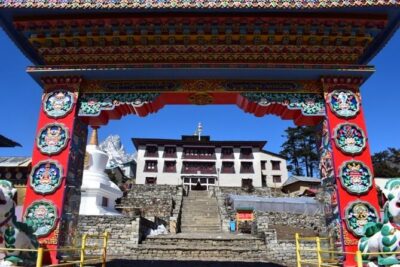
Browse the lists this tour appears in