
Reviewed · EVEREST BASE CAMP TREK
Everest Base Camp Trekking
A classic Everest Base Camp trek stands out here because you get both the Sherpa villages vibe and the big Kalapatthar viewpoint payoff. You start in Kathmandu, fly to Lukla, then follow river valleys and prayer-flag trails all the way to Everest Base Camp at 5,380 meters, with Kalapatthar up at 5,545 meters.
What I like most is how the pacing supports your body. There is a dedicated acclimatization day in Namche, plus the kind of slow, steady rhythm that matters when you are walking at altitude. I also like the human touch from the Nepal Guide Treks team, including guides like Krishna and Sonam Sherpa who have been praised for staying calm when Lukla flights get tricky.
One drawback to plan for is weather and the basics of mountain lodging. Lukla flights can be delayed by mountain conditions, and tea houses are simple, with attached toilets not always available and room sharing possible depending on group size (max 15).
Key highlights that make this trek worth your time
- EBC plus Kalapatthar: EBC at 5,380 m and the 5,545 m viewpoint for panoramic Everest-region views
- Namche acclimatization with Khumjung: hike high, sleep low, plus monastery and school visits
- Sagarmatha National Park time: opportunities to spot flora and fauna in the Everest region
- Real Khumbu crossings: Dudh Koshi suspension bridge, Imja Khola crossing, and multiple Bhote Koshi crossings on the way out
- A workable teahouse routine: dinner when you arrive at camp, then breakfast at the same lodge
- Small group pace: max 15 travelers, which usually makes the experience feel less chaotic
Everest Base Camp and Kalapatthar: the altitude story you should understand
This trek is basically built around two altitude days. Everest Base Camp sits at 5,380 meters, and then the big summit-feeling day is Kalapatthar at 5,545 meters, which is famous for showing you a wide sweep of the highest peaks in the Khumbu area.
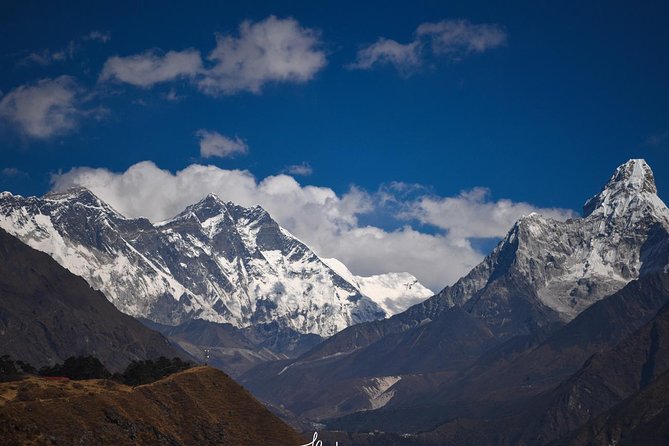
A helpful detail: you do not always get a direct view of Everest from Base Camp because Mt. Lhotse can block the line of sight there. Kalapatthar is the viewpoint that fixes that, giving you the all-around view that people remember.
You should treat this as a walking trek, not technical climbing. The route is described as moderate and adventurous, with a need to handle roughly 5 to 6 hours of walking per day, and trails that rise above 5,000 meters.
More ways to walk to Everest Base Camp:
- Everest Base Camp Trek – 14 Days
★ 5.0 · 1,499 reviews - Everest Base Camp Trek
★ 5.0 · 842 reviews - Everest Base Camp Helicopter Tour landing at Everest View Hotel
★ 5.0 · 668 reviews
Kathmandu start: airport pickup, hotel base, and welcome dinner
You start with a straightforward Kathmandu arrival setup. A representative meets you outside Tribhuvan International Airport, then you get taken to a hotel in central Kathmandu, where you can rest or stop by the Nepal Guide office to get trip info.
In the evening, you get a welcome dinner, which is not just a nice meal. It is also a moment to confirm that you understand the plan for your Lukla flights and the first hiking day.
In Kathmandu you get bed and breakfast service. Your trek days then shift to tea house lodges in the Everest region, so this short Kathmandu period is mainly about getting organized and letting your body settle before the altitude jump.
Lukla jump and the Dudh Koshi river trail into Phakding
Day 2 is your first big logistics test: an early morning flight from Kathmandu to Lukla, the gateway to the Khumbu region. Lukla flights can be weather-sensitive, so going in with patience helps. When the weather cooperates, you land and begin hiking right away.
From Lukla, you follow a trail that climbs gradually along the left bank of the Dudh Koshi River. You also pass many mani walls, which are a quiet reminder that this area is not just a hiking corridor, it is a living cultural zone.
You walk toward Ghat and then continue to Phakding, getting your first taste of mountain terrain that feels steep even when it is not. This is a good day to watch your effort. You want consistent breathing, not a sprint.
Registration at Sagarmatha National Park and the long approach to Namche
When you leave Phakding, the route keeps mixing ups and downs. You cross a small stream, then start ascending to Bengar, again with that stop-start rhythm that helps the trek feel varied without going full technical.
A key administrative moment comes when you reach the entrance of Sagarmatha National Park. You register and pay the entry fee as part of entering the protected zone of the Everest region.
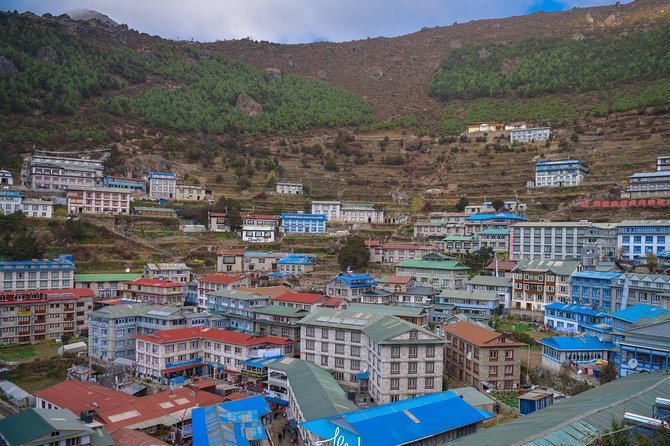
After that, you steadily climb toward Namche Bazaar, the Sherpa hub. Spending the next day there matters because Namche is where the trek turns from “getting there” into “adapting.”
More to compare around Kathmandu
- Private Kathmandu Sightseeing Tour | UNESCO World Heritage sites
★ 5.0 · 756 reviews - Kathmandu: 7 UNESCO Sites with Lunch
★ 4.8 · 744 reviews - Half day cooking class in Thamel kathmandu
★ 5.0 · 607 reviews - Everest Base Camp Trekking
★ 5.0 · 485 reviews
Namche acclimatization and the Khumjung hike for altitude safety
Your itinerary gives you an acclimatization day in Namche, and that is one of the smartest parts of the whole plan. The concept is hike higher and sleep lower, which helps reduce the risk of altitude problems while still giving your body useful adaptation.
You take a day trip up toward Khumjung. It is described as a hike of about 300 meters to the town, plus time to visit local monasteries and schools. That combination is practical. You get elevation work, but you also get a cultural stop that makes the day feel purposeful rather than just treadmill-hard.
You should use this day to slow down, hydrate, and keep your pack comfortable. You are not trying to prove anything here. You are trying to arrive at the next stage feeling steadier than you did at the start.
Tyangboche and Dingboche: pass views, forests, and the big-monastery moment
Leaving Namche, you continue toward Tyangboche, which is one of the most meaningful spiritual stops on this trek. You pass over the Mongla pass at about 3,975 meters, and that is where the views start feeling more open.
Then comes Tyangboche, described as the biggest and largest monastery of the region. Even if you are not religious, it is worth slowing down here, because the monastery buildings and daily life around them tell you what this region values beyond mountains and photo angles.
Day 6 shifts into a different feel: lush alpine forest and small villages along the way. You hike through the Khumbila Khola valley toward the ridgeline, then continue toward Dingboche, where the descriptions highlight views of Mt. Nuptse and Mt. Cholaste among others.
This section is a reminder that the Everest region is not only a skyline. It is also forests, villages, and community life you walk through.
Lobuche and the memorials: why the toughest climbs can still be hopeful
As you head to Lobuche, the route involves climbing along the terminal moraine left by the Khumbu Glacier. This is not just a scenic detail. Moraine trails can feel rough underfoot, and the climb can get tiring even if you are moving at a reasonable pace.
At the top of the hill, you reach memorials for climbers who lost their lives trying to summit Everest. It changes the tone of the day. You get a moment of reflection before you move deeper into the climbing zone.
Then you continue to Lobuche for the night. This stop sets you up for the Everest Base Camp push, because you are already close enough that your final day will feel both exciting and physically demanding.
Everest Base Camp day via Gorakshep and the Khumbu Icefall zone
Day 8 is the “most awaited” day, and the plan treats it with respect. You head out early, hike to Gorakshep, then continue toward Everest Base Camp.
On the approach, you see the Khumbu Glacier, and as you near Gorakshep, the trail becomes more difficult. That is normal here. Even people who are in shape often feel the altitude and the footing at the same time.
At Gorakshep, you have a short adjustment period, then you continue toward Everest Base Camp slowly. The route description notes you will see the Khumbu Icefall as you come nearer to the Base Camp area.
After spending time at EBC, you descend back, then overnight at Gorakshep. That overnight matters because it gives your legs a real second chance to recover before Kalapatthar.
Kalapatthar at 5,545 meters: the best viewpoint and how Lhotse changes what you see
Today is your highest-point day at Kalapatthar (5,545 m). The timing is built for good visibility, because the whole point is getting those wide views of multiple major peaks.
The plan specifically calls out views including Everest (8,848 m), Mt. Lhotse (8,516 m), Mt. Makalu (8,481 m), Mt. Cho Oyu (8,201 m), and more surrounding snow-capped mountains.
A practical detail you can take with you: Mt. Lhotse blocks Everest from the direct Base Camp sightline, so if you are hoping for a perfect Everest framing from EBC, Kalapatthar is the day that actually delivers.
After Kalapatthar, you head toward Pheriche for the next stage. This downhill section is where people notice fatigue the most, so keep your steps controlled.
The return route: Tyangboche, Namche tea house nights, and Lukla descent
After Kalapatthar, you continue down toward Tyangboche. The route is described as easier downhill to Pangboche, then it becomes a mix again as you cross the Imja Khola bridge and climb back to Tyangboche.
Day 11 brings a steep descend from Tyangboche to the Dudh Koshi River, then you cross the suspension bridge. You continue through villages like Tashinga and Sansa, returning to Namche Bazaar for an overnight tea house stay.
This stretch is a good test of endurance. You have plenty of dramatic views, but the body is still adapting, and your knees tend to remember every downhill step.
On day 12, you head from Namche to Lukla, descending through densely forested areas with short ups and downs. The route description highlights crossing the Bhote Koshi River three times, then a final uphill climb of about 45 minutes to reach Lukla.
Price and value: what you are paying for, and what you still need to budget
At $1,700 per person for about 14 days, this is not a cheap vacation. The value comes from what is handled for you.
Your package includes airport pickup and drop, and the Kathmandu to Lukla and Lukla to Kathmandu flights cost. It also includes trekking permits and necessary paperwork, plus breakfast, lunch, and dinner during the trek and accommodations in both Kathmandu and tea houses.
It also includes staff logistics like staff food, accommodation, salary, and insurance, and it even lists first-aid kits. You get welcome and farewell dinner, which is a small detail but it adds up in a place where you are often eating and sleeping on a schedule.
What is not included is what usually surprises people later: personal expenses, and alcoholic beverages. If you like wine with dinner or want lots of snacks in the villages, plan for that separately.
Season and flight reality around Lukla
Timing matters a lot here. Spring (March, April, May) and autumn (September, October, November) are listed as the best seasons for clear weather and good mountain scenery. Winter (December, January, February) can be great too, especially if you want fewer crowds.
Monsoon season (June, July, August) is flagged as a bad fit because rain can affect the trekking experience.
Even in good months, Lukla flights can still be sensitive to weather. One review detail that lines up with real life: when a January flight was delayed, the team made sure the trek still started with the first available flight, and the itinerary shifted slightly.
That is the kind of flexibility you want in a mountain operator. Still, you should plan your own travel with buffer time when you can.
Fitness, altitude, and knee-friendly trekking habits
This is described as a moderate trek, but it is not a casual stroll. You need to handle a steady pace of about 5 to 6 hours a day, and you will be walking on trails that rise above 5,000 meters.
The guidance is clear: take it slow and keep a steady pace because high altitude sickness can show up unexpectedly. It also recommends physical fitness beforehand, with examples like jogging, cycling, and swimming in the couple of days before the trek date.
For your knees, pay attention to how you move on descents. One specific tip coming from a past trek: if you have knee pain going down, train your hamstrings before the trip. It is a small prep step that can pay off big when the trail tilts steep.
And on acclimatization days, treat the “hike high, sleep low” plan as serious, not optional.
Tea house comfort: food rhythm, toilets, and shared rooms
The trek uses tea house lodges for overnight stays. The food part is handled in a structured way: dinner is served after you reach the teahouse, and breakfast the next morning is also at the same lodge. Lunch is described as en-route as you hike toward the next destination.
There is a note that tea houses serve healthy food in an orderly manner, with wide varieties from around the globe. That matters more than you think at altitude. You need regular meals, not just whatever you can find.
Bathrooms are the area to expect basic conditions. Attached toilets are not available in every tea house, so you may need to use public toilets. Rooms are arranged by group size into single, double, triple, or twin sharing, and sharing twin rooms with other trekkers can happen depending on how many people are in the group.
If you pack with that in mind, you will feel less annoyed by small inconveniences.
Who should book this trek, and who should rethink it
This tour fits best if you want the classic Everest Base Camp route with a proper acclimatization day in Namche and a high-payoff viewpoint day at Kalapatthar. I also think it suits you if you like clear guidance and want logistics managed, especially for permits, flights, and meals.
You should rethink the plan if you are not comfortable with moderate daily hiking for 5 to 6 hours, or if you struggle with altitude well. This is not described as requiring high mountaineering skills, but it is still high altitude trekking.
If you are a first-time Everest region trekker, the route’s slow pacing and the acclimatization stop are exactly the sort of support you want.
Should you book this Everest Base Camp trekking tour?
I would book it if your priority is a well-managed EBC experience that combines Namche acclimatization, a big monastery stop at Tyangboche, and the chance to hit Kalapatthar at 5,545 meters for wide peak views. The fact that flights to Lukla and permits are included is also a real time-saver, and the small group size (max 15) helps the trek feel more controlled.
I would not book it if you cannot handle the altitude walking reality, if your schedule has no flexibility for weather delays, or if you hate the idea of basic tea house living and sometimes shared rooms. You will be happier if you go in expecting simple lodging and focusing on the trail, not comfort luxuries.
If you want, tell me your travel month and your fitness level, and I can help you sanity-check whether spring, autumn, or winter makes the most sense for your trip style.
FAQ
What is the duration of the Everest Base Camp trekking trip?
The itinerary is listed as 14 days approximately, from Kathmandu to the trek and back to Kathmandu.
What are the highest points on this trek?
Everest Base Camp is at 5,380 meters, and Kalapatthar is at 5,545 meters.
Where does the trip start and when do the arrangements begin?
The meeting point is Tribhuvan Airport, Kathmandu, Nepal, with a stated start time of 9:45 am.
Does the price include flights between Kathmandu and Lukla?
Yes. The package includes the KTM to Lukla and Lukla to KTM flight costs.
Are meals included during the trek?
Yes. The tour includes breakfast, lunch, and dinner during the trekking duration, plus welcome and farewell dinners. Kathmandu is covered with a bed and breakfast plan.
Are permits and taxes included?
Yes. Trekking permits, required government taxes, and necessary paperwork are included.
What kind of accommodation should I expect?
In Kathmandu, you stay in a three-star rated hotel, and during trekking days you stay in available tea house lodges. Room types can include single, double, triple, or twin sharing, depending on group size and availability.
Is airport pickup and drop-off included?
Yes. The tour includes airport pickup and drop.
What is not included in the cost?
Personal expenses and alcoholic beverages are listed as not included.
What is the cancellation policy?
Free cancellation is offered up to 24 hours in advance for a full refund. If you cancel less than 24 hours before the start time, the amount paid will not be refunded.
Latest Kathmandu write-ups
- Langtang Valley Trek★ 5.0 · 3 reviews
- Khopra Danda Trek★ 5.0 · 3 reviews
- Langtang Valley Trek from Kathmandu★ 5.0 · 3 reviews
- 5 night / 6 days Kathmandu Nagarkot Chitwan Pokhara tour★ 5.0 · 3 reviews
- Nepal Highlights Tour: 5 Nights 6 Days Kathmandu & Pokhara Tour★ 5.0 · 3 reviews
- Kathmandu Valley Private Day Tour★ 5.0 · 3 reviews
- Conquer the Himalayas: The Ultimate 16-Day Annapurna Circuit Trek★ 3.5 · 3 reviews
- Kathmandu Heritage Day Tour★ 5.0 · 3 reviews
Everest Base Camp Trek, compared.



Everest Base Camp Helicopter Tour landing at Everest View Hotel
Read our review →



Everest Base Camp Helicopter Tour landing at Hotel Everest View
Read our review →
Browse the lists this tour appears in