
Reviewed · EVEREST BASE CAMP TREK
Everest Base Camp Yoga Trek – 15 Days
Everest Base Camp Yoga Trek is interesting because it keeps a mountain rhythm, morning yoga included, while you do the classic Khumbu route. I like the focus on daily yoga practice with an instructor who travels with you, and I also like the small-group feel (max 8) that makes tough days feel more manageable. You’ll get both the spiritual side and the practical side, without turning the hike into a yoga retreat that forgets you’re climbing high.
One consideration: this is still a serious high-altitude trek. Yoga can help you breathe, move, and recover, but you still need moderate fitness and the right cold-weather gear, especially if you’re hiking in colder months.
Key things that make this trek worth your attention
- Daily yoga with a traveling instructor, so it’s not just a one-off workshop
- Kathmandu UNESCO day before the flight to Lukla, for an easy cultural warm-up
- Acclimatization built in at Namche Bazaar and Dingboche, not just “keep going”
- Kala Patthar sunrise day for the closest, most dramatic Everest views you can plan
- Small group limit (max 8) for smoother pacing and less chaos in teahouses and trail bottlenecks
- Local support throughout, including a guide for the trek and a separate yoga lead
Daily yoga on the Everest Base Camp trail, what changes in your body
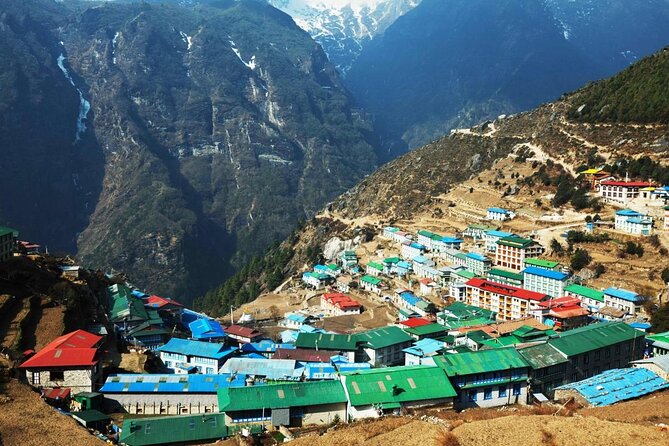
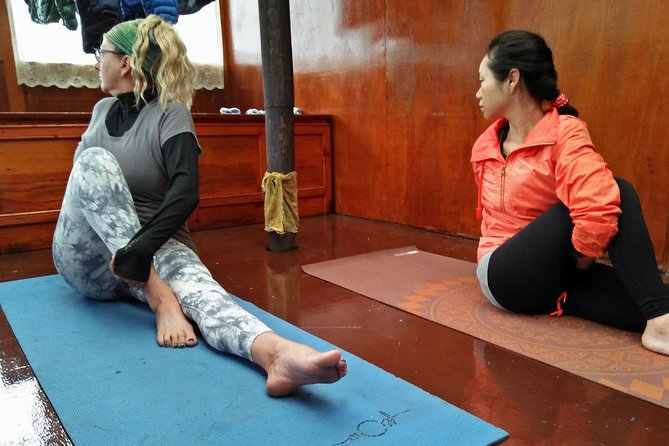
This trek works because the yoga is woven into the day, not stapled on top of it. Each day begins with yoga that focuses on centering your mind and body so you can handle cold air, changing altitude, and uneven footing. For me, that’s the key difference. When the terrain gets steep or your lungs start feeling “different,” you want a routine that keeps you calm and steady.
On a route like this, you’re dealing with three things at once: fatigue, cold, and altitude stress. The yoga format described here sounds simple on paper, but it can be huge in real life. Short sessions early in the morning can help you feel more in control of your breath and movement before you start hiking. You’ll also be more likely to stretch intentionally after a hard climb, which matters when your ankles and calves get cranky around the Khumbu region.
Still, yoga is not a magic altitude pill. If you’re expecting to feel light and effortless at high elevation, you’ll be disappointed. Think of yoga as a way to stay connected to your body and handle discomfort with less panic.
More ways to walk to Everest Base Camp:
- Everest Base Camp Trek – 14 Days
★ 5.0 · 1,499 reviews - Everest Base Camp Trek
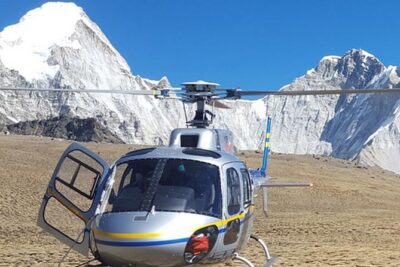
★ 5.0 · 842 reviews - Everest Base Camp Helicopter Tour landing at Everest View Hotel
★ 5.0 · 668 reviews
Kathmandu warm-up day: Swayambhunath, Boudhanath, and a calmer start before Lukla
You start in Kathmandu with airport reception and a hotel stay after you handle entry formalities. Then you get a cultural day that’s built to reset your legs and your mood before the flight days take over.
Your Kathmandu sightseeing day includes major spiritual stops: Swayambhunath, also called the Monkey Temple, with its big viewpoint over Kathmandu. Then you visit Boudhanath Stupa, one of the largest stupas in the world, where you’ll see pilgrims circumambulating and hear the steady hum of mantra culture. The plan also mentions Durbar Square as part of the Kathmandu heritage walk, plus an overall feel for how Hindu and Buddhist traditions overlap in day-to-day life here.
Why this matters: many first-time trekkers rush straight into trekking. That works if you’re already comfortable with jet lag and city chaos. Here, you get a day to get bearings, walk at an easier pace, and understand the religious landscape you’ll be walking through later.
Practical tip: wear layers. Even in Kathmandu, mornings and evenings can feel cooler than you expect, and you’ll be doing outdoor walking before your trek even starts.
Flight to Lukla and the first steps toward Phakding
The trekking phase starts the day after you organize your gear. You’ll pack your trekking equipment and leave early for Lukla, flying in a twin otter. The landing is at Tenzing-Hillary Airport (LUA), and then you meet other group members before starting an introductory trek toward Phakding.
This opening section is meant to help you settle into the rhythm of the Khumbu. You’re walking routes used traditionally by local communities, not just cutting through a designed tourist corridor. Expect big views as the scenery unfolds and the trail starts to feel like it has its own logic.
The big advantage of Day 3 being an intro day is that you avoid jumping straight into maximum effort. The tradeoff is that you’ll still start thinking about altitude, because even “early” days can feel tiring once the air gets thin.
Namche Bazaar to Tengboche: Dudh Koshi, suspension bridges, and your first real summit energy
After Lukla, you follow the Dudh Koshi River, and the trail style starts to look very “Himalaya.” The route includes suspension bridges and passes through places like Benkar, with waterfalls, ancient gompa, and forested stretches that give your eyes a break from constant uphill.
As you near Monjo, you’re reaching the gateway to Sagarmatha National Park, and that transition has a real mental effect. It’s the point where the trek stops feeling like a walk in the hills and starts feeling like a journey into protected, high-altitude terrain with its own rules.
From Monjo you move onward, and the plan references a stop at Jorsale village before you cross a high suspension bridge over the confluence of Dudh Koshi and Bhote Koshi. That bridge crossing is one of those moments where you feel how exposed the trail can be, and where steady steps matter more than speed.
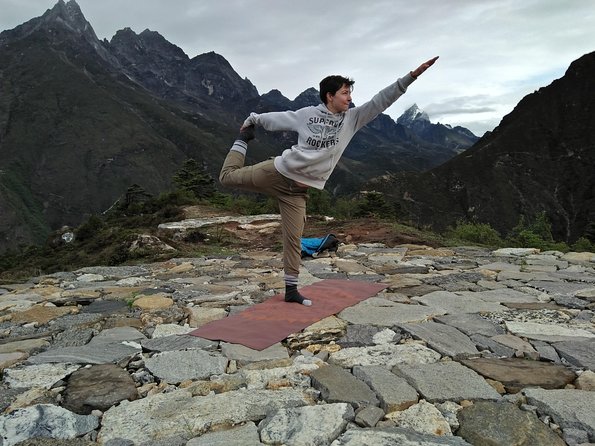
Then you arrive in Namche Bazaar, the practical hub for the Khumbu region. This is where the trek starts to feel social. You’ll see Sherpa life up close and meet other trekkers headed for similar destinations.
More Yoga & Meditation Retreats in Kathmandu:
- 500 hours Advanced Yoga Teacher Training at Nepal Yoga Home (Every 1st of month)
★ 5.0 · 185 reviews - 200 Hours Yoga Teacher Training at Nepal Yoga Home (starts on 1st of everymonth)
★ 5.0 · 125 reviews - 3 night 4 Day Yoga & Ayurveda Retreat to Detox the Body & Mind, Nepal
★ 5.0 · 37 reviews - 21 days Himalayan yoga retreat in Nepal in Kathmandu
★ 5.0 · 28 reviews
Rest day in Namche Bazaar: this is where your altitude plan becomes real
Day 5 is a rest and acclimatization day. That’s not optional here, and it’s one of the best parts of the trek planning.
In Namche Bazaar you can shop, check out the Saturday market, and get a feel for how the region adapts to seasonal crowds. You’ll also visit the Sherpa cultural museum, which focuses on mountaineering in the region, plus flora and fauna, history and geography of the Himalayas, and local traditions. I like this stop because it’s not vague. It gives context so the scenery feels connected to the people living beside it.
There’s also an early day hike option nearby, suggested before weather creates problems. This is the right type of acclimatization: you move your body, but you avoid spending the whole day forcing altitude.
The drawback? You’ll likely feel tempted to use rest days for extra exploring. Try not to treat it like a free day off. The goal is to arrive at higher villages feeling functional, not wrecked.
From Namche to Tengboche and onward: forests, prayer wheels, and the first big view moments
Day 6 starts with a short but steep climb out of Namche Bazaar, then shifts to a fairly leveled trail through dense forest toward Kenjoma and Sanasa. The plan also includes those “small” high-altitude touches that make the route feel alive, like dense vegetation and occasional Everest sightings in breaks between clouds.
Then you get to the junction area where trails connect toward the Gokyo valley and Everest base camp, and you head down to the Dudh Koshi riverbed before climbing toward Phunke Tenga. The prayer wheels here are a detail worth noticing. They act like trail markers for culture as much as for navigation.
You’ll rest at Phunke Tenga and then continue on the steep trail leading toward Tengboche. Day 6 ends with the feeling that you’re climbing into the more iconic monastery area that many people associate with Khumbu trekking.
Day 7 continues this arc. You leave Tengboche after sunrise and sunset moments and hike toward Dingboche, with a stop at Deboche for big views of Everest plus Ama Dablam, Lhotse, and Nuptse. The plan also highlights wildlife like musk deer, monal, and blue sheep, which is a reminder to keep your eyes open but your pace sensible.
You cross the Imja River via a suspension bridge and pass through places like Panchboche, including a visit to an ancient stupa. Then you move through alpine vegetation and reach Dingboche, where the air often feels drier and harder.
Dingboche acclimatization day: Nangkartshang Gompa and choosing a hike that fits
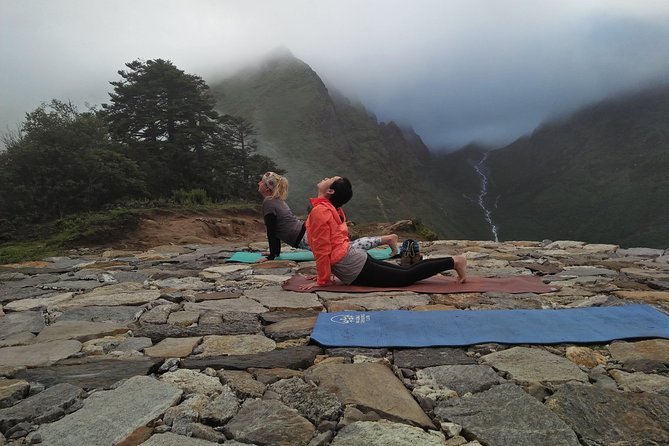
Day 8 is another rest and acclimatization day. You’ll have options, including a hike to Nangkartshang Gompa, described here as offering breathtaking views and access to heritage like Thangka paintings. You can also choose a shorter hike toward the hill behind Dingboche for views of several six-thousand-meter peaks.
I like that the plan gives alternatives. When you’re acclimatizing, “one-size-fits-all” hikes can backfire. If you feel good, you push a bit. If you feel off, you still get movement without overreaching.
This is also where you get a sense of the Imja River valley and the route network toward places like Island Peak. Even if you’re not going to Island Peak, it helps to see the bigger picture of what lives around this trekking corridor.
The climb toward Gorakshep: Dughla, Chukpo Lari, and crossing into glacier country
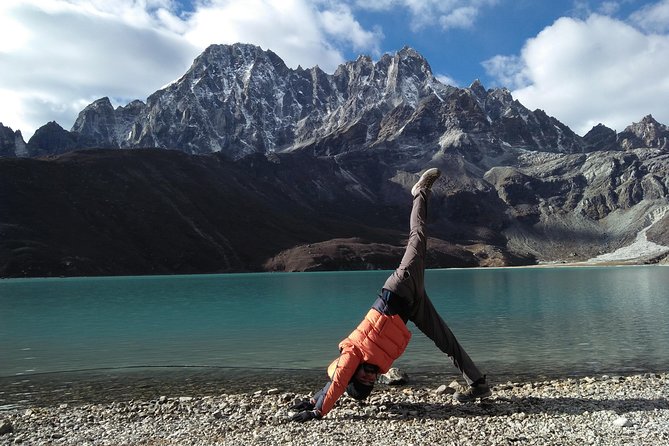
Day 9 begins with gradual ascent from Dingboche. The route references grazing areas with cattle, plus passes by chortens, Mani walls, and stupas. These are the visual anchors of the Khumbu trail, and they’re easy to miss if you always stare at your feet.
You’ll also get broad mountain views, including Taboche Peak and Ama Dablam. Then the plan takes you through glacial valleys and past the last settlement before traveling further to base camp, referenced here as Dughla.
A standout moment on this day is Chukpo Lari, described as a high ground overlooking the Khumbu valley with monuments built in remembrance of mountaineering lives. This kind of stop changes the tone of the trek. You’re not just collecting views. You’re stepping into the history and risk that comes with these mountains.
Day 10 is the big push to Gorakshep. It starts early from Lobuche. You travel past the Italian research center and across rocky paths over the Khumbu Glacier moraine area, with cautious navigation around ice pinnacles and occasional crevasses.
Why “Gorakshep” matters: it’s the staging point for the highest-view day. You lunch there and overnight there, so your energy planning matters. This is where having a yoga routine helps, because you’ll want your body feeling as ready as possible for a sunrise start.
Everest Base Camp plus Kala Patthar sunrise: the day the effort makes sense
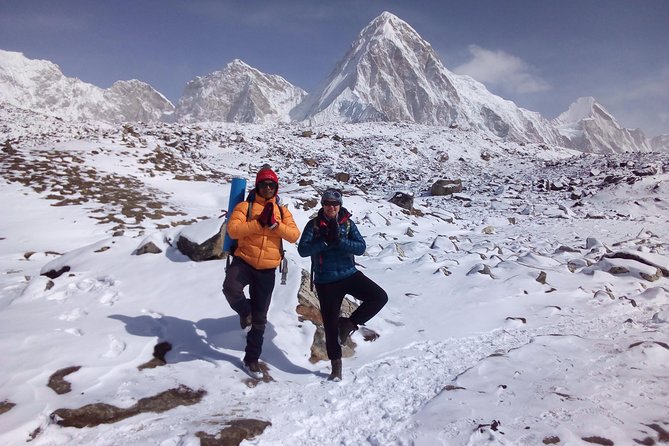
Day 11 is a sunrise-focused day. You get ready before day breaks and trek from Gorakshep to Kala Patthar, described as a close-up view point that gives a strong Everest silhouette, plus nearby peaks like Pumori, Lhotse, Nuptse, and Changtse. You’ll also see the Khumbu Glacier and the Southeast face of Everest.
This is the classic “I cannot believe I’m here” moment, but it’s also a hard day physically. Walking in the pre-dawn cold while you’re already tired from the altitude means you need warm layers and gloves that actually work. If you’ve got gear that’s only okay in mild weather, this day can punish you.
After Kala Patthar, the plan shifts you back toward lower altitudes. The descent helps you recover, but the schedule keeps you moving, so don’t underestimate your legs.
Then Day 12 turns into the long return. You depart from Periche toward Namche Bazaar, with mostly downhill hiking. The plan references Dudh Koshi along the way, plus prayer flags, suspension bridges, forests, waterfalls, gompas, monasteries, rural settlements, and villages.
You also encounter yaks and other porters and trekkers. Practical travel note: on narrow trails, step aside early. Don’t wait until someone is practically on top of you. It makes the hike easier for everyone.
Coming back through the Sagarmatha National Park exit and reaching Namche again
Day 13 is the last trekking stretch that still feels like a full trek day. You descend from the Namche Bazaar area down to the riverbed at the confluence of Dudh Koshi and Bhote Koshi, then cross a high suspension bridge to Monjo, where you exit Sagarmatha National Park.
After that, you trek through Benkar and past waterfalls and several suspension bridges back through villages such as Phakding, Ghat, Nursing, and Chheplung. You also pass Mani walls and prayer wheels again, which can feel comforting because you recognize them from earlier days.
The plan ends by trekking back up to the hill town of Namche Bazaar. That might sound odd, but it’s actually helpful. It sets you up for easier travel logistics once you’re done with the mountain days.
Lukla back to Kathmandu, Thamel recovery, and how to use your last two days well
Day 14 is travel day. You fly early from Lukla to Kathmandu, with a flight time around 35 minutes mentioned in the plan. Once back in Kathmandu, you’ll transfer to your hotel for much-needed rest.
Later in the evening, the plan suggests a stroll around Thamel and nearby streets. That’s a smart way to end: you’re done with cold, done with high altitude, and you can let your body decompress without turning the last day into another hike.
The plan includes breakfast, lunch, and dinner on this Kathmandu return day, plus an overnight stay.
Day 15 wraps the experience with final souvenir shopping and then an escort to Tribhuvan International Airport (KTM) at least three hours before your flight. That timing is practical on Nepal airport schedules, especially if you’re tired and you just want the day to run smoothly.
Price, what you get for $1,699, and where it can feel like good value
At $1,699 per person for about 15 days, the value depends on what matters to you. This price is not just for hiking. It includes accommodation across the itinerary, national park fees, airport and departure tax items, local guiding, and meals (breakfast for 15 days, lunch for 12 days, and dinner for 12 days). Coffee and/or tea are included too.
You also get a yoga instructor who travels with you, which is a big operational cost on a multi-day trek. You’ll also have airport reception in Kathmandu and coordination around your departure back to the airport.
Two things make this feel like better value than a stripped-down trek. First, you’re covered for park fees and guiding. Second, the daily yoga component is not a short add-on. If you’ll actually use yoga every day, it changes how you experience the trek.
Where costs can surprise you: drinks and alcoholic drinks are listed as not included, so if you want bottled water, soft drinks, or beer on return nights, budget for that.
Who this trek fits best:
- People who want a structured spiritual and physical routine, not just “walk from point A to point B”
- Trekkers with at least moderate fitness who know this is still a demanding high-altitude hike
- Solo travelers and groups alike, since the max group size is capped and the trekking support is built into the plan
- Anyone who appreciates Kathmandu culture before the mountain grind starts
Guides, yoga leaders, and the support system that keeps you safe and calm
This trek is only as good as its people, and the details here point to a real support setup. You’ll have a local guide for the trekking portion. You’ll also have a yoga instructor who follows the group for the duration and leads daily sessions.
In the wider Trekking Planner Nepal context, names like Nirmal and Sonam Jangbu Sherpa show up as guides for these kinds of treks, with praise for being fun, organized, and focused on group safety. Dipak appears in Kathmandu as an organizer who handles communication and problem-solving for arrival and trip details. Other names like Ganesh, Ram, Suman, Anil, Pemba, and Anish show up as guide personalities, often paired with themes like patience and keeping logistics moving.
You should not pick a guide on name alone, but those patterns matter. When you have high-altitude risk and cold-weather challenges, a calm, responsive guide team reduces stress, and that makes the trek more enjoyable.
Also, the small group size helps. If you’re not packed in with a huge crowd, it’s easier to keep your own pace and avoid trail bottlenecks turning into frustration.
Should you book this Everest Base Camp Yoga Trek?
If you want the classic Everest Base Camp route, plus daily structure that keeps you calm and consistent, this is a strong pick. The daily yoga factor is the main reason I would book it, because it turns the mornings and recovery time into part of your plan, not an optional extra.
I’d hesitate if your goal is simply to “check off Everest.” This trek takes time, it involves high altitude risk, and yoga does not replace acclimatization. Also, make sure your gear is truly cold-weather ready, since the route does not slow down just because it’s pretty.
If you’re the type who likes clear plans, supportive guides, and a meaningful routine each day, you’re going to get a lot out of this trek.
FAQ
How long is the Everest Base Camp Yoga Trek?
It runs for about 15 days.
Where does the trek start, and how does it end?
It starts in Kathmandu, and after returning from Lukla it includes hotel time in Kathmandu and an escort to Tribhuvan International Airport for departure.
How many people are in the group?
The tour has a maximum of 8 travelers.
Are yoga sessions included every day?
Yes. Each day begins with yoga practice under the guide of an instructor, and the yoga instructor travels with you for the duration of the trek.
What meals are included?
Breakfast is included for 15 days, and lunch and dinner are included for 12 days. Coffee and/or tea are also included.
Is free cancellation available?
Free cancellation is available up to 24 hours in advance for a full refund. If you cancel less than 24 hours before the start time, the amount paid is not refunded.
Latest Kathmandu write-ups
- Visit Swayambhunath and Bauddhanath Stupa with Guide★ 5.0 · 5 reviews
- 10 days Annapurna Base Camp Trek★ 5.0 · 5 reviews
- Langtang Trek from Kathmandu 7 Days★ 5.0 · 5 reviews
- Island Peak Climbing with Everest Base Camp★ 5.0 · 5 reviews
- 7 Day Kathmandu Pokhara Tour★ 4.5 · 5 reviews
- Chandragiri Hill Cable Car Tour with Hotel Transfers from Kathmandu★ 4.5 · 5 reviews
- Everest Mountain Flight★ 5.0 · 5 reviews
- Kathmandu city day tour (4 world heritage sites)★ 5.0 · 5 reviews
Everest Base Camp Trek, compared.
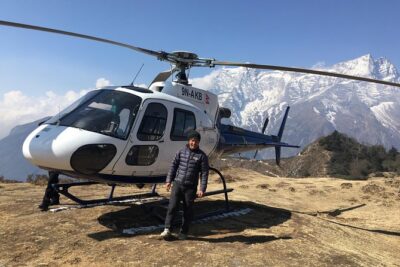
Everest Base Camp Helicopter Tour landing at Everest View Hotel
Read our review →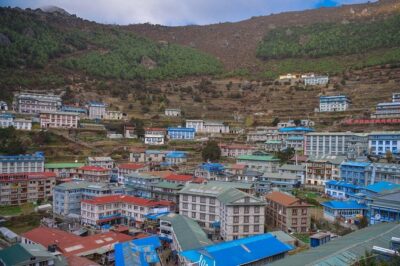
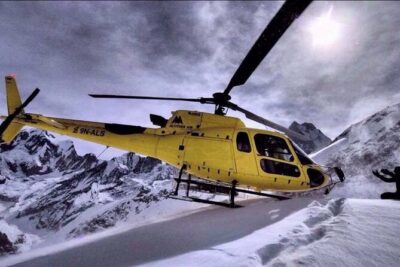
Everest Base Camp Helicopter Tour landing at Hotel Everest View
Read our review →
Browse the lists this tour appears in