
Reviewed · GOKYO LAKES TREK
Gokyo Valley Trek
This trek is interesting because it trades the usual Everest-only focus for Gokyo Ri and the huge ice world around the Ngozumpa Glacier. I like that you get real village time with Sherpa communities, not just high-altitude photo stops. And the view payoff is the main event, especially when the big peaks start lining up above Gokyo Lake.
One consideration: you are dealing with altitude and long hiking days, plus Lukla flights and mountain weather that can be unpredictable. You’ll want solid fitness and smart pacing, and you should plan for travel insurance that covers emergency high-altitude evacuation.
Key things to know before you go
- Gokyo Ri sunrise views at 5,483m, with Everest, Lhotse, Makalu, Cho Oyu, and more in the same panorama
- Ngozumpa Glacier area plus the terminal moraine scenery that feels close enough to touch
- Sherpa village trekking with monasteries and everyday life built into the route
- Small-group feel (max 15) with a clear guide and porter support structure
- Good support setup: licensed English-speaking guide, and 1 porter for every 2 clients
- Practical Kathmandu pre- and post-trek days with major Hindu and Buddhist stops
Why Gokyo Valley is a smart choice for Everest-view lovers
If you like the idea of seeing the Himalaya without spending every day fighting for Everest-area logistics, Gokyo Valley is a strong alternative. You still get the big-name peaks, but the angles are different. From Gokyo Ri, the view fans out in a way that makes the whole Khumbu region feel close and connected.
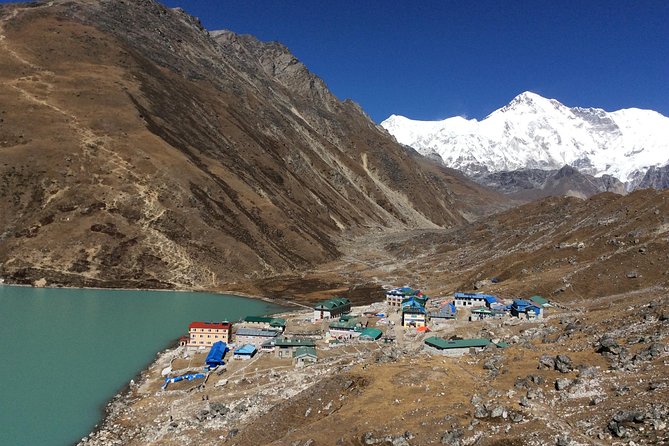
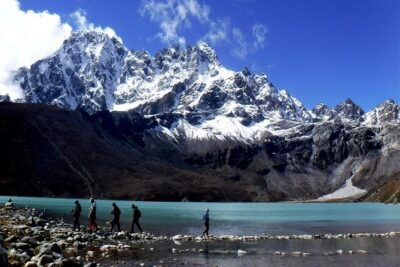
What I like most is how the trek is built around two visual anchors: the deep turquoise area around Gokyo Lake and the ice weight of the Ngozumpa Glacier. The route also keeps you walking through human-scale places. You move through rhododendron forests, past Buddhist monasteries, and through villages where people run lodges and live their normal routine.
The other reason to pay attention is that the itinerary does not just jump up and hope. It includes an acclimatization day in Namche, and it gives you time to settle at higher elevation before the main viewpoint climb.
More of the Gokyo lakes:
- Gokyo to Everest Base Camp Trek
★ 5.0 · 113 reviews - Everest Base Camp – Cho La Pass – Gokyo Trek
★ 5.0 · 65 reviews - Everest Gokyo Valley Trek – 12 days
★ 5.0 · 27 reviews
Price and logistics: what $1,514.67 really buys
At $1,514.67 per person, this trek is not a budget hike. But it is also not just a bundle of walking days. The value is in what’s handled for you, especially for an area like this where flights, permits, and altitude planning matter.
Here’s what you get that usually costs extra when you book pieces separately:
- Kathmandu to Lukla and back by air (roundtrip airfare is included)
- Licensed English-speaking trekking guide
- 1 porter for every two clients
- Permits for trekking
- Down jacket and sleeping bag provided for the trek (returned at the end)
- Kathmandu airport transfers and guided sightseeing with entrance fees
Meals are part of it too. You get multiple breakfasts and dinners during the trek window, and lunches are included on several trek days. You still need to cover lunch and dinner in Kathmandu on your own days, and alcoholic drinks are not included.
Two value notes that matter:
- Porter support is built in. That can mean the difference between enjoying the trek and feeling beaten up by your pack weight.
- Equipment rental included reduces the hassle of trying to source warm gear in advance.
Kathmandu warm-up days: Pashupatinath, Boudhanath, and Bhaktapur
You start in Kathmandu with a mix of Hindu and Buddhist landmarks, which is a great way to shift your mind from city time into mountain time. You’ll do major sightseeing on Day 2: Pashupatinath Temple, Boudhanath Stupa, and Bhaktapur Durbar Square.
At Pashupatinath, you can’t enter the temple itself, but you can see the complex and daily river activity from across the Bagmati River. That’s worth knowing because it shapes what you should plan for: you’ll spend more time observing than wandering inside.
Boudhanath is the opposite vibe. It’s visual, busy in its own slow way, and you’ll see pilgrims moving around the stupa with prayer wheels. This is a good place to get comfortable with the idea that spirituality here is part of daily motion.
Then comes Bhaktapur Durbar Square, with its pagoda-style and temple architecture and the feel of a historic royal residential area. The practical value is that you’re not rushing. These are shorter stops that prepare you for the long walking days that follow.
Day 1 to Day 2 support: airport pickup and the pre-trek meeting
From Tribhuvan International Airport, you’ll be met and taken to your Kathmandu hotel by private vehicle. Either on Day 1 or Day 2, there’s a pre-trek meeting in the office where you meet the trek leader or guide.
This meeting is not just paperwork. It’s where you confirm details like balance due, sign legally binding trip forms, and review non-liability language. You’ll also need to bring your passport, three passport-size photos, and a readable copy of your travel insurance policy.
If you prefer a smooth start, do this meeting early in your timeline. It helps the first trekking day feel controlled, not chaotic.
More to compare around Kathmandu
- Everest Base Camp Trek – 14 Days
★ 5.0 · 1,499 reviews - Everest Base Camp Trek
★ 5.0 · 842 reviews - Private Kathmandu Sightseeing Tour | UNESCO World Heritage sites
★ 5.0 · 756 reviews - Kathmandu: 7 UNESCO Sites with Lunch
★ 4.8 · 744 reviews
Lukla to Phakding: the first altitude and the Dudh Kosi crossings
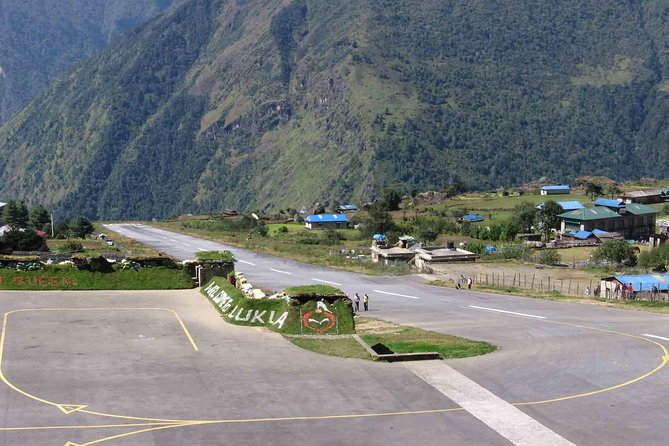
The trek truly starts when you fly from Kathmandu to Lukla, landing at Tenzing and Hillary Airport at 2,804m. After you arrive, your guide and porters get introduced, equipment is sorted, and you begin by descending toward the Dudh Kosi River.
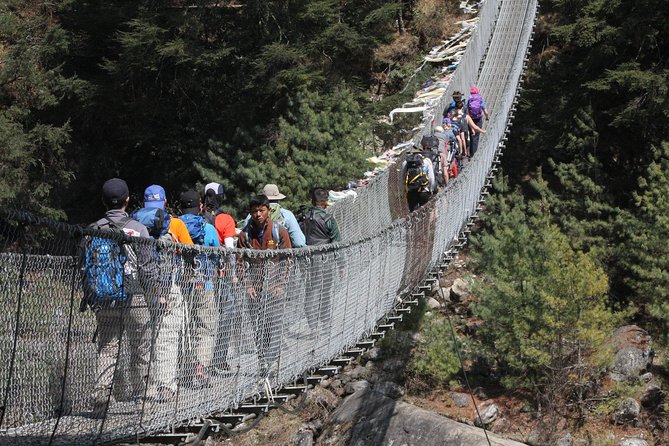
This first hiking section is about rhythm. You’ll cross suspension bridges, often with prayer flags, and you’ll connect the idea of Nepal’s river valleys to the big peaks that will dominate later days.
Phakding is a gentle landing spot. It’s a village where you can reset your body after the flight, and it’s also where Sherpa crews and lodge life become real. I find the best part here is that it feels like a normal mountain journey, not a theme park version of one.
Namche Bazaar acclimatization: Sagarmatha Park views and a full day to adjust
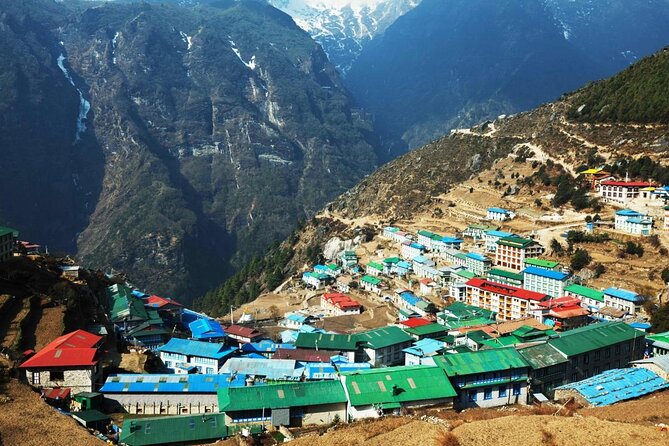
Namche Bazaar is your big altitude milestone, and your schedule reflects that. You climb into the Sagarmartha National Park area and reach the town that many people treat as the gateway to Everest trekking.
On the first arrival day, you’ll likely feel the steepness. The suspension bridges keep your mind busy, and the views start turning from occasional glimpses into frequent reminders that you’re headed somewhere serious.
The next day is the important one: a dedicated acclimatization day. You’ll visit a Sherpa museum focused on traditional customs, and you’ll hike up near Syangboche Airport at the Everest View Hotel area for panoramic views. That sunrise and sunset potential is a big reason to consider this a worthwhile day, not a “wasted” day.
Practical takeaway: acclimatization days work best when you keep your effort steady and do not turn everything into a race. You’re not just chasing views, you’re helping your body adjust.
Phortse and Machhermo: rhododendron forests to the edge of the glacier world
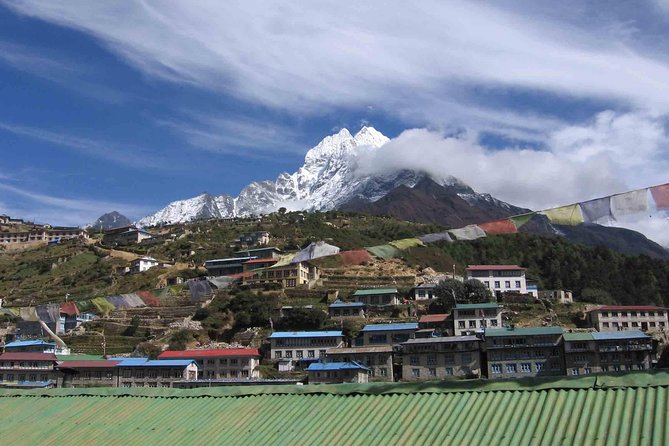
After Namche, the trail climbs through rhododendron forest, plus juniper and conifer zones as elevation increases. This is a nicer day than it sounds because the vegetation makes the hike feel less sterile. You also get more of that pristine, mountain-fresh feeling as you move away from town noise.
You’ll pass through Yak Kharkas and summer settlements en route to Phortse. The guide’s value here is timing and pacing. When you’re above the tree line or near it, your body notices every extra push.
Then you continue to Machhermo. This stage brings better dramatic angles. You get views down the valley toward Kengtega, and up toward Cho Oyu. The route dips toward a river and then climbs again toward the terminal moraine of the Ngozumpa Glacier.
If you like seeing the glacier not as a distant postcard, but as a physical presence, this is the moment when it starts to feel real.
Gokyo: two nights of basecamp time around Lake and ice
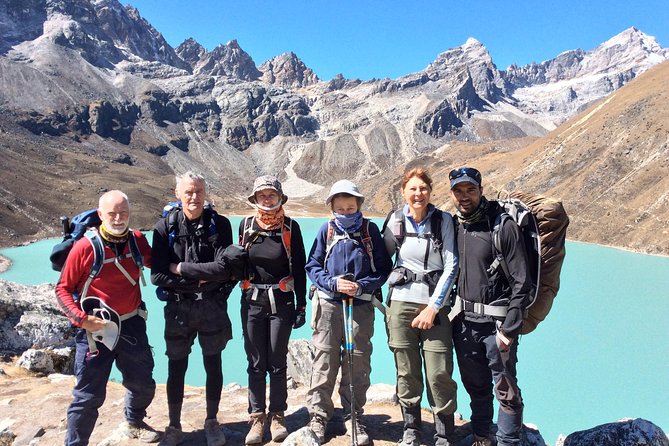
Reaching Gokyo at 4,790m feels like a shift from “climbing toward something” into “living inside the scenery.” The itinerary gives you two nights here, which matters. You get time for sightseeing and hiking around the Gokyo area instead of packing everything into a single rushed day.
This is where the views become easier to appreciate because you can plan your effort around light and air. It’s also where you start to see how the glacier, the lakes, and the routes connect.
And for people who want more than one good photo angle, the extra time means you’re not forced into one best moment. You can pick a morning plan, a midday rest, and a late-afternoon walk.
Gokyo Ri at 5,483m: how to make the steep morning worth it
The highlight climb is Gokyo Ri at 5,483m. You go early, and it’s a steep push. This is not the kind of climb where you coast. You’ll work for it.
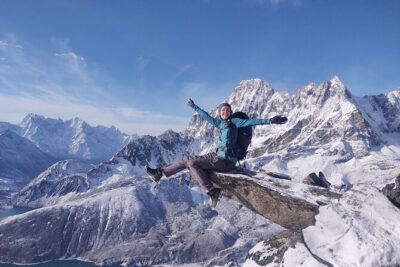
The payoff is the panoramic view of the entire Khumbu region, including Everest, Lhotse, Nuptse, Makalu, Cho Oyu, and Gyachung Kang, plus the view of the massive Ngozumpa glacier. It’s the kind of sunrise that makes you understand why people wake up at odd hours to suffer for a view.
What helps you enjoy it:
- Keep your pace controlled. Small steady steps beat big efforts at altitude.
- Bring layers you can manage during the climb and after you reach the viewpoint.
- If weather looks shaky, trust your guide’s judgement about timing and safety.
This is also the moment where good guidance pays off. The guide can read conditions and adjust if needed. In past trips, guides have shown flexibility when things shift due to mountain realities like delays.
Dole and the return to Namche: the rhythm changes on the way down
After Gokyo Ri, you head back to Dole following the trail and descending. Day by day, the physical challenge changes. Downhills can feel easier than climbs, but they can also beat up your knees if you’re not careful with stride and step placement.
You’ll then continue back toward Namche by walking through a typical Sherpa village area like Khumjung. This matters because the trek becomes about more than elevation. You see the human side of the region again as your route moves back toward the trail network around Namche Bazaar.
The return is where you realize how much you gained emotionally. You’ve seen the big peaks up close, and now you’re weaving through everyday life again.
Lukla and Kathmandu: finishing the loop with time to reflect
You finally return to Lukla, where it started. This day can feel like a reset. You’ve done the hard part, and now you’re closing the distance between high camps and normal village rhythm.
Your flight back lands you in Kathmandu. You’ll be transferred to your hotel, and you get some time to breathe and reflect as a group.
Then there’s a spare Kathmandu day. You’ll have options for extensions, like Chitwan jungle safari or rafting or extra Kathmandu valley time. And there’s a farewell dinner at a traditional Nepalese restaurant with cultural performances.
This post-trek structure is practical. It keeps you from immediately jumping into more logistics before you’ve fully recovered.
Support, gear, and who this trek is best for
This trip runs with a licensed English-speaking trek guide. You also get porter support at 1 porter for every 2 clients, which is a major comfort upgrade at altitude. And you’ll stay in a three-star hotel in Kathmandu for four nights, then in guesthouses on the trek in twin-share or dormitory rooms for ten nights.
Gear support is built in. You receive a down jacket and sleeping bag for the trek, and you return them at the end. That’s one less expense and one less stressful sourcing problem before you fly to Nepal.
From the support side, the most praised element in the mountain experience is usually how people feel cared for, especially when schedules shift or the route needs adjustment. You can look for guides who are comfortable reading the Khumbu region and keeping things safe while still finding the best workable plan. Names you may see in the guide roster include Ngima, Nimesh, Bishnu, Milan, and Aamod Nepal. Porters such as Lochan and Bishaal, or Bal Krishna Niagiar, also come up as key support figures.
This trek suits you best if:
- You have moderate physical fitness and you’re used to long days on your feet.
- You want Everest-area views but prefer the Gokyo angles and glacier-heavy scenery.
- You like village trekking and monasteries, not just summits.
If your idea of trekking is short, flat, and low-stress, this is not that trip. This is honest work.
Should you book the Gokyo Valley Trek?
Yes, if your main goal is peak views with a glacier focus and you want a route that includes Sherpa life and multiple chances to see the mountains in different light. The included flights, guides, permits, porter ratio, and provided sleeping bag and down jacket add up to a lot of value that is hard to replicate if you DIY everything.
I’d think twice before booking if you are not confident in altitude effort or if you hate uncertainty around mountain weather and flight timing. Also plan your gear and insurance early, because the trek depends on good conditions, and you will need proper coverage for emergency high-altitude rescue and evacuation.
If you’re the right kind of traveler, this is the kind of Himalayan trip that sticks with you for the right reasons: steep mornings, ice giants, Sherpa villages, and that moment when the view finally fills the whole horizon.
FAQ
Where does the trek start and what time do you meet?
The start point is Tribhuvan Airport in Kathmandu, Nepal, with a start time of 8:00 am.
How many days is the trek?
It’s listed as 15 days approximately.
What are the key high points during the trek?
You reach Gokyo Ri at 5,483m, and the Lukla airport is at 2,804m. Gokyo is camped at 4,790m.
What’s included for meals during the trek?
Breakfast is included for 14 days, lunch is included for 10 days, and dinner is included for 11 days. Lunch and dinner in Kathmandu are not included.
Do you get a guide and porter support?
Yes. You get a licensed English-speaking trekking guide and 1 porter for every two clients.
Is trekking gear included?
Yes. Down jacket and sleeping bag are provided for the trek and returned at the end. Personal trekking equipment is not included.
Is travel insurance included, and what if weather is bad?
Travel insurance is not included. The trek requires good weather, and if it is canceled due to poor weather you’ll be offered a different date or a full refund.
Latest Kathmandu write-ups
- Langtang Valley Trek★ 5.0 · 3 reviews
- Khopra Danda Trek★ 5.0 · 3 reviews
- Langtang Valley Trek from Kathmandu★ 5.0 · 3 reviews
- 5 night / 6 days Kathmandu Nagarkot Chitwan Pokhara tour★ 5.0 · 3 reviews
- Nepal Highlights Tour: 5 Nights 6 Days Kathmandu & Pokhara Tour★ 5.0 · 3 reviews
- Kathmandu Valley Private Day Tour★ 5.0 · 3 reviews
- Conquer the Himalayas: The Ultimate 16-Day Annapurna Circuit Trek★ 3.5 · 3 reviews
- Kathmandu Heritage Day Tour★ 5.0 · 3 reviews
Gokyo Lakes Trek, compared.

Landing Private Helicopter at Everest base camp & Gokyo for photo
Read our review →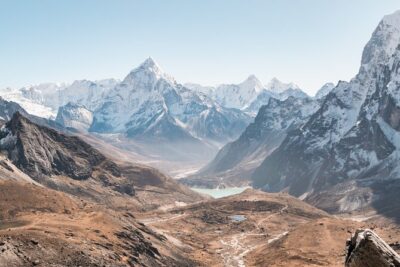
Gokyo Lakes, Gokyo Ri Trekking Package – 10 Days
Read our review →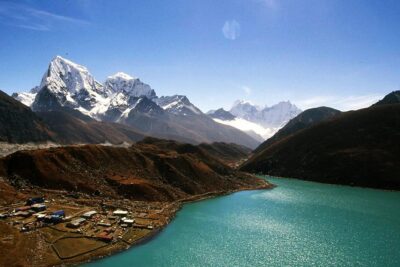
Browse the lists this tour appears in