
Reviewed · PEAK CLIMBING
Island Peak Climbing – 20 Days
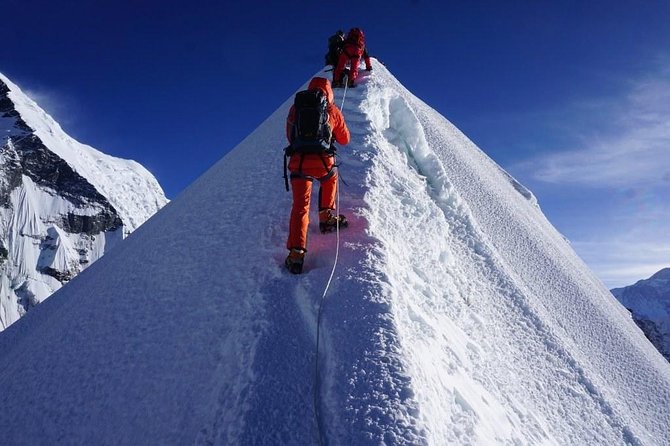
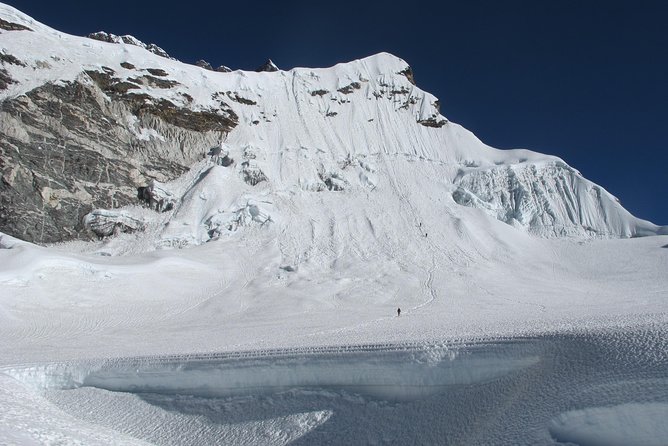
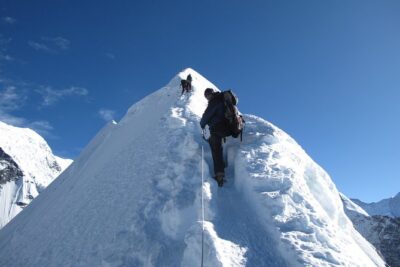
Island Peak Climbing is interesting because you get the classic Everest Base Camp trek feel, then you switch gears to a real 6000m peak. The route funnels you toward a 300 meter headwall of 45 degree snow slopes and then an exposed summit ridge, with big views of Nuptse, Lhotse, Makalu, Ama Dablam, and more.
What I like most is the balance of structure and support. You get a properly guided build-up with an English speaking, certified Sherpa guide and a team that keeps the trek side moving while you also train for the climb. In the reviews people highlight guides like Tenzing and Mingma for taking care of comfort and handling the unexpected.
One thing to consider is that this is still a high-altitude commitment. You should expect a long summit day, plus weather can shape the plan even with a reserve day built in, so strong fitness and a calm attitude toward the mountains matter.
Key Highlights You’ll Care About
- A classic Everest trek plus a 6000m summit that ties together two major goals on one schedule
- The 45 degree, 300 meter headwall that sets up the kind of summit feeling most people only imagine
- Built-in acclimatization and hiking breaks from Namche Bazaar through Dingboche and beyond
- Licensed Sherpa guidance (often named Tenzing and Mingma) with real on-the-ground problem solving
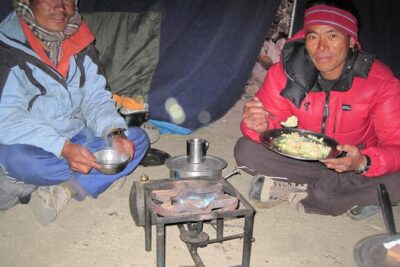
- Camping support that reduces stress with tents, mattresses, and a kitchen setup included
- A reserve day for weather so the plan can wait when conditions need it
Why Island Peak Plus Everest Base Camp Works Better Than a Shortcut
This is not just a climb tacked onto a trek, or a trek tacked onto a climb. The best part is the rhythm: you walk up through the Khumbu on an intentionally slow staircase, then you push into the higher zone where Island Peak makes sense.
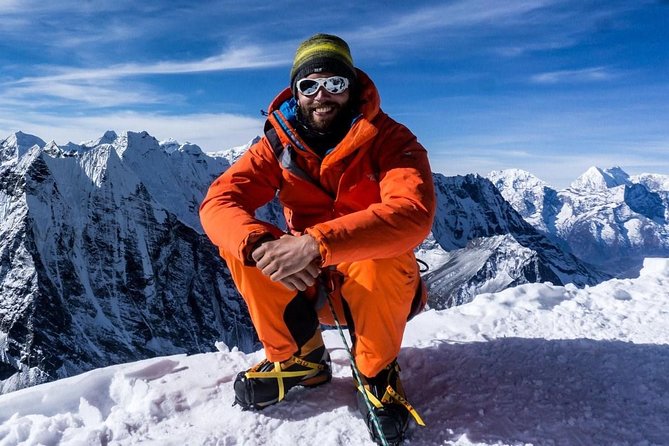
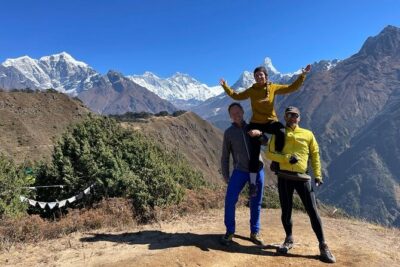
On the summit itself, the view is the main event. From Island Peak you look toward Nuptse (7879 m), Lhotse (8501 m), Lhotse Middle Peak (8419 m), and the unclimbed Lhotse Shar (8383 m). To the east you face Makalu (8475 m) and the frozen waves of the Lhotse Shar Glacier. To the south you get Baruntse and Ama Dablam. That’s a lot of heavy-hitter scenery packed into one ridgeline moment.
You should still go into this with realistic expectations. Island Peak may be “only” 6189 m, but the approach includes long days, cold nights, and altitude that sneaks up on you even when you feel fine at the start. This isn’t a vacation hike. It’s a big mountain trip where you earn the views.
More trekking peaks with guided ascents:
- Mera Peak Climbing
★ 5.0 · 33 reviews - Island Peak Adventure
★ 5.0 · 15 reviews - Everest Base Camp Trek with Island Peak Climbing
★ 5.0 · 14 reviews
Kathmandu Warm-Up: Transfers, Twin-Share Beds, and a Cultural Welcome
Your first days in Kathmandu are designed to get your trip off the ground without wasting time. You’ll have airport pickup and a private vehicle transfer between airport and hotel, then you get four nights in Kathmandu on a twin-share bed and breakfast basis.
Day 2 is a prep day. That usually means time to sort the details you’ll need before you leave the city, then get yourself ready for cold temperatures and early starts once you hit the mountains. It’s also the moment where a good operator helps you feel organized, not rushed.
One of the more memorable “non-mountain” parts is the authentic Nepali welcome dinner with a live cultural program. It’s a nice reminder that you’re not only visiting peaks. You’re also in a place with music, dance, and real local hospitality, and that matters on a trip this physically demanding.
If you want a practical tip: use Kathmandu to rest, not to “fit in one more thing.” Save your energy for the trek days that come fast.
Lukla to Namche to Lobuche: The Trek Part That Earns the Summit
The mountain starts the moment you fly to Lukla. From Kathmandu you take the flight to Lukla, then trek to Phakding in about 4 hours. The next day, you climb to Namche Bazaar, a 6 to 7 hour trek. That first shift from low altitude to Himalayan terrain is a big mental switch, and it helps that the schedule keeps you moving but not sprinting.
Day 5 is an acclimatization day in Namche Bazaar. Instead of just walking higher, you spend time trekking around the area. That’s smart. If you treat acclimatization like a chore, altitude punishes you. If you treat it like a tool, altitude behaves better.
Day 6 takes you to Tengbuche in about 5 to 6 hours. Day 7 goes to Dingboche in about 5 hours. Dingboche is a key stop, because you spend the next day hiking either Nagarjun Hill or the Chukkhung Valley. Those options are both about giving your body a higher signal while keeping you from climbing so fast that you lose the altitude battle.
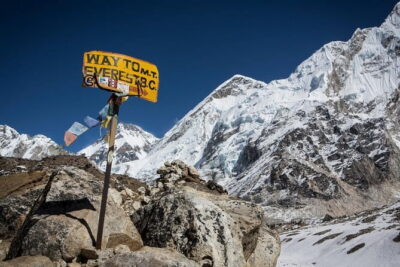
After that, the trip tightens toward Everest Base Camp territory. Day 9 goes to Lobuche (4915 m), about 5 hours. Day 10 brings you to Gorak Shep (5130 m) in about 3 hours, then you hike up to Everest Base Camp (5364 m). This is where the trek part stops being training and starts becoming its own payoff. You’re not just passing through.
One reality check: expect cold and wind at these elevations, and expect the pace to feel slower even when you’re doing everything right. Your goal here is steady breathing and consistent effort.
Everest Base Camp and Kala Patar: Big Altitude, Real Views
Everest Base Camp day is typically long, but it’s also one of the most satisfying days of the whole trek. You’ll start from Gorak Shep at 5130 m and hike up to Base Camp at 5364 m. That higher start matters because even small altitude changes can feel dramatic at this point.
Then comes Kala Pattar, which is the “okay, wow” day for a lot of people. On Day 11 you ascend to Kala Pattar (5545 m) and then descend back to Dingboche (4400 m) over about 6 to 7 hours. This day is a grind, but it’s the kind of grind that gives you a big horizon view over the Everest region.
Why I like this pattern: you get a major view-focused push, then you descend to recover. It’s not just all uphill, all the time. That recovery matters for what comes next, because Island Peak training begins shortly after you reach the Chhukung area.
If you’re prone to overdoing it, watch your pacing on Kala Pattar. It’s easy to feel heroic for the first half hour, and then feel it in your legs later.
More to compare around Kathmandu
- Everest Base Camp Trek – 14 Days
★ 5.0 · 1,499 reviews - Everest Base Camp Trek
★ 5.0 · 842 reviews - Private Kathmandu Sightseeing Tour | UNESCO World Heritage sites
★ 5.0 · 756 reviews - Kathmandu: 7 UNESCO Sites with Lunch
★ 4.8 · 744 reviews
Chhukung to the Summit: Training, High Camp, and the 45 Degree Headwall
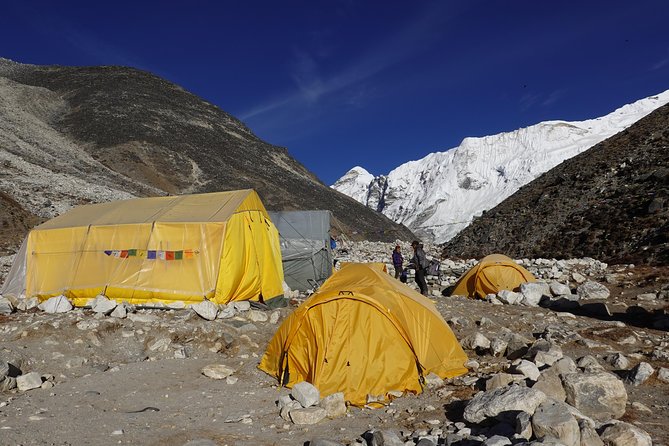
After Dingboche, you shift toward Island Peak. Day 12 is a transition day, trekking from Dingboche to Chhukung and then onward to Island Peak Base Camp (5200 m) in about 3 to 4 hours. This is where you stop thinking like a trekker and start thinking like a climber.
Day 13 includes pre-climb training and a trek to High Camp (5450 m) in about 2 hours. Training isn’t wasted time here. You want to practice the move patterns and get comfortable with the climbing rhythms before the summit day. The altitude is also high enough that you should treat everything as deliberate, not rushed.
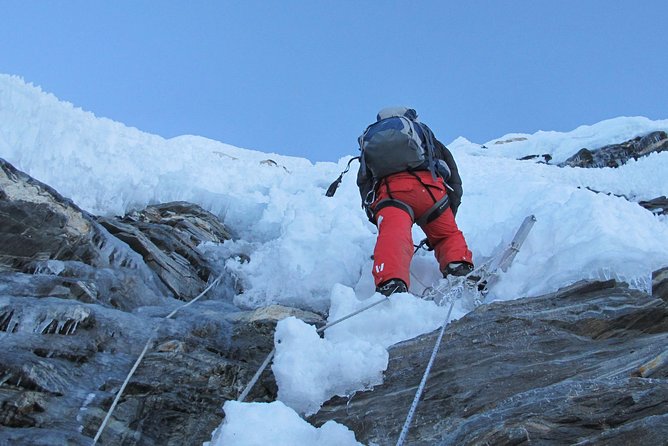
Then you have Day 14, the summit attempt. You ascend Island Peak to 6189 m and descend to Chhukung (4710 m), typically 10 to 12 hours. That long descent matters. It’s part of the day’s work, not a free ride.
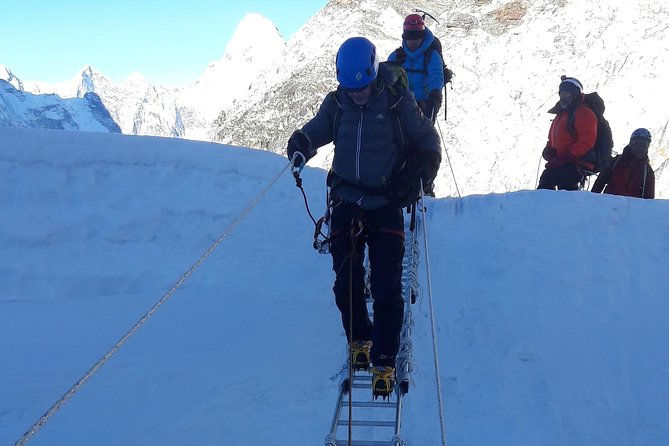
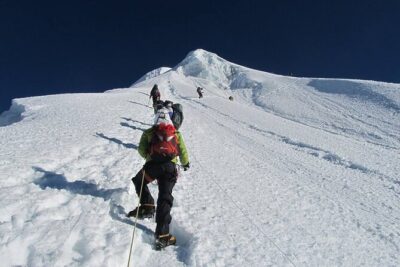
The summit route is defined by the 300 meter headwall of 45 degree snow slopes, leading to the exposed summit ridge. That description tells you what kind of day this is. You’re not hiking a scenic ridge and taking photos whenever. This is a technical, cold, concentrated effort where footing and patience matter.
Day 15 is a reserve day if conditions are unfavorable. This is a huge quality-of-life feature because weather at these elevations is not predictable. Having that buffer reduces pressure and increases the odds that you actually get the summit window when you’re ready.
Back Down to Lukla and Home: Recovery, Flights, and a Free Day
Once you’re through the hard part, the schedule becomes about getting safely back down and recovering. Day 16 takes you from Chhukung back to Namche Bazaar in about 7 to 8 hours. Day 17 continues down to Lukla in about 7 to 8 hours.
Then you fly from Lukla to Kathmandu on Day 18. Day 19 is a free day in Kathmandu, which is your chance to eat something normal, do a little souvenir browsing, and let your body unclench. Day 20 is departure.
This “down days are still hard days” setup is important. Your muscles might feel done on Day 14, but the trail down from high elevation can still be rough on knees and ankles. The fact that the plan includes gradual descents and structured days helps a lot.
Also, the trip is private, meaning your group is just your group. That can make the experience feel more personal and easier to manage, especially when weather forces changes or when someone needs a slower pace.
Price and Value for a 20-Day Island Peak Climb
At $3,250 per person, this is a serious price point. The way it makes sense is not because it’s cheap. It’s because a lot of the expensive, logistical pieces are bundled in.
Here’s what you’re effectively paying for:
- Round-trip airfare between Kathmandu and Lukla, which removes major travel hassle
- A full support package: English speaking certified Sherpa guide, plus trekking cook and climbing support staff
- Permits and fees such as Island Peak climbing permit, Sagarmatha National Park fee, TIMS permits, and required official documentation
- Accommodation: four nights in Kathmandu on a twin-share bed and breakfast basis, then local lodges for 13 nights with breakfast, lunch, and dinner
- Camping logistics: tents, mattresses, kitchen tent and equipment, plus one night of meals at Base Camp and one night at High Camp
- Porters on a One porter for Two Trekker basis during climbing trips
- Safety basics like a first aid medicine kit
- Useful extras on trek like energy supplies (Snickers, Mars, Bounty) and fresh or canned fruits
On top of that, you get trekking and climbing equipment coverage through “all required personal and group climbing equipments and gears.” I can’t tell you every item included, but the key is that you’re not left scrambling for major climbing gear at the last minute.
What’s not included is also important for budgeting: personal travel insurance, Nepal entry visa fee, meals in cities (you should allow $10 to $14 per meal), and beverages. Tips for guide, porters, and driver are also customary and not included.
My take: if you want a guided climb where you can focus on acclimatization and technique, the value is in the bundled support and the fact that the hardest parts are handled by trained people.
Should You Book This Island Peak Climbing Plan?
Book it if you want a real mountain climbing experience with a classic trek backbone, and you appreciate a plan that treats acclimatization seriously. The combination of Island Peak’s summit payoff, Everest Base Camp, and built-in support like camping setup, Sherpa guidance, and a reserve weather day makes this feel like a full program, not a patched-together itinerary.
Don’t book it if you’re not ready to commit to altitude and long days. You need strong physical fitness, and you should expect the summit day to take 10 to 12 hours plus a difficult snow and ridge route.
If you’re coming for the view, this program delivers. If you’re coming for a relaxed holiday, pick something else. This one is for people who want to work, adapt, and earn the panorama.
FAQ
Where does the trip start and end?
It starts at Thamel, Kathmandu, Nepal (44600) and ends back at the same meeting point.
How long is the Island Peak climbing trip?
It runs for about 20 days.
What is the price per person?
The price listed is $3,250.00 per person.
Are flights between Kathmandu and Lukla included?
Yes. Round-trip airfare between Kathmandu and Lukla is included, with airport tax included.
Are permits and park fees included?
Yes. The Island Peak climbing permit, Sagarmatha National Park fee, TIMS permits, and all required permits or official documentation are included.
What lodging is included in Kathmandu and on the trek?
You get four nights in Kathmandu on a twin-share bed and breakfast basis. During the trek you stay in local lodges for 13 nights with breakfast, lunch, and dinner, plus meals during one night at Base Camp and one night at High Camp while camping.
What climbing support and guiding do you get?
You get an English speaking experienced and certified Sherpa guide (Govt. trained and license holder). The trip also includes a trekking cook, kitchen staff, Trek Sherpa, and other support staff for the Island Peak climbing portion. Porters are arranged on a one porter for two trekker basis.
Is there a reserve day in the schedule?
Yes. There is a reserve day on Day 15 in case of unfavorable weather.
What is not included in the price?
Not included are personal travel insurance, Nepal entry visa fee, city meals (allow $10 to $14 per meal), beverages, and tips for guide, porters, and driver.
Is this a private tour?
Yes. It is a private tour/activity, and only your group participates.
Latest Kathmandu write-ups
- Langtang Valley Trek★ 5.0 · 3 reviews
- Khopra Danda Trek★ 5.0 · 3 reviews
- Langtang Valley Trek from Kathmandu★ 5.0 · 3 reviews
- 5 night / 6 days Kathmandu Nagarkot Chitwan Pokhara tour★ 5.0 · 3 reviews
- Nepal Highlights Tour: 5 Nights 6 Days Kathmandu & Pokhara Tour★ 5.0 · 3 reviews
- Kathmandu Valley Private Day Tour★ 5.0 · 3 reviews
- Conquer the Himalayas: The Ultimate 16-Day Annapurna Circuit Trek★ 3.5 · 3 reviews
- Kathmandu Heritage Day Tour★ 5.0 · 3 reviews
Peak Climbing, compared.
Everest Base Camp Trek with Island Peak Climbing
Read our review →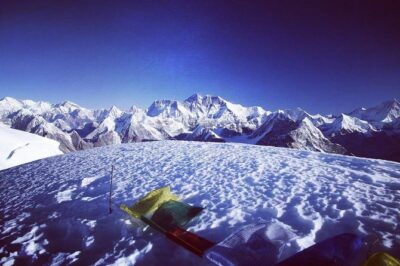
Private Lobuche East Peak Climb and Mt Everest Base Camp Trekking
Read our review →Browse the lists this tour appears in