
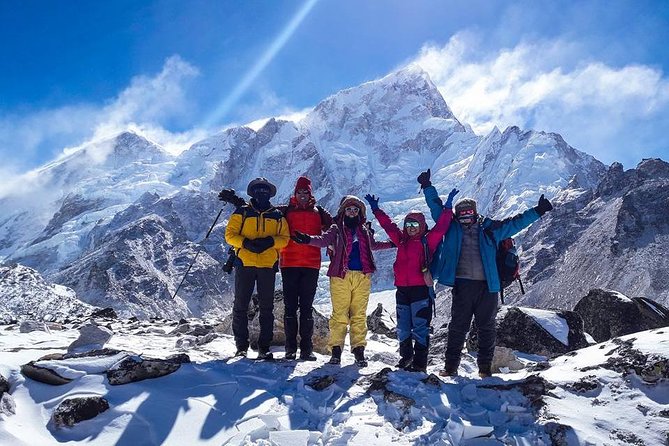
Reviewed · EVEREST BASE CAMP TREK
Everest Base Camp trek- 11 days
This Everest Base Camp trek is interesting because it builds up the mountains in a sensible way: a flight into Lukla, a valley hike to Namche Bazaar, a real acclimatization day, and then step-by-step climbs toward Everest Base Camp and Kalapathar. I really like the early Lukla flight with big snow mountain views and the fact you get a government-licensed guide plus a porter to carry your baggage.
The main consideration is that you are going to spend many days at high altitude, and the Lukla flight can be weather dependent. You also need a moderate fitness base, because the itinerary is demanding even with a steady pace.
If you want authentic Khumbu life, the trip delivers. You pass through Sherpa home communities, monasteries, and classic viewpoint spots where the Himalaya looks close enough to touch, then you return with your logistics handled end to end.
Key highlights from this Everest Base Camp trek
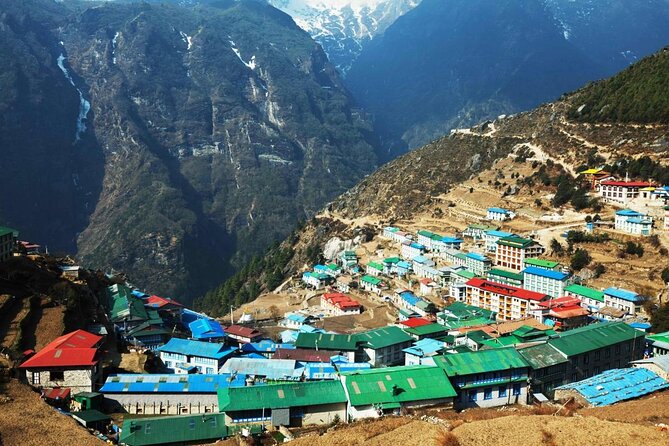
- Lukla flight on day 1, starting at Lukla around 2850m and linking quickly to the trek rhythm
- Namche Bazaar acclimatization day at 3435m, designed to help your body adjust
- Tengboche monastery area, a spiritual stop with standout mountain views
- Everest Base Camp at about 5380m, plus the staging day in Gorakshep
- Kalapathar viewpoint at 5545m, one of the highest moments on this route
- Full-board meals during the trek plus a porter system (often 1 porter for 2 clients)
Sunrise-style Lukla Flight and Phakding day: the trek starts fast
Day 1 is built around the jump from Kathmandu to Lukla. You fly to Lukla at around 2850m, then hike to Phakding around 2660m. This is a smart way to begin because you waste less energy on long travel days and you get into the mountain mindset immediately.
What I like about starting this way is how quickly the scenery takes over. From Lukla, you get that classic early mountain look over snowcapped peaks, including views connected with the Everest region. Then the trail drops you into a trekking rhythm with an easy-ish first leg to Phakding, so you are not immediately trying to sprint uphill.
One drawback to keep in mind: once you are dependent on a mountain flight schedule, you should stay flexible. Even if you are fully prepared, flight timing is not something you fully control.
More ways to walk to Everest Base Camp:
- Everest Base Camp Trek – 14 Days
★ 5.0 · 1,499 reviews - Everest Base Camp Trek
★ 5.0 · 842 reviews - Everest Base Camp Helicopter Tour landing at Everest View Hotel
★ 5.0 · 668 reviews
Namche Bazaar at 3435m: acclimatization that turns hard days into survivable days
Day 2 takes you from Phakding to Namche Bazaar at about 3435m. Day 3 is an acclimatization day in Namche. That extra day is the difference between feeling rushed and feeling steady.
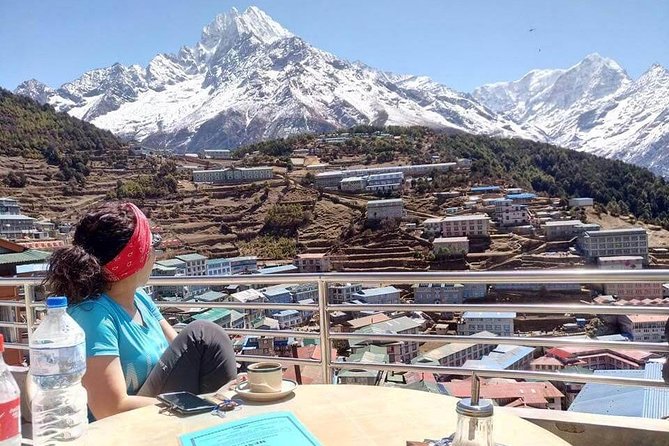
Namche is more than a climb waypoint. It is the gateway feel of the Khumbu, the place where trade, trekkers, and local life mix. You also get time to take in the big panorama over the Everest massif, including Everest and neighboring peaks like Lhotse and Nuptse based on the views highlighted in this route.
For me, the key value of this stop is pacing. The itinerary gives your body a chance to adjust before it pushes higher into Tengboche, Dingboche, and Lobuche. That matters because your later days are at elevations that can make even simple trekking feel like work.
Tengboche to Dingboche to Lobuche: monasteries, Sherpa life, and the climb to thin air
Day 4 moves from Namche to Tengboche at about 3890m. Tengboche is where the route adds a powerful cultural layer. You get to experience a monastery stop and the quiet feel around it, while also enjoying the big mountain views that make this region famous. If you care about how people live here, this is a good place to slow down, look around, and absorb the setting.
Day 5 is Tengboche to Dingboche around 4400m. Day 6 is Dingboche to Lobuche around 4910m. These days gradually raise your altitude and your effort. You are not going from flat to steep once. You are learning to travel in a thinner, colder-feeling world, one valley hop at a time.
Two practical notes:
- Your breathing will likely change on these higher sections. Slow down and let your body catch up, even if others around you move faster.
- Lodges at these elevations can mean simpler comfort. Plan to focus on warmth, sleep, and fuel, not perks.
If you want the “real Khumbu” vibe, this stretch delivers. The itinerary highlights Sherpa home towns, monasteries, and multi-ethnic culture, and you will see that day by day in the way the trail connects communities.
Gorakshep, Everest Base Camp at 5380m: the day your effort finally shows
Day 7 is one of the biggest days on the route. You go from Lobuche to Gorakshep, then to Everest Base Camp around 5380m, and back to Gorakshep around 5180m. This is the classic structure: hike to the staging area, do the base camp push, then return to sleep at altitude.
What makes this day special is that it turns the distance you have been climbing into a single destination moment. Everest Base Camp is the end goal, and the route is designed to bring you there even if you need to go slower than you expected.
The drawback is simple: it is not a stroll. You are climbing and then walking again on a day where your energy matters. I strongly recommend you treat this as a steady effort day, not a day to prove anything. Keep your steps controlled, and save the emotional reactions for when you actually arrive.
More to compare around Kathmandu
- Private Kathmandu Sightseeing Tour | UNESCO World Heritage sites
★ 5.0 · 756 reviews - Kathmandu: 7 UNESCO Sites with Lunch
★ 4.8 · 744 reviews - Half day cooking class in Thamel kathmandu
★ 5.0 · 607 reviews - Everest Base Camp Trekking
★ 5.0 · 485 reviews
Kalapathar at 5545m and Pheriche: going higher for the view payoff
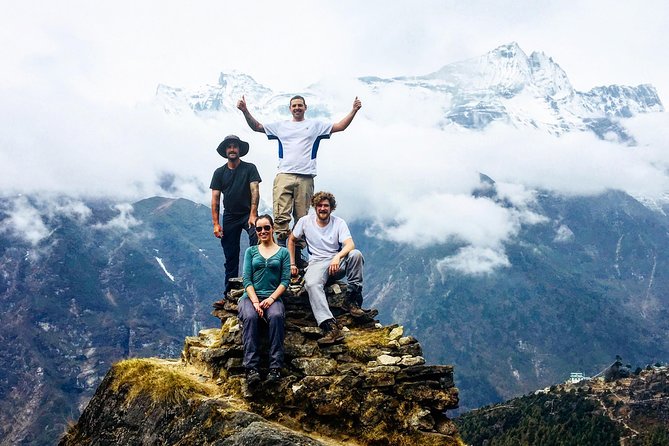
Day 8 is Gorekshep to Kalapathar at about 5545m, then down to Pheriche around 4320m. Kalapathar is the viewpoint that gives you another high-altitude perspective on the Everest region.
This is a smart choice for anyone who wants the “once in a lifetime” feeling to last longer than one photo stop. You already reached Everest Base Camp, then the route asks for one more viewpoint climb. That extra altitude can feel like a lot, but it is also what makes the days memorable.
Day 9 takes you from Pheriche back down to Namche around 3435m. This downhill move helps your body recover. It also gives you time to reset mentally, because by now you have lived the mountains for more than a week.
The return loop: Namche to Phakding to Lukla, then home to Kathmandu
Day 10 is Namche back to Phakding, then to Lukla around 2835m. Day 11 is the flight from Lukla to Kathmandu.
I like that the return itinerary is straightforward and keeps you moving through the same corridor of the Khumbu rather than adding new complications. You get to revisit key trekking zones you already know, which can feel easier than totally new terrain.
One more value point: getting back to Lukla early enough to catch your Kathmandu flight can reduce stress. The program also includes ground transportation charges while returning back to Kathmandu from the trekking destination, so you are not left scrambling at the end.
Price and logistics: what $1,699 really covers, and what you must plan for
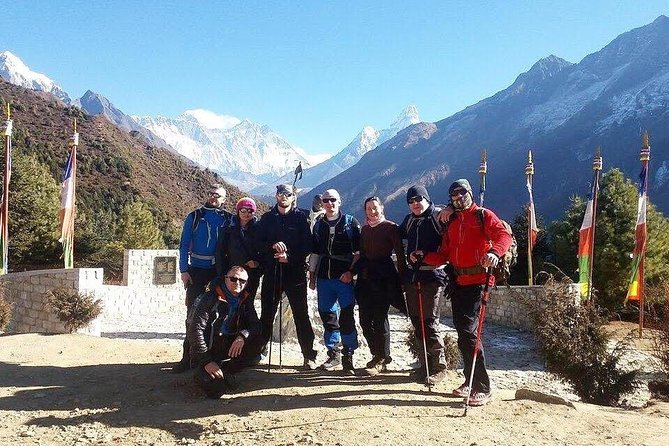
At $1,699 per person, the big question is value. The best way to judge this trek is by looking at what is included, because Everest Base Camp is expensive in the parts that are hard to manage yourself.
Here is what you get included:
- Air fare Kathmandu to Lukla and back to Kathmandu
- Pickup and drop to the local airport for the Lukla flight
- Full board meals (breakfast, lunch, dinner) during the trek
- Best available accommodations during the trek
- A government license holder guide
- Porter to carry your baggage (noted as typically 1 porter for 2 clients)
- TIMS card
- First aid kit
- Trekking permits needed for restricted area trekking
- All government taxes and service charges
- Farewell dinner prior to departure
What is not included also matters:
- Hotel in Kathmandu and meals in Kathmandu (lunch and dinner)
- Travel insurance
- Nepal entry visa fee
- International airfare and airport departure tax
- Tips for trekking staff
- Drinks and alcohol
- Personal trekking equipment, personal shopping, laundry, souvenirs
My take: the price feels more justified because it bundles the expensive and coordination-heavy parts, especially the Lukla flights, permits, and full-board support. You are paying for reduced decision fatigue during a trip where weather, altitude, and timing already create enough variables.
Guides and porter support: why the staff system changes your experience
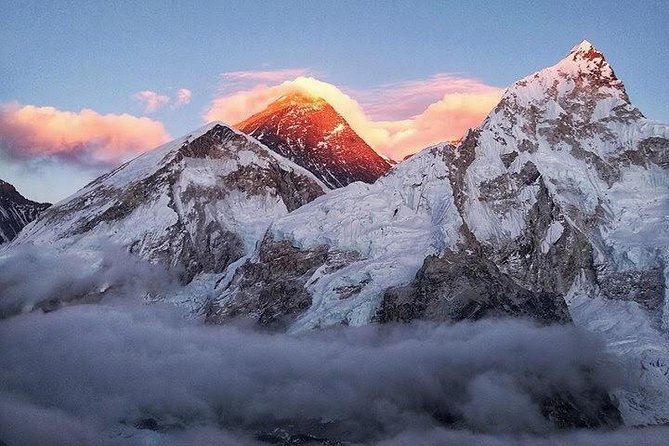
The itinerary includes a government-licensed guide and a porter. That means your toughest work is focused on walking, not carrying. The porter system is especially important on a route like this, because the days stack up.
The support factor is not just practical. In this program, the guide is a central piece of the experience. A standout detail from the trip’s service reputation is that many people remember their guide by name, with Dipu mentioned repeatedly. That signals a real human element, not just generic group leadership.
You also get a first aid kit included, plus insurance, equipment, transportation, and local tax coverage listed for guides and porters. You still need your own travel insurance, but the presence of a first aid kit and professional staff support is a reassuring baseline.
Day-by-day rhythm: how each stage helps you finish the trek strong
Here is the logic of the route in plain terms:
- Day 1 starts with a flight into the Khumbu, then a gentle entry hike to Phakding
- Day 2 and Day 3 build up to Namche, then pause for acclimatization
- Days 4 through 6 step higher toward Tengboche, Dingboche, and Lobuche
- Day 7 is your base camp target day, with an overnight staging plan
- Day 8 adds Kalapathar, then gives you a descent to Pheriche
- Days 9 and 10 bring you back down toward Namche, Phakding, and Lukla
- Day 11 returns you to Kathmandu
This is not a random set of hikes. It is organized around altitude management and on-the-ground logistics. Even if you are an experienced hiker, that matters.
What fitness you need, and how to pace for high altitude
The trek calls for moderate physical fitness. That is the right wording for most people who are not extreme athletes. The key is that “moderate” still means consistency, because you are walking at altitude for multiple days.
The most effective strategy for this kind of trek is boring: pace slower than you think you need to, drink enough, and focus on steady effort. The itinerary already gives you acclimatization time in Namche, which helps your body handle the higher days.
If you have any history of severe altitude reaction, take that seriously. The data provided here does not describe medical screening, so you should talk with your clinician before you go. If you are unsure about your readiness, you might also consider longer acclimatization, but that depends on the exact trek structure your operator can support.
Who should book this Everest Base Camp trek, and who should pass
This trek fits best if you want:
- A structured 11-day route with acclimatization built in
- Full-board meals during the trek, so you are not planning food every day
- A guide and porter system, so you can focus on the trail and the views
- A mix of nature and culture, including monasteries and Sherpa community areas
- A goal-focused itinerary that reaches Everest Base Camp and also includes Kalapathar
You might want to rethink it if:
- You are not comfortable with multi-day high altitude trekking
- You hate any plan dependence, because the Lukla flight can be weather impacted
- You do not want to handle costs in Kathmandu beyond the trek itself, since the package does not include Kathmandu meals or a Kathmandu hotel
Should you book Mount Face Nepal for this Everest Base Camp trek?
I would book this trek if you want a smoother logistics setup and you care about getting to Everest Base Camp without micromanaging the details. The package covers the big moving parts, including Kathmandu-Lukla-Kathmandu airfare, full-board meals, permits, TIMS, and a licensed guide. For many people, that is where the real value is.
I would hesitate if you are worried about flight timing or if you need a highly flexible itinerary. The program is private, but it still follows the mountain realities of a Lukla flight and an 11-day altitude schedule.
If you decide to go, bring your own personal trekking equipment, plan for extra Kathmandu costs, and set your expectations around effort and altitude management. Do that, and you give yourself the best shot at a trip that feels like a true lifetime achievement.
FAQ
Where is the trek start point in Kathmandu?
The start meeting point is Thamel, Kathmandu 44600, Nepal, with pickup offered.
What time does the experience start?
The start time is 7:15 am.
How long is the Everest Base Camp trek?
The trek duration is 11 days (approx.).
Is this a private tour?
Yes, it is listed as a private tour or activity. Only your group will participate.
What is included during the trek?
Meals are included (breakfast, lunch, and dinner) during the trekking period, along with best available accommodations, a government license holder guide, a porter, permits needed for restricted area trekking, a TIMS card, and a first aid kit.
Are flights included?
Yes. Air fare for Kathmandu to Lukla and Lukla to Kathmandu is included.
Do I need trekking permits?
Yes. Trekking permits needed for restricted area trekking are included.
Do you include a porter for luggage?
Yes. A porter is included to carry your baggage, normally 1 porter for 2 clients.
Do I need travel insurance and a visa?
Travel insurance is not included, and Nepal entry visa fee is also not included.
Latest Kathmandu write-ups
- Langtang Valley Trek★ 5.0 · 3 reviews
- Khopra Danda Trek★ 5.0 · 3 reviews
- Langtang Valley Trek from Kathmandu★ 5.0 · 3 reviews
- 5 night / 6 days Kathmandu Nagarkot Chitwan Pokhara tour★ 5.0 · 3 reviews
- Nepal Highlights Tour: 5 Nights 6 Days Kathmandu & Pokhara Tour★ 5.0 · 3 reviews
- Kathmandu Valley Private Day Tour★ 5.0 · 3 reviews
- Conquer the Himalayas: The Ultimate 16-Day Annapurna Circuit Trek★ 3.5 · 3 reviews
- Kathmandu Heritage Day Tour★ 5.0 · 3 reviews
Everest Base Camp Trek, compared.



Everest Base Camp Helicopter Tour landing at Everest View Hotel
Read our review →


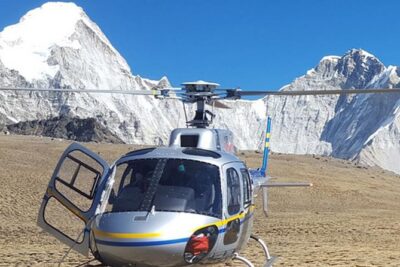
Everest Base Camp Helicopter Tour landing at Hotel Everest View
Read our review →
Browse the lists this tour appears in