
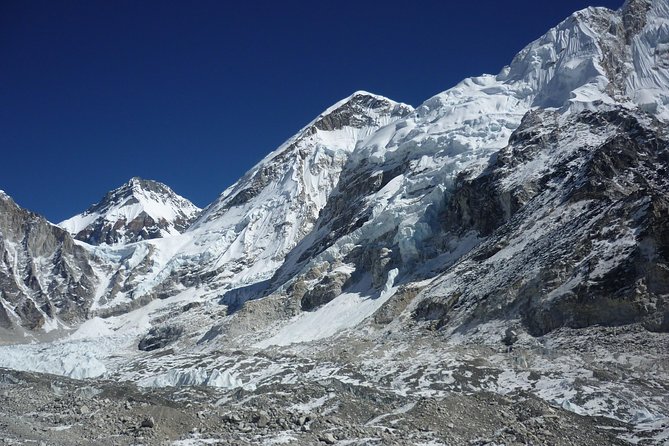
Reviewed · EVEREST BASE CAMP TREK
Everest Base Camp Trek – 16 Days
Everest Base Camp is interesting because it turns a famous mountain into a real, step-by-step journey. You fly into Lukla, then keep climbing through Khumbu villages until you reach the prayer flags at base camp, with Kathmandu as your calm start.
I especially like that this trek mixes big goals with real acclimatization breaks. Namche and Dingboche are built in, and you also get included gear like a sleeping bag and down jacket, plus hot showers in key towns. The second thing I like is the support structure, you travel with an experienced English-speaking guide and a porter system so you are not dragging everything yourself.
The main drawback to plan around is logistics. Flights to Lukla can be weather dependent, and if you need extra help at altitude, oxygen is available only on request and has an extra charge.
Key highlights to know before you go
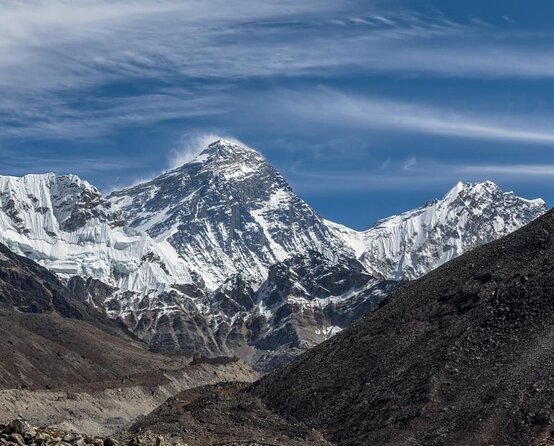
- Lukla flight drama, then instant trail time: expect dramatic views and an immediate jump into the Khumbu rhythm.
- Acclimatization days that make sense: Namche plus Dingboche with a hike to Nagarsan Hill at 5,100 meters.
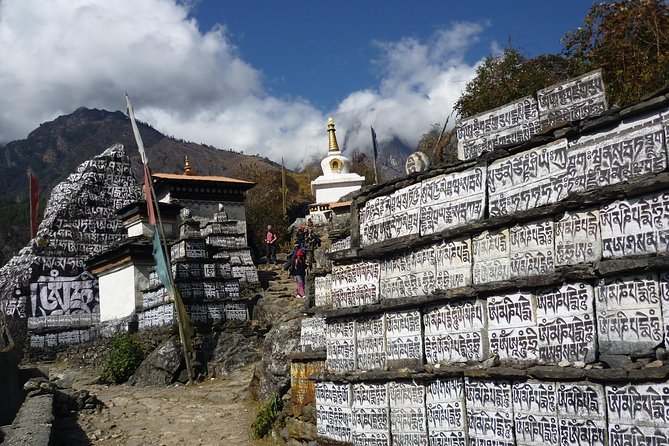
- Big cultural stops without detours: prayer wheels, mani stones, and Tengboche Monastery are part of the hiking day, not add-ons.
- Kalapatthar sunrise is a real mission: very early start, then that golden ridge view you came for.
- Gear and permits handled: sleeping bag and down jacket, trekking map, and all required paperwork are included.
- Safety support with real problem-solving: guides have shown they can adjust when weather disrupts flights or someone gets sick.
Kathmandu to Lukla: the trip starts with a flight and a gear check
Most Everest Base Camp trips begin with a mental reset, and Kathmandu does that job. You land at Tribhuvan Airport, get picked up, and check into a three-star hotel with room and breakfast. Day 1 is not about hiking, it is about being human again after travel, and getting your bearings.
Day 2 is your prep and stroll day in Kathmandu. This matters more than it sounds. When your first big effort is a mountain trek, you want time to sort last items, buy any personal supplies you forgot, and keep your body calm. I like that this schedule does not shove everything into day one.
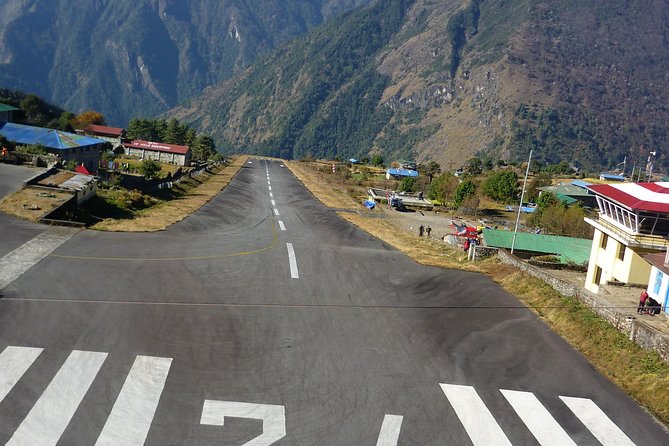
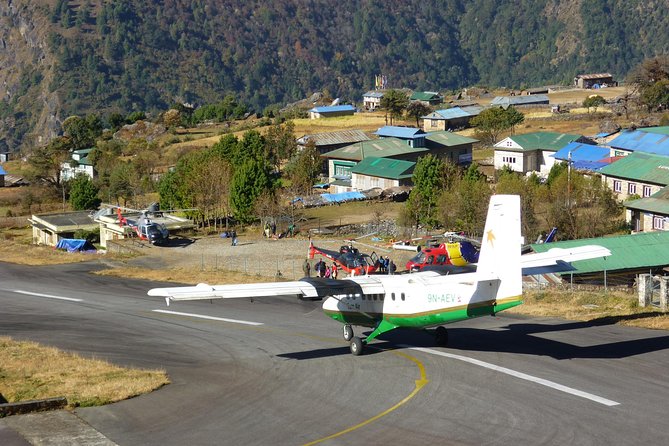
On Day 3, you transition from city planning to mountain reality. You take a domestic flight from Kathmandu to Lukla. The flight itself is a highlight because Lukla’s airport sits in a dramatic setting, and you get mountain views laid out like a row of peaks. Then it is straight onto the trail toward Phakding, so there is no long delay between planning and effort.
More ways to walk to Everest Base Camp:
- Everest Base Camp Trek – 14 Days
★ 5.0 · 1,499 reviews - Everest Base Camp Trek
★ 5.0 · 842 reviews - Everest Base Camp Helicopter Tour landing at Everest View Hotel
★ 5.0 · 668 reviews
Phakding to Namche Bazaar: Sagarmatha National Park and bridge-photo energy
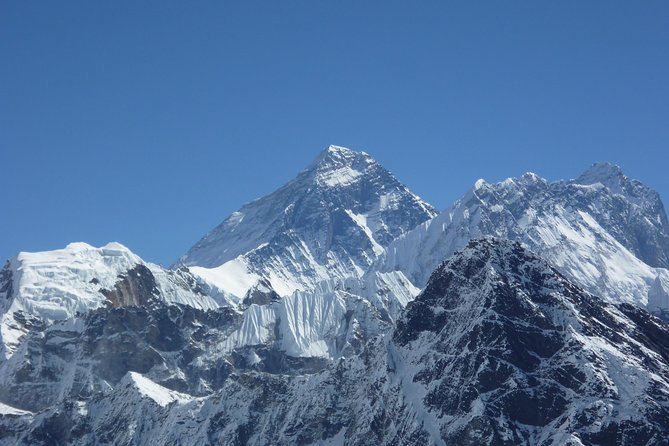
Day 3 finishes in Phakding. This stretch gives you the Khumbu essentials fast: prayer wheels you can spin clockwise, a descent toward the Dudh Koshi River, and a suspension bridge crossing. You also get the rhythm of the region quickly, villages, small trails, and the sense that the mountains are constantly watching.
Day 4 climbs toward Namche Bazaar over about six hours. You walk through villages and rhododendron forests, and you will see yaks and donkeys working because there are no roads in these higher areas. A key value here is that you enter Sagarmatha National Park, listed as a UNESCO World Heritage Site. That is not just paperwork, it frames what you are walking through as protected, not a theme park trail.
Namche Bazaar is popular for a reason. It is a hub where trekkers compare notes, share snacks, and notice how quickly your body starts reacting to altitude. The stop is long enough that you truly arrive, not just pass through.
A possible drawback on this section is also the reason it is so rewarding: the walking is active and the trail is rarely flat. If you rush, you will pay for it later, so pace yourself early.
Namche acclimatization: the small day that changes everything
Day 5 is a true acclimatization day around Namche. The main idea is simple: altitude goes up, and your body needs time to adjust. You either take a short hike or enjoy a slower day in town, and you will still move around a bit because that helps your system.
This program gives you a smart hike option to the Everest View Hotel, described as the world’s highest-placed hotel. The reward is huge mountain viewing, including Mount Everest plus Ama Dablam and other peaks around the Khumbu region. Even if you are not obsessed with identifying every summit, you will feel the difference when views open up like that.
What I like about this plan is that it uses a day that could feel like downtime and turns it into a body-friendly reset. You come out of it more stable for the next uphill work.
Tengboche: forests, monasteries, and a very early taste of the Himalaya
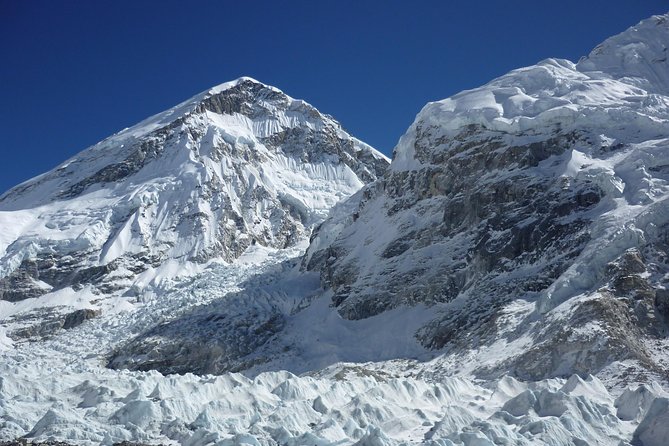
Day 6 moves you from Namche toward Tengboche in about six hours. The day is uphill and downhill, which can feel harder than a steady climb. You pass pine and rhododendron forests, then reach a village known for its monastery and for major views.
Tengboche is one of those stops where culture and nature share the same breath. You may see Buddhist monks play football near the village center, or you may catch early sunrise vibes over the monastery with Ama Dablam and Everest in the backdrop. Those moments are not guaranteed, but the atmosphere is part of why people remember this trek.
The drawback to consider here is straightforward: you can start feeling tired in a way that is not just muscle fatigue. Altitude plus moving all day can make even a normal day feel like work. That is why the acclimatization schedule matters, you do not skip the earlier altitude prep, and you keep your effort steady.
More to compare around Kathmandu
- Private Kathmandu Sightseeing Tour | UNESCO World Heritage sites
★ 5.0 · 756 reviews - Kathmandu: 7 UNESCO Sites with Lunch
★ 4.8 · 744 reviews - Half day cooking class in Thamel kathmandu
★ 5.0 · 607 reviews - Everest Base Camp Trekking
★ 5.0 · 485 reviews
Dingboche altitude work: Nagarsan Hill and learning to go slow
Day 7 continues through the Tengboche area, descending toward Deboche and then moving onward through forests and crossings, including a bridge over the Imja Khola. From there, you reach Dingboche to spend the night.
Day 8 is the second big acclimatization day. You hike up to Nagarsan Hill at 5,100 meters. You will feel the thin air as you climb, then the payoff is mountain views, including Island Peak, Ama Dablam, Lhotse, Makalu, Nuptse, and more. The day ends with a return down into the valley, which is exactly the kind of pattern that helps your body adjust.
This is where I think the trek earns its reputation for being well planned. Base camp is the dream, but acclimatization is what makes the dream possible. Your goal becomes not speed, but recovery.
Lobuche and the glacier edge: a quiet cemetery pause
Day 9 moves you toward Lobuche in about five hours. You continue along the valley floor toward Dugla and begin leaving the Khumbu glacier behind. One emotionally striking stop is the cemetery where climbers who lost their lives during attempts rest there. This is not a sightseeing detour. It is a moment to stand quietly and reflect on what people come here to chase.
As you continue, the air feels thinner. The program emphasizes going slow at this critical point, and you should listen to that. At this stage, even if you feel capable, you can accidentally spend too much energy.
You also get big mountain views around Lobuche, including Pumori, Lingtren, Khumbutse, Mahalangur, and Nuptse.
Everest Base Camp day: Changri Glacier, Gorekshep, and prayer flags at the end
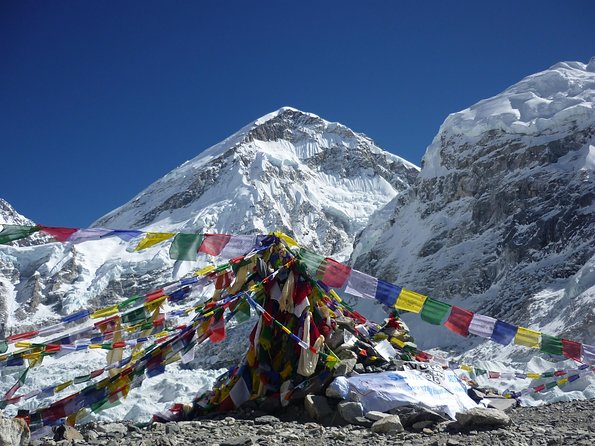
Day 10 is your signature day, Everest Base Camp. You hike up past Changri Glacier, and Kalapatthar starts to appear in the landscape. From there, you continue until Gorekshep, then move through a frozen-world section of glaciers and rivers. The last part is rocky terrain for about the final hundred meters, then you arrive at the prayer flags at Everest Base Camp.
A good way to think about this day is that it is both the hardest and the most direct. You are not doing complicated technical travel, but it is long, cold, and mentally demanding. Your win condition is simple, reach base camp and take it in without sprinting.
The best part is that Everest Base Camp feels like an arrival, not just a photo stop. The views around you stay intense, and you can see multiple major peaks from the area.
Kalapatthar sunrise and the return to Pheriche
Day 11 shifts from reaching base camp to chasing the mountain’s light. It is a very early rise for sunrise from Kalapatthar. If you care about photography, this is where you get that golden sun behind white-capped peaks feeling, with Mount Everest clearly visible.
Then you descend to Pheriche and stay overnight. This downshift is important. Early starts can wipe you out, and the day after base camp is not the time to be reckless.
Day 12 starts the return. You retrace your steps to Namche Bazaar in about seven hours. Even though the route is the same, going down can feel like you are walking through a new place because the angles change and your brain now recognizes landmarks with context.
Day 13 continues the trek back toward Lukla in about seven hours, including reverse views of the Dudh Koshi River and suspension bridge. You stay overnight in Lukla.
Day 14 flies back to Kathmandu from Lukla Airport, escorting you to your hotel. Day 15 is a free Kathmandu day for rest, shopping, or optional activities like a massage. Day 16 ends with hotel pickup and an airport transfer.
What “well run” looks like in the real world
This trek includes the practical backbone that makes a multi-day hike survivable. You get all trekking permits and necessary paperwork, plus an experienced English-speaking guide and a porter ratio listed as two travelers per porter. That porter support is not a luxury. It changes how heavy your own pack feels day after day.
Gear is also handled in a smart way. The program provides a sleeping bag and down jacket during the trek. That can be a big deal if you do not want to buy or rent high-quality cold-weather gear. You also receive a Nepal Intrepid Treks T-shirt, a duffle bag, and a trekking map.
On top of that, there is a built-in acclimatization rhythm: Namche and Dingboche are planned, and the Nagarsan Hill hike is timed to help your body adjust.
From real on-the-ground examples shared with this company, their guides have shown they can handle disruption. One solo trek with Hem as guide and Ram as porter continued safely even after flight cancellations due to poor weather and after the trekker developed a chest infection partway up. In that situation, the guide stayed back to support the sick traveler, then they reconnected later and still reached Everest Base Camp.
Another example of safety-first behavior: a guide focused closely on whether gear was adequate and on overall safety, which helped the trekker complete their planned route even though conditions changed.
These are not promises, but they do tell you what kind of leadership the program emphasizes.
Gear, luggage, and altitude realities you should plan for
You only want two kinds of surprises on a trek like this: good ones and none. So let’s talk logistics that are explicitly covered and what still needs you.
Included: the sleeping bag and down jacket, plus meals and tea or coffee each day. The program also lists attached bathrooms with hot shower access in Lukla, Phakding, and Namche. That is a morale booster, especially after cold nights.
Not included: trekking equipment overall. The program explicitly says you need to arrange personal trekking gear. Also not included are all cold drinks and beverages, plus phone calls, internet, laundry, and bar spending.
Flights: you have domestic luggage allowance of 15 kg. That is one more reason to pack light on the personal items you bring.
Altitude support: oxygen cylinder and mask are available on request with extra charge. That means you should plan that possibility rather than assuming it will be included.
Fitness: you only need moderate physical fitness according to the program, but the days include long walks and changing terrain. The trick is to keep pace realistic and let acclimatization days do their job.
Price and value: what you should double-check before you sign
The listed price shows $0.00 in the information you provided. In real life, that usually means you are looking at an entry value or a placeholder, so check the real total before you book.
Still, the value package is clear on what is included. You are paying for domestic flights (Kathmandu-Lukla-Kathmandu or Ramechhap-Lukla-Ramechhap), 2 nights in Kathmandu on a room and breakfast basis, guesthouse stays on twin sharing during the trek, three meals a day with tea or coffee, permits and paperwork, guide and porter support, and key gear (sleeping bag and down jacket).
You are also paying for reduced stress. When someone else handles permits, documentation, and day-to-day logistics, your mental bandwidth stays for the mountains.
Budget items to keep in mind: travel insurance is required but not included, Nepal entry visa fare and international airfare are not included, and tips for drivers, guides, and porters are not included.
Who this trek suits best
This is a great fit if you want a classic Everest Base Camp route with structured acclimatization and a guided experience. It is also a strong match if you prefer not to manage permits and daily logistics on your own.
It is especially suitable for:
- People who want to learn the Khumbu culture while trekking, not just chase views
- Trekkers who benefit from a clear schedule, Namche and Dingboche are key
- Photographers, because Kalapatthar sunrise is included as an early-morning goal
It might be less suitable if:
- You have zero flexibility for flight disruption due to weather
- You dislike long days of walking, even on acclimatization and return days
The program also caps group size at a maximum of 14 travelers, and it is private, meaning only your group participates.
Should you book this 16-day Everest Base Camp trek?
If your goal is Everest Base Camp with a sensible acclimatization plan and real human support, I would say yes, with one important checklist.
Book it if you:
- Are comfortable with early starts like the Kalapatthar sunrise day
- Want included meals, permits, and core cold-weather gear
- Prefer having an English-speaking guide and porter system guiding your daily effort
Think twice or ask more questions first if:
- You are extremely sensitive to missed flight schedules, because Lukla can be weather dependent
- You are traveling solo and need to confirm whether you will be able to share lodging, since a single surcharge may apply if there is no existing group
Final tip from how this trek is set up: treat the acclimatization days as sacred. If you do, Everest Base Camp stops being a hope and becomes a finish line you actually reach.
FAQ
Where does the trek start and how do I get to the first hotel?
The meeting point is Tribhuvan Airport in Kathmandu. The program includes airport pickup and drop-off with a private vehicle, and Day 1 includes your three-star hotel room with breakfast.
What kind of accommodation should I expect on the trail?
You stay in guesthouses during the trek, and you get the best available accommodation on a twin sharing basis. The information also states attached bathrooms with hot shower in Lukla, Phakding, and Namche.
Are meals included during the hiking days?
Yes. The program includes three times daily meals with a cup of tea or coffee, including breakfast, lunch, and dinner.
Who will guide the trek and is porter support included?
You get an experienced English-speaking guide and a porter setup listed as 2 travelers to 1 porter. A personal Sherpa guide is available upon request for an extra charge.
What flights and luggage allowance are included?
Round trip domestic flights are included, either Kathmandu-Lukla-Kathmandu or Ramechhap-Lukla-Ramechhap. Domestic flight luggage allowance is listed as 15 kg.
Is oxygen available if needed?
Oxygen cylinder and oxygen mask are available on request with an extra charge.
Latest Kathmandu write-ups
- Langtang Valley Trek★ 5.0 · 3 reviews
- Langtang Valley Trek from Kathmandu★ 5.0 · 3 reviews
- Khopra Danda Trek★ 5.0 · 3 reviews
- 5 night / 6 days Kathmandu Nagarkot Chitwan Pokhara tour★ 5.0 · 3 reviews
- Nepal Highlights Tour: 5 Nights 6 Days Kathmandu & Pokhara Tour★ 5.0 · 3 reviews
- Kathmandu Valley Private Day Tour★ 5.0 · 3 reviews
- Conquer the Himalayas: The Ultimate 16-Day Annapurna Circuit Trek★ 3.5 · 3 reviews
- Kathmandu Heritage Day Tour★ 5.0 · 3 reviews
Everest Base Camp Trek, compared.



Everest Base Camp Helicopter Tour landing at Everest View Hotel
Read our review →


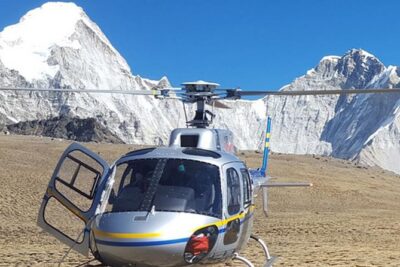
Everest Base Camp Helicopter Tour landing at Hotel Everest View
Read our review →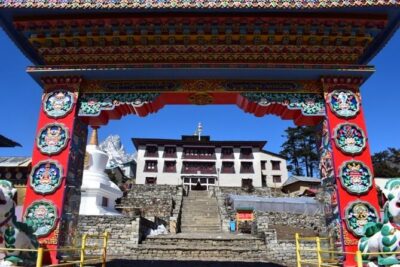
Browse the lists this tour appears in