
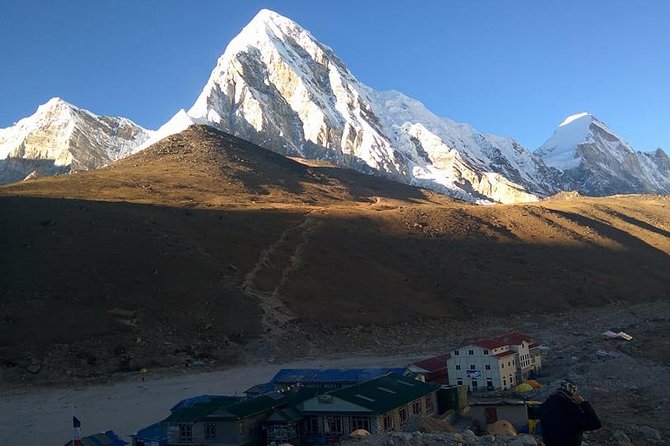
Reviewed · EVEREST BASE CAMP TREK
Everest Base Camp Trek from Salleri (Overland)
What makes the Salleri Everest Base Camp trek interesting is that you get into the Everest region by jeep and trekking, not by doing the Kathmandu to Lukla hop first. That changes the feel of the whole trip right away, because your first days are built around gradual movement through villages, rivers, and forests.
Two things I really like: first, the route is designed to be a less touristic way in, so you’re not rushing into the most crowded part on day one. Second, the trip includes the practical stuff that often gets missed, like teahouse stays, meals, private airport transfers, and a porter setup (2 trekkers share 1 porter). The one drawback to consider is simple: this is still a serious high-altitude trek with long walking days, so if you’re not comfortable with altitude and sustained effort, it can feel like a grind, especially on the 5,000m plus days.
You should also know the vibe you may get from past groups: guides associated with this operator, including Rupak, and trekking teams that included Binod and Ballaram, have been described as very supportive and family-like, which helps a lot when the days get hard and the schedule gets tight.
Key highlights you’ll feel on the ground
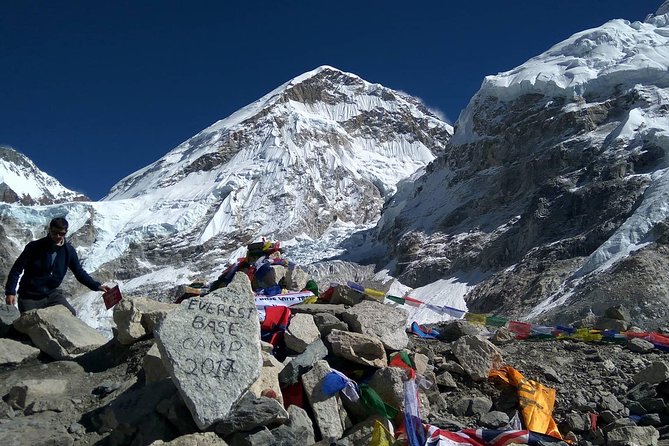
- Overland access to Salleri: you start trekking without the early Kathmandu to Lukla flight pressure.
- Acclimatization built in with a dedicated day and a climb up Nagarjun hill (5080m).
- Full meal coverage on trek: breakfast, lunch, and dinner are included once you start trekking.
- Climbing day rhythm: Everest Base Camp day plus a separate early morning push to Kalapather (5545m).
- Teahouse style, not hotel comfort: expect simple lodges, shared dining, and basic rooms.
- Private trip feel: it’s a private group, up to 15, with an English-speaking government-licensed trek leader.
Why Start From Salleri Instead of Flying to Lukla?
The classic Everest rhythm is often: arrive in Kathmandu, fly to Lukla, then start trekking almost immediately. This itinerary does the opposite. You travel from Kathmandu to Salleri (about 8 to 9 hours), then begin trekking from there.
For you, that matters because it gives you a different kind of pacing. You’re not starting with the stress of a short flight and then hopping straight into high trails on day two. Instead, the trek ramps up through a sequence of elevations, from roughly 2309m in Salleri upward toward Namche.
Also, the route is described as going through parts of the Everest region that feel less touristic, at least in the way that access and early logistics shape what you see. Even if you don’t know the trails yet, you’ll probably notice it on your first couple of walking days. You’ll spend more time on the “in-between” places that many people skip because they take the faster air route.
Practical note: the overland day is long. You’ll be sitting in the vehicle for hours before you get your first stretch. If you’re prone to feeling sore after long rides, build in patience for that day.
More ways to walk to Everest Base Camp:
- Everest Base Camp Trek – 14 Days
★ 5.0 · 1,499 reviews - Everest Base Camp Trek
★ 5.0 · 842 reviews - Everest Base Camp Helicopter Tour landing at Everest View Hotel
★ 5.0 · 668 reviews
The Team and Comfort Level: What’s Included (and What Isn’t)
This trek is structured as a package, and that’s a big part of the value story.
What’s included for you:
- Private airport pickups and drops in Kathmandu
- 3-star hotel in Kathmandu with breakfast (on day 1)
- All meals during the trek (breakfast, lunch, dinner)
- Teahouse accommodation during the trek
- Farewell dinners
- All ground transportation on a comfortable private vehicle as per the itinerary
- Domestic flight Lukla to Kathmandu (included)
- An experienced, English-speaking, government-licensed trek leader
- Porters with a ratio of 2 trekkers to 1 porter
- A medical kit carried by your trek leader
- Government and local taxes
What’s not included (and you should plan for it):
- Nepalese visa fee
- International flights to and from Nepal
- Lunch and dinner in Kathmandu
- Any extra Kathmandu nights if your timing changes
- Travel and rescue insurance
- Personal expenses (Wi-Fi, phone calls, laundry, charging batteries, water, showers, and similar)
- Tips for guide(s), porter(s), and driver(s)
Here’s the balanced way to look at it. You’re paying a full-service rate that removes a lot of daily decision-making during the trek. That’s great when you’re tired and breathing is already a job. Just remember that you still need to handle personal spending and the insurance piece yourself.
Day 1 and Day 2: Kathmandu to Salleri, Easy Start, Long Ride
Day 1 is arrival in Kathmandu and transfer to your booked hotel. It’s the typical “get settled, get sleep” day, and it sets you up for the real start tomorrow.
Then Day 2 is a long vehicle day: Kathmandu to Salleri (2309m), roughly 8 to 9 hours. This is one of the most important days to respect, not because it’s hard, but because it steals energy if you waste it.
My advice: on this day, plan to travel light, keep your basic essentials easy to reach, and don’t assume you’ll feel fresh enough for big energy hikes later. The trek doesn’t start until day three, and your body needs time to adjust to travel fatigue.
Days 3 to 5: Nunthala, Puiyan, Phakding, Your Body Learns the Trail
These first trekking days are where you build rhythm.
- Day 3: Salleri to Nunthala (2190m), about 5 to 6 hours
- Day 4: Nunthala to Puiyan (2300m), about 6 to 7 hours
- Day 5: Puiyan to Phakding (2652m), about 6 to 7 hours
Notice the pattern. You’re not rocketing upward yet. Elevation rises steadily, and the walking time is significant but manageable. This is the phase where you learn how your breathing and pace feel when you’re not yet at the highest altitudes.
Also, you’re staying in teahouses during the trek. That means your meals and lodging are handled for you, but the rooms are simple and the heat is basic. You’ll want to get used to being flexible with comfort.
If you’re someone who likes to move fast, you may feel tempted to push. Early on, resist that urge. Your job is to build consistency, not win a race.
More to compare around Kathmandu
- Private Kathmandu Sightseeing Tour | UNESCO World Heritage sites
★ 5.0 · 756 reviews - Kathmandu: 7 UNESCO Sites with Lunch
★ 4.8 · 744 reviews - Half day cooking class in Thamel kathmandu
★ 5.0 · 607 reviews - Everest Base Camp Trekking
★ 5.0 · 485 reviews
Namche Bazzar Stays With You: Arrival and a Day Hike
Day 6 climbs to Namche Bazzar (3440m), about 6 to 7 hours. This is a big elevation jump, and it’s also the kind of place where you start seeing the Everest trek world more clearly.
Then comes Day 7, a day hike around Namche. That’s not just sightseeing. It’s part of how the trek helps you handle altitude without forcing a straight, exhausting climb every single day.
Why this matters: at these elevations, the difference between a smart pacing choice and a tough pacing choice becomes very physical. A day around Namche lets you move, get your bearings, and watch how your body responds.
Tengboche and Dingboche: Where the Air Feels Different
After Namche, the itinerary continues upward.
- Day 8: Namche to Tengboche (3880m), about 4 to 5 hours
- Day 9: Tengboche to Dingboche (4410m), about 6 to 7 hours
These are the kinds of days where you can feel the altitude even if the walking time is not the longest. You may notice that you walk slower, take more breaths, and feel tired sooner. That’s normal.
Teahouses keep you fed and ready for the next day, which is a comfort when your energy is limited.
One more practical point: you’re also dealing with weather in the high Himalaya. The trek operates in all weather conditions, so you need to dress appropriately. That line sounds generic, but it’s real. You’ll be outside for long periods, and conditions can change.
Acclimatization Day at 5080m: Nagarjun Hill Gives You a Real Check
Day 10 is the dedicated acclimatization day. You hike to Nagarjun hill (5080m), about 4 to 5 hours.
This is the heart of your altitude strategy. A climb like this is not meant to exhaust you, even if it will be tiring. It gives your body a chance to adapt and helps your trek leader watch how you’re doing.
I like that the schedule includes an acclimatization day here instead of treating every ascent as optional. You have a plan. You know where the hard elevations are coming from.
If you’re prone to altitude headaches, this is also the day where you should pay attention. Don’t push past what feels manageable. Speak up and adjust your pace.
Lobuche and the Big Everest Day: From Base Camp to Gorekshep
Day 11 goes to Lobuche (4930m) in about 4 to 5 hours.
Then Day 12 is the headline: Everest Base Camp (5364m), plus returning to Gorekshep (5180m), about 7 to 8 hours total.
This is where your stamina and mental focus get tested. It’s also where teahouse support helps. You’re not out there on your own. You’re moving through a structured route and returning to places where you can eat, rest, and recharge for the next morning.
A practical tip for your Everest day: treat it as a full trekking day, not a sprint. Even if you feel good early, your body might tighten up later. Pace early and keep your breathing steady.
And yes, the scenery is unforgettable. But the real value is that you’re earning it step by step with a plan designed around acclimatization.
Kalapather Morning to Pheriche: A Second High Point
Day 13 is another long one. It’s an early morning climb to Kalapather (5545m), then you trek back to Pheriche (4200m) in about 7 to 8 hours.
This is your “second top day.” The itinerary doesn’t just take you to Everest Base Camp and call it a week. It adds another higher viewpoint style of push, then descends. That pattern helps: you get the altitude experience and then you move back down to recover.
If you’re the kind of person who worries about whether you’ll have energy for the day after Base Camp, this matters. You’ll have to be ready, but the itinerary is also not random. It builds a sequence: Base Camp, then a viewpoint climb, then a descent.
Returning to Namche, Then Lukla, Then Home
After Kalapather and the descent:
- Day 14: Pheriche to Namche (3440m), about 6 to 7 hours
- Day 15: Namche to Lukla (2860m), about 6 to 7 hours
- Day 16: Flight from Lukla to Kathmandu (about 35 minutes)
- Day 17: Final departure to TIA Airport
Two things to note here.
First, the downhill days can still feel hard. Going from high elevation to lower elevation does not mean you suddenly feel like you’re on a flat city sidewalk. Your legs will still work. Plan to take short steps and keep your posture stable.
Second, you end with the Lukla flight. The package includes it, which removes a major “logistics headache” for many trekkers.
This also closes the circle of the route. You did the overland start, then you finish with a classic Lukla flight home. It’s a thoughtful mix, and it avoids the early flight stress while still giving you that end-of-trek transportation piece.
Guides and the Human Side: Rupak, Binod, Ballaram, and Why It Matters
The technical parts of this trek are clear. Elevations, teahouses, meals, acclimatization, and a government-licensed trek leader are all part of the structure.
But the human side is what often decides how good your trek feels.
I’m glad to see that past teams associated with this operator have included guides such as Rupak, and trekking teams with Binod and Ballaram that have been described as exceptionally supportive and warm. On a trek like this, the difference between a “checklist guide” and a guide who pays attention to you can show up in small ways: how you’re paced, how you respond to altitude, how quickly you get questions answered, and how you feel at the end of a tough day.
So if you’re choosing between different operators, I’d treat the guide choice as a major factor, not a minor one. With Everest treks, the guide is part of your safety system, not just your translator.
Price and Value: Why $1,500 Per Group Can Be a Smart Deal
The price is $1,500 per group, for groups of up to 15. That means your per-person cost depends on how many trekkers are in your booking. If you’re traveling as a small group, the cost per person can be higher. If you’re filling a group of 15, it can be easier to justify.
Here’s what you get for that money:
- Kathmandu hotel and private airport transfers
- Full trekking meals and teahouse lodging
- Porter support with a fixed ratio
- Ground transport for the itinerary
- Lukla to Kathmandu flight
- Guide, staff costs, medical kit, and local taxes
That’s why I think it can be good value. You’re not just paying for walking. You’re paying for staffing, food logistics, and reducing the number of decisions you make each day when you’re exhausted.
The two big financial “watch-outs” are not included: travel and rescue insurance, and tips. Also, personal expenses will add up if you’re buying water, charging devices, or using Wi-Fi.
If you want a trek where the operational parts are largely handled, this price structure fits.
Who Should Book This Trek?
This experience is best for you if:
- You have moderate physical fitness
- You want an Everest Base Camp trek without the early flight to Lukla
- You like the idea of an overland start and a steady ramp into higher altitudes
- You’re comfortable with teahouse style lodging
- You want a guided, structured route with acclimatization built in
It may not be ideal if:
- You need quick comfort or resort-level lodging
- You struggle with long travel days like Kathmandu to Salleri
- You’re not ready for 5,000m plus days and long trekking hours
- You’re traveling with kids, since it’s not recommended for child aged 10 and under
Should You Book? My Practical Bottom Line
If your goal is Everest Base Camp with a route that starts overland and keeps logistics handled, this trek is a solid choice. The best parts are the structure: acclimatization planning, full meal coverage, porter support, and a guide who leads the whole thing.
I’d only hesitate if you know you get overwhelmed by long days or if you’re uncertain about altitude. In that case, don’t gamble on bravery. Check your fitness honestly, and be willing to slow down.
If you do book, treat pacing like a skill you practice, not a luck factor. You’re climbing above 5,000m. You’ll feel every choice you make.
FAQ
How many days is the Salleri Everest Base Camp trek?
It runs for about 17 days total, including arrival in Kathmandu, the trek, and the Lukla to Kathmandu flight back.
What is the highest altitude you reach on this itinerary?
The itinerary lists Everest Base Camp at 5,364m and Kalapather at 5,545m.
Is the Kathmandu to Lukla flight included?
No. You travel overland to Salleri at the start, and the trek includes a domestic flight from Lukla to Kathmandu near the end.
What is included in the trek price?
Included are airport pickups and drops (private vehicle), a 3-star hotel in Kathmandu with breakfast, teahouse lodging, all meals during the trek, farewell dinners, ground transportation, the Lukla to Kathmandu flight, porter service, a government-licensed English-speaking trek leader, a medical kit, and taxes.
Do I need to arrange meals and lodging during the trek?
No. Teahouse accommodation and all meals (breakfast, lunch, dinner) during the trek are included.
How many people are in a group and do I need a minimum booking?
This is a private activity for your group only. The price is per group up to 15, and there is a minimum of 2 people per booking.
Is there porter support?
Yes. Porter service is included with a ratio of 2 trekkers to 1 porter.
What is not included that I should budget for?
Not included are the Nepal visa fee, international flights, lunch and dinner in Kathmandu, extra Kathmandu nights if your schedule changes, travel and rescue insurance, personal expenses, and tips for guide(s), porter(s), and driver(s).
What is the cancellation policy?
You can cancel for a full refund if you cancel at least 24 hours in advance of the experience start time. If you cancel less than 24 hours before, it is not refunded.
Is it suitable for children?
It is not recommended for child aged 10 and under.
Latest Kathmandu write-ups
- Langtang Valley Trek★ 5.0 · 3 reviews
- Langtang Valley Trek from Kathmandu★ 5.0 · 3 reviews
- Khopra Danda Trek★ 5.0 · 3 reviews
- 5 night / 6 days Kathmandu Nagarkot Chitwan Pokhara tour★ 5.0 · 3 reviews
- Nepal Highlights Tour: 5 Nights 6 Days Kathmandu & Pokhara Tour★ 5.0 · 3 reviews
- Kathmandu Valley Private Day Tour★ 5.0 · 3 reviews
- Conquer the Himalayas: The Ultimate 16-Day Annapurna Circuit Trek★ 3.5 · 3 reviews
- Kathmandu Heritage Day Tour★ 5.0 · 3 reviews
Everest Base Camp Trek, compared.

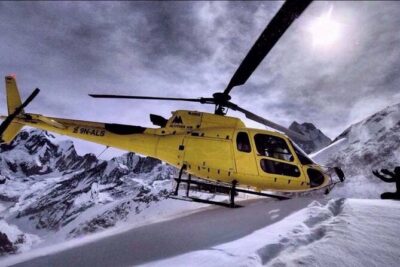
Everest Base Camp Helicopter Tour landing at Everest View Hotel
Read our review →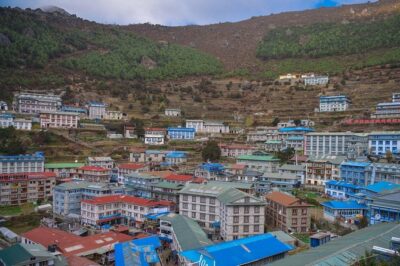
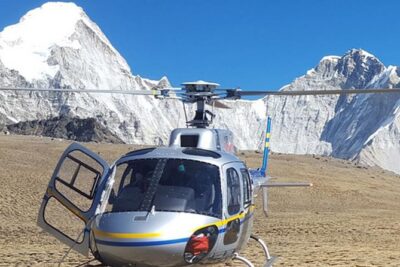
Everest Base Camp Helicopter Tour landing at Hotel Everest View
Read our review →
Browse the lists this tour appears in