
Reviewed · EVEREST BASE CAMP TREK
Everest Base Camp Trek with Helicopter Return from Gorakshep to Lukla
Everest Base Camp with a helicopter return is the kind of plan that feels both honest and smart. You still earn the high-altitude walking, but you skip the long, repeat grind back down after Gorakshep. The result is a trip built for people who want the classic Khumbu route without turning the whole return into a second expedition.
I especially like the clear support setup. You get a licensed, first-aid trained English-speaking guide plus porters (one porter for every two guests). From the teams people have had, guides such as Raj, Ram, and Madan get singled out for motivation and day-to-day problem solving, which matters when the air thins and the trail gets busy.
One consideration: this relies on good weather, especially for the shared helicopter segment. If conditions do not cooperate, you may be offered a different date or a full refund, so keep your schedule flexible and your expectations weather-aware.
Key things I’d plan around
- Helicopter return from Gorakshep to Lukla cuts the toughest fatigue loop.
- Acclimatization days in Namche and near Dingboche help you climb smarter, not faster.
- Porter support (1 for every 2 guests) keeps your pack weight realistic.
- Oxygen safety check with an Oxymeter in the kit is a comfort upgrade at altitude.
- Katadyn Pocket Water Filter means you can treat water on the trail.
- Max group size 14 keeps the trek feeling communal but not chaotic.
Everest Base Camp with heli return, what you really gain
Let’s be real about Everest Base Camp. It is a slog, in a beautiful way. You get long days, thin air, cold mornings, and the constant task of moving forward at altitude without burning out. The classic approach is to walk up, reach the base camp region, then walk down. That works, but it also means you repeat effort when your legs are already tired.
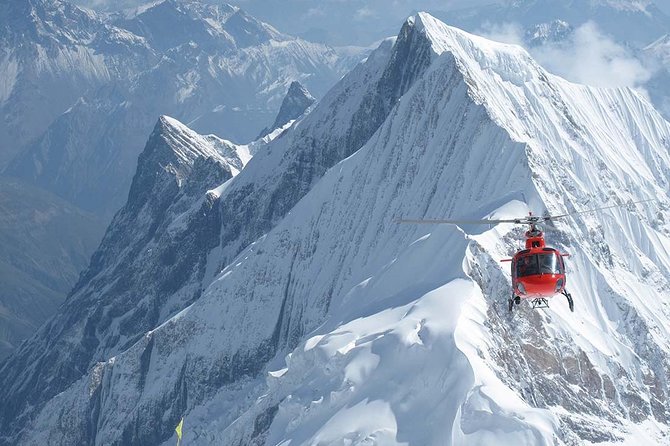
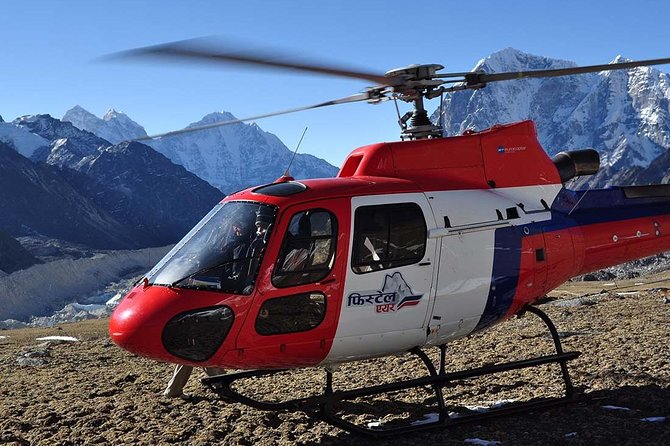
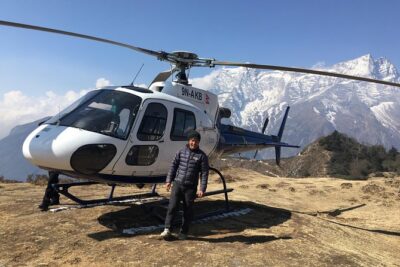
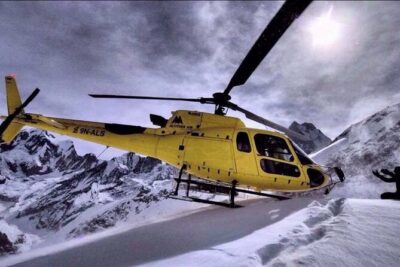
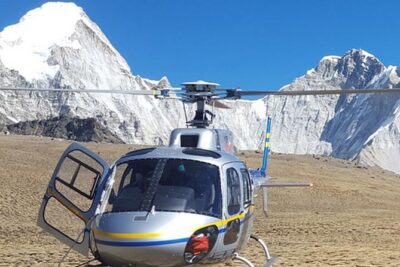
This version keeps the iconic route to Everest Base Camp and Kala Pattar, then replaces the later return from Gorakshep to Lukla with a shared helicopter ride (about 20 minutes). That one change can make the entire trip feel more balanced. You still get the brag-worthy high points, but you trade part of the return time for a smoother finish.
More ways to walk to Everest Base Camp:
- Everest Base Camp Trek – 14 Days
★ 5.0 · 1,499 reviews - Everest Base Camp Trek
★ 5.0 · 842 reviews - Everest Base Camp Helicopter Tour landing at Everest View Hotel
★ 5.0 · 668 reviews
Kathmandu, pickup, and what day 1 is for
Day 1 is mostly about getting you settled and oriented. You land at Tribhuvan International Airport, meet an official, then head to your Kathmandu hotel in a private tourist vehicle. There is a pre-trip meeting where you meet your guide and go over the basics, which I like. It reduces that awkward, half-panicked feeling you get when you show up and everyone starts talking logistics.
You will stay in a twin-sharing setup in a three-star hotel in Kathmandu, with breakfast included for two nights. This is not an extreme luxury stay, but it gives you a real bed and a controlled base before the trek starts.
Practical tip: use this day to keep your small stuff organized. Your trail life depends on having socks, sunscreen, and essentials easy to access, not buried in a duffel.
Getting to Lukla: the short flight that changes everything
On day 2, you fly from Kathmandu to Lukla, using the Tenzing and Hillary Airport at an altitude of 2804 m. The flight is about 35 minutes and it is scenic, but the bigger point is how quickly you shift altitude and mindset. One day you are in Kathmandu, the next you are in the Khumbu region where breathing feels different.
After landing, your guide helps you get ready for the hike toward Phakding. You can think of day 2 as the transition day. It is not the hardest push of the whole journey, but it is where your body starts learning the rhythm: shorter breaths, slower pace, and frequent pauses.
If you are prone to motion sickness, consider packing something for flights. The flight is short, but it happens early, and you want to feel steady before hiking.
Phakding to Namche: Dudh Koshi, prayer flags, and suspension bridges
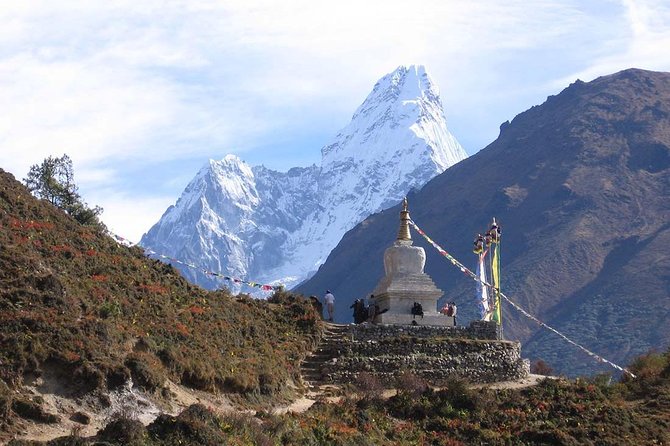
Day 3 brings the classic Khumbu feel as you go from Phakding to Namche Bazaar. It is about a 6-hour hike in total along the Dudh Koshi, with multiple suspension bridge crossings decorated with prayer flags. These bridges are not just decoration. They break up the walk and give you regular visual cues for pacing.
Namche is also where the trip starts to feel like a real town, not a trail stop. You are higher, it is busier, and services become easier to find. That is helpful, but it can also tempt you to move too fast because you feel more awake at “town altitude.”
I like that this itinerary builds in a slow mindset. You are not racing through Namche. You arrive, settle in, and then later you work acclimatization in a structured way.
More Helicopter Tours in Kathmandu:
- Everest Base Camp Helicopter Tour landing at Hotel Everest View
★ 5.0 · 218 reviews - Everest Base Camp helicopter tour with landing
★ 5.0 · 61 reviews - Everest Base Camp Helicopter Tour with Hotel Everest View Landing
★ 5.0 · 52 reviews - Guaranteed Landing at Everest Base Camp Kalapathar by Helicopter
★ 5.0 · 38 reviews
Namche acclimatization and the Everest View Point payoff
Day 4 is an acclimatization day, anchored around Everest View Point. You also do a short trek around Namche Bazaar. The goal is to let your body adjust to thinning air pressure while still giving you rewarding mountain views, including sunrise glimpses when conditions align.
This is one of those days where the value is not just scenery. It is physiology. Your lungs need time to adapt. If you skip real acclimatization, you pay later with heavier fatigue and headaches. This schedule helps you avoid that mistake without turning the trip into a grind of constant rest.
From a comfort standpoint, this day can also give you a chance to fine-tune gear. If you forgot gloves or your base layers are not working, Namche is where you can adapt your plan.
Tengboche: the monastery stop and the 3860 m milestone
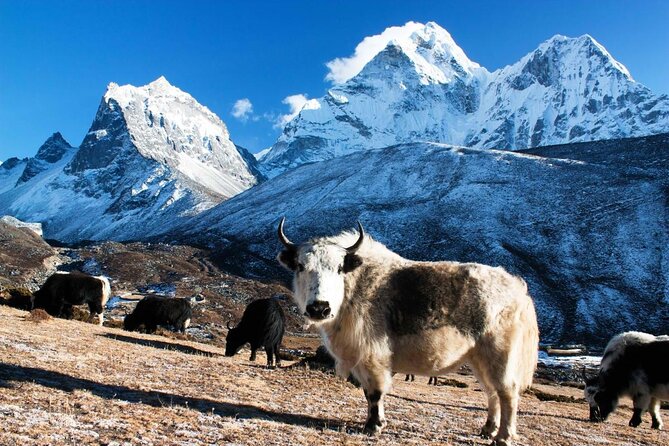
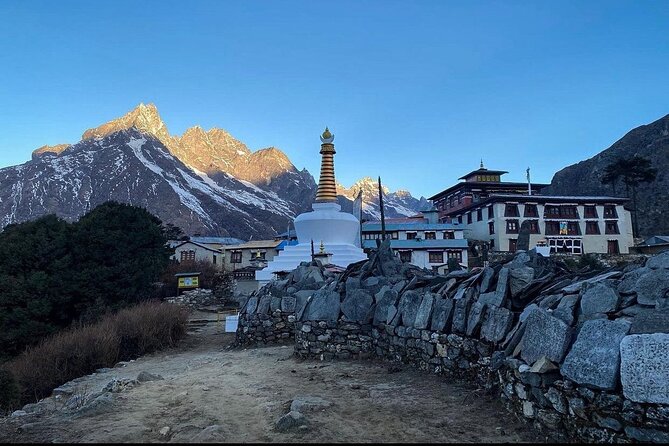
On day 5 you move to Tengboche, reaching an altitude of 3860 m. The walk continues along glacial waters of the Dudh Kosi and includes more suspension bridges, plus big mountain views along the way.
Tengboche is known for its monastery atmosphere. You get time inside the monastery, which adds a calm break from pure trekking. For many people, it is the first time the route feels culturally grounded, not just physically challenging.
The drawback to note: day 5 is longer and higher than the earlier transition. So even though it feels scenic, you still need to treat it as serious altitude climbing. Keep your pace slow, drink water consistently, and avoid the urge to sprint to the next viewpoint.
Dingboche route building: Debuche, Pangboche, and mani stones
Day 6 continues the climb toward Dingboche. The route includes a drop to Debuche, another suspension bridge crossing on the Imja Khola, and then an uphill push through Pangboche, where you see thousands of mani stones.
That detail matters more than it sounds. Mani stones are part of the visual language of the Khumbu. They tell you you are walking through a lived-in region, not a theme park path. You feel the trail’s meaning through those small repeated cultural signs.
This day’s “win” is that the itinerary keeps you moving while still preparing you for the serious altitude next. You are building toward high elevations with fewer sudden jumps than a faster itinerary would allow.
Nangkartshang Peak: acclimatization without the base camp scramble
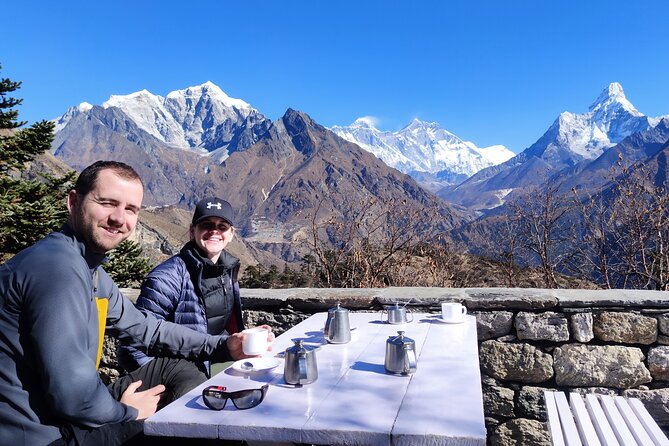
Day 7 is another acclimatization day. You do not trek all the way to Everest Base Camp yet. Instead, you hike to Nangkartshang Peak just above Dingboche for views. It’s planned as a way to stimulate acclimatization without overextending.
I like this approach because it gives you something that feels adventurous while respecting the altitude problem. You get the satisfaction of reaching a viewpoint, but you are not burning yourself out before the base camp and Kala Pattar days.
If you tend to feel restless on rest days, this is a good compromise. It keeps your legs moving and your brain engaged.
Lobuche to Everest Base Camp: the glacier zone reality
Day 8 takes you to Lobuche. You walk along the lateral moraine of the Khumbu Glacier and pass stone memorials for climbers who have perished on nearby summits. This is one of those reality-check moments on the trek. It is not meant to scare you. It helps you understand that this area is serious, even for trekkers who are not summiting.
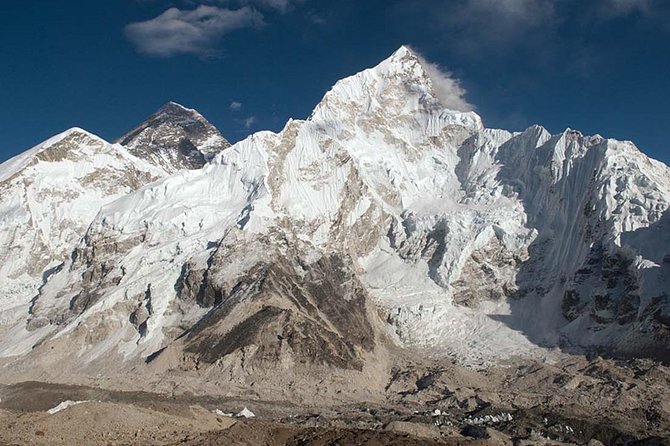
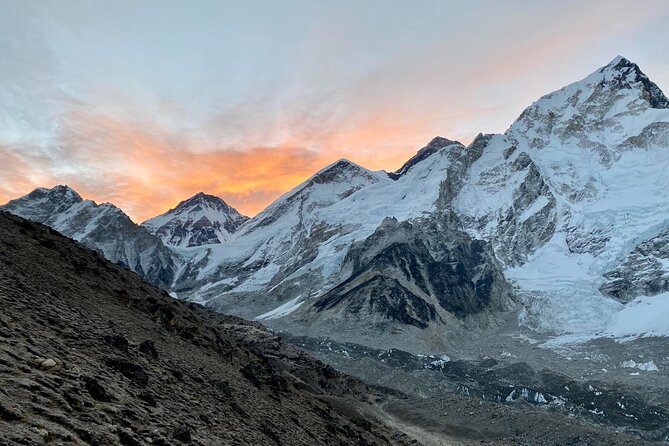
Day 9 is the big one: Everest Base Camp. It is described as a big and difficult day walk along the Khumbu Glacier to reach the base camp area at 5,365 m. This is where your preparation, pacing, and hydration choices show up as either manageable effort or miserable fatigue.
What I’d watch for: cold and slow movement. Glacier terrain can feel uneven. Take your time with footing, and do not chase a faster pace than your lungs can support. The point is to reach the base camp area feeling like you still have something left in the tank for Kala Pattar the next day.
Kala Pattar: hard climb, high reward day
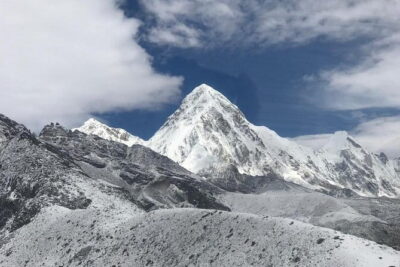
Day 10 is mostly about Kala Patthar, a small peak at 5,555 m. The ascent is demanding, but the itinerary builds it as the rewarding payoff day. This is the kind of climb where the effort feels steep and the air feels thin, but the views you get at the top tend to justify the pain.
From a planning perspective, what you want most is good visibility. Clouds can blunt the experience. But even without perfect weather, the physical achievement and the sweeping sense of place in the Everest region usually land well for most people.
Practical strategy: keep your head steady and your pace conservative. If you go out too fast in thin air, you will pay for it later on the way up.
Helicopter return from Gorakshep to Lukla, then down to Kathmandu
Day 11 is the finish. You enjoy the last glimpses of the mountains, then the shared helicopter flight takes you back to Lukla in about 35 minutes, depending on the schedule and conditions. After landing, you fly to Kathmandu and transfer back to your hotel.
This part is where the itinerary feels especially efficient. Most EBC trekking plans make you walk back down over several days. Here, you get a shorter, more controlled return.
One note: because it is a shared helicopter ride, you are still tied to operating conditions. Build in some mental flexibility for timing. The good news is that the itinerary was designed with the helicopter as a core feature, not an afterthought.
Day 12 is departure from Tribhuvan International Airport. It is a simple wrap-up day.
Price and logistics: does $3,000 feel fair
At $3,000 per person, this is not a budget trek. But it is also not just a “guide and permit” package. Your price includes a lot of real costs that many do-it-yourself plans underestimate.
Here is what is included:
- Airport and hotel pickup and drop in Kathmandu by private tourist vehicle
- Twin-sharing hotel in Kathmandu (three-star), plus breakfast for two nights
- Twin-sharing guesthouse accommodation in Lukla, Phakding, and Namche with attached toilets in those places
- A licensed English-speaking trekking guide plus porter support (one porter for every two guests)
- Airfare from Kathmandu to Lukla and back
- A shared helicopter ride from Gorakshep to Lukla
- Meals on the trek (breakfast, lunch, dinner) plus a farewell dinner on the last night
- Everest National Park permits and TIMS permit
- Safety and comfort add-ons: a first-aid kit with Oxymeter, plus a Katadyn Pocket Water Filter
- Seasonal fruits on the trail
- A duffel/kit bag, trekking map, and sun hat
What is not included:
- Travel insurance that covers rescue and evacuation
- Your Nepal entry visa and international airfare to/from Nepal
- Tips for staff and driver (tipping is expected)
- Alcohol and drinks, and personal trekking equipment
My value take: you are paying for reduced uncertainty. You are not budgeting for flights, permits, guide fees, porter logistics, meal coordination, or the safety setup. If you want the full EBC experience but you also want your energy to go toward walking and enjoying rather than organizing, the price starts to make sense.
Food, water, safety, and that altitude reality check
Altitude safety is not only about willpower. It is about pacing, hydration, and having tools to monitor how you feel.
This trek includes:
- A first-aid kit with an Oxymeter to measure oxygen saturation
- A Katadyn Pocket Water Filter for treating water on the trails
- Standard meals three times a day during the trek, with breakfast in Kathmandu for two nights
I like that the package emphasizes practical basics. When you are high up, you cannot rely on perfect availability of supplies. Filtered water and consistent meal timing matter more than fancy extras.
Also, the itinerary is built around acclimatization days in Namche and near Dingboche, which gives you a better shot at feeling strong rather than wrecked. If your body is telling you to slow down, you can do that and still feel like the schedule has your back.
The human part: guides and porters who make it work
The trek is hard enough without needing to manage every detail yourself. That is why the guide and porter team matters.
The guides people have had with this company include Raj, Ram, Madan, and Saman, and they are repeatedly highlighted for support, motivation, and smooth logistics. That tracks with what you need on this route. You want someone who can keep your pace steady, troubleshoot problems, and keep you emotionally on track when the climb feels endless.
Porters are assigned at a ratio of one porter for every two guests. That is a big deal. Carrying a lighter day pack changes how your legs feel at the end of each stage, especially as you get closer to the glacier zone and higher elevations.
Who should book this, and who should slow down
This trek is a strong fit if:
- You have moderate physical fitness and want a guided structure
- You want the classic Everest Base Camp route, plus Kala Patthar
- You value support and want porter help instead of hauling everything yourself
- You like the idea of a helicopter return because you want to protect your energy for the high days
It may not be your best match if:
- You cannot handle altitude well, or you need more time than a 12-day schedule gives
- You have a rigid, non-flexible travel window, since good weather is required for the helicopter segment
Also consider your group preference. This trip runs with a maximum of 14 people, so you get a group vibe without it becoming a giant moving crowd.
Should you book Everest Base Camp with heli return from Gorakshep to Lukla?
If your priority is the full Everest Base Camp experience, including the high points of Kala Pattar, this plan is one of the more practical ways to do it. The helicopter return is not a shortcut that removes the hard part. It removes the repeat-fatigue portion that can drain a trip, especially after you already worked hard at altitude.
I’d book it if you want: guided logistics, consistent meals, real safety support with an Oxymeter, and a lighter-feeling finish after Gorakshep. If you are comfortable with the reality that weather controls the helicopter and you can manage a moderate fitness level through long days, you will likely find this a smart, value-focused way to reach Everest Base Camp.
FAQ
How long is the Everest Base Camp trek with helicopter return?
The trip runs about 12 days.
Where does the helicopter return, and when does it happen?
The shared helicopter ride goes from Gorakshep to Lukla. It happens after the Gorakshep area portion of the trek, before the final flights back toward Kathmandu.
What flights are included in the package?
Airfare is included for Kathmandu to Lukla and Lukla back to Kathmandu, and the helicopter segment is included from Gorakshep to Lukla.
Where will I stay during the trek and in Kathmandu?
You get twin-sharing accommodation in a three-star hotel in Kathmandu with breakfast included for two nights. On the trek, you stay in twin-sharing guesthouses in Lukla, Phakding, and Namche, with attached toilets in those places.
Are meals included?
Yes. The trek includes standard meals (breakfast, lunch, and dinner) and there is a farewell dinner on the last night.
What safety and water treatment is included?
The trip includes a first-aid kit with an Oxymeter to measure oxygen saturation. It also includes filtered water treatment using a Katadyn Pocket Water Filter on the trails.
Do I get a guide and porter help? How large is the group?
You travel with a local, first-aid trained, licensed English-speaking trekking guide. Porters carry luggage with a ratio of one porter for every two guests. The maximum group size is 14 people.
What is the cancellation policy for a full refund?
You can cancel up to 6 days in advance of the experience for a full refund, as long as you cancel at least 6 full days before the experience’s start time.
Latest Kathmandu write-ups
- Visit Swayambhunath and Bauddhanath Stupa with Guide★ 5.0 · 5 reviews
- 10 days Annapurna Base Camp Trek★ 5.0 · 5 reviews
- Langtang Trek from Kathmandu 7 Days★ 5.0 · 5 reviews
- 7 Day Kathmandu Pokhara Tour★ 4.5 · 5 reviews
- Island Peak Climbing with Everest Base Camp★ 5.0 · 5 reviews
- Chandragiri Hill Cable Car Tour with Hotel Transfers from Kathmandu★ 4.5 · 5 reviews
- Everest Mountain Flight★ 5.0 · 5 reviews
- Kathmandu city day tour (4 world heritage sites)★ 5.0 · 5 reviews
Everest Base Camp Trek, compared.
Everest Base Camp Helicopter Tour landing at Everest View Hotel
Read our review →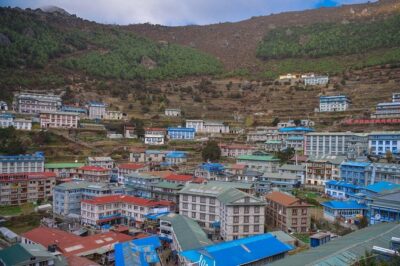
Everest Base Camp Helicopter Tour landing at Hotel Everest View
Read our review →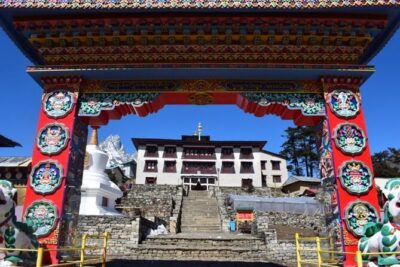
Browse the lists this tour appears in