
Reviewed · EVEREST BASE CAMP TREK
Everest Base Camp Trekking 14 days
Everest Base Camp is interesting because it combines two things most people only see in postcards: a real trekking circuit through Sherpa villages, and that long, slow build toward the world’s highest mountain. You start with a flight from Kathmandu to Lukla, then you walk upward day by day, with big payoff viewpoints like Kala Patthar waiting near the end.
What I like most is the way this route plans for your breathing. You get built-in acclimatization days in Namche Bazaar and again around Dingboche, so you are not just rushing uphill on a tight schedule. I also like the organization on the ground, including an experienced English speaking guide plus a professional insured porter setup (typically 1 porter for 2 guests) so your pack stays manageable.
The main drawback to consider is the altitude. Even with acclimatization, you will still do high days like Kala Patthar around 5,545m, and some people feel it more than others. If you are not comfortable making smart altitude decisions, this trek can feel more demanding than the photos suggest.
Key points before you go
- Lukla flight plus a classic Khumbu circuit so you spend your energy on hiking, not logistics
- Acclimatization built into the schedule with Namche and Dingboche rest days
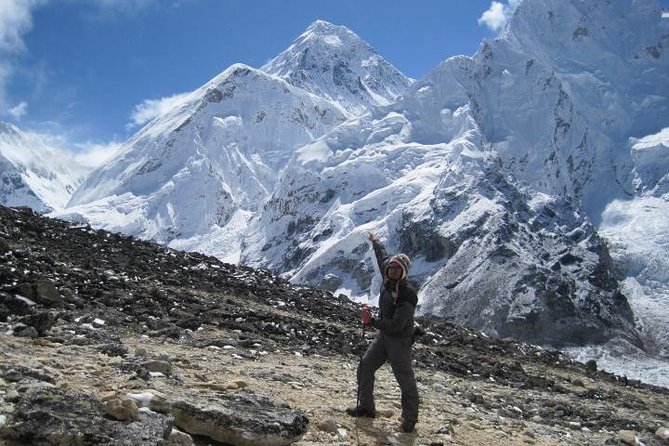
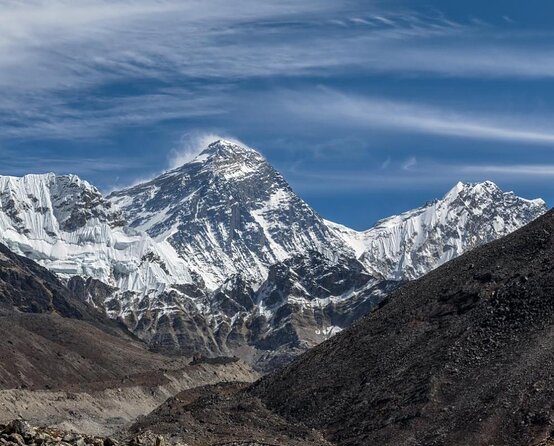
- Kala Patthar is the headliner for Everest views from a high viewpoint without summiting
- Experienced team support with English speaking, government licensed guidance and insured porters
- Small group size, up to 12 travelers which usually means less bottlenecking on trails
- Tea house trekking reality with basic rooms and charged extras like hot showers and battery refills in some stops
Everest Base Camp in 14 days, with a plan that keeps you moving
This is a 14-day Everest Base Camp trekking program that follows the main Khumbu rhythm: fly in, walk through the Everest region valleys, reach Base Camp, then come back over a few trekking days. The big practical win is that the itinerary spaces out the hardest parts, especially the altitude gains.
You meet your team early in Kathmandu, with pickup and a start time listed at 6:30 am. From there, your first job is to get your bearings: hotel, briefing, and a bit of last minute shopping for snacks and gear you forgot at home.
This trek is designed for travelers with moderate physical fitness. That sounds vague, but the meaning is straightforward: you should be able to hike several hours on uneven paths, handle stairs, and walk uphill without needing to stop every 10 minutes.
One more detail that matters: the group max is 12 travelers. On popular trails, smaller groups usually mean fewer traffic jams, easier meal planning in teahouses, and a guide who can actually manage everyone’s pace.
More ways to walk to Everest Base Camp:
- Everest Base Camp Trek – 14 Days
★ 5.0 · 1,499 reviews - Everest Base Camp Trek
★ 5.0 · 842 reviews - Everest Base Camp Helicopter Tour landing at Everest View Hotel
★ 5.0 · 668 reviews
Kathmandu hotel night, briefing, and the welcome dinner moment
Day 1 is all about getting ready in Kathmandu. You get airport pickup and a transfer to your three star hotel (options listed include Hotel Bliss International or similar), with breakfast included. After you freshen up, you’ll receive practical information and time for last minute shopping.
I like this setup because it gives you a gentle buffer before the first serious day. Kathmandu can be loud and crowded. Having a planned evening helps you avoid the common “we spent half the night running around” problem.
You also get a welcome dinner and then a farewell dinner before you leave the region. Even when you do not expect much from group dinners, it is useful because it is often where you confirm packing, learn how water and charging work in the mountains, and check altitude medication basics.
Fly Kathmandu to Lukla, walk to Phakding, then step through Sagarmatha National Park
Day 2 is your first altitude shift and also your first reality check. You fly Kathmandu to Lukla at about 2,800m, and the flight is listed as around 40 minutes. When the aircraft doors open, you get a quick taste of why this trek has such a dedicated fan base.
Then you trek to Phakding (around 2,652m) for about 3 to 4 hours. This day is shorter on purpose. You are learning trail textures, finding your hiking rhythm, and getting used to the fact that you are walking on mountain time, not city time.
Day 3 starts with a climb toward Namche Bazaar (about 3,440m) in roughly 5 to 6 hours. Your route goes through Monjo, and you pass the entrance gate for Sagarmatha National Park. The practical value here is simple: you are officially in the protected Khumbu zone, and the trail feels established, with a steady flow of teahouses and locals.
This is also a good day to practice pacing. On Everest routes, the goal is not to prove you can sprint uphill. The goal is to finish the day feeling like you could do one more hour if you had to.
Namche Bazaar acclimatization: Khumjung, Khunde, Hillary Museum, and the Sherpa rhythm
Namche Bazaar is your first big “settle in” stop. It sits around 3,440m and is where you see how the region functions. The program calls out a lot of normal life here: government offices, ATMs, internet cafes, shops, and a colorful market.
You spend an acclimatization day (Day 4) in Namche, with exploring options like Everest View Hotel, Khumjung and Khunde Valley, plus the Hillary School and Hillary Museum. Even if you skip parts, having an organized day like this is a smart safety tool. It reduces the chance you try to power through altitude too quickly.
Here is how I would use this day if you want the best mix of comfort and effort:
- Walk enough to stay warm and keep circulation moving.
- Stop before you feel “wrecked.” You are training your body, not conquering a mountain.
- Spend some time in Namche to plan your next stages and eat a real meal, not just snacks.
The Sherpa villages around here are not just scenery. They teach you how people live near the big mountains, and that context makes Base Camp feel less abstract.
More to compare around Kathmandu
- Private Kathmandu Sightseeing Tour | UNESCO World Heritage sites
★ 5.0 · 756 reviews - Kathmandu: 7 UNESCO Sites with Lunch
★ 4.8 · 744 reviews - Half day cooking class in Thamel kathmandu
★ 5.0 · 607 reviews - Everest Base Camp Trekking
★ 5.0 · 485 reviews
Tsengboche to Dingboche: forests, monastery history, and big faces like Ama Dablam
Day 5 takes you from Namche Bazaar to Tsengboche (about 3,870m) for 5 to 6 hours, plus time to explore Tsengboche Monastery, listed as the oldest in the area. Monasteries on Everest routes are more than pretty buildings. They give you a calm pause in the day, and they help you understand why these mountains hold spiritual weight.
Day 6 continues to Dingboche (about 4,360m) in about 5 to 6 hours. The trail crosses through a rhododendron forest, and you get close views of peaks like Ama Dablam and Thamsherrku Mountain.
This day matters because Dingboche is higher and the walking can feel steeper. If you feel unusually tired, do not interpret it as a personal failure. It is altitude. Eat when offered. Drink water steadily. Let your body adjust.
One more practical note: the higher you go, the less you want to carry your problems. This is where the guide and porter support pay off, and it is where having good boots and sock strategy becomes more important than fancy gear.
Dingboche acclimatization day: short hikes that teach your body the rules
Day 7 is an acclimatization hike day around Chukkung and Dingboche (around 4,360m). This is the second built-in “slow down” moment in the itinerary, and it is a big reason the trek is approachable for people who are planning responsibly.
The idea is that you get a hike that feels purposeful, but you do not gain much net altitude. That helps your lungs and helps you avoid getting blindsided by a harder day later.
If you want to feel confident heading into higher country, use this day like practice:
- Keep breaks frequent but short.
- Watch your breathing. If it feels chaotic, ease the pace.
- Do not overeat. It is better to eat steady than to pack on a big meal and then climb.
Lobuche and Gorak Shep: the long day toward Base Camp
Day 8 takes you to Lobuche (listed around 4,940m) in 2 to 4 hours. That might sound easy on paper, but it is a shorter walking time after you have already been climbing. The program notes a climb via Khumbu Glacier and offers a “panchromatic” mountain view experience. In human terms, you will feel the ice-and-rock atmosphere up here.
Day 9 is the big push: Gorak Shep to Everest Base Camp and back to Gorak Shep, with a long day of about 8 to 9 hours. You trek to Gorakshep first, put luggage, then after lunch head to Everest Base Camp and walk toward the Khumbu Ice-fall area. From there you explore the vicinity with that famous view of the mountain itself.
Then you sleep in Gorakshep again. This matters because Gorakshep is high, and cold plus fatigue can make the night feel longer than you expected. Pack a way to stay warm at night even if you feel fine on arrival.
The Base Camp day is the heart of the trek, but it is also the day you most need good judgment. If you feel significantly worse at altitude, you should trust the guide’s call on pacing and what is safe to do.
Kala Patthar viewpoint at 5,545m, then the descent to Pheriche
Day 10 is an 8 to 9 hour walk that takes you from Gorak Shep up to Kala Patthar (about 5,545m) and then down to Pheriche (about 4,730m). The itinerary notes Kala Patthar as optional to the 5,555m level for the best Everest south face views without summiting.
This is the kind of day where “optional” can still be a near-decision you cannot ignore. The tradeoff is time and breath. Kala Patthar offers one of the clearest high-altitude viewing experiences in the region. It is also one of the most demanding segments in the trek.
The upside is huge: you get broad sightlines toward Everest, Changtse, and parts of the west ridge route, plus views of Mount Pumori and surrounding peaks. Even if you are not a photo person, the mental payoff is real. You stand high enough that the whole region feels mapped out.
After the viewpoint, you descend to Pheriche and sleep there. This descent phase is where you start to feel like you are moving back into a more normal breathing pattern, even if “normal” at 4,730m still feels intense compared to sea level.
Tengboche to Lukla return: back to lower air and the last monastery moments
Day 11 takes you from Pheriche to Tyangboche (about 3,867m) in 4 to 5 hours. This is a transition day. Your body gets slightly more oxygen back, and your legs feel the difference.
Day 12 goes from Tyangboche to Lukla (about 2,800m) in 5 to 6 hours. As you get lower, the walk changes character. The trails often feel less grindy, but you still need to be careful. Going downhill is easier on breathing and harder on knees.
Day 13 is your flight back to Kathmandu (about 1,300m). This is the “exhale” day. You sleep in Kathmandu again at a hotel and get breakfast included, before your departure on Day 14.
One thing I would plan for: flights can be affected by weather. In the experience details you provided, there is an example of a delayed Lukla flight being handled by arranging an earlier first flight for the group. That kind of responsiveness matters because it protects your whole schedule.
Price and logistics: what you get for $1,440 and where you might spend extra
The listed price is $1,440 per person for roughly 14 days. For Everest Base Camp trekking, that number lands in the “structured and supported” category rather than the “ultra budget DIY” approach.
Here is what your money buys:
- Kathmandu hotel for 2 nights in a three star property, with breakfast
- Airport pickup and drop
- A flight Kathmandu to Lukla and back, including airport taxes
- A guided trek with an English speaking, government licensed trek leader
- Porter support (insurance included, and the plan lists 1 porter for 2 guests)
- Meals during the trek: breakfast, lunch, dinner
- Lodging in local tea houses or lodges during the trekking days
- A sleeping bag and a trekking map (sleeping bag return is noted)
Where you should budget extra:
- Nepal visa fee (plus two passport photos are mentioned)
- International airfare
- Travel and health insurance, with emergency helicopter rescue insurance called out as recommended
- Lunch and dinner in Kathmandu
- Tips for staff
- Hot showers and battery charging, sometimes charged in tea houses
- Alcohol, cold drinks, and bottled drinks during the trek are not included
If you like control, you might be tempted to treat this as an all-inclusive experience. It is not. But it is close to “everything you need is handled,” especially for people who do not want to figure out food and beds in high country.
Also note a single supplement is listed as $100 extra for solo travelers. If you want a quieter room arrangement, that is part of the real cost picture.
Tea houses, food, and the not-so-glamorous comfort you should plan for
During the trek, accommodation is basic tea house or lodge style. Rooms are typically twin share, and some places may have private bathroom while other places may have shared bathroom. The good news is that the program says there is 24/7 hot water, but it also says hot water in tea houses is chargeable.
This is a normal pattern for Everest treks. What it means for you is simple: do not plan on a daily luxury shower. Plan on clean enough, comfortable enough, and warm enough.
Meals during trekking are included as breakfast, lunch, and dinner, with food prepared by local people and described as organic and healthy. The food in Kathmandu tends to be more decorated. In the mountains, it is more about calories and warmth than styling.
If you want to eat well without wasting your limited appetite at altitude, choose meals you know you will finish and that settle well in your stomach. The tea house menu can vary by day and by availability, so your flexibility helps.
Guides, porters, and safety details that matter on the Everest route
The most valuable part of an organized Everest Base Camp trek is not the hotel. It is the human support system when things get hard.
This program uses an English speaking, government licensed guide and an insured porter team. The porter arrangement is listed as 1 porter for 2 guests, and porter responsibilities include salary, meals, accommodation, domestic airfare, and insurance.
That reduces the load you carry and can reduce fatigue, especially once you are walking for long stretches like the 8 to 9 hour Base Camp day.
Safety also shows up in the provided altitude support items. The additional info notes:
- Diamox (for altitude sickness if needed)
- Water purified pills
- First aid kits carried by the guide
In the review names you shared, there are examples of guides like Bishnu Tamang being described as kind, polite, and with more than 25 years of trekking guide experience. Another guide name mentioned is Ramesh, described as helpful and safety focused. On weather delays, an example is given of the team arranging a first flight to reduce disruption.
I cannot promise which specific guide you get, but I can tell you how to judge the team when you contact them: ask how they handle weather delays, how they manage altitude concerns, and how quickly they adjust pacing if someone struggles.
What to pack for Everest Base Camp trekking, using their gear notes
The list you were given is solid, and it saves you from guessing. You are basically assembling a system for warmth, sun protection, and wet protection, plus a way to stay hydrated without hassle.
Focus areas that I would not skip:
- Sun and cold protection: UV sunglasses, a sun hat or scarf, and a warm hat or head covering
- Cold hands strategy: lightweight gloves
- Layering: base shirts plus fleece and a waterproof shell jacket
- Wet protection for storms: waterproof, breathable shell pants if possible
- Feet system: thin inner socks plus thicker warm wool hiking socks, and good hiking boots with spare laces
- Night warmth: a sleeping bag rated to zero degrees F is mentioned as part of the gear plan (and you are also provided a sleeping bag from the office to return after completion)
- Light: a headlamp with spare batteries or bulbs
On personal comfort, you might consider: wet wipes, tissues, a small quick drying towel, and a few hygiene basics. The program explicitly calls out that bottled mineral water and drinks are not included, so you will be using purification options and buying or treating water according to the trek plan.
If you bring binoculars, fine. If you do not, fine. Your main tool is your legs and your breathing plan.
Best seasons for Everest Base Camp trekking: when the views are easiest
The best seasons listed are:
- Autumn (Sept to Nov)
- Spring (March to May)
In these months, you get sunny, warmer weather with outstanding views. If you want fewer crowds, the plan notes winter months (Dec, Jan, Feb) can be an option, but it also warns winter can be harsh.
Monsoon and summer (June to Aug) can mean rain and affected trail conditions. If you choose those months, expect the trek to feel wetter and colder at times, even if temperatures are not as extreme as winter.
For most people, autumn or spring is the best blend of workable weather and clear sky potential.
Should you book this Everest Base Camp trekking 14 days tour?
Book it if you want a classic Everest Base Camp trek with organized logistics, built-in acclimatization, and a support team that keeps you from handling everything alone. The combination of included Kathmandu lodging, included flights, meal planning, a licensed guide, and porter help is great value if you hate uncertainty.
Do not book it if you are looking for luxury comfort in the mountains. Tea houses are basic, and extras like hot showers and battery charging may cost extra. Also, if altitude stress is a major concern for you, you should talk to a medical professional before you go and take acclimatization seriously.
My practical take: for $1,440, you are paying for a guided, structured climb with fewer moving parts for you to manage. If you show up ready to hike and you respect the pace, this route has a lot to deliver, especially the days around Gorak Shep, Everest Base Camp, and the Kala Patthar viewpoint.
FAQ
What is the duration of this Everest Base Camp trekking experience?
The trek is listed as approximately 14 days, with a final day for departure from Kathmandu.
How do you get from Kathmandu to the trekking route?
You fly from Kathmandu to Lukla, and then start trekking from Lukla to places like Phakding, Namche Bazaar, Dingboche, and onward toward Everest Base Camp. You also fly back from Lukla to Kathmandu near the end.
What is the highest altitude reached during the trek?
The itinerary includes Kala Patthar at about 5,545m (also notes an optional hike to around 5,555m). Everest Base Camp is listed around 5,364m.
Are meals included during the trek?
Yes. Breakfast, lunch, and dinner are included during the trekking days. Kathmandu includes breakfast, and lunch and dinner in Kathmandu are not included.
What is included in the tour price?
Included items list airport pickup and drop, two nights in a three star Kathmandu hotel with breakfast, welcome and farewell dinners, flights between Kathmandu and Lukla with airport taxes, lodge or tea house accommodations during the trek with meals, a licensed English speaking trek leader, an insured porter setup, government taxes, a sleeping bag and trekking map, plus breakfast, lunch, and dinner.
Do you get a sleeping bag and trekking map?
Yes. A sleeping bag and trekking map are provided, with the sleeping bag noted as to be returned after trip completion.
Is there porter support?
Yes. The plan notes professional insured porters, with the ratio listed as 1 porter for 2 guests.
What seasons are best for Everest Base Camp trekking?
The best seasons listed are autumn (Sept to Nov) and spring (March to May). Winter is mentioned as an option for fewer crowds but can be harsh, and summer or monsoon season can be affected by rain.
What extra costs should I expect besides the tour price?
The data lists Nepal visa fee, international airfare, travel and health insurance (including emergency helicopter rescue insurance as recommended), Kathmandu lunch and dinner, tipping for guide and porter staff, and extra charges like hot showers and battery charges where applicable.
Latest Kathmandu write-ups
- Langtang Valley Trek★ 5.0 · 3 reviews
- Khopra Danda Trek★ 5.0 · 3 reviews
- Langtang Valley Trek from Kathmandu★ 5.0 · 3 reviews
- 5 night / 6 days Kathmandu Nagarkot Chitwan Pokhara tour★ 5.0 · 3 reviews
- Nepal Highlights Tour: 5 Nights 6 Days Kathmandu & Pokhara Tour★ 5.0 · 3 reviews
- Kathmandu Valley Private Day Tour★ 5.0 · 3 reviews
- Conquer the Himalayas: The Ultimate 16-Day Annapurna Circuit Trek★ 3.5 · 3 reviews
- Kathmandu Heritage Day Tour★ 5.0 · 3 reviews
Everest Base Camp Trek, compared.



Everest Base Camp Helicopter Tour landing at Everest View Hotel
Read our review →



Everest Base Camp Helicopter Tour landing at Hotel Everest View
Read our review →
Browse the lists this tour appears in