
Reviewed · HIKING & TREKKING
Kanchenjunga Circuit Trek 19 Days
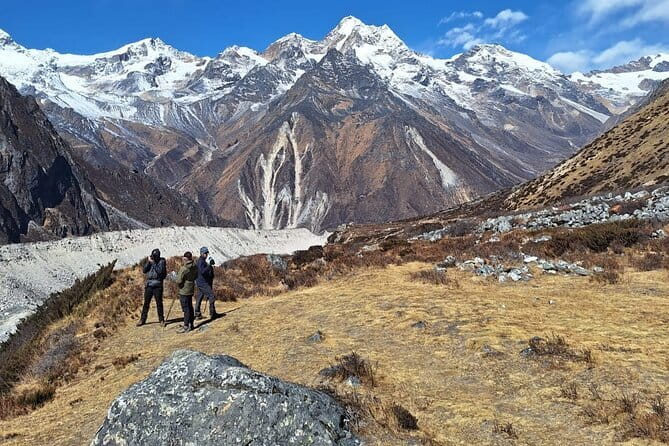
Kanchenjunga feels interesting for one big reason, it is less packed than the classic Nepal routes, because this circuit is newer and the villages along the trail are still growing. You also get multiple angles on one of the tallest mountains on Earth, including North and South Base Camp perspectives.
What I like most is the mix of low-river trekking days and higher, more alpine walking, plus the chance to spend time in tea-house villages that still feel remote. The other thing I really like is the small size, the group is capped at 8 travelers, which keeps the pace calmer and the vibe more local.
The main drawback to plan for is logistics and effort. Expect long jeep days to and from the remote trailheads, and the food along the way is described as very basic, so you will want to choose carefully.
Key things that make this Kanchenjunga trek worth your time
- Quieter trail by design: a newer route with less tourist infrastructure, so you often get more breathing room on the path
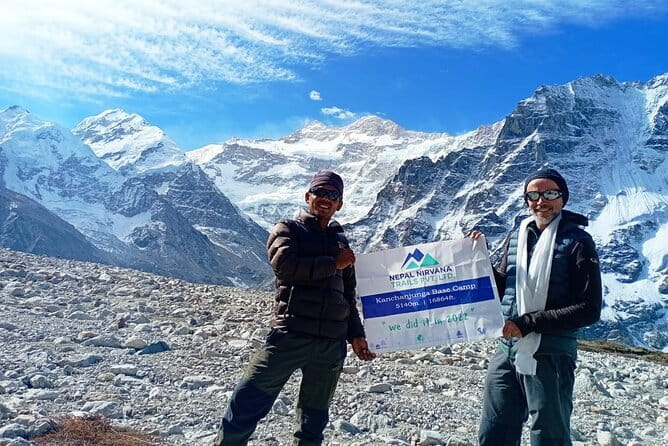
- Base camp time in different angles: walking up to the north side, plus the itinerary is built to include both base camps for fuller views
- Acclimatization built in: a rest day at Khambachen includes a short hike to glaciers, viewpoints, and lakes
- Small group support: max 8 travelers with a guide and porter system (typically 2 trekkers per porter)
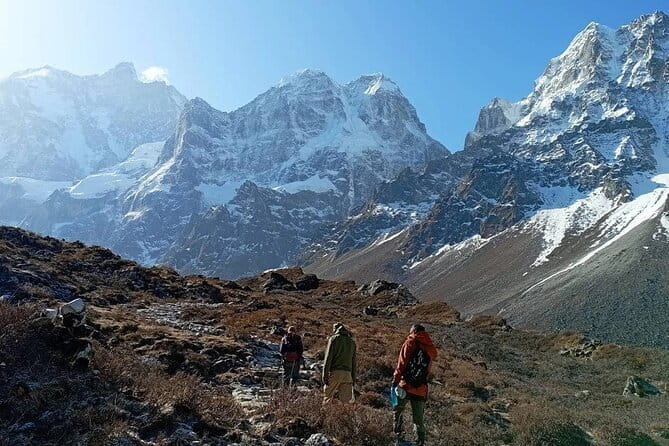
- High-pass scenery: Sinion La, Mirgin La, and Sinelapche Bhanjyang are on the route with big panorama potential
- Value-packed package: permits, flights, jeeps, Kathmandu hotel nights, and most meals are included, so you are not piecing it together yourself
Entering Nepal’s big mountain world from Thamel
Most trips start in Thamel, Kathmandu, and this one does the practical things first. An airport representative is set to meet you at Tribhuvan International Airport and transfer you to the Kathmandu hotel booked for the first part of the trek. Then, you settle in for a day that is less about views and more about prep.
On the next Kathmandu day, the team management meets you around 9 am and asks for your original passport for permit preparation. Later that same day, around 5 pm, the manager returns your passport when everything is ready. It is a small workflow detail, but it matters, because it keeps the actual trekking days smoother.
If you are the kind of person who likes to travel with fewer surprises, this is a good sign. You are not guessing about permits, transfers, or domestic flights once you are in-country.
More Kanchenjunga itineraries:
- Kanchenjunga South Base Camp Trek – 13 Days
★ 5.0 · 6 reviews - Kanchenjunga Circuit Trek
★ 5.0 · 5 reviews - 20 Days Private Kanchenjunga Circuit Trek
★ 5.0 · 3 reviews
Price and logistics: what $2,000 actually covers
At $2,000 per person, this trek is not cheap, but the package includes a lot of the big-ticket items that usually add up fast. You get all necessary trekking permits, tea-house accommodations during the trek, and a licensed guide plus a porter (with the typical ratio of 2 trekkers to 1 porter). There is also a first aid kit with basic medication.
On top of that, you get 3 nights in a 3-star hotel in Kathmandu with breakfast. Flights are included between Kathmandu and Bhadrapur, plus the return flight to Kathmandu. You also get private jeeps for the Bhadrapur to Taplejung to Sekathum transfer, and again for Yamphudin to Kanyam to Bhadrapur.
What is not included is where you must pay attention. You are responsible for your international airfare, Nepal entry visa, and travel or health insurance that covers emergency rescues and evacuations. Personal snacks, drinks, battery charging, hot shower, and Wi-Fi are also on you, and tips for the guide and porter are appreciated but not included.
In plain terms, you are paying for a full support structure. If you hate arranging permits and domestic transport in a new country, that value tends to show up fast.
Kathmandu to Taplejung: a flight plus a long road to nowhere
The trek starts to feel real on the way out of Kathmandu. You fly from Kathmandu to Bhadrapur (Chandragadhi Airport), a domestic hop of about 45 to 50 minutes. Then you drive onward by local jeep through Kanyam, using the Mechi Highway for part of the route.
These are not small “quick transfer” segments. The route to Taplejung and beyond is remote, so expect serious time in the vehicle. Past trekkers have flagged the long 4×4 jeep ride as something to take seriously, and I agree with that mindset.
The good part is that once you reach Sekathum, your walking days start to roll like a rhythm. You trade traffic noise for river valleys, bridges, and the kind of trail where you spend more time looking at the mountains than at your phone.
First trekking days: Sekathum to Ghunsa, river valleys and forest edges
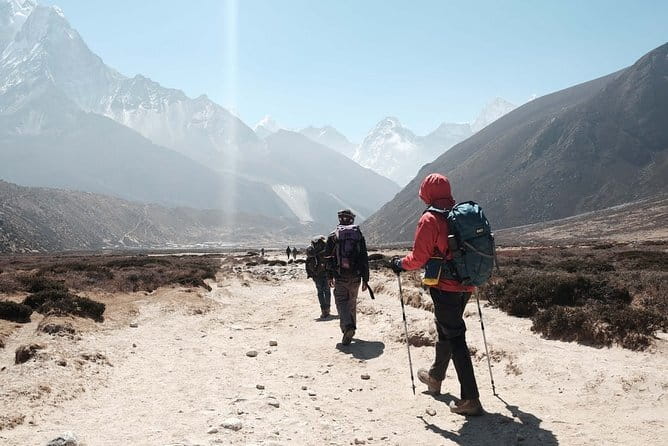
From Sekathum, you begin hiking after breakfast. The early route follows the Ghunsa Khola and includes many bridges, which helps the trail feel varied even when you are walking for hours. This is also when the day-to-day routine clicks, because your effort is steady and the route is designed to move you forward into the Kanchenjunga region.
As you continue, you reach areas like Amjilosha and then move onward toward Gyabla, also called Kyapra. This is where you start sensing the wilderness factor. The route is described as passing through dense forest trails with stretches that do not feel like traditional village walking.
Then you reach Ghunsa village. Ghunsa is a classic pause point in this region, and the itinerary gives you time here as part of the flow. The walk through woodland brings a range of flora and fauna into view, so even on “just another day” legs, the surroundings keep changing.
One practical note: these early days are not just about speed. You are learning how to hike on bridges and uneven ground while carrying your day pack. If you go out too fast, altitude and fatigue will collect later, so keep your effort controlled.
More to compare around Kathmandu
- Kathmandu: 7 UNESCO Sites with Lunch
★ 4.8 · 744 reviews - Everest Base Camp Helicopter Tour landing at Everest View Hotel
★ 5.0 · 668 reviews - Kathmandu: Local Women-Led Nepali Cooking & Momo Class
★ 4.9 · 360 reviews - Manaslu Circuit Trek
★ 5.0 · 292 reviews
Khambachen acclimatization: open pine forest and glacier viewpoints
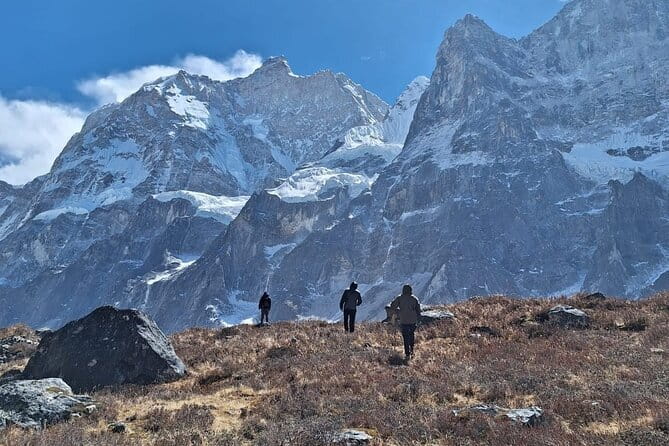
After Ghunsa, you move toward Khambachen. The trail climbs gradually through an open pine forest, and this is also where the route description points out potential wildlife sightings such as blue sheep and even snow leopards, though you should treat wildlife as a bonus, not an expectation.
The trek route also passes through landslide-prone areas, so you may see sections where the trail feels more weathered and careful footwork matters. This is one of those “don’t rush it” days.
At Khambachen you get a rest day. The plan includes a short hike to nearby glaciers, viewpoints, and lakes, so you are not stuck doing nothing, but you are also not adding a big mileage push. This is the kind of acclimatization day that helps your body adjust without treating rest as a waste.
If you want the best chance of enjoying higher altitude days later, take this rest seriously. Drink water, eat steadily, and keep your hikes short and controlled.
The north base camp push: Lhonak to Pang Pema
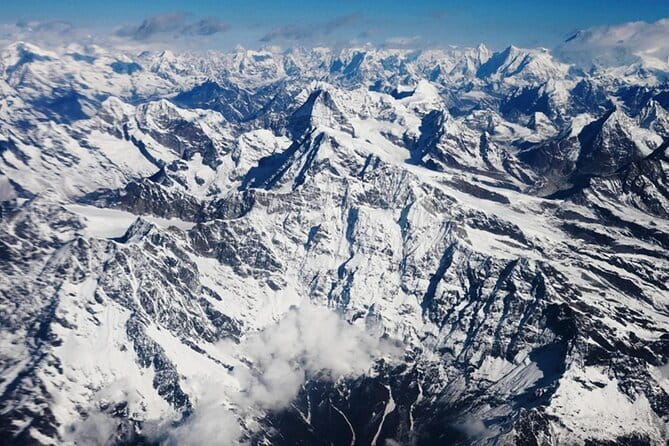
When you move ahead to Lhonak, you are walking into the main north base camp approach area, and the route is described as connected to the Kanchenjunga glacier track. This is where the trail is more “seasonal trekking corridor,” since you can meet other groups walking toward and returning from the north base camp.
Then comes the day you hike to Kanchenjunga base camp, also known as Pang Pema. The route follows moraines, and the approach is described as a gradual climb. That gradual feel matters because it lets you focus on breathing and pacing rather than burning your legs on a steep start.
What you will likely feel is a mix of fatigue and satisfaction. This is a big effort day, but it is also the day you understand what you paid for, the scale of the mountain setting and the glacier terrain you have been climbing toward.
Important expectation set: the trek days are long, and this day in particular is not a quick photo stop. Build in time to slow down, take a few steady breaks, and enjoy what you came for.
Coming back down toward villages: Ghunsa and Sele Le transition
After the north base camp day, the itinerary brings you back toward Ghunsa. You retrace the track, and that can feel monotonous for a few hours, but it is also how you reduce altitude stress and make the next stages safer.
Then the route continues via Sele Le. This is where you leave the trail toward Gyabla and move into dense forest areas again. The plan notes a chance to see snow leopards, again treat this as unpredictable rather than guaranteed.
The big practical difference near Sele Le is that you are in higher, pass-adjacent terrain with fewer services. The itinerary says there are isolated settlements with few teahouses, and that some teahouses are open only in certain seasons. So you should plan to keep your energy up and not assume you will have lots of choices for meals and comfort.
High passes day: Sinion La, Mirgin La, and Sinelapche Bhanjyang
Leaving Sele Le, the trek becomes pass focused. You hike up to three high-altitude passes: Sinion La at 4,440 m, Mirgin La at 4,480 m, and Sinelapche Bhanjyang at 4,645 m. Those numbers are not trivia, they are your day’s reality in the form of slower steps and careful breathing.
The route description points to spectacular panorama views here, which makes sense because high passes naturally open sightlines. But the real “value” is how the passes create a sense of crossing from one world to another, from forest to open high terrain and back.
This is also the day you want to be emotionally patient. If you treat passes like a race, you will pay for it with exhaustion. If you treat them like a step-by-step climb, you will enjoy them more.
Yalung Glacier views: Rathong and Kabru angles
After the high passes, you move toward the Yalung Glacier. The day starts with early morning breakfast, then you head forward through the glacier area and rise toward close-up vistas.
The route description highlights views of Rathong at 6,682 m and Kabru at 7,412 m from this stage. If you like big mountain names, this is where you see why mountain people get obsessed, because the peaks feel close even when you are still far away.
This is also a quieter kind of day in the sense that the focus is on walking and watching. You will likely feel more time passing as you adjust to wind, sun, and cold, especially if conditions change quickly.
Downhill recovery: from Tortong through Yamphudin to Kanyam
After Yalung Glacier, the itinerary transitions into downhill. You walk back through rhododendron forests, and the trek starts to feel more restorative as you move toward Tortong via Simbuwa Khola.
Then you descend further to Yamphudin, passing through areas like Lasiya or Lamite Bhanjyang at 3,415 m and Dhupi Bhanjyang at 2,665 m. These named points help you track progress, and they also show that the route is not a single steep drop, it is a series of controlled elevation changes.
From Tortong to Yamphudin to Kanyam, the village walking returns. You also get a final “explore a bit” feel at the end, where the plan includes exploring landscapes alongside Kabeli Khola before returning toward Kanyam for the drive out.
This stage is good for your body, but still do not get careless. Slower uphill days punish you if you rush them, downhill days punish you if you forget your footing.
Flying back via Bhadrapur: green tea country before Kathmandu
The last trekking day is capped by a drive and then a flight. After breakfast in Yamphudin, you start exploring a bit more before taking a drive to Kanya(or Kanyam) and onward to Chandragadhi Airport in Bhadrapur.
Once you reach Bhadrapur, the plan includes a short pause to explore a green tea cultivation area. Then you fly from Bhadrapur back to Kathmandu, a 45 to 50 minute domestic flight followed by hotel drop-off.
This “final reset” day is surprisingly useful. By the time you land back in Kathmandu, you have a little structure for eating, relaxing, and thinking about what you want to do next in Nepal.
Guides, pace, and group size: why the support matters
This trek caps at 8 travelers, and that changes the whole feel of the trip. Fewer people also means less congestion at viewpoints and teahouses, which helps keep your day from turning into a traffic jam.
The guide and porter setup is another big quality factor. The program uses a government licensed guide and a first aid-trained porter, with an expected ratio of 2 trekkers to 1 porter. They cover guide and porter salary, food, equipment, and insurance, and you get a basic first aid kit included in the group support.
In past experiences shared with this operator, guides such as Raj and Jangbu have been praised as hardworking and caring, and KP Dhital has been described as helpful and quick to respond during the planning phase. That kind of staff reputation matters because Kanchenjunga rewards hikers who stay calm, not people who improvise when conditions shift.
One more reality check: the trip asks for strong physical fitness. That is not marketing language. It is a reminder that you will be doing long days, high passes, and lots of time on your feet.
Food reality on the trail: basic tea-house meals and a smart approach
Tea-house accommodations are included, but the food is described as very basic. The practical advice is to opt for the veg foods available while you are in the trek.
That matters for two reasons. First, simple food is easier on your stomach at altitude. Second, consistent meals help your body keep working when you need energy for long walking days.
You should still expect that food choices and quality can vary by location and season. If you are picky, plan to soften your standards for this specific part of your journey, because the point here is the trek, not fine dining.
Should you book Kanchenjunga Circuit with Nepal Nirvana Trails?
I think this trek is a strong fit if you want a quieter, less crowded Himalayan circuit and you like the idea of a full support structure. The package value is real because it covers permits, domestic flights, jeeps, guide and porter support, Kathmandu hotel nights, tea-house lodging, and most major meals.
I would think twice if you hate long vehicle days or if you know you struggle with basic food when you are tired. Also take the fitness note seriously, because the high-pass section and long walking days require steady stamina.
If you want quiet villages, a route with big mountain payoff, and a small group experience with professional support, this is the kind of plan you can feel good about.
FAQ
What is the total duration of the Kanchenjunga Circuit trek?
The trek is listed as 19 days approximately, with a full route starting from Kathmandu and ending back in Kathmandu.
How much does the trip cost per person?
The price is $2,000.00 per person.
What is included in the tour price?
Included items cover trekking permits, 3 nights in a 3-star hotel in Kathmandu with breakfast, tea-house accommodations during the trek, a licensed guide and porter setup, private jeeps between key route sections, domestic flights (Kathmandu to Bhadrapur and back), a first aid kit with basic medication, and breakfast and other included meals during the trek.
What is not included?
Not included are international flights, Nepal entry visa, travel and health insurance for emergency rescues and evacuations, personal expenses like snacks and drinks, extra nights in Kathmandu, and tips for the guide and porter.
Is the group small?
Yes. The tour is described as having a maximum of 8 travelers.
Does the itinerary include acclimatization days?
Yes. The plan includes a rest and short hike at Khambachen for altitude adjustment, and it also includes time in Ghunsa within the trekking flow.
What kind of food should I expect during the trek?
Food is described as very basic on the trek. The suggestion provided is to choose the veg foods available while you are trekking.
What is the cancellation policy?
You can cancel up to 24 hours in advance of the experience for a full refund. If you cancel less than 24 hours before the start time, the amount paid will not be refunded.
Latest Kathmandu write-ups
- 16 Days Island Peak Climbing With Everest Base Camp Private Trip★ 5.0 · 3 reviews
- 15 Days Round Annapurna Trek with Poon Hill from Pokhara★ 5.0 · 5 reviews
- Private Nepal round trip including Ghorepani Poonhill trek★ 5.0 · 3 reviews
- Everest Base Camp Trekking 16 Days★ 4.0 · 7 reviews
- 14 Days Luxury Annapurna Base Camp Trek★ 5.0 · 6 reviews
- Everest Base Camp Trek★ 5.0 · 32 reviews
- Everest Base Camp Trek★ 5.0 · 87 reviews
- Everest Base Camp Trek★ 5.0 · 97 reviews
Hiking & Trekking, compared.
Nagarkot Sunrise and Hike Tour to Changu Narayan
Read our review →
4-Day Ghorepani, Poonhill & Ghandruk Mountain Trek
Read our review →
Browse the lists this tour appears in