
Reviewed · EVEREST BASE CAMP TREK
Mt. Everest Base Camp Trek Nepal – 16 Days
This trek is interesting because it hits the Everest story from the ground up, starting in Kathmandu and ending at some of the most dramatic viewpoints in the Khumbu. I like that it is private and handled with a clear schedule, not a loose backpack plan. I also like that you get real support on the ground, with a trekking guide and Sherpa porter.
The second thing I like is the all-in feel of it. You’re not only paying for the walking, you’re paying for flights to and from Lukla, permits and fees, teahouse lodging, and a full slate of trek meals. Even better, you’re handed key items like a sleeping bag, duffel bag, down jacket, and trekking poles, so you can travel lighter.
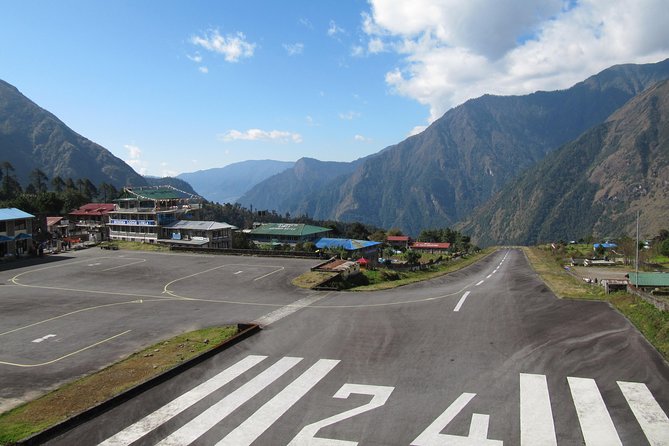
One possible drawback is the big one for Everest area treks: Lukla flights can delay or cancel due to weather or technical issues. The operator says they try to switch airlines, but if you cannot get there by aircraft, you may need an expensive alternative.
Key things to know before you go
- Private trek setup with only your group participating
- Airport pickup in Kathmandu plus a hotel stay with a briefing and welcome dinner
- Lukla flight round-trip included, but weather can still shake the timetable
- Sherpa porter and guided route to keep logistics and navigation under control
- Acclimatization built in with a full rest day in Namche and another rest day at Dingboche
- Everest viewpoints included, including time at Everest Base Camp area and Kala Patthar
Kathmandu, the briefing, and how you start on the right foot
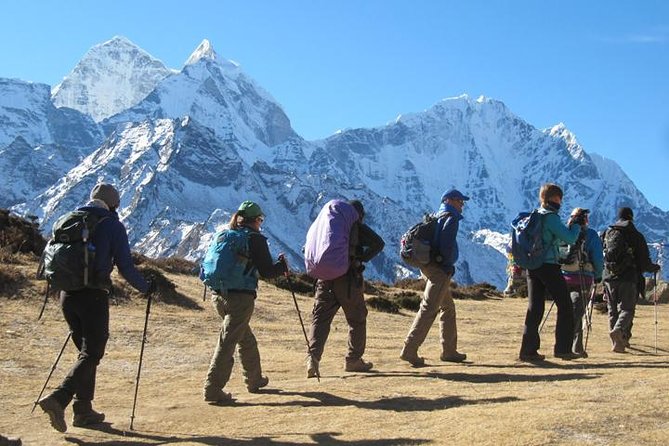
Your trip begins in Kathmandu with airport pickup and a transfer to your hotel. After you get sorted, you attend a program briefing in the hotel lobby so you know what comes next, including how the trekking days tend to unfold and when you’ll move. Then you head out for a welcome dinner at a typical Nepalese restaurant with cultural programs.
I like this first-day setup because it reduces the usual “figure it out yourself” stress in a country where schedules can shift quickly. It also gives you a chance to ask practical questions before you’re dealing with altitude and cold.
A small note to keep in mind: Kathmandu days are often about getting your rhythm. You do not need to overdo it with sightseeing on day one. You want sleep, hydration, and an early sense of what your mornings will feel like.
More ways to walk to Everest Base Camp:
- Everest Base Camp Trek – 14 Days
★ 5.0 · 1,499 reviews - Everest Base Camp Trek
★ 5.0 · 842 reviews - Everest Base Camp Helicopter Tour landing at Everest View Hotel
★ 5.0 · 668 reviews
Lukla flights, porters, and the day-one confidence boost
On day two, you transfer to the domestic airport and fly to Lukla, at about 2,800 meters. The flight is short in time but huge in impact, because Lukla is where the trek really begins. Once you land, luggage is handled by porters (droghers), and you can focus on the walk instead of hauling heavy bags.
This is where the “all-inclusive” value shows up. When the flights are included and the porter logistics are arranged, you avoid a common Everest mistake, showing up unprepared and then losing time fixing gear or carrying too much. Your first hiking day goes from the Lukla area toward Phakding, with scenic views and passing through Sherpa farm areas.
What you should expect on this first trek day is moderate effort with frequent landscape payoffs. It’s a good day to settle in, get used to the rhythm of the trail, and start learning what “thinner air” feels like without going too hard.
Phakding to Namche Bazaar: national park entry and your first real altitude test
Day three is the classic route toward Namche Bazaar. You cross suspension bridges over the Dudh Koshi River and hike through sections with short uphill segments. You also pass checkpoints tied to the Sagarmatha National Park entrance, where your trekking permit is checked.
This matters more than it sounds. It’s not just paperwork. It’s part of how the trek stays organized and monitored in a high-traffic, high-risk zone. You also get your early Sherpa-culture context, moving through villages and viewpoints that start to frame the Khumbu region as more than just a mountain.
When you reach Namche, you’re stepping into the main hub. Expect teahouse life, market energy, and more travelers than you’ll see later along quieter stretches. It is also where acclimatization strategy becomes real, because the next day is intentionally lighter.
Namche rest day: acclimatization plus monastery-adjacent choices
Day four gives you a full day off for acclimatization. This is a smart design, and you should treat it like part of the trek, not a spare day. You can stroll the bazaar and browse, and you can also visit the Sherpa Museum to learn about Sherpa culture and mountaineering history.
The route also offers options if you want a viewpoint and comfort break. You can go up to the Everest View Hotel area and the Syangboche airstrip, then return at a relaxed pace.
If you’re the type who wants to pack the day with activity, this is where you resist that instinct. Altitude does not care about your sightseeing list. On rest days, the goal is to keep moving enough to stay comfortable, but not to exhaust yourself. You’ll get more out of the next hiking days if you keep this day calm.
More to compare around Kathmandu
- Private Kathmandu Sightseeing Tour | UNESCO World Heritage sites
★ 5.0 · 756 reviews - Kathmandu: 7 UNESCO Sites with Lunch
★ 4.8 · 744 reviews - Half day cooking class in Thamel kathmandu
★ 5.0 · 607 reviews - Everest Base Camp Trekking
★ 5.0 · 485 reviews
Tengboche to Dingboche: forests, prayer walls, and monastery atmosphere
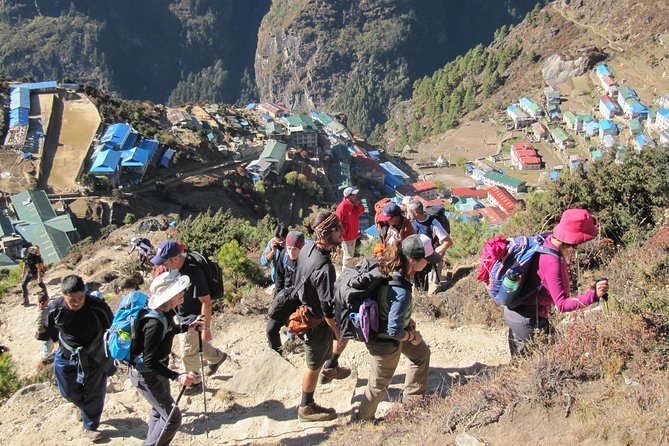
Day five and day six shift you deeper into the Khumbu with scenic mountain views that can start popping even on gentler walking. You pass through forests with silver fir, blue pine, rhododendron, magnolia, and birch, and you reach Tengboche with its big monastery presence.
Tengboche is often the emotional stop on this trek. Even if you’re not religious, you’ll feel the rhythm of daily life around the monastery, prayer spaces, and the way the trail funnels people into the same sightlines. The peaks in view, including Everest-adjacent massifs, also make this feel like a “real” moment, not just a long walk.
By day six you reach Dingboche after crossing into higher, more valley-like sections. You’ll spot long mani walls (prayer walls) and get strong views of peaks including Amadablam and others. The walking is steady, and your lungs start to remind you that you’re not on a normal hiking altitude anymore.
Dingboche to Chukung: why that extra day is worth it
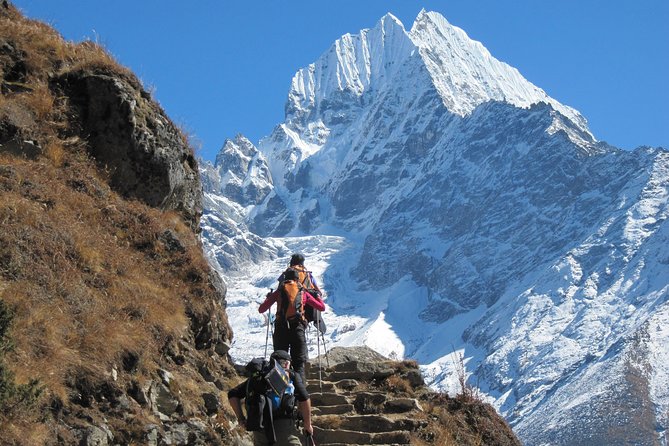
Day seven is another rest day, this time in Dingboche. You can either take a true rest day or do a shorter climb toward Chukung, around 4,730 meters. The walk is gradual, but it still climbs enough to keep you practicing altitude breathing.
Chukung is valued for views over snow-capped summits and glacier scenery. You’ll hike out, enjoy the viewpoint, then return to Dingboche for the night.
This is one of those days where I’m firmly in favor of the design. Everest area trekking works because you gain altitude in steps. That rest day reduces the chance you feel wrecked later, especially when the trail starts to get tougher toward Lobuche and then into Gorakshep.
If you’re prone to altitude headaches or you tend to push too fast, follow the plan and keep your Chukung pace easy. You will have plenty of hard efforts later.
Lobuche and Thukla: memorials, rocky walking, and focus
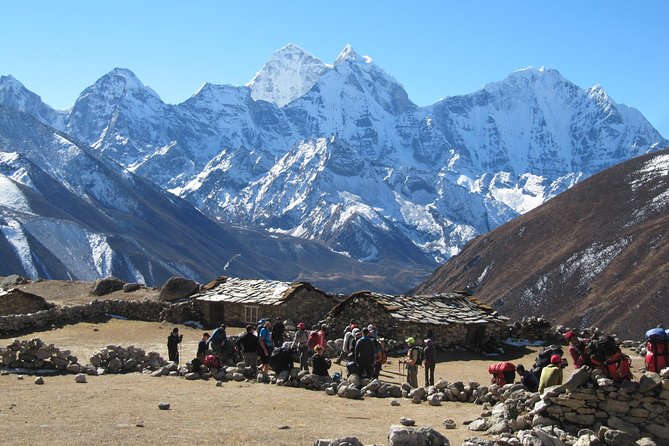
Day eight moves you toward Lobuche via a route that veers north. You’ll pass a mani stupa and then walk toward Thukla, which involves a sharper climb. This is where the scenery includes stark, high-altitude surroundings and where the trail starts to feel more demanding.
At Thukla, there are memorials tied to climbers who lost their lives in the broader mountain region. It’s a sobering stop. It also helps you remember that this is a high-stakes landscape, not a postcard backdrop.
Then you continue to Lobuche for the night. Practically, this day sets you up for the next big movement toward the Everest Base Camp area. Your legs may feel fine at the time, but the real challenge will be endurance and stamina as altitude stays high.
Gorakshep and Everest Base Camp area: when the trail turns serious
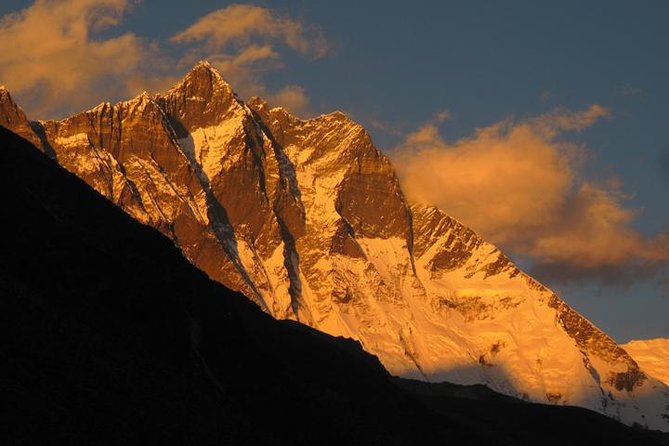
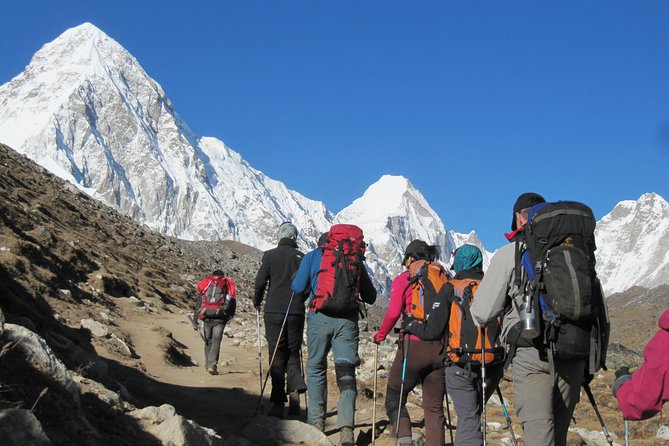
Day nine is a long day that starts early toward Gorakshep. After rocky, windy hiking, you arrive at Gorakshep and then head onward toward Everest Base Camp area and the Khumbu icefall zone. The details matter here: the path can be tough due to high altitude and thin air, and conditions near glacial areas can demand extra attention.
One of the best values on this trek is that you’re not doing this section alone. With your guide and porter support, you get help pacing, route-finding, and managing the “I’m here, now what” moments when fatigue is creeping in.
Also, this is where your senses sharpen. Even when you’re not at the highest viewpoint of the trip, the scale of the area and the way people move through it makes it unforgettable. You’re walking in a region that shifts each year due to glacier movement, so expect the trail character to feel a bit different as you progress.
Kala Patthar sunrise mission: the view is the point
Day ten is your Kala Patthar day. You start early, hike for about two hours to reach the top at a small rocky summit, then enjoy views that are beyond what most people expect from a day hike. From Kala Patthar, you can look down toward the Everest Base Camp area, plus see massive mountain panoramas.
This is also the day where weather can make or break the experience. If it’s clear, it’s a “how is that real?” scene. If clouds move in, you’ll still feel the achievement, but the visibility may be limited.
After the viewpoint time, you return to Gorakshep for the night. This day tends to be physically demanding mainly because it combines early timing with cold and altitude. Bring your attitude: slow steps, steady breathing, and minimal stopping for long conversations.
Return to Tengboche and Namche: the trail gets easier, your mind stays loud
Day eleven makes the shift back, with downhill and an easier progression toward Tyangboche and Tengboche Gompa. You’ll see Amadablam and Everest-adjacent peaks from the village approaches, and you’ll spend time in the monastery area again, this time with a different feeling because you’ve already pushed higher.
By day twelve, you move downhill to Phungithanka and then back toward Namche Bazaar, crossing suspension bridges over the Dudh Koshi River along the way. The walking is still real, but you’ll likely feel more comfortable because your altitude is trending lower.
This return period is when I recommend you slow down mentally. You already earned your hero moments at the high points. Now you can enjoy the trail as a lived experience, noticing where the forests change, how villages cluster around teahouses, and how daily life continues in the Khumbu.
Lukla day back to Kathmandu: finish strong, celebrate calmly
Day thirteen is your long return day toward Lukla. It includes descending, walking through places like Monjo and Phakding for lunch, and then finishing at Lukla after several hours on the trail. Once you arrive, you typically get help reconfirming your air ticket.
You then overnight in Kathmandu and have time to stroll in the area around your hotel, plus a final supper to celebrate with the crew.
Day thirteen can feel long because it combines fatigue from the trek plus the relief that makes you forget to keep your routine. Keep drinking water. Keep your calories coming. You’ll feel better when you reach Lukla and it’s time to focus on flights.
Kathmandu finish, Thamel time, and what happens if your flight changes
Day fourteen brings you back to Kathmandu by flight, and the timing can depend on wind. If a flight doesn’t work as planned, the operator schedules accordingly when possible. From there, you transfer back to your hotel and unwind.
Day fifteen is a flexibility day. If your flight needs adjustment, you do not lose your chance to catch an international flight, and you can use the day for a full Kathmandu area break. If you already flew, you get extra time, including exploring Thamel for last shopping and a farewell dinner.
Day sixteen is for last-minute shopping, airport transfer, or starting a new trip plan. The overall structure is designed to reduce the common stress of suddenly having a travel window that shrinks.
What $1,900 buys you, and where the value really is
At $1,900 per person, you’re not just paying for “days on a trail.” You’re paying for a bundle that includes Kathmandu to Lukla flights and the return, 3 nights in Kathmandu (twin sharing), and 12 nights in teahouses. You also get permits and fees covered, plus meals on full board during the trek and breakfast in the city.
Then there’s the support side: a trekking guide, a Sherpa porter, and route organization. In Everest country, good logistics can be the difference between a smooth climb and an exhausting scramble.
On top of that, you receive trek gear items like a sleeping bag, duffel bag, down jacket, and trekking poles. That can save money and packing weight, and it matters when you want to travel comfortably without building a whole gear kit from scratch.
One fair way to judge value: if you had to separately coordinate flights to Lukla, permits, teahouse stays, guide help, and gear, the “what would it cost” question gets messy fast. This price wraps those moving parts into one plan.
The real risk: weather, Lukla cancellations, and possible backup costs
The Everest region is weather-first. The operator explicitly warns that Lukla flights can delay or cancel due to conditions or technical problems. Their plan is to try shifting you to a similar airline if seats are available.
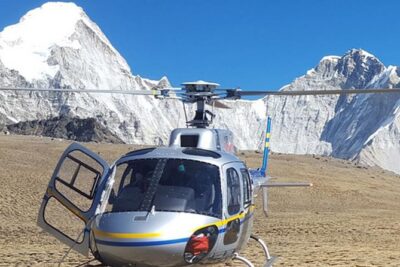
They also mention helicopter pickup as a fallback if you need it. The cost estimate they provide is about $500 to $600 per person on a sharing basis, or about $2,500 total if not sharing, each way. They recommend keeping a few extra days to absorb these disruptions.
Here’s my practical advice: treat this as the one variable you can control with your schedule, not with your attitude. Leave buffer days around your international travel dates so you are not forced to make sudden expensive choices.
Gear provided vs. gear you still must bring
You’ll be given key trekking items: sleeping bag, duffel bag, down jacket, and trekking poles. That’s a big help for comfort in cold conditions and for keeping your pack weight reasonable.
That said, the tour info also stresses you still need proper trekking gear. That usually means you should plan on bringing your own basics, like layers you can move in, suitable footwear, and personal items. The tour won’t magically cover everything you’ll rely on day after day.
A good strategy is to review your gear list right before you go, then pack for layers. In this region, temperature swings are common, and what feels fine at midday can feel sharp by evening.
Who should book this trek, and who should think twice
This trek is a good match for anyone with moderate physical fitness who wants a guided, organized path through the Everest Base Camp approach. It’s also set up as a private group experience, so you’re not sharing your trek with strangers.
Family trips are mentioned as a successful experience, which suggests the operator can handle different group needs as long as everyone can manage the hiking demands and altitude.
If you know you struggle with altitude or you tend to push too hard early, be honest with yourself. The trek includes rest days on purpose, but you still have high altitude days and long walking days. Train a bit before you arrive, and keep your pace disciplined once you start climbing.
Should you book this Mt. Everest Base Camp trek?
I’d book it if you want Everest area trekking with a strong logistics backbone. I especially like the way this plan covers the hard-to-handle pieces, like flights, permits, teahouse stays, meals, and guide and porter support, and then backs it up with acclimatization days.
I’d hesitate if your schedule is tight with no flexibility for Lukla flight disruption. The helicopter fallback can get expensive fast. If you can add a buffer, you’ll feel much calmer.
One more reason I’m positive: the support has real credibility. In earlier experiences shared with the operator, guides like Hari, and the company team led by Naba, were described as well organized from pickup through the return flight. That kind of continuity matters in Nepal’s unpredictable environment.
FAQ
What is the trek duration and starting time?
The trek is scheduled for about 16 days. The meeting/start time is listed as 5:00 am.
Is this trek private?
Yes. It is described as a private tour/activity, meaning only your group participates.
What is included in the price?
Included items are Kathmandu to Lukla flights and return, 3 nights twin sharing in Kathmandu, 12 nights in teahouses, guide and Sherpa porter, permits and fees, meals on full board during the trek plus breakfast in the city, and trek gear items including a sleeping bag, duffel bag, down jacket, and trekking poles.
What is not included?
Not included are Kathmandu lunch and dinner except the welcome and farewell dinner, personal expenses like hot showers, laundry, bars and beverages, WiFi, and extra porter, plus travel insurance and gratuities for the guide and Sherpa.
What about fitness requirements?
The tour notes that travelers should have a moderate physical fitness level.
Will the Lukla flight always happen as scheduled?
No. The tour states Lukla flights may delay or cancel due to weather or technical issues. The operator may shift you to another similar airline if seats are available.
If the flight is canceled, is there a backup plan?
The tour mentions helicopter lifting as a possible option if needed, with additional costs if it becomes necessary. They recommend keeping a few extra days for booking the trip.
Is there a cancellation policy?
Yes. Free cancellation is allowed up to 24 hours in advance for a full refund, and cancellation due to poor weather should result in an offered different date or a full refund.
Latest Kathmandu write-ups
- Langtang Valley Trek★ 5.0 · 3 reviews
- Khopra Danda Trek★ 5.0 · 3 reviews
- Langtang Valley Trek from Kathmandu★ 5.0 · 3 reviews
- 5 night / 6 days Kathmandu Nagarkot Chitwan Pokhara tour★ 5.0 · 3 reviews
- Nepal Highlights Tour: 5 Nights 6 Days Kathmandu & Pokhara Tour★ 5.0 · 3 reviews
- Kathmandu Valley Private Day Tour★ 5.0 · 3 reviews
- Conquer the Himalayas: The Ultimate 16-Day Annapurna Circuit Trek★ 3.5 · 3 reviews
- Kathmandu Heritage Day Tour★ 5.0 · 3 reviews
Everest Base Camp Trek, compared.



Everest Base Camp Helicopter Tour landing at Everest View Hotel
Read our review →


Everest Base Camp Helicopter Tour landing at Hotel Everest View
Read our review →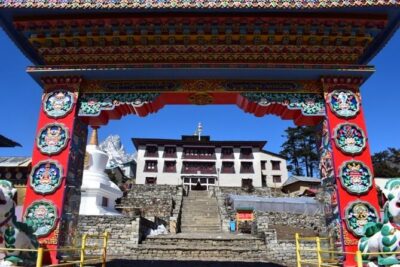
Browse the lists this tour appears in