
Reviewed · EVEREST BASE CAMP TREK
Private 12 – Day Everest Base Camp Trekking
This is interesting because it pairs the drama of Everest with a practical, handled-for-you plan. You fly in and out of Lukla, then walk the classic route at a pace set for your group, with permits, tea-house stays, meals, and staffing taken care of. I especially like the private setup with a guide plus porters, and I like the included logistics gear like a trekking map, water purification, and oxygen saturation monitoring. One thing to consider, though: some comfort items are not included, like hot showers, battery charging, and tea or coffee on the trail, so you’ll need to budget for those small extras.
You’ll also be traveling in a real mountain environment where conditions can change fast, especially around Lukla flights. That’s where having emergency coordination support included matters. The trek itself is memorable, but the “value” is really about reducing decision fatigue, so you can focus on altitude, pace, and the scenery.
Key highlights to pay attention to
- Private guide and porters, with their expenses included
- Round-trip Kathmandu to Lukla flights built into the schedule
- Permits included for Sagarmatha National Park and other required entry fees
- Tea-house style lodge accommodation during the trek (not hotel comfort)
- Oxygen saturation monitoring and water purification included for the trek
- Emergency rescue evacuation assistance included if you need it
What makes this private EBC trek feel lower-stress
If you’ve ever planned an Everest trek, you already know the stress is not the walking. It’s everything around the walking, like permits, routing, lodging, and the little “wait, who’s doing what?” moments. This experience is built to remove that. Once you’re in Kathmandu, someone else handles the moving parts, so you can stay in trekking mode.
I also like that this is truly private, meaning only your group participates. On the Everest trail, that matters. You’re not stuck matching a random group’s speed, and your guide can fine-tune the day’s pace to how you feel.
The other thing I appreciate is the human touch behind the logistics. In practice, the trek is run by a team that focuses on responsiveness, including handling administrative problems if weather affects Lukla flights. Even better, the package specifically includes assistance for emergency rescue evacuation, which is exactly what you want in a remote, high-altitude setting.
More ways to walk to Everest Base Camp:
- Everest Base Camp Trek – 14 Days
★ 5.0 · 1,499 reviews - Everest Base Camp Trek
★ 5.0 · 842 reviews - Everest Base Camp Helicopter Tour landing at Everest View Hotel
★ 5.0 · 668 reviews
Price and logistics: what the $1,300 is really buying
At $1,300 per person for about 12 days, the headline number can look either high or reasonable depending on what you compare it to. Here’s the honest breakdown of what you are getting for that money, based on the included items.
You’re paying for:
- Flights: Kathmandu to Lukla and return
- Permits and fees: Sagarmatha National Park fee plus other required entry fees
- Staffing: a government registered trekking guide and porters, with their expenses covered
- Accommodation and meals on the trek: lodge stays, plus breakfast, lunch, and dinners on trekking days (the package lists 12 breakfasts, 11 lunches, and 11 dinners)
- Trek support extras: trekking map, duffle bag, oxygen saturation support, water purification, and a company t-shirt
- Insurance and rescue support: public liability insurance plus emergency rescue evacuation assistance
And you are not paying for:
- Kathmandu hotel and meals (before and after the trek)
- Trail add-ons like tea/coffee, hot water, hot shower, battery charging, alcoholic drinks, laundry, phone bills, and desserts
- Travel insurance
- Tips for guide and porters
So the value story here is not just “meals and lodging are included.” It’s that the expensive and complicated parts, like flights to Lukla and permits, are included upfront. That reduces the risk of budget surprises later.
Kathmandu to Lukla: the day you start thinking in breathing
Your day starts early in Kathmandu, with a morning drive to Tribhuvan International Airport. The schedule lists a start time of 6:15 am at the Nepal Alternative Treks & Expeditions office in Raniban Marg.
Then comes the flight to Lukla. It’s short, about half an hour, and it’s the first real taste of Nepal’s “mountain math,” where geography shapes everything. You land, enjoy breakfast in Lukla, and then start walking the Dudh Koshi corridor.
Day 1: Lukla to Phakding (about 3 hours)
The first trek section follows the Dudh Koshi River. It’s a gentle entry into the route, and it’s where you should practice your rhythm: slow steps, steady breathing, and making small adjustments before altitude starts demanding full attention. You overnight in Phakding, in lodge style accommodation.
If you’re the type who gets antsy on Day 1, this is where you’ll learn to enjoy the small stuff: river valleys, forested sections, and settling into the trail routine.
More to compare around Kathmandu
- Private Kathmandu Sightseeing Tour | UNESCO World Heritage sites
★ 5.0 · 756 reviews - Kathmandu: 7 UNESCO Sites with Lunch
★ 4.8 · 744 reviews - Half day cooking class in Thamel kathmandu
★ 5.0 · 607 reviews - Everest Base Camp Trekking
★ 5.0 · 485 reviews
Phakding to Namche Bazaar: permits, bridges, and your first real altitude moment
Day 2 is longer, about 6 hours, and it’s a bigger “moving day.” You trek upstream from Phakding along the Dudh Koshi, passing places like Monjo and crossing suspension bridges along the way.
A key practical moment happens at Monjo: you get the permit for Sagarmatha National Park. That’s not just paperwork. It’s the checkpoint that confirms you’re officially in the protected Everest region, and it’s part of what makes this route smooth instead of chaotic.
Day 2: Phakding to Namche Bazaar (about 6 hours)
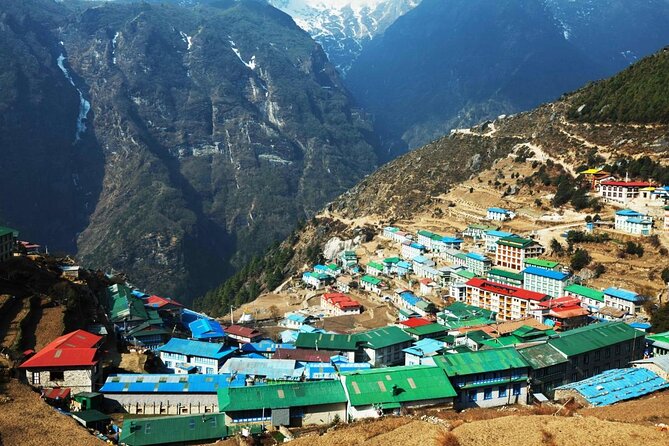
You move through places like Jorsalle, and you’ll likely notice waterfalls and thick valley scenery. Then Namche Bazaar comes into view. This is the biggest village in the Everest region, and it functions like a high-altitude hub with lodges, cafes, and a busier feel than the smaller settlements.
You overnight in Namche.
Namche rest day: Khumjung, Khunde, and the local culture you actually remember
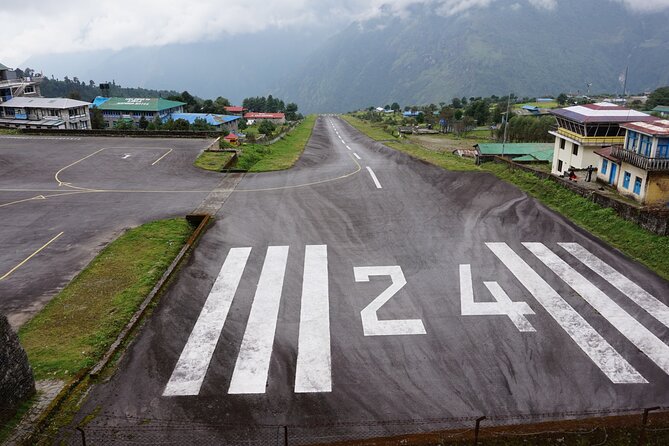
The best acclimatization days are the ones that don’t feel wasted. This rest day is designed so you still get out and walk, but in a way that helps your body adjust.
Day 3: Namche Bazaar to Khumjung and Khunde area (about 3 hours total trekking)
You tour around Namche, then head to Khumjung and Khunde. This is where the trek turns from only scenery into human scale.
You can visit Khumjung Monastery, which is described as preserving the remains of what’s often referred to as a yeti, and you can also visit the Edmund Hillary School en route. The walk includes views toward Kongde Ri, plus the feeling of being among Sherpa communities who’ve lived with these mountains for generations.
Then you return and overnight back in Namche.
If you want a mental reset mid-trek, this is it. It’s also a great day to check in on how you’re sleeping and how you’re handling the altitude.
Tengboche and Ama Dablam: the day the route feels iconic
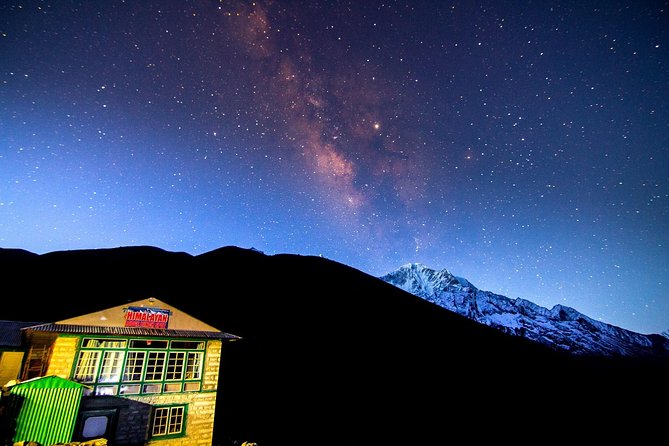
After Namche, the trail shifts into a more dramatic rhythm. The trek day is about 5 hours, and you start seeing the kind of views that make people stop talking for a minute.
Day 4: Namche to Tengboche (about 5 hours)
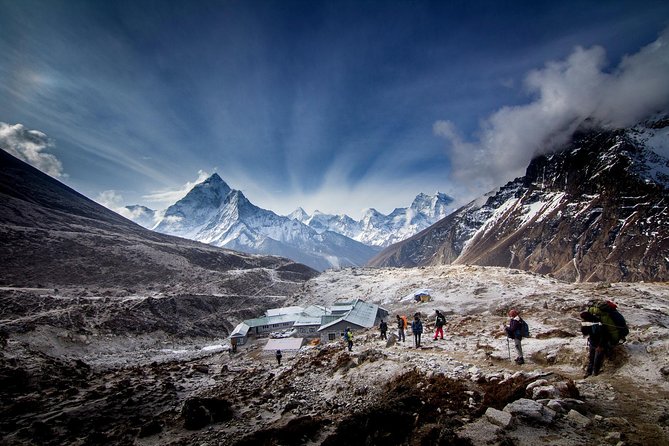
You head upstream along the Dudh Koshi, then climb steeply past Phunki Tenga. The route includes standout views of Ama Dablam (6,856 m) and climbs about 427 meters in altitude on the day.
You arrive in Tengboche, home to Tengboche Monastery, described as the largest monastery in the Everest region and about 100 years old. If you’re there in October, it hosts the Mani Rimdu festival, though your dates might not line up.
This stop is not only scenic. It’s a cultural pause in the middle of a physically demanding route. Overnight in Tengboche.
Dingboche and the long climb toward higher altitude comfort
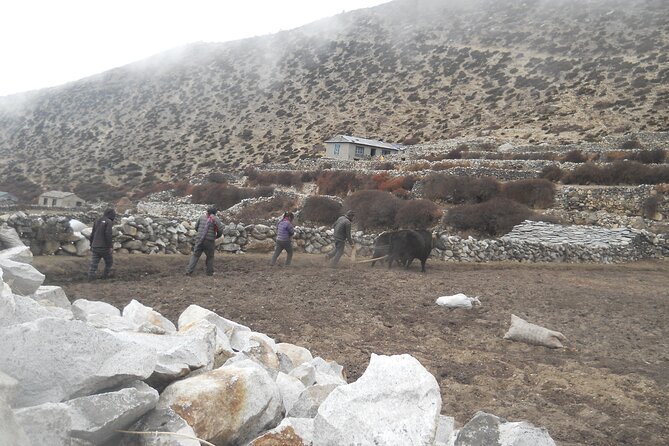
Day 5 is about 6 hours, and it tends to feel like a transition day. You leave more forested sections behind and move into rockier terrain.
Day 5: Tengboche to Dingboche (about 6 hours)
The trek goes via Debuche, then out of the forest path and into rocky climbing. You drop toward Imja Khola, rise again, and pass Pangboche.
The walk includes mani stones, which you’ll notice repeatedly along the Everest trail. They’re small, but they help you feel the route is not only about climbing toward a point on a map.
You finish in Dingboche, a remote Sherpa village.
Day 6: Acclimatization in Dingboche with Nangkartshang Peak hike (about 5 hours)
This is the day that helps prevent the trek from feeling like it’s rushing you. Instead of moving to a new village, you stay in Dingboche and hike up to Nangkartshang Peak (5,083 m) to acclimatize.
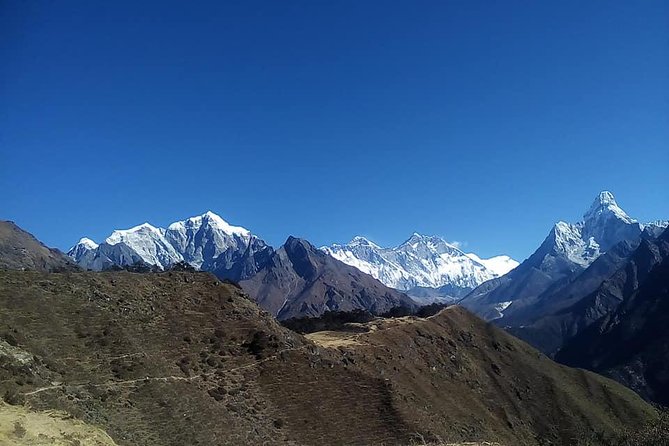
From the top, you get sweeping views including Taboche, Ama Dablam, Island Peak, Lhotse, and Mount Everest (8,848 m). Then you retrace your steps and overnight in Dingboche again.
If you’re worried about altitude, this kind of structured acclimatization is one of the most valuable parts of the whole plan.
Lobuche: the Climber’s memorial park and the “final” terrain shift
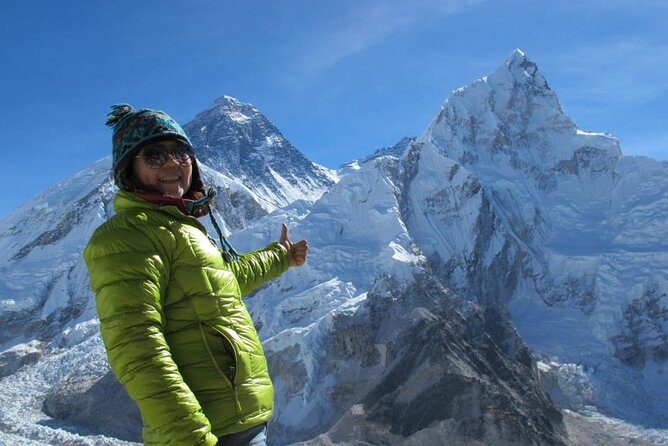
Day 7 is about 5 hours. You start moving toward a colder, more exposed feel as you go from Dingboche toward Lobuche.
Day 7: Dingboche to Lobuche (about 5 hours)
The trail passes Pheriche and Thukla, then includes a stop at Climber’s memorial park, built in memory of climbers who lost their lives while climbing Everest. It’s one of the emotional, reflective moments on the route.
After Thukla, the walk turns more glacier-oriented as you trek along the Lobuche Glacier to reach Lobuche for the night.
Gorakshep and Everest Base Camp: the day your legs stop caring, and your camera starts
Day 8 is about 5 hours total for the push toward Gorakshep and the excursion to Everest Base Camp.
Day 8: Lobuche to Gorakshep, then up to Everest Base Camp (about 5 hours)
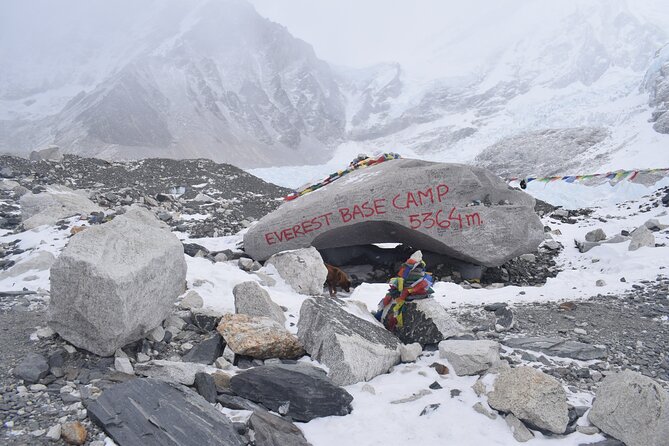
You climb toward Gorakshep, walking along the Lobuche Glacier and Khumbu Glacier. Once you reach Gorakshep, you make a short excursion to Everest Base Camp.
From Base Camp, you’re set up for big-picture views of the Khumbu Icefall and the climber’s base camp area, plus peaks like Pumo Ri, Lingtren, Khumbutse, and Nuptse.
Then you retrace your route and overnight in Gorakshep.
Practical note: this day often feels like you’re walking longer than it sounds on paper. So keep your pace calm. You do not need to sprint to enjoy it.
Kala Patthar: why this detour is the payoff
Day 9 is another 5-hour day, and it includes the trek to Kala Patthar. This is described as an early hike, with a climb through rocky moraine and an excellent view of Everest and surrounding peaks.
Day 9: Gorakshep to Kala Patthar and then down to Pheriche (about 5 hours)
You hike up to Kala Patthar and arrive at the top with wide views of Mount Everest (8,848 m) plus Nuptse, Lhotse, Khumbutse, Pumo Ri, and Ama Dablam.
Then you head back down to Gorakshep, and after breakfast you continue trekking downhill along the Lobuche Glacier toward Pheriche.
This is one of those days where the effort feels directly rewarded. But it’s also one of those days where you should respect your body and keep moving steadily.
The return via Namche: same trail, different feeling
Day 10 and Day 11 bring you back, and the return is not just “easy going.” It’s still full trekking time, with long descents and plenty of stone-and-slope work for your legs.
Day 10: Pheriche down toward Namche (about 6 hours)
You trek from Pheriche to Pangboche, stop briefly in Debuche, then continue to Tengboche for lunch. After that, the route continues downstream along the Dudh Koshi River, crossing Phunki Tenga back toward Namche Bazaar.
Overnight is in Namche again.
Day 11: Namche to Lukla (about 8 hours)
You wake up with views of Kongde Ri (6,137 m) and then trek downhill. You cross Jorsalle, pass Monjo, and exit the national park area.
Then you drop down to Phakding for lunch, and finish with the short trek back to Lukla. The evening is for celebrating and you overnight in Lukla.
This day is long. Even if you’re feeling strong, don’t treat it like a victory lap.
Lukla back to Kathmandu: the last views and a well-earned reset
Day 12 is a quick one. You catch an early flight back to Kathmandu, about 35 minutes, and you get mountainous panoramas during the flight as you leave Lukla. Before landing, you can also see aerial views of the city, including UNESCO World Heritage Sites mentioned in the plan.
Then you drive to your Kathmandu hotel and you’re free for the rest of the day.
How to prepare, so you enjoy the trek instead of wrestling it
This plan is for people with moderate physical fitness. That’s not the same as “you must be athletic.” It means you should be comfortable walking for several hours and you should plan to take altitude seriously.
Here’s what you can do to make the experience smoother using only what the package already supports:
- Use the included oxygen saturation monitoring and follow your guide’s pace adjustments.
- Expect lodge-style accommodation, not full hotel comfort. Bring a mindset that values warmth, layers, and routine.
- Plan for extra spending on comfort items that are not included, like hot showers, battery charging, and tea or coffee.
- Bring the right clothes for cold mornings, especially for Kala Patthar timing and general early starts.
Also, because this is a private trek, you can ask for pace tweaks. If you start the day tired, say so early. Guides can adjust your tempo when they know you’re not feeling great.
Should you book this 12-day private Everest Base Camp trek?
Book it if:
- You want a worry-reduced Everest Base Camp experience where flights, permits, guide, porters, lodge stays, and meals are already handled.
- You like the idea of acclimatization days built into the schedule, like staying in Namche and Dingboche to adjust to altitude.
- You value emergency support, including assistance for emergency rescue evacuation and the included oxygen saturation monitoring.
Skip it or ask questions first if:
- You hate the idea that hot showers, charging, and trail drinks are extra. Those small costs add up.
- You’re expecting a Kathmandu-style hotel experience during the trek. This is tea-house lodge life.
If your goal is to reach Everest Base Camp and enjoy the journey there, this package is the kind of setup that lets you do the hard part, the walking, and leaves the complicated part to the team.
FAQ
What time does the trek start in Kathmandu?
The start time listed is 6:15 am, with the meeting point at Nepal Alternative Treks & Expeditions Pvt. Ltd. in Kathmandu.
Are round-trip flights to Lukla included?
Yes. The package includes Kathmandu to Lukla flights and the return flight from Lukla back to Kathmandu.
Are park permits included?
Yes. The package includes the Sagarmatha National Park fee and necessary permits, plus the Pashang Lhamu entry fee mentioned in the included items.
What meals and lodge accommodation are included?
During the trek, you get lodge accommodation and meals, including 12 breakfasts, 11 lunches, and 11 dinners. Hotel accommodation and meals in Kathmandu are not included.
Is travel insurance included?
No. Travel insurance is listed as not included.
How does free cancellation work?
You can cancel up to 24 hours in advance for a full refund. If you cancel less than 24 hours before the experience starts, the amount paid is not refunded.
Latest Kathmandu write-ups
- Langtang Valley Trek★ 5.0 · 3 reviews
- Khopra Danda Trek★ 5.0 · 3 reviews
- Langtang Valley Trek from Kathmandu★ 5.0 · 3 reviews
- 5 night / 6 days Kathmandu Nagarkot Chitwan Pokhara tour★ 5.0 · 3 reviews
- Nepal Highlights Tour: 5 Nights 6 Days Kathmandu & Pokhara Tour★ 5.0 · 3 reviews
- Kathmandu Valley Private Day Tour★ 5.0 · 3 reviews
- Conquer the Himalayas: The Ultimate 16-Day Annapurna Circuit Trek★ 3.5 · 3 reviews
- Kathmandu Heritage Day Tour★ 5.0 · 3 reviews
Everest Base Camp Trek, compared.



Everest Base Camp Helicopter Tour landing at Everest View Hotel
Read our review →


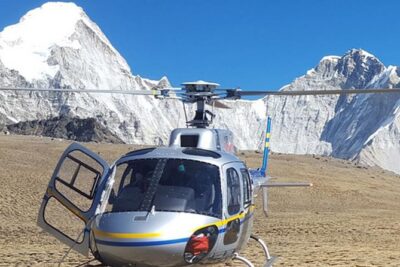
Everest Base Camp Helicopter Tour landing at Hotel Everest View
Read our review →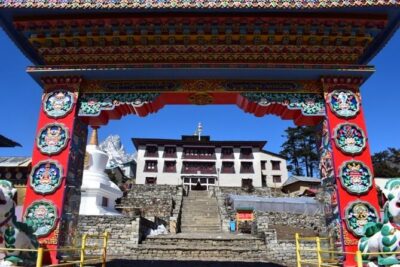
Browse the lists this tour appears in