
Reviewed · HIKING & TREKKING
Kanchenjunga Circuit Trek
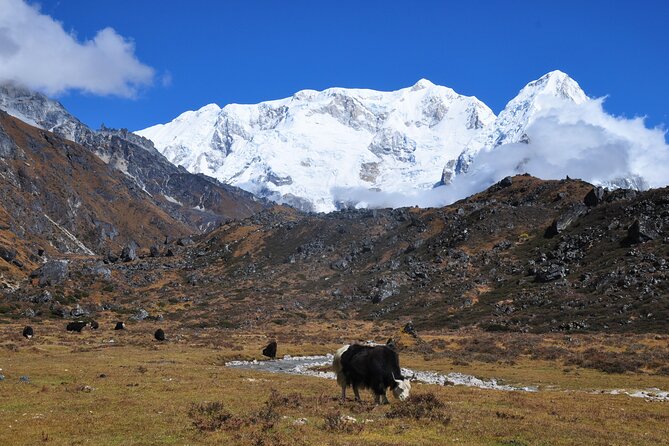
Kanchenjunga Circuit Trek is interesting because it is not built for quick checklists. You move through quiet villages, steep forests, and high passes, ending up at serious elevation like Pangpema base camp around 5,143m. If you like the idea of trekking where time still feels slower, this route fits.
I like the solitude built into the trail. Even with a fixed itinerary, the day-to-day rhythm feels like you are traveling in the mountains, not inside a crowds-and-shuttles circuit. And I also like that your logistics are handled: airport and hotel pickup in Kathmandu, government-licensed English speaking guide, three meals during the trek, and the Kanchenjunga permit and conservation fee are included.
One drawback to plan for is altitude management. The program takes you to high camps and includes a rest and acclimatization day, but this is still a demanding 21 days with long days and big elevation swings. If your fitness is only moderate, you will need to train and pack smart, or the trek will feel tougher than the photos.
Key takeaways before you commit
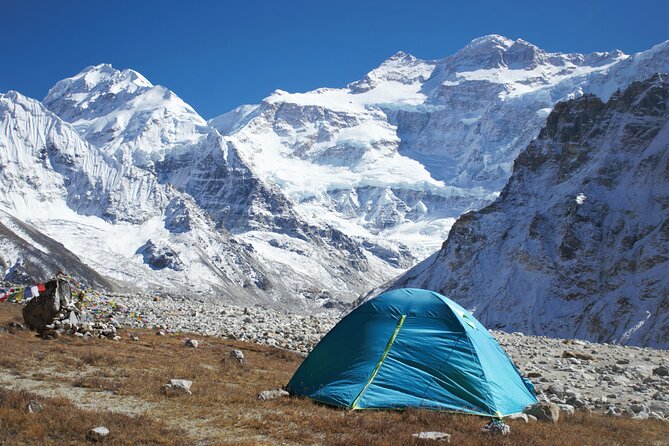
Pangpema base camp time at about 5,100m gives you a real high-mountain payoff, not just a look from far below.
Selela Pass crossing at 4,290m adds a classic Himalayan pass moment, with cold weather likely.
Local guides show up as a strength, with Nima Sherpa and Pasang specifically mentioned as friendly and well spoken.
Meals are planned for the trail, and one trekker noted being vegan had no problems during the trek.
Permits, map, first aid kit, and even a down jacket and sleeping gear reduce your out-of-pocket surprises.
Entering Kanchenjunga: why this trek is more about the trail than the checkboxes
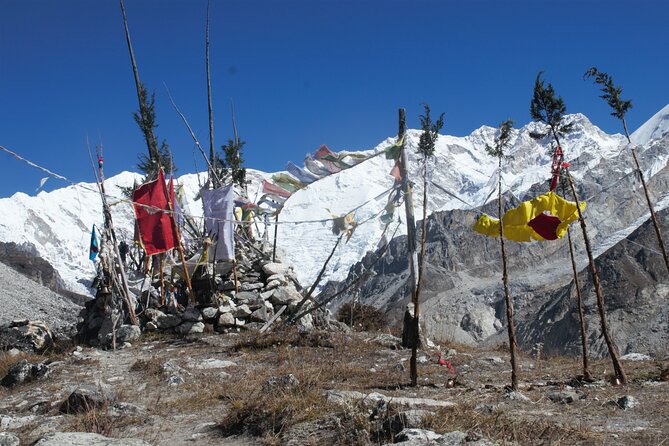
Kanchenjunga sits in far northeast Nepal, in a zone that feels more wild than touristy. The route heads through forests, villages, and multiple geographic sides of the massif, so you do not repeat the same view all day. If you want a trek that feels like you are earning the scenery, this is it.
You start with a flight from Kathmandu to Suketar at about 2,420m, then it is trekking almost immediately. That matters. A lot of high treks give you a couple of warm-up days right away. Here, you step into altitude and walking from day one, so your legs get a chance to settle into the rhythm before you hit the real heights.
Also, you are not just chasing the top. You go through a mix of local ethnic communities such as Rai and Limbu, and you get flora and fauna time too. I like that the route is described as passing through pristine oak and rhododendron forests, which can mean different light, smells, and bird life depending on the altitude band.
More Kanchenjunga itineraries:
- Kanchenjunga Circuit Trek 19 Days
★ 5.0 · 9 reviews - Kanchenjunga South Base Camp Trek – 13 Days
★ 5.0 · 6 reviews - 20 Days Private Kanchenjunga Circuit Trek
★ 5.0 · 3 reviews
Getting to Suketar and easing in on day one and two
On day one, you fly to Suketar (around 2,420m) and walk toward Lalikha. That first stage sets your pace. The goal is not hero miles. It is steady hiking, good hydration, and learning how your body behaves as the air thins.
Day two continues into Lalikharka and Khesewa at about 2,120m. This segment is a smart setup because it gets you moving without immediately throwing you into extreme elevation. You can think of these early days as building endurance and finding your stride. If you go too fast early, the later high points will punish you. If you go steady early, everything feels more manageable later.
Practical note: you should expect changing temperatures. Even without exact daily weather readings in the plan, Nepal in the Himalaya belt can shift quickly from sunny to cold, especially as you climb. Pack layers you can control.
The middle grind: Mamankhe, Yamphudin, Tortong, and Cheram
By day three and four, the itinerary drops and rises in elevation, which is typical on circuit treks but still worth respecting. Khesewa to Mamankhe takes you to around 1,785m, then Mamankhe to Yamphudin takes you up again to about 2,080m. These fluctuations are not random. They are part of how trails connect valleys and ridges.
Day five pushes to Tortong at roughly 2,995m. Day six continues to Cheram at about 3,870m, and then day seven is a rest and acclimatization day. That stop is one of the most important parts of the whole plan, even if it feels like a pause in the action.
Why I like this structure: it gives your body a chance to adjust before you go higher. A lot of people think acclimatization is optional because they are anxious to reach the highest point. But that rest day can be the difference between a confident high phase and a miserable one.
Cheram is also where you start to feel the trek shift. Higher terrain usually means colder nights, stronger winds, and a landscape that looks less lush and more sculpted by altitude. If you brought a pack that is too heavy, you will feel it more now.
Ramche, Yalung Base Camp, and Sele La: the high point sequence
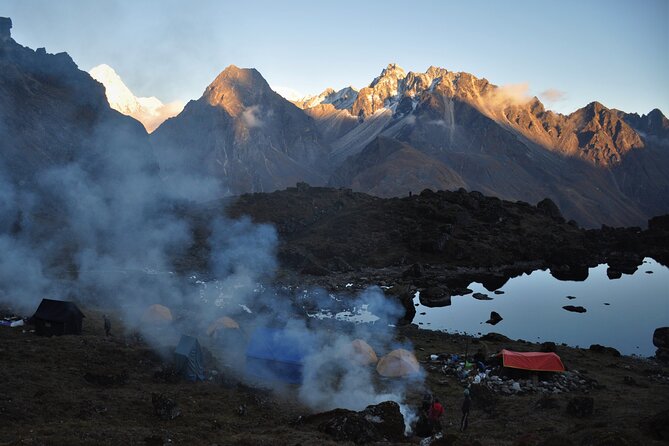
Day eight goes to Ramchaur or Ramche at about 4,580m. This is the kind of elevation that makes you move slower, not because your spirit is lower, but because your breathing has to work harder.
Day nine is a big day: Ramche to Yalung Base Camp (around 4,500m) and then back to Cheram. This is a classic feel of trekking high, reaching a milestone, then returning. It gives you the satisfaction of a base camp experience without forcing you to stay at the highest elevation the whole time.
Day ten then transitions to Sele La at about 4,290m. Crossing passes is where trekking becomes most psychological. Not just physical. You can be winded, cold, and impatient, and still you have to keep going at a careful pace. This is where your layers, gloves, and face protection matter. The higher air plus wind chill can turn what you thought would be a short discomfort into a long one.
Also, the route description calls out a pass called Mirgin-La at 4,725m, with views that can include Makalu, Chamlang, and Everest. Even if the detailed day-by-day text does not highlight every pass in the same way, you should treat the high section as a long string of scenery payoffs and cold-weather decisions.
More to compare around Kathmandu
- Kathmandu: 7 UNESCO Sites with Lunch
★ 4.8 · 744 reviews - Everest Base Camp Helicopter Tour landing at Everest View Hotel
★ 5.0 · 668 reviews - Kathmandu: Local Women-Led Nepali Cooking & Momo Class
★ 4.9 · 360 reviews - Manaslu Circuit Trek
★ 5.0 · 292 reviews
Ghunsa and Kambachen: the camps that make the trek real
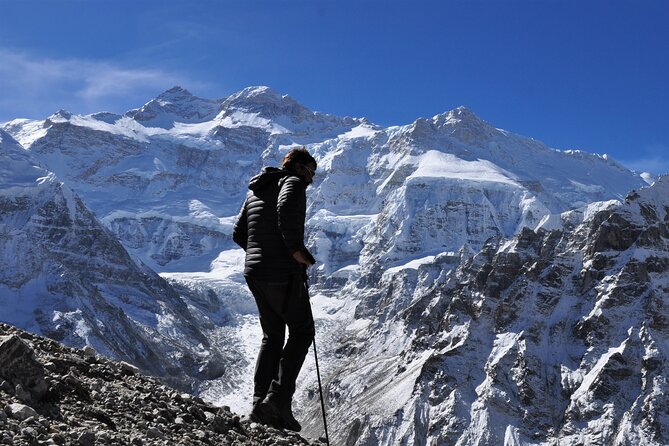
Day eleven brings you to Ghunsa at around 3,595m, then day twelve to Kambachen at about 4,050m. Day thirteen goes to Lhonak at roughly 4,780m.
I like this camp-to-camp approach because it keeps your days structured. You know where you are going, you know the altitude goal, and you can plan your pacing. Ghunsa and Kambachen typically feel like working trekking bases, the kind of places where you can catch your breath, see other trekkers, and also soak in the mountain presence without trying to outrun it.
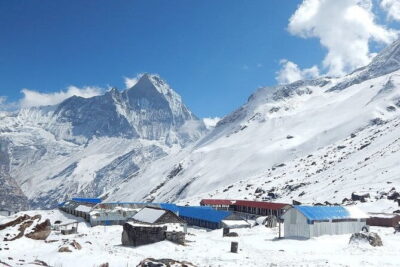
Day fourteen is Kanchenjunga base camp with an overnight at Pang Pema around 5,143m. If you want one moment to remember, this is it. Pang Pema at that altitude is not a casual stroll. Your body will feel it, even if the walk is not the longest day on paper.
Pangpema base camp at 5,143m: your cold-weather checkpoint
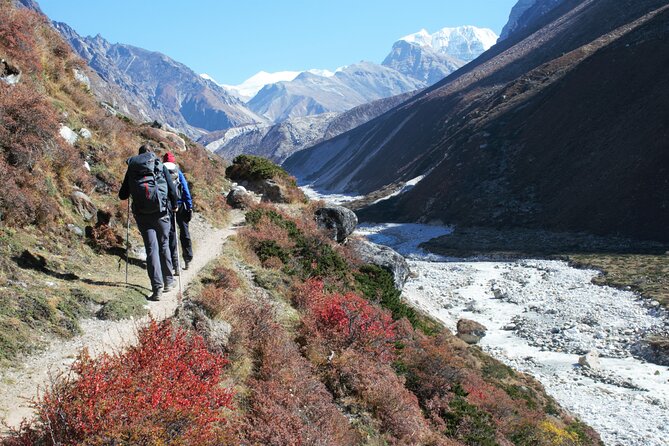
Day fourteen is the summit of your trek experience, not just geographically but emotionally. You have made it through villages, forests, and repeated altitude changes to reach one of the core goals: base camp and Pang Pema.
The plan then includes day fifteen: Pangpema to Lhonak. This is smart because it gives you a way to return while letting your body recover from the highest overnight point.
Cold matters here. Nights at 5,000m can be brutal. The good news is the trek includes a down jacket and sleeping gear for the time you need them, and it is described as refundable after the trek. That reduces the chance you show up underprepared, which is a real risk for international travelers who are trying to save money on gear.
The long return: Lhonak to Ghunsa to Amjilosa, then down to Chirwa and Phurumbu
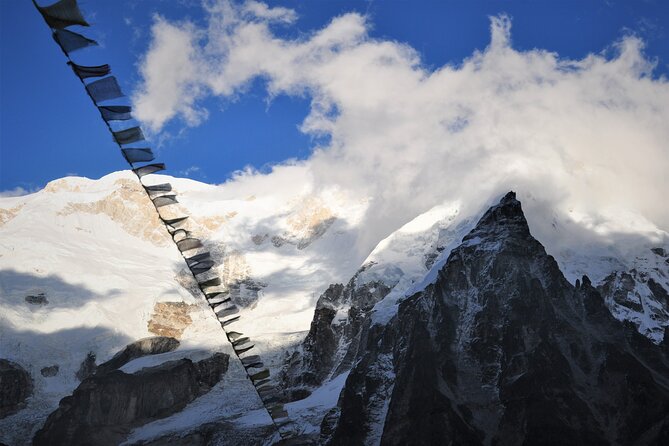
Day sixteen is Lhonak to Ghunsa, dropping to about 3,475m. That descent is a relief, but it can still feel hard on knees and ankles if you push too fast. The trick is controlled steps, and taking breaks before your body gets angry.
Day seventeen continues Ghunsa to Amjilosa at about 2,308m, day eighteen goes to Chirwa at roughly 1,270m, and day nineteen drops to Phurumbu at about 1,549m. You are moving back into warmer air and lower terrain, which often feels like your energy returns, bit by bit.
What I like about the return days: they are not just a victory lap. They are still trekking days that let you transition from high-altitude focus to steady hiking. By day twenty, Phurumbu to Suketar completes the circuit, and day twenty-one you fly back to Kathmandu.
That final flight is your decompression moment. Your body may not feel fully normal right away, but you will feel like you are back in civilization.
Guides, groups, and why your day-to-day experience depends on them
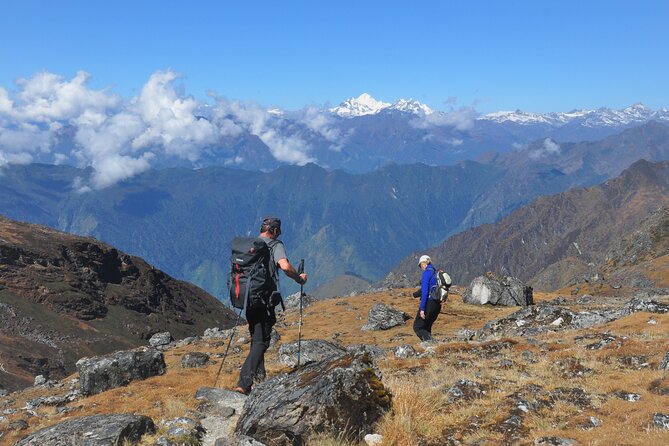
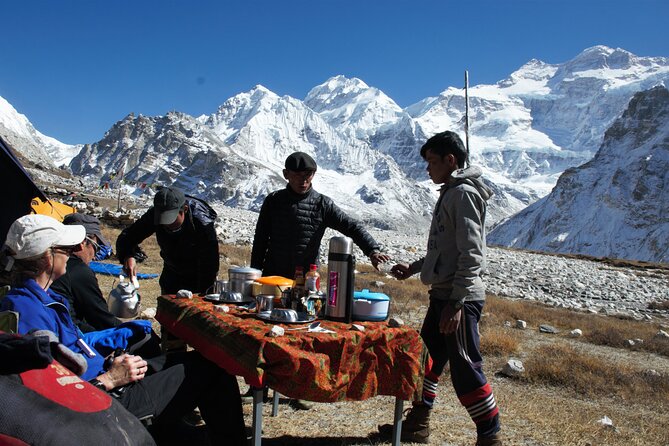
This trek is a private tour/activity, meaning it is just your group. You are not rotating with random strangers. That matters because trekking gets personal. Pace, food tolerance, and altitude responses vary. A private setup usually means fewer awkward compromises.
The guide is described as government licensed and experienced, and English speaking. In the accounts you provided, the guide quality shows up strongly. Nima Sherpa gets highlighted for being knowledgeable and welcoming, and Pasang is described as friendly and well spoken. That is exactly what you want on a route where weather, altitude, and trail conditions can change your day.
If you care about food, there is another reassuring point. One trekker noted they were vegan and still had no problems eating during the trek. That suggests the team can handle dietary needs in practical ways, as long as you communicate them clearly ahead of time.
Price and value: what you are really paying for at $3,000
At $3,000 per person for about 21 days, the question is not just the number. It is what you are buying with that number.
Here, the package covers the big cost drivers and risk reducers: airport and hotel pickup and drop off in Kathmandu by private vehicle, Kathmandu hotels with breakfast, three meals during the trek, the guide, permits and conservation fees, and a trekking map per person. It also includes a first aid kit and seasonal fresh fruit during the trek.
It even includes down jacket and sleeping gear for the trekking period, described as refundable after the trek. That can be a serious value item if you do not want to source expensive cold-weather gear locally or carry extra baggage.
What is not included is equally important: international airfare, Nepal visa fees, travel and medical insurance, emergency evacuation, and personal expenses like hot showers, drinks, and other small extras. Porter service is also available but at extra cost.
So my practical take: this is priced like a trek that handles your core logistics. If you are the type who prefers fewer surprises, it is a good fit. If you like to DIY everything and already own your gear, a custom approach might be cheaper, but it also puts more responsibility on you.
Packing and fitness: how to avoid the most common pain points
The trek is listed for travelers with moderate physical fitness, but moderate still means preparation. You will hike on consecutive days, and at times you will be at higher elevations that make walking feel harder.
Train with two goals:
- Build leg endurance so long hiking days do not drain you early.
- Practice walking with a loaded daypack so your weight feels normal.
Also think about cold management. Since the trek includes down jacket and sleeping gear, you are not totally on your own, but you still need the rest of your system: warm layers, gloves, and the kind of clothing that keeps you functional when you stop moving.
And pack for realistic pace. When you are at high camp altitude, being overly ambitious costs energy that you cannot get back.
Flora, wildlife, and village life: what to pay attention to besides altitude
The route description encourages you to look for snow leopards, mask deer, and several species of birds. You might spot them, and you might not, but the point is that the trail passes through habitats that can support wildlife. Slow down during quieter stretches and you will notice more.
You will also notice vegetation changes as you climb. Oak and rhododendron forests are called out in the route notes, and those forests can mean different walking conditions, different sounds, and sometimes different light. Even a simple break becomes more pleasant when the environment is shifting under you.
Then there is cultural detail. Passing through Rai and Limbu communities makes this more than a wilderness trek. You are walking through living areas. Be respectful in villages and use your guide as a translator when you are unsure.
Should you book this Kanchenjunga Circuit Trek?
Book it if you want a remote circuit with structured acclimatization, a serious high point at Pang Pema, and a guide team that is described as friendly and well spoken. It is also a good fit if you prefer your permits, meals, and key logistics handled, with included gear that supports cold nights.
I would hesitate if you know you struggle with altitude in general, or if you hate long days and want a trek that is more gentle. This is not a walk in the park. Even with a rest and acclimatization day in the midsection, the high camp sequence is real.
If you are ready for a quieter Himalayan experience and you can train and pack for cold, this one has the kind of depth that lasts long after you are back in Kathmandu.
FAQ
Where does the trek start and when?
The trek starts at Tribhuvan Airport in Kathmandu, Nepal. The listed start time is 7:15 am.
How long is the Kanchenjunga Circuit Trek?
The duration is listed as 21 days, approximately.
Is pickup and drop-off included?
Yes. The package includes airport and hotel pickup and drop off by private vehicle, plus hotels in Kathmandu with breakfast.
What’s included during the trek?
You get three times meals during the trek, a government licensed experienced English speaking guide, Kanchenjunga permit and conservation fee, a trekking map per person, a first aid kit, seasonal fresh fruit, and down jacket and sleeping gear for the trek (refundable after).
What is not included in the price?
International airfare, Nepal visa fees, travel and medical insurance, emergency evacuation, and personal expenses like drinks, hot shower, drinking water, telephone, internet, laundry, and other extras are not included. Porter service is also extra.
What about cancellation?
There is free cancellation. You can cancel up to 24 hours in advance of the experience for a full refund.
Latest Kathmandu write-ups
- 16 Days Island Peak Climbing With Everest Base Camp Private Trip★ 5.0 · 3 reviews
- 15 Days Round Annapurna Trek with Poon Hill from Pokhara★ 5.0 · 5 reviews
- Private Nepal round trip including Ghorepani Poonhill trek★ 5.0 · 3 reviews
- Everest Base Camp Trekking 16 Days★ 4.0 · 7 reviews
- 14 Days Luxury Annapurna Base Camp Trek★ 5.0 · 6 reviews
- Everest Base Camp Trek★ 5.0 · 32 reviews
- Everest Base Camp Trek★ 5.0 · 87 reviews
- Everest Base Camp Trek★ 5.0 · 97 reviews
Hiking & Trekking, compared.
Nagarkot Sunrise and Hike Tour to Changu Narayan
Read our review →
4-Day Ghorepani, Poonhill & Ghandruk Mountain Trek
Read our review →
Browse the lists this tour appears in