
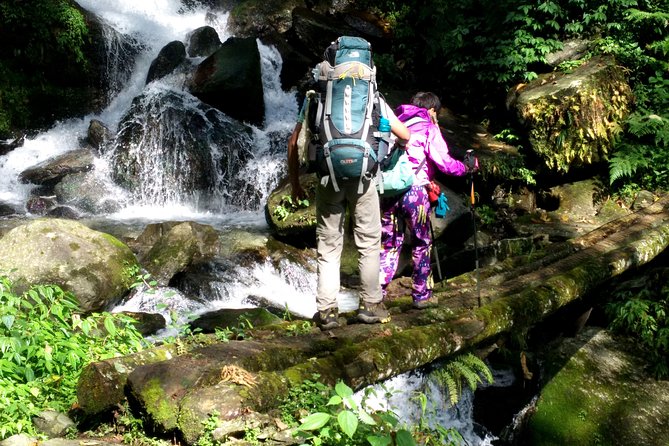
Reviewed · HIKING & TREKKING
Kanchenjunga South Base Camp Trek – 13 Days
Kanchenjunga South Base Camp is interesting because it gives you big Himalayan views without the huge crowds you might expect elsewhere. You’ll trek through farm villages, thick forests, and high glacial scenery in one of Nepal’s most remote corners of Taplejung district, where even the local cultures feel distinct from village to village. It’s the kind of trip where the mountain stays the main character, not your itinerary.
I especially love the chance to get off the beaten flow and meet the people of the region, including Rai and Limbu communities and Tibetan neighbors with their own dialects and rituals. I also like how the route is built around gradual walking days plus a real base-camp approach day, so the pace feels human. One possible drawback: you are looking at a lot of road time up front and at the end, plus days that can be long, so this is not a quick weekend fix.
Key Highlights You Should Care About
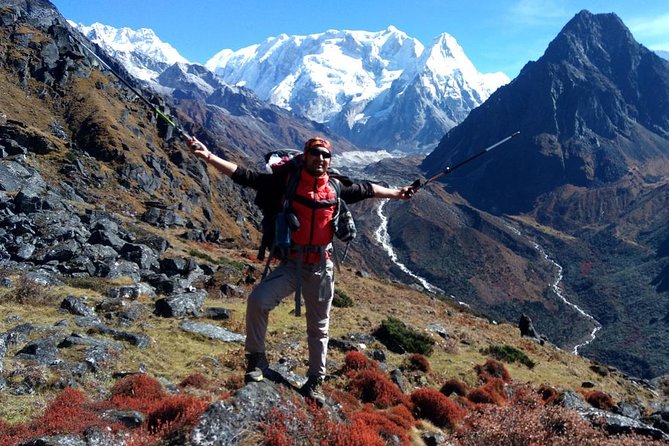
- Kanchenjunga views with fewer trekkers, on a remote trail in Taplejung district
- Small group max of 7 travelers, which usually means easier decisions about pacing
- Teahouses most nights, with a possible tent night at the last stop, depending on group size
- Wildlife and bird spotting chances in a conservation area, including Himalayan tahr and snow cock
- A culture-first route, passing Rai, Limbu, and Tibetan-influenced villages and customs
- A glacier-facing day around the southern wall, built for close mountain encounters
Why Kanchenjunga South Feels Different From Other Big Mountain Treks
If you compare the famous peaks in Nepal, Kanchenjunga often gets treated like a cousin who lives a little farther away. That’s exactly the point here. This trek puts you in the far northeast, near the border regions where cultures and languages shift, even when everyone is Nepali. On this route, you’re not just climbing height. You’re moving through communities tied to the land, farming cycles, and seasonal rituals.
I also like that Kanchenjunga South Base Camp is positioned for serious views. You’re looking at Kanchenjunga at 8,586 meters, plus other major summits along the ridge. The mountain is visible in stages, not just on one postcard moment. Even when the weather plays hide-and-seek, the terrain tells you you’re in a place that takes its own sweet time.
The wildlife angle is real too, even if no one can guarantee sightings. The conservation area is home to animals like Himalayan tahr, Himalayan black bear, musk deer, and even the snow leopard. Birders may hope for snow cock and pheasant. You won’t be in a zoo. You’ll just be walking through habitat where tracks, calls, and glimpses are possible if you move quietly and keep your eyes open.
More Kanchenjunga itineraries:
- Kanchenjunga Circuit Trek 19 Days
★ 5.0 · 9 reviews - Kanchenjunga Circuit Trek
★ 5.0 · 5 reviews - 20 Days Private Kanchenjunga Circuit Trek
★ 5.0 · 3 reviews
Price and What $2,095.34 Actually Buys You
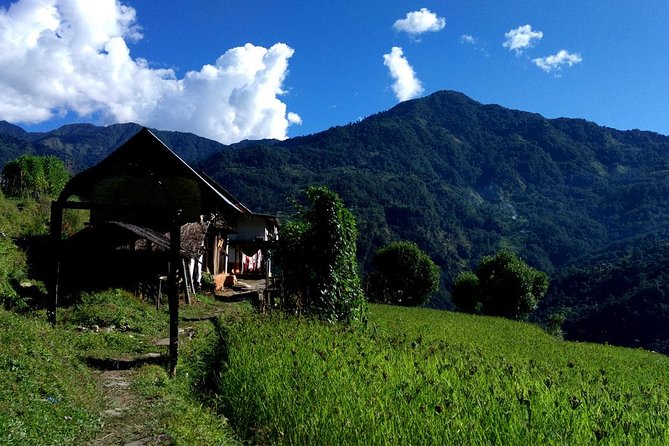
At $2,095.34 per person for 13 days, the price is not low. But it can make sense if you look at what’s included and what you avoid having to arrange yourself.
Here’s what your money covers in practical terms:
- Government-authorized guide and porters, with wages included
- Kanchenjunga Conservation Area permit and government taxes
- Road transportation during the trek portion plus the Kathmandu start and end logistics
- Hygienic trek meals (breakfast, lunch, dinner)
- Two nights in Kathmandu at a 2 to 3 star hotel, with breakfast
- A first aid kit and included insurance for the support team (important distinction)
What you still need to plan separately:
- International airfare
- Meals in Kathmandu beyond the included breakfast
- Alcoholic drinks, chocolates, tea and coffee
- Tips for guide and porter
- Your own personal travel insurance, since that is not included
So the value comes from reduced hassle and real support for a remote trek. If you’re the type who wants to focus on walking, seeing, and adjusting your pace to conditions, that support matters. If you prefer solo planning, you’ll likely find cheaper DIY options in Nepal, but you’ll trade that for more legwork and more uncertainty in a harder-to-reach region.
Small Group Trekking: Kathmandu Start, Pickup, and the Team Factor
This is set up for small-group trekking, with a maximum of 7 travelers. That matters more than it sounds. When the group is small, you get more flexibility in pacing, and your guide can pay closer attention to how you’re feeling that morning.
You meet at Breeze Adventure Pvt. Ltd, Thamel Marg, Kathmandu 44600, Nepal. Pickup is offered, and you’ll use a mobile ticket. After the initial Kathmandu sightseeing, the schedule moves you quickly out of the city rhythm.
One of the strongest signals from past trekkers is guide quality. A traveler specifically praised Galje as a guide and highlighted how he stayed upbeat and made suggestions that matched a slower pace, including options like Sunpati Peak. That kind of responsiveness is exactly what you want on a remote trek, where conditions and energy can change fast.
The Real Trek Begins: Day-by-Day Through Ilam and Taplejung
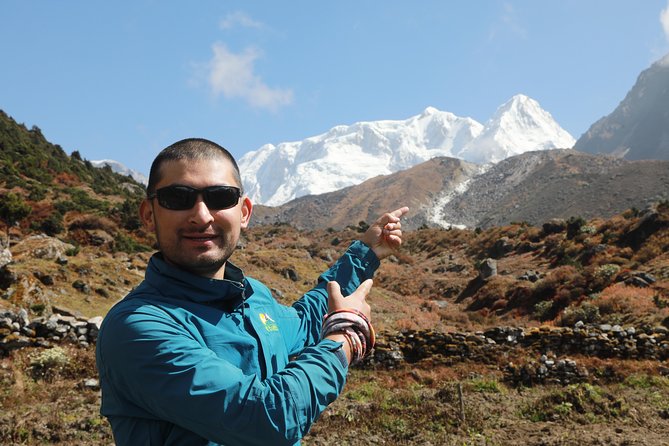
Below is what you can expect, with the parts that tend to matter for your comfort, your energy, and your photos.
More to compare around Kathmandu
- Kathmandu: 7 UNESCO Sites with Lunch
★ 4.8 · 744 reviews - Everest Base Camp Helicopter Tour landing at Everest View Hotel
★ 5.0 · 668 reviews - Kathmandu: Local Women-Led Nepali Cooking & Momo Class
★ 4.9 · 360 reviews - Manaslu Circuit Trek
★ 5.0 · 292 reviews
Day 1: Kathmandu to Ilam by Bus, with UNESCO Stops
You start with breakfast and sightseeing in Kathmandu in a private vehicle, with UNESCO World Heritage Sites on the day plan. The evening brings an overnight bus ride to Ilam. This is a long travel opener, so treat it like a warm-up. Your job is to arrive rested enough to enjoy the next driving day.
Tip: pack essentials for the bus, because your trek-day routine comes fast.
Day 2: Into Taplejung District, Guest House Night
Another long drive puts you into Taplejung, passing villages and agricultural fields along the way. The vibe shifts from city pace to rural rhythm. You end in a guest house for the night, so you can reset before walking.
This is also the day where your body learns the schedule. If you plan to take the trek seriously, hydrate and eat normally today. Don’t experiment with spicy street food. Keep your stomach steady.
Day 3: First Mountain Glimpses and the Phewa Khola Bridge
The trek starts by descending through millet and rice fields until you reach a suspension bridge over Phewa Khola (1430 m). From there, you move toward Sinchebu Bhanjyang (2240 m), a small Gurung settlement where you might pause for tea or a snack.
This is the day for first real mountain energy. You may catch your first glimpses of Kanchenjunga and Kyabru. Then you cross a pass, descend to Khesewa, and sleep in a teahouse.
What to watch: early trekking days set the tone. Keep your breathing controlled on climbs. You’re not trying to prove anything today.
Day 4: Mixed Forests, Waterfalls, and Lunch Near Mt. Jannu
You hike through mixed forests on a relatively flat path toward Kabeli Khola. Waterfalls appear along the route, which gives you a morale boost when the forest gets quiet.
Lunch is at Yangpang, with views of Mt. Jannu. The day ends with a short but steep uphill climb to Pumpe Dada for your teahouse night.
This is a good example of why teahouse treks work well for many people: even when the trail turns steeper, it’s still manageable, because you know the day ends with warmth and food.
Day 5: Along Kabeli Khola, Switchbacks, and Rocky Landslide Scars
Today is mostly uphill on a trail that follows the Kabeli Khola valley. You’ll see ridge views beyond the stream and walk a few switchbacks up the valley. The trail also passes areas under rocky cliffs shaped by past landslides, so the ground can feel uneven.
You cross a suspension bridge and pass smaller settlements before reaching Yamphudin.
If you’re worried about stamina, this day is useful for building confidence. It’s not described as technically hard. It’s mostly steady hiking with scenery that keeps you moving.
Day 6: Relentless Climb and Spanish Moss Forest Mood
From Yamphudin, facilities are few and far between. That’s part of why the support and meal planning matter here. You climb relentlessly from Amje Khola to Chitre, where you might see grazing yaks.
Then comes one of the signature nature moments: you walk through a forest with Spanish moss, a look that can feel straight out of a movie. You take a quick lunch, keep hiking through a mysterious-feeling stretch, break into an opening, cross a suspension bridge, and finish at Tortong.
This is a day where the trail might feel long, but the forest pays you back with constant visual changes.
Day 7: Lalung Valley, Rhododendron, and a Lake at Tseram Approach
You begin with a gradual climb toward Tseram for about 3 to 4 hours from Tortong. Your trail tracks the Simbuwa Khola side, and you get to enjoy the Lalung valley with Tuplung peak accompanying you.
Thick rhododendron forest appears, and you’ll enjoy views of the Yalung Glacier. After reaching Cheram village, you have lunch and hike up to a lake for 1 to 2 hours, with possible sunset views on clear weather. Then you descend to Tseram and sleep in a teahouse.
This day is ideal if you like variety: valley walking, forest, glacier views, and a payoff lake.
Day 8: Toward Ramche, Last Teahouse, and Starry Potential
After breakfast, you ascend a bit before reaching the start of the Yalung Glacier. The walking continues through the valley toward Lapsang and then Ramche.
Ramche is described as the last teahouse on the Kanchenjunga South Base Camp trek, with wide ground around it. If the group is large, you might sleep in a tent instead of the teahouse. Either way, the plan is for an experience under a sky full of stars.
This is one of the biggest psychological days. You’re getting closer, and the route feels more remote as facilities thin out.
Day 9: Excursion Day Around Kanchenjunga South Base Camp
This is the day that turns the trek into the trip you came for. You start early with a packed lunch. The route follows the valley curve toward the southern wall. Along the ridge, you’re facing Kanchenjunga’s main summits, described at 8420 m, 8586 m, and 8474 m.
You’re aiming for an up-close encounter with the mountain’s southern wall and its dramatic ridge lines. You also do glacier traversing as part of the approach, with the goal of reaching a point close to the base-camp area.
Practical reality: weather determines what you see. When it’s clear, you’ll feel like you can touch the ridge with your eyes. When it’s not, you’ll still have the satisfaction of being there, walking the glacial terrain and earning the view if it opens up.
Day 10: Down to Tseram, Long But Easy
You head back down to Tseram on the same trail. This is described as a bit long, but easier. Your eyes get the job of keeping you motivated while your legs do the steady work.
This is often the day where people’s knees and feet start negotiating. Trekking poles can be helpful if you have them.
Day 11: The Ancient Trade Route Shortcut Toward Ranipul
From here, you follow an old trade market route historically used for business between India and Tibet, when roads were limited. The route is now supported so trekking to Ranipul becomes easier and shorter, helping you skip the long downhill walk to Yamphudin.
The trail goes a little up at the start and then mostly downhill toward Ranipul. You stop for lunch during the trek portion.
This is a smart design choice for a 13-day trek. Instead of dragging you through the hardest repetition, it gives you a different line of travel and keeps the schedule from getting too punishing.
Day 12: Celebratory Breakfast, Drive to Taplejung, Then Ilam Hotel
Your hiking portion is over. You wake up, have a celebratory breakfast in the teahouse, then enjoy a scenic drive through terraced hills and quaint villages. You stop for lunch in Taplejung, then continue to Ilam, where you spend the night in a hotel.
This day is emotional in a good way. You’re not still climbing. You’re reconnecting with the feeling of settlement and roads.
Day 13: Return to Kathmandu and a Farewell Dinner
You drive back to Kathmandu, with a long day on the road. In the evening, you have a farewell dinner and a sense of completion.
If you want a simple metric for whether this trek was worth it, it’s this: you’ll likely feel tired, but also oddly energized. Long treks do that, because your brain gets a full workout too.
Trekking Fitness and What the 13 Days Will Ask of You
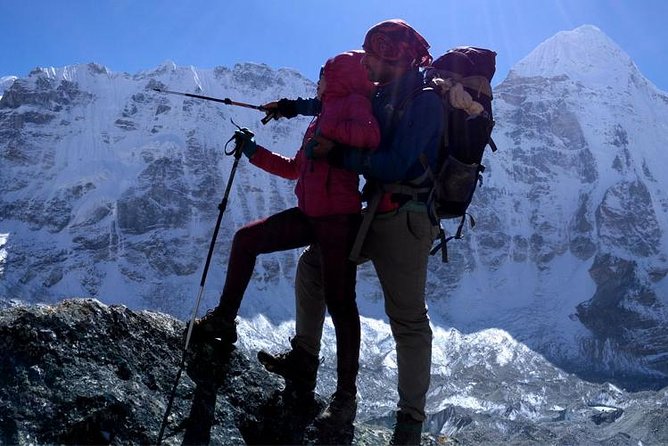
The tour calls for moderate physical fitness. That doesn’t mean it’s effortless. It means the route is designed to be achievable for people who can handle long walking days without needing technical climbing skills.
The best way to think about it is this:
- You’ll hike multiple days around 5 to 7 hours, sometimes with steeper finishes.
- You’ll have a full glacier-facing day, which is more about endurance and patience than scrambling.
- You’ll also handle two big road days early on, so plan for fatigue management.
If you’re the kind of person who walks every week but doesn’t do structured altitude training, you still might be fine. Just don’t underpack your preparation. Train with hills if you can. Practice using your trekking shoes and any gaiters or socks you plan to trust. The mountain will do what it does. Your job is to show up ready.
Culture Encounters Along the Rai, Limbu, and Tibetan Villages
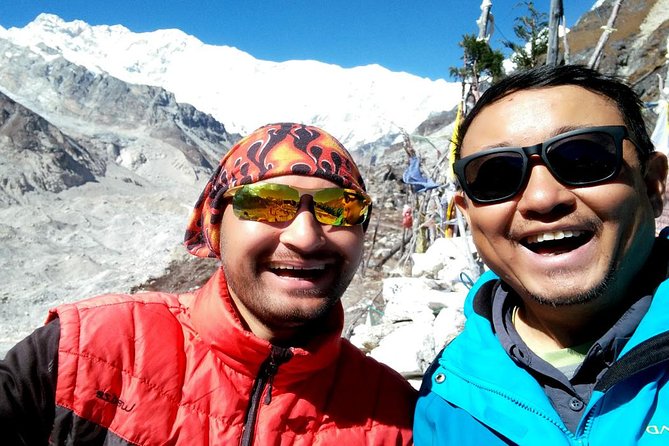
One of the most interesting parts of this trek is how culture changes as you walk. The route describes the presence of Rai and Limbu locals, along with Tibetan villagers who call the region home. Even though they’re all Nepali, the differences show up in dialect, rituals, and customs.
You’ll see this in small ways, like the way villages are structured, the rhythms of daily life, and the kinds of greetings you get at tea stops. This is not a stage show. It’s your chance to slow down enough to notice how people live at the edge of a high mountain world.
If you like human-scale travel, this trek rewards you. When you’re tired from a climb, you’ll appreciate that tea house conversations often feel like information, not just small talk.
Teahouses, Meals, and the Comfort Level You Should Expect
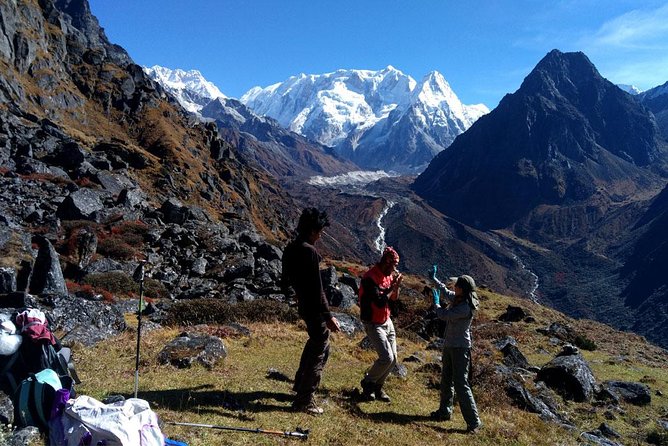
On this trek, you spend nights in local guest houses and teahouses, with a possible tented camp night at Ramche if the group is large. On paper, that sounds simple. In reality, it means your comfort level stays basic, but predictable.
Your meals during the trek are described as hygienic, with breakfast, lunch, and dinner included. That matters because you’re in remote areas where food options can get limited. You’ll still want to eat normally and not surprise your stomach on the hardest days.
In Kathmandu, you get breakfast on the two hotel nights, but other meals are not included. Plan a little extra budget there if you want more flexibility.
Wildlife and Birding Chances, Without the Fantasy Promises
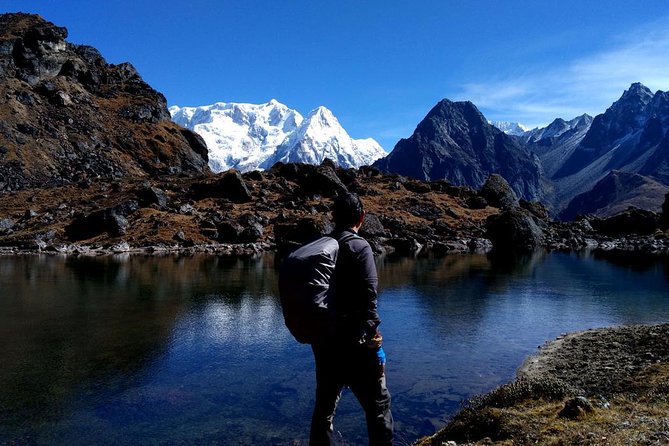
This trek runs through a Kanchenjunga Conservation Area, and it’s framed with wildlife possibilities. The animals mentioned include Himalayan tahr, Himalayan black bear, musk deer, snow leopard, and red panda. Birders may hope for snow cock and pheasant.
Here’s the practical way to handle this: go in excited, but don’t plan your memories around a guaranteed sighting. Your best odds come from quiet attention, early starts, and staying present when the scenery seems still.
Even without a clear wildlife moment, you’ll notice the habitat. The trail through forests and glacier valleys changes how the air feels. That alone is a kind of reward.
Picking This Trek: Who It Suits Best
This trek is a great match if:
- You want big Himalayan scenery with fewer trekkers
- You like small-group guiding and a pace that can adjust
- You want a mix of culture villages, forest walks, and glacier terrain
- You’re okay with teahouse style comfort and basic nights outside Kathmandu
It might be less ideal if:
- You dislike long road days (there are multiple 9 to 10 hour travel blocks)
- You want a fully comfortable, all-luxury hotel experience throughout
- You’re looking for a short trip. Thirteen days is a serious commitment
Should You Book Kanchenjunga South Base Camp?
I’d book this if you’re chasing one of Nepal’s most remote, less crowded high-mountain experiences and you want solid organization around a difficult route. The price feels reasonable when you consider the permits, the guide and porters, the trek meals, and the two Kathmandu hotel nights. Plus, the small group size and the guide praise you see for Galje suggests you’ll be in good hands when weather and pace need real-time decisions.
If you’re on the fence, ask yourself one question: do you want to feel like you are walking into the Himalaya, not just ticking off a destination? This trek is built for that.
FAQ
Where does the Kanchenjunga South Base Camp trek start and end?
It starts at Breeze Adventure Pvt. Ltd in Thamel Marg, Kathmandu, and it ends back at the same meeting point.
How long is the trek?
The duration is 13 days (approx.).
Is pickup in Kathmandu included?
Pickup is offered.
What kind of accommodation is included during the trek?
You’ll use local guest houses and teahouses during the trek. At Ramche, you may sleep in a tent if the group is large.
What is included in the price?
Included items are guide and porter services, accommodations during the trek, trek meals (breakfast, lunch, dinner), permits and government taxes for the conservation area, first aid kit, and two nights in a 2 to 3 star hotel in Kathmandu with breakfast.
What is not included?
Not included are international airfare, meals in Kathmandu except breakfast, alcoholic drinks, chocolates, tea and coffee, tips for guide and porter, and personal insurance.
How big is the group?
The maximum group size is 7 travelers.
What is the cancellation policy?
Cancellation is free, and you can cancel up to 24 hours in advance for a full refund. If you cancel less than 24 hours before the start time, the amount paid is not refunded.
Latest Kathmandu write-ups
- 16 Days Island Peak Climbing With Everest Base Camp Private Trip★ 5.0 · 3 reviews
- 15 Days Round Annapurna Trek with Poon Hill from Pokhara★ 5.0 · 5 reviews
- Private Nepal round trip including Ghorepani Poonhill trek★ 5.0 · 3 reviews
- Everest Base Camp Trekking 16 Days★ 4.0 · 7 reviews
- 14 Days Luxury Annapurna Base Camp Trek★ 5.0 · 6 reviews
- Everest Base Camp Trek★ 5.0 · 32 reviews
- Everest Base Camp Trek★ 5.0 · 87 reviews
- Everest Base Camp Trek★ 5.0 · 97 reviews
Hiking & Trekking, compared.
Nagarkot Sunrise and Hike Tour to Changu Narayan
Read our review →
4-Day Ghorepani, Poonhill & Ghandruk Mountain Trek
Read our review →
Browse the lists this tour appears in