
Reviewed · LANGTANG VALLEY TREK
Langtang Gosainkunda Trek
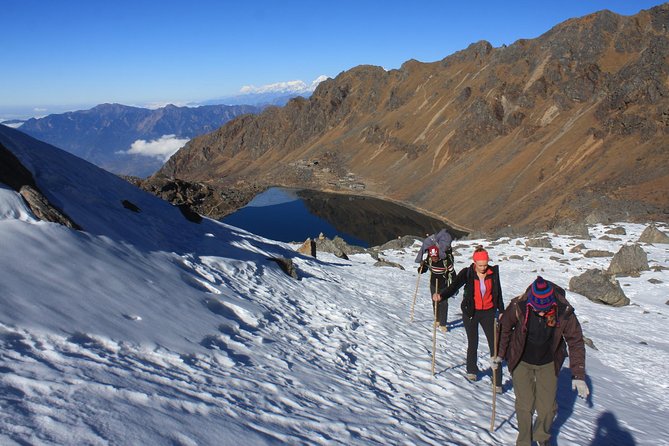
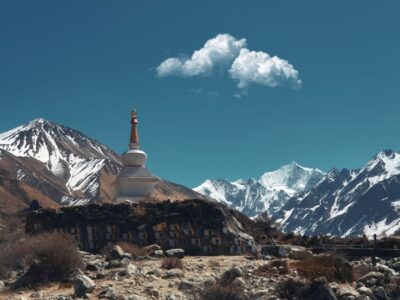
Gosainkunda is interesting because it mixes big mountain scale with a very human, spiritual setting. You hike up to Gosainkunda Lake at 4,380 m, then look out from a viewpoint above the lake over the Langtang valley and a wide sweep of Himalayan peaks. It feels like high-altitude theater, except it is real and you are standing inside it.
What I love most is that it is a relatively short trek from Kathmandu compared with many Nepal big treks, so you still get that remote-lake feeling. I also love the religious side of it, since Gosainkunda is known as the Frozen Lake, and the lakes and surrounding peaks create that surreal, otherworldly look. The main consideration is altitude and weather, because the trek needs good weather to go smoothly and it is aimed at people with moderate fitness.
A good bonus: this is set up as a private experience. Only your group participates, with pickup offered and a clear start time of 7:45 am, plus meals included (breakfast, lunch, dinner, and coffee or tea). Based on past guest feedback, the planning and communication can be very thoughtful, with Sajana Tripathi (and CEO Ram Barakoti) noted for careful attention.
Key things I’d bet on before you go
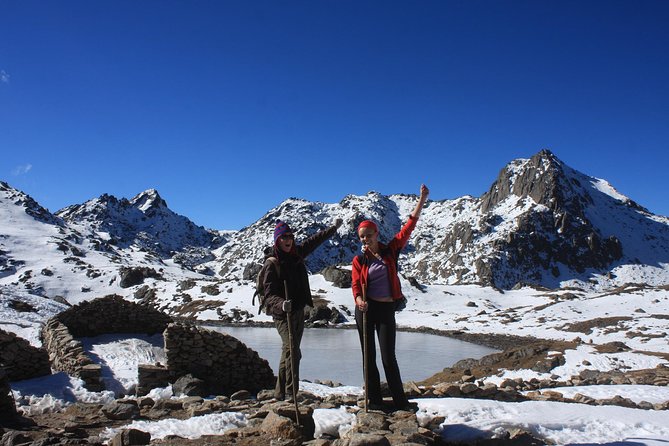
- Gosainkunda at 4,380 m: high enough to feel the altitude, close enough that you can do it in about a week.
- Religious Frozen Lake setting: it is not just scenery, you hike through a spiritually meaningful place.
- Viewpoint above the lake: you get the Langtang valley and a broad Himalayan view from up high.
- Two access styles: you can hike from Dhunche or approach from Kathmandu, depending on the route you choose.
- Private group feel: only your group participates, which usually means a calmer pace and less crowd pressure.
- Meals included: breakfast, lunch, dinner, plus coffee and/or tea, so you do not have to make every meal decision on the trail.
Gosainkunda Lake and the Frozen Lake feeling at 4,380 m
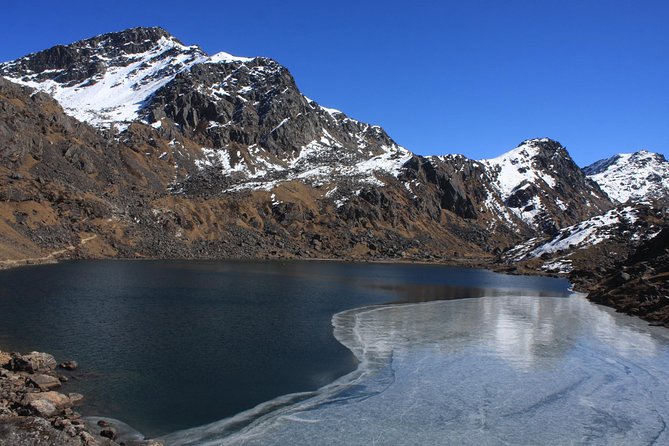
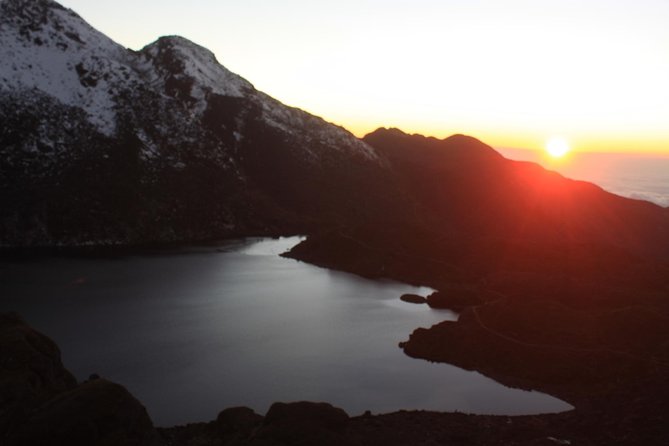
Gosainkunda is famous for a reason: at 4,380 m (14,368 ft), the lake and the peaks around it feel huge. The key word here is surreal. You are looking at a group of lakes set against Himalayan heights, and the whole area has that “this can’t be real” look that only high altitude and cold clarity can create.
It is also known as the Frozen Lake. Even if you do not see literal ice on every visit, the name makes sense when you are trekking in thin-air cold. Expect weather that can turn fast, especially as you climb. If your plan is flexible and you respect the mountain, this part of the trek can feel almost cinematic.
More of the Langtang valley:
- Kathmandu: 6-Day Limitless Langtang Trek
★ 5.0 · 21 reviews - Langtang, Gosaikunda and Helambu Trek
★ 5.0 · 9 reviews - Kathmandu: 6 Days Langtang Valley Trek
★ 5.0 · 3 reviews
The view from above the lake (and why it matters more than you think)
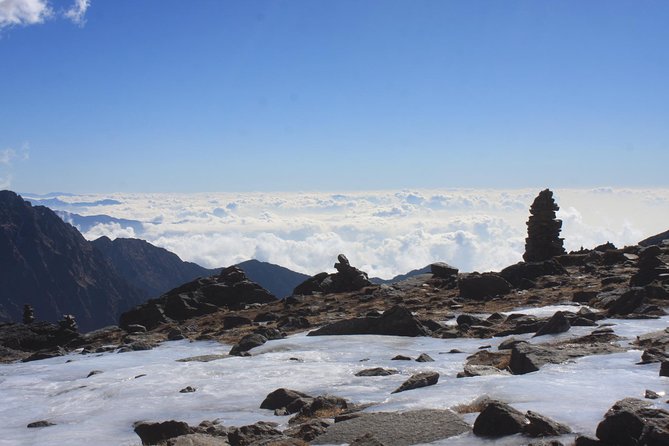
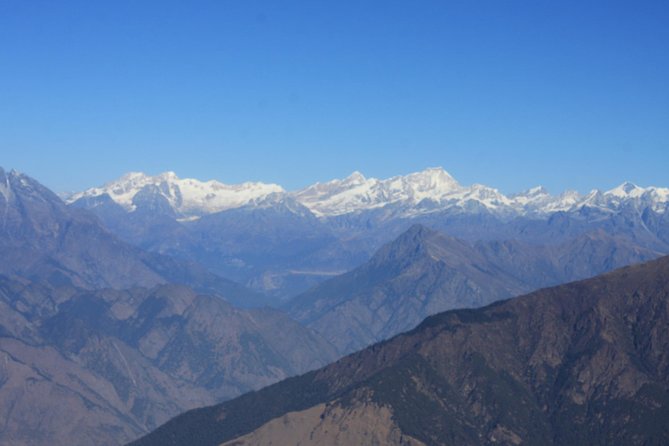
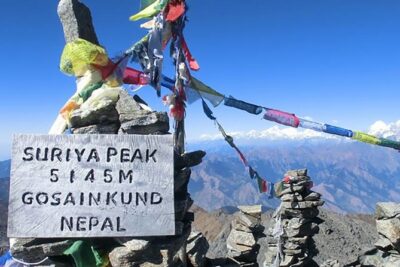
Yes, you came for the lake. But what makes this trek special is the viewpoint above the lake. From that vantage, you look down and across, toward the Langtang valley, with a wide range of Himalayan peaks in view.
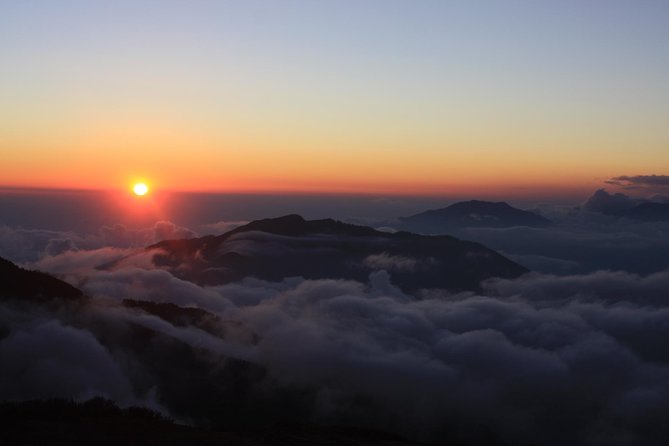
That viewpoint does two jobs for you. First, it gives you perspective, so the lake no longer feels like a single dot on a map, it becomes part of a bigger mountain world. Second, it helps you “place” your hike, so you remember not only the destination, but the scale of the journey up to it.
If you tend to rush through photos, slow down here. The best moments usually come when you pause long enough for the light to change, and for the peaks to show more detail as clouds shift.
Route choices: starting from Dhunche or from Kathmandu
The trek is reachable with a short trek from Kathmandu, and you can hike toward Gosainkunda from Dhunche or from Kathmandu. In practical terms, this affects how much time you spend on the trail versus in transit, and how your first day of hiking feels.
If your route begins via Dhunche, you are likely starting your trekking rhythm after a road leg. That often helps if you want to save your energy for the climb itself. If you approach from Kathmandu more directly, you might spend more time early on with the logistics of getting out to the trail area, then settling into hiking mode.
Either way, the goal is the same: gradual movement up toward Gosainkunda, then enough time near the lake area to enjoy it, not just arrive and leave.
A practical, realistic weekly rhythm (what the week feels like)
You should think of this trek as a steady climb, a meaningful high point, and a return that lets your body reset. The experience runs about 7 days, and that timeline is long enough to enjoy the scenery without turning the trip into an all-out suffering contest.
Here is the shape of the journey you can expect:
- Kathmandu start and pickup: You meet at 7:45 am and, with pickup offered, you get moving early so you waste less time staring at the clock.
- Getting onto the trekking approach: You transition from city life toward the trail area, then start building your hiking rhythm.
- Ascent toward Gosainkunda: You gain elevation to reach the lake at 4,380 m. This is where you move slow and controlled.
- Time at the lakes and viewpoint: This is the heart of the trip, where the religious setting and frozen-lake atmosphere come through.
- Descent and return: You come back down through the same general corridor, with the focus on steady footing and enjoying the cooler air on the way down.
- Back to Kathmandu: You end the week with the sense that you really left the city behind.
More of the Gosaikunda lakes:
- From Kathmandu: 5-Day Gosaikunda Lake Trek
★ 5.0 · 4 reviews
What meals included really means on a trek
Included in this experience are breakfast, lunch, dinner, plus coffee and/or tea. That matters more than it sounds. On high-altitude treks, meal planning becomes your biggest daily decision unless it is handled for you.
With meals included, you can focus on hiking, hydration, and layers instead of constantly asking what is open or what is safe to eat. It also helps with consistency, especially if you are not used to trekking schedules.
Two small notes to keep your trip smooth:
- Bottled water is not included, so you will want to plan how you will handle water on the route.
- Alcoholic beverages are not included, which is normal for trekking logistics but still worth knowing if you like a post-hike drink.
Why a private group is a big deal here
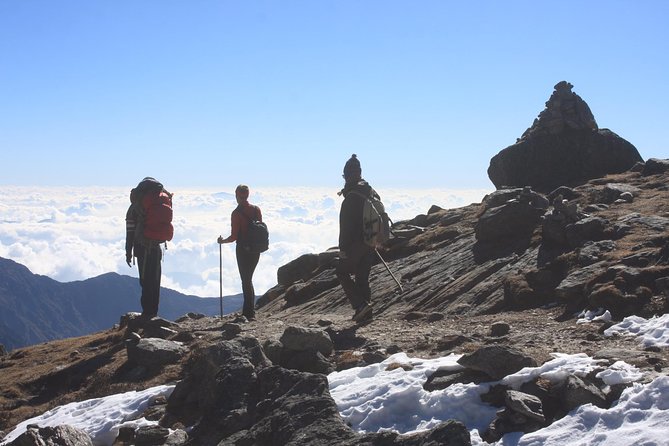
This is a private tour/activity, meaning only your group participates. For a trek like Gosainkunda, that matters because the pace can be more aligned to your comfort.
At higher altitude, pace is everything. A private setup lets your guide manage the tempo, breaks, and timing so you are not forced into the “fast group” pressure. It is also often easier to ask questions, and to get real guidance on what to do when the weather shifts.
The human side: what guests praised about Hiking Adventure Treks
The company behind this experience is Hiking Adventure Treks. What stands out from strong feedback is not just logistics, it is care.
Guests highlighted that communication can be excellent and quick, with Sajana Tripathi specifically noted for being responsive. People also praised the planning side, including the attention given when dietary needs were part of the conversation. CEO Ram Barakoti is named in feedback tied to strong leadership and consistent service.
There is also praise for professionalism and patience. One review mentioned the company working with a group that included blind travelers and several escorts, with sensitivity and care beyond what you would expect from a basic trekking setup.
Even if you are not dealing with special circumstances, that kind of guest-centered mindset tends to show up as calmer trail days, clearer explanations, and fewer surprises. In a trek where weather and altitude can add stress, that tone matters.
Gear and fitness: how to set yourself up for the 4,380 m reality
This trek is for travelers with moderate physical fitness. That phrase is practical. You do not need to be an athlete, but you do need to be comfortable hiking uphill for hours and managing uneven terrain without panic.
Altitude is the other reality. Gosainkunda at 4,380 m is high enough that you should expect slower steps, quicker breath, and an urge to take extra breaks. The smartest approach is to hike like you are training your lungs, not like you are trying to win a race.
For gear, the general priorities are warm layers, rain protection, sturdy footwear, and a plan for hydration. Also remember that bottled water is not included, so your water plan should be real, not a guess.
If you go in with patience, Gosainkunda usually rewards that mindset fast. If you go in expecting easy breathing and constant sunshine, you will feel stressed as soon as clouds roll in.
Weather, timing, and that early 7:45 am start
The experience requires good weather. That is not a throwaway line. At altitude, rain, mist, or poor visibility can turn the day into a slow, careful route instead of a clear-view hike.
The 7:45 am start time helps reduce wasted daylight. It gives you more workable hours and, when conditions are good, it helps you reach viewpoints with the light and visibility you want.
When weather is messy, you want your guide to keep decisions practical, not dramatic. The best way to handle this is to stay flexible in your expectations and pack for cold and wet conditions even if the forecast looks calm.
Is the $700 price worth it for Gosainkunda?
At $700 per person, you are not just paying for “walking in mountains.” You are paying for a guided, organized trekking experience with meals included, pickup offered, and a private group setup.
Here is why that can be good value:
- Meals are covered (breakfast, lunch, dinner, coffee/tea). On treks, that can be a big chunk of daily cost if you have to buy everything yourself.
- Pickup offered reduces your hassle factor, especially if you are new to Nepal logistics.
- Private group can save your energy. You are not fighting a crowd pace, and your guide can manage timing for your group.
- The company focus on planning and communication, including attention to needs and careful service, can reduce stress in the moments that matter.
It may not be the cheapest option if you compare it to DIY trekking. But with altitude, weather dependency, and the value of having a team that manages the day, this price can make the trip feel simpler and more secure.
The best way to judge value is to ask yourself one question: do you want to manage the details, or do you want the mountain to be the hard part, not the paperwork and meal decisions?
Who should book this trek
This experience fits best if you:
- Want Gosainkunda Lake and the spiritual Frozen Lake setting, without committing to a month-long Nepal trek
- Prefer a private, calmer trekking experience
- Are okay with moderate fitness demands and the realities of trekking at 4,380 m
- Value good communication and careful planning from a trekking company
It might not be ideal if you:
- Need guaranteed clear views every day. Weather can affect visibility
- Are looking for a very low-effort hike with minimal altitude pressure
Should you book the Langtang Gosainkunda Trek?
I think you should book if your heart is set on Gosainkunda, but you also want the trip to feel organized, steady, and well supported. The combination of private group setup, meals included, pickup offered, and a company known for attentive communication (Sajana Tripathi) and leadership (Ram Barakoti) is a strong mix for a trek where conditions can change.
Before you go, make sure you can handle moderate trekking and that you are comfortable hiking at altitude. Also plan for bottled water since it is not included.
If that sounds like you, you are in for the kind of trek where the lake is only part of the story. The bigger payoff is the viewpoint above the water, the sweep toward the Langtang valley, and the feeling that you really climbed into a different world for a week.
FAQ
How long is the Langtang Gosainkunda Trek?
The trek lasts about 7 days.
What time does the experience start?
The start time is 7:45 am.
Where does the trek take place?
The trip is based in Kathmandu, Nepal, and you hike to Gosainkunda Lake in the Langtang region.
Is pickup included?
Pickup is offered.
What meals are included in the trek price?
Breakfast, lunch, and dinner are included, along with coffee and/or tea.
Is bottled water included?
No, bottled water is not included.
Is this trek private?
Yes, it is a private tour/activity, and only your group participates.
What if the weather is bad, or I cancel?
The experience requires good weather. If it is canceled due to poor weather, you will be offered a different date or a full refund. If you cancel or request an amendment for any other reason, it is non-refundable and cannot be changed.
Latest Kathmandu write-ups
- 16 Days Island Peak Climbing With Everest Base Camp Private Trip★ 5.0 · 3 reviews
- 15 Days Round Annapurna Trek with Poon Hill from Pokhara★ 5.0 · 5 reviews
- Private Nepal round trip including Ghorepani Poonhill trek★ 5.0 · 3 reviews
- Everest Base Camp Trekking 16 Days★ 4.0 · 7 reviews
- 14 Days Luxury Annapurna Base Camp Trek★ 5.0 · 6 reviews
- Everest Base Camp Trek★ 5.0 · 32 reviews
- Everest Base Camp Trek★ 5.0 · 87 reviews
- Everest Base Camp Trek★ 5.0 · 97 reviews
Langtang Valley Trek, compared.
Browse the lists this tour appears in