
Reviewed · EVEREST BASE CAMP TREK
Everest base camp Helicopter Tour
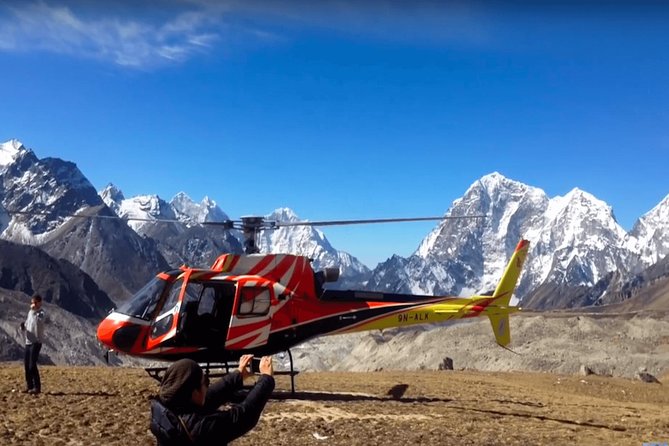
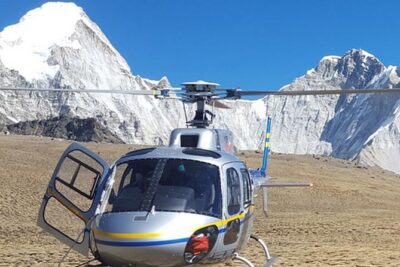
This Everest Base Camp helicopter day is interesting because it trades long treks for fast altitude, with you seeing Everest from the air and from high viewpoints in a single morning. You get a small-group setup and hotel pickup, which makes the logistics feel far less stressful than planning your own route.
I especially like the mix of big-picture scenery and cultural stops, including Sherpa village time with Buddhist sights and colorful local customs. I also like the photo-first rhythm, including a dedicated stop at Kala Patthar where the timing is built for window and viewpoint shots.
The main thing to consider is weather and altitude. This tour requires good weather, and parts of the route run at very high elevations, plus there is a stated passenger weight limit.
Key Highlights You’ll Actually Care About
- Hotel pickup and drop-off in Kathmandu: You start and end with less hassle on busy streets and early mornings.
- Short total time, long flight time: About 5 hours 30 minutes overall, with roughly 4 hours 30 minutes of flying.
- Kala Patthar stop for photos: You get meaningful time at high elevation for Everest views and camera angles.
- Sherpa village and Buddhist culture stops: You see more than snow and rock, with optional monastery visiting.
- Small group limits: Typically up to 10 per booking, and the experience can cap even lower (for example, five travelers in one group).
- Weather-dependent, altitude-heavy day: You’re booking for conditions, not just dates.
Everest Base Camp by Helicopter: The Big Idea
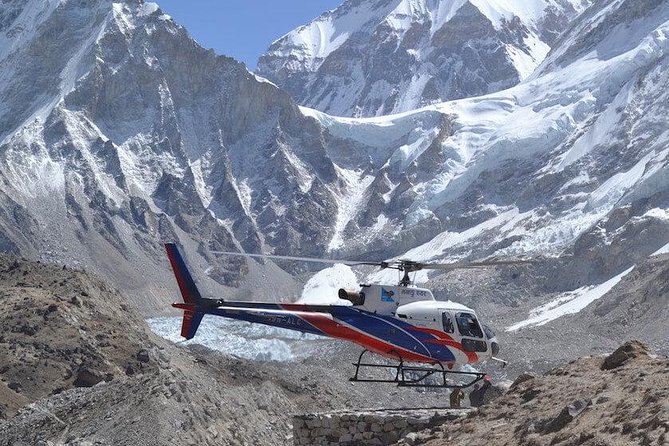
If your Nepal trip has limited time, this is one of the clearest ways to aim at Everest without committing to a multi-day trek. The day is built around a flight plan that connects Kathmandu to the Everest region, including the Lukla area and high viewpoints like Kala Patthar, plus ground movement tied to the Everest Base Camp area.
What makes it work for many travelers is how tightly it’s scheduled. You’re not waiting around in a van for hours at a time, and you’re not spending your whole trip fighting logistics. Instead, you’re focused on a small number of high-impact moments: scenic flying, a Sherpa cultural stop, a breakfast viewpoint, and key photo windows at major Everest angles.
Just know the trade: you are dependent on conditions. High mountain weather can change quickly, and this kind of route needs stable flying conditions more than most sightseeing does.
More ways to walk to Everest Base Camp:
- Everest Base Camp Trek – 14 Days
★ 5.0 · 1,499 reviews - Everest Base Camp Trek
★ 5.0 · 842 reviews - Everest Base Camp Helicopter Tour landing at Everest View Hotel
★ 5.0 · 668 reviews
Getting There from Kathmandu Without Losing Your Morning
The tour starts early, with a start time listed at 6:15 am. Most days, you’ll begin with hotel pickup in Kathmandu, then transfer to the right departure point in a private, air-conditioned vehicle. Round-trip private transfer is included, which matters because Kathmandu traffic can turn an early plan into a late one.
The flight-focused structure also means you’ll be awake and ready longer than a normal half-day tour. You will want to treat the morning like a mission, not casual sightseeing. If you’re the type who needs coffee and buffer time, build it in beforehand.
A practical tip: keep your camera and chargers very accessible. When you’re doing multiple photo stops and window views, you do not want to be digging through a packed bag every time the light changes.
The Sherpa Village Stop: Culture Before the Climb Fantasy
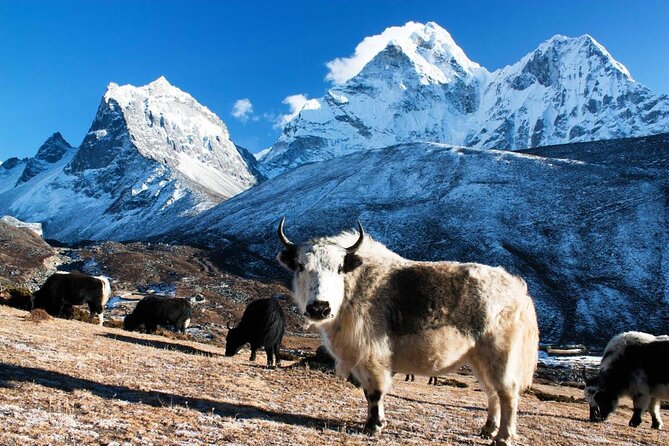
One portion of the route includes time for visiting Sherpa highlanders, with commentary on Buddhist culture and colorful local customs. You’ll also fly and stop in Sherpa villages, and there may be an optional stop at old monasteries tied to ancient heritage.
This is a meaningful inclusion because it anchors the day in people, not just peaks. Everest is easy to reduce to a checklist, but Sherpa culture is part of what makes the region what it is. Even brief village time helps you connect the landscape to the lived traditions that shaped how this area became internationally known.
What to expect from this part: you’ll likely get a guided explanation while you look around. Wear layers and be ready for cool air, especially once you’re moving into higher, colder elevations.
The Breakfast Stop at Everest View Hotel Area
The day includes a stop at an Everest viewpoint hotel area for breakfast, with 30 to 50 minutes of time to eat and enjoy the view of Mt. Everest. Admission tickets and the breakfast itself are listed as not included, so you’ll want to budget for that meal separately.
This is a clever timing choice. Breakfast stops can be an afterthought on some tours, but here it’s paired with viewpoint time. You can use those minutes to settle your body, check your camera settings, and look for the clearest line of sight.
If visibility is good, this is the moment where Everest can look dramatic and immediate. If visibility is weaker, the viewpoint still helps you understand the terrain and direction of the main features you’ll see later from Kala Patthar.
More Everest Helicopter Tours in Kathmandu:
- Everest Base Camp Helicopter Tour landing at Hotel Everest View
★ 5.0 · 218 reviews - Everest Base Camp helicopter tour with landing
★ 5.0 · 61 reviews - Everest Base Camp Helicopter Tour with Hotel Everest View Landing
★ 5.0 · 52 reviews - Everest Base Camp Helicopter Tour landing at Everest View Hotel.
★ 5.0 · 34 reviews
Lukla to Kala Patthar: The High-Altitude Photo Window
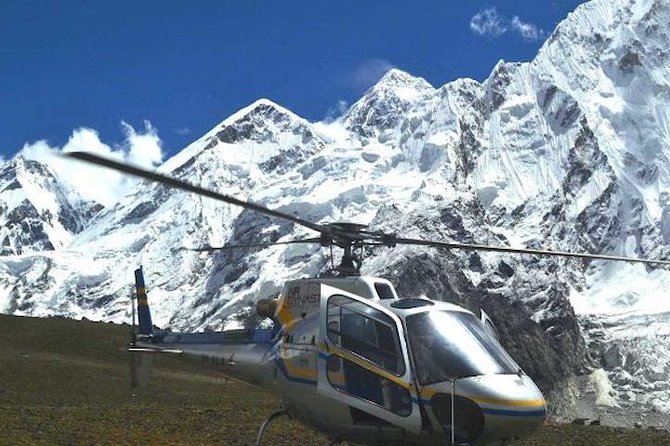
After the Kathmandu to Lukla segment, you go into the core flight piece of the day. The plan includes a Kathmandu to Lukla transfer by flight listed at around 45 minutes. From there, the helicopter portion continues toward Kala Patthar, at about 5,550 meters, with a flight time listed roughly 15 to 20 minutes.
This part is all about altitude and angles. Kala Patthar is famous because it gives you a viewpoint perspective that feels directly connected to Everest’s mass and neighboring peaks. Even if you’re not trekking, this is a way to stand in a place that most visitors only reach after long climbs.
The helicopter format also matters for photographers. Short segments, frequent vantage moments, and an emphasis on window seating all increase your odds of getting shots that are sharp and framed the way you want.
A key note for your planning: this day is not the place to go light on layers. Even if Kathmandu feels mild, high elevation can feel harsh fast. Bring a warm layer you can actually move in, not just something bulky.
Reaching Everest Base Camp Area and Kalapatthar Views
The routing includes flying to the Kala Patthar area and also references shuttle time from Phiriche toward the Everest Base Camp area. It also notes flying over twice for getting a window seat, including views tied to Everest Base Camp and Kalapatthar.
You can think of it like this: the itinerary gives you multiple ways to see the same big story. Some of it is ground perspective, and some of it is aerial perspective. That redundancy is good. If you miss one clear angle, you might still catch another from the air or during the high-view stop.
Also, this helps you understand where you are relative to Everest. When your day includes both a viewpoint stop and window fly-bys, you get a clearer mental map than you would from a single scenic flight.
One more practical detail: the itinerary mentions a helicopter flight that allows visiting Mt. Everest in a day, and it’s structured as a morning plan. If you’re used to long days in the mountains, it can feel short. But it’s dense, so expect a steady pace with little downtime.
Group Size and Why It Changes the Experience
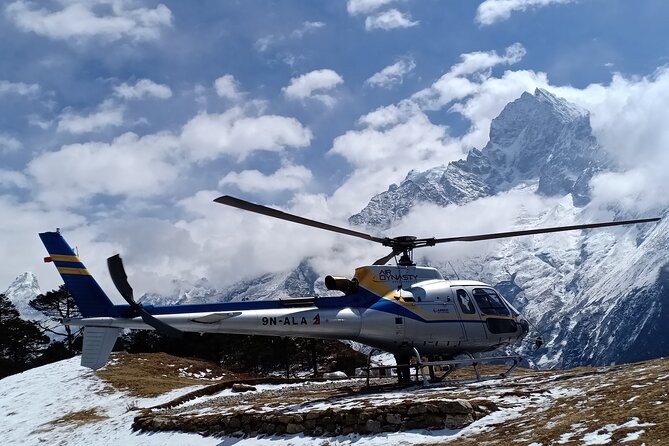
This tour lists a maximum of 10 people per booking, and the tour can have a maximum of 5 travelers. In practice, that smaller number is a big deal.
Small group tours tend to move better. You get more direct attention and fewer delays if someone has a question or needs a quick adjustment before a boarding step. It also makes the shared photo moments calmer. When you’re aiming for camera angles, crowd pressure can ruin the rhythm.
If your travel style prefers personal space and clear communication over long lines and waiting, this format is a strong fit.
Included vs Not Included: Where Your Money Really Goes
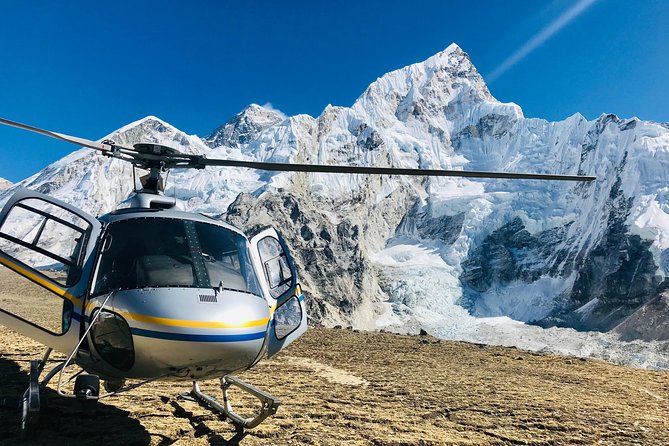
The tour price is listed at $1,700 per person. That’s a serious chunk of your Everest budget, so it’s worth asking what you actually get for that money.
What’s included:
- Hotel pickup and drop-off
- Round-trip private transfer
- Air-conditioned vehicle
- Private transportation
What’s not included:
- Airport tax listed at $8.00 per person
- Breakfast
- Entrance fee, National park fee listed at $43.00 per person
If you do the math, the base fee is mainly covering the aerial part plus the local movement and time management. The listed fees are the add-ons you’ll want to budget for, but the biggest cost driver is the helicopter and flight plan.
So the value question becomes: are you buying time? If you want Everest views without a multi-day trek, this is essentially paying to compress weeks of effort into a half-day. For many travelers, that’s exactly what makes it worth considering.
If your priority is saving money or you enjoy slow travel and hiking, you might prefer a ground itinerary. But if you want to see the Everest region fast, this price is consistent with that goal.
What the Reviews Emphasize, and How to Use That
The highest-rated experience pattern comes down to timing, clarity of the day, and photo access. One standout comment notes the route included flights to Lukla, then on to the Pheriche area, then to the Everest View Hotel, and that the group size was small, with five people in the helicopter. The same review highlights good time for pictures at Kala Patthar and says breakfast at the hotel was really nice.
Use those signals to set your expectations. Your success on a photo-heavy day depends a lot on visibility. If you can choose a date with clearer seasonal chances, do it. Also, aim to be ready early and organized so you can take full advantage of the viewpoint minutes you’re given.
Altitude, Comfort, and the Stuff You Should Pack
This is an altitude-forward tour. While the plan does not list a detailed acclimatization schedule, it does include a helicopter route to Kala Patthar at about 5,550 meters and involves additional movement around high-elevation points.
You should assume cold temperatures and expect your body to feel the elevation. Bring warm clothing, and plan for a slower breath pace at viewpoint stops.
Other practical limits to note:
- There is a stated maximum passenger weight of 243 lbs
- The tour has a cap on group size and requires conditions for flying
If you have medical concerns related to high altitude, treat that as a serious decision and talk to a medical professional before you go.
Best Fit: Who Should Book This
This tour is a strong match if you:
- Have limited time in Nepal and want Everest-focused highlights without trekking for days
- Prioritize aerial views and want to see Everest from multiple angles in one day
- Like small-group pacing and fewer people in the helicopter
- Want cultural context, including Sherpa villages and Buddhist sites, not just peaks
It may not be the best fit if you:
- Want a fully flexible plan that ignores weather
- Prefer long, walking-based sightseeing
- Are sensitive to cold or altitude stress
Should You Book the Everest Base Camp Helicopter Tour?
Book it if you want the Everest region experience fast, and you’re comfortable paying for the time compression. The strongest case is the combination of small group size, hotel pickup, and a route that builds in photo-focused high viewpoint time at Kala Patthar, plus cultural stops along the way.
Skip it if you’re mainly chasing the cheapest way to reach Everest. Helicopter routes cost for a reason, and this one is built around flights, not budget trekking.
If your dates are flexible and you’re prepared for weather-dependent rerouting or refund options, this is a high-impact way to see Everest when your schedule does not allow the classic trek.
FAQ
What time does the Everest helicopter tour start?
The start time listed is 6:15 am.
How long is the tour in total?
The duration is listed as about 5 hours 30 minutes, with flight time around 4 hours 30 minutes.
What is included in the price?
Included items are hotel pickup and drop-off, round-trip private transfer, air-conditioned vehicle, and private transportation.
What extra costs should I plan for?
Airport tax is listed at $8.00 per person, breakfast is not included, and a National park fee is listed at $43.00 per person.
What is the maximum group size?
A maximum of 10 people per booking is listed, and there is also a stated maximum of 5 travelers.
Is the tour dependent on weather?
Yes. The experience requires good weather. If it is canceled due to poor weather, you are offered a different date or a full refund.
More Helicopter Tours in Kathmandu
- Everest Base Camp Trek with Helicopter Return from Gorakshep to Lukla
★ 5.0 · 161 reviews - Guaranteed Landing at Everest Base Camp Kalapathar by Helicopter
★ 5.0 · 38 reviews - Everest Base Camp Trek with Helicopter Return to Lukla – 10 Days
★ 5.0 · 34 reviews - Kathmandu: Everest Base Camp Helicopter Tour
★ 4.9 · 30 reviews
Latest Kathmandu write-ups
- Visit Swayambhunath and Bauddhanath Stupa with Guide★ 5.0 · 5 reviews
- 10 days Annapurna Base Camp Trek★ 5.0 · 5 reviews
- Langtang Trek from Kathmandu 7 Days★ 5.0 · 5 reviews
- Island Peak Climbing with Everest Base Camp★ 5.0 · 5 reviews
- 7 Day Kathmandu Pokhara Tour★ 4.5 · 5 reviews
- Chandragiri Hill Cable Car Tour with Hotel Transfers from Kathmandu★ 4.5 · 5 reviews
- Kathmandu city day tour (4 world heritage sites)★ 5.0 · 5 reviews
- Everest Mountain Flight★ 5.0 · 5 reviews
Everest Base Camp Trek, compared.
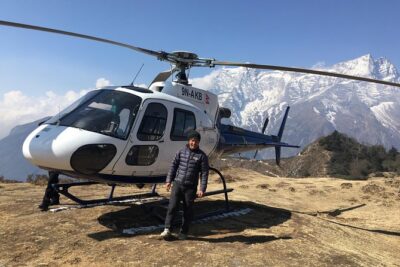
Everest Base Camp Helicopter Tour landing at Everest View Hotel
Read our review →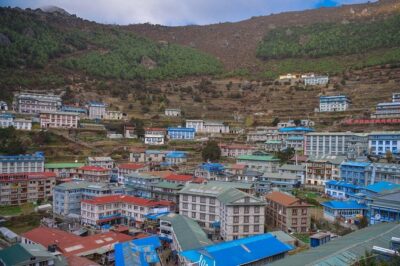
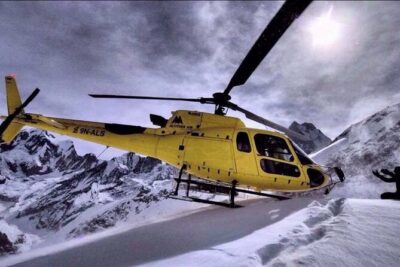
Everest Base Camp Helicopter Tour landing at Hotel Everest View
Read our review →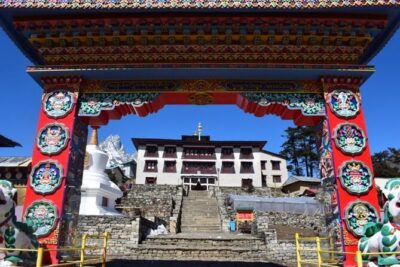
Browse the lists this tour appears in