
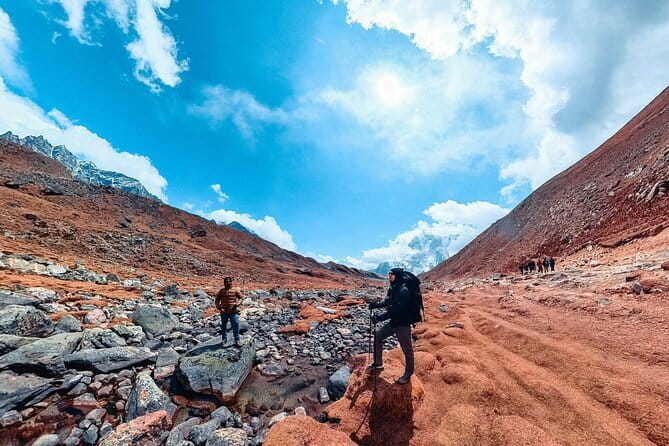
Reviewed · EVEREST BASE CAMP TREK
Everest Base Camp trek with Helicopter return 9 days
If you want Everest in a hurry, this plan is interesting because it keeps the classic trek up to Everest Base Camp country while cutting the long return with a helicopter ride on the last day. I like how the route gradually climbs toward Kala Patthar (5,644 m) and how the schedule builds in real altitude time, not just nonstop hiking. The trekking difficulty is described as moderate, but once you’re above Dingboche (4,410 m), you should expect a trail that turns more remote and steep.
One possible drawback to think about up front: you’re trading the slow, lingering Everest feel for speed. You still do the big view push at Kala Patthar, but the helicopter means you won’t have the long, multi-day downhill rhythm of a full classic trek.
Key highlights at a glance
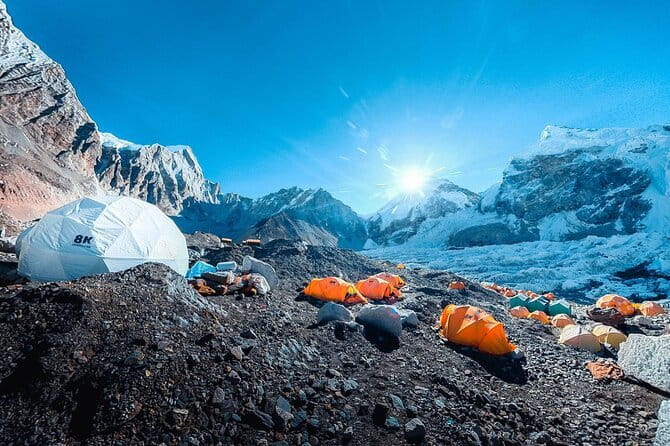
- Fast Everest, classic route, 7 full days in the mountains with a helicopter return
- Altitude monitoring included, oximeter checks (pulse, oxygen saturation, heart rate) twice a day
- Real acclimatization time, including a rest day in Namche Bazaar
- Big view moment built in, Kala Patthar trail to 5,644 m and early sunrise viewing
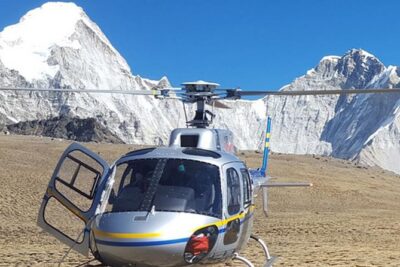
- Transport made simple, private car, Kathmandu to Lukla flights, and helicopter from Gorakshep to Lukla
- Porter support, one porter for two people plus an experienced guide team
Why This 9-Day Everest Base Camp With Heli Return Makes Sense
This kind of Everest trek is built for people who want the Everest story without the full time sink. Nine days is short for this region, so the key is balance: you get enough days climbing to reach the high points, but you also get the payoff without spending a week more than you need.
What I like is the structure. Day by day, you climb, you adjust, and then you go for the signature view. The itinerary is also explicit that the trek to Kala Patthar is part of the goal, not an optional detour. That matters because on Everest, the difference between arriving and actually seeing the mountains can be huge.
The other big plus is how supported it is. The trip uses an experienced mountain guide, includes a first aid kit, and includes an oximeter to check key vitals twice daily. That doesn’t remove risk, but it does make the expedition feel run like a system instead of a solo adventure.
More ways to walk to Everest Base Camp:
- Everest Base Camp Trek – 14 Days
★ 5.0 · 1,499 reviews - Everest Base Camp Trek
★ 5.0 · 842 reviews - Everest Base Camp Helicopter Tour landing at Everest View Hotel
★ 5.0 · 668 reviews
Day 1 in Kathmandu: smooth start, less stress
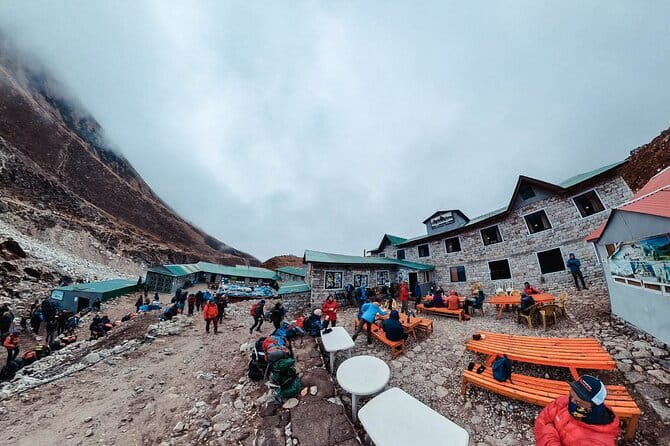
Your trip begins with an airport team waiting at the international terminal. They help you check in and carry your bags, then transfer you to your hotel with a private car. After that, you meet the core team.
This sounds small, but on a first day that can be jet lag plus paperwork plus baggage, it’s a big deal. The less you have to figure out, the faster you can shift into trek mode.
Also, the trip is listed as a private tour/activity, meaning only your group participates. If you dislike the chaos of large mixed groups, this matters.
Day 2: Flight to Lukla, then your first Khumbu steps
The next morning starts early with a short but iconic flight from Kathmandu to Lukla, landing at Tenzing Hillary Airport. The included notes highlight beautiful views from the air and a quick transition on arrival, with porters meeting you and getting you moving.
From there, you begin trekking. The route described takes you from Phakding area toward Toktok (2,760 m) through rhododendron and magnolia forests, then onward through Monjo. The description also mentions crossing two bridges on the way to Monjo from Bengkar Village (2,630 m).
Why this day matters: it’s your on-ramp. You’re not going straight to extreme altitude, but you are stepping into the Khumbu rhythm: trail time, scenery, and small elevation gains that set you up for the higher days.
One consideration: Lukla flights depend on conditions. The tour includes the flight, so you’re covered in the sense that logistics are arranged, but it’s still wise to be mentally flexible for any schedule shifts that can happen in mountain aviation.
Day 3: Namche Bazaar day, forests to altitude reality
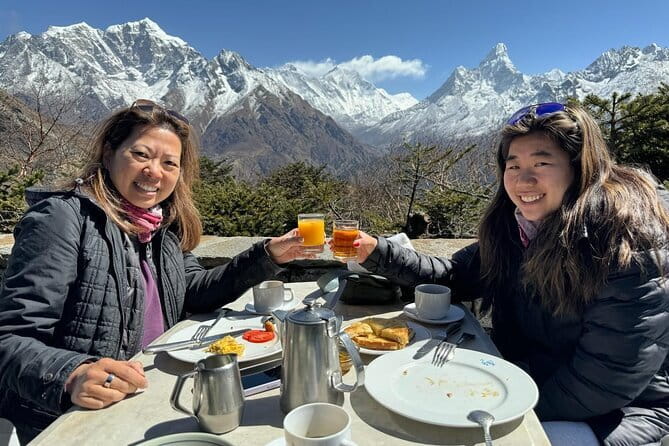
Day three moves toward Namche Bazaar. The itinerary paints a picture of a trail through rhododendron and magnolia forests, then moving into the busier high-country hub.
The day is described as about six hours of trekking, which is a solid amount for an early acclimatization phase. It also sets you up for the next day’s rest strategy, so you’re not trying to “force” high altitude before your body is ready.
For me, Namche is more than a town. It’s where you feel the altitude up close, where weather can change, and where the Everest trek becomes the Everest trek. The tour’s next step uses that wisely.
More Helicopter Tours in Kathmandu:
- Everest Base Camp Helicopter Tour landing at Hotel Everest View
★ 5.0 · 218 reviews - Everest Base Camp Trek with Helicopter Return from Gorakshep to Lukla
★ 5.0 · 161 reviews - Everest Base Camp helicopter tour with landing
★ 5.0 · 61 reviews - Everest Base Camp Helicopter Tour with Hotel Everest View Landing
★ 5.0 · 52 reviews
Day 4: Namche rest day plus Everest View Hotel via Syangboche
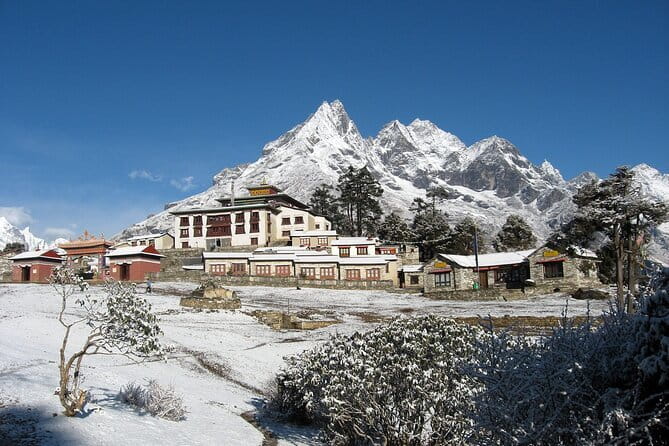
This is one of the best-value parts of the trip because it’s not just a rest day, it’s a smart rest day. You spend time in Namche Bazaar to let your body adjust, then head toward the Everest View Hotel using the Syangboche Airstrip above Namche Bazaar.
Why I like this: you get to build tolerance and awareness without adding extra big days of walking. You’re also not stuck doing nothing. You get a change of scenery and a high vantage feel while keeping the load manageable.
The tour still keeps you moving in the bigger plan, which helps avoid the classic mistake: arriving at altitude, feeling rough, then trying to “make up time” later. This schedule tries not to do that.
Day 5: Kyangjuma and the steady grind upward
After Namche, day five heads toward Kyangjuma (3,550 m). The description says you go up along green foothills with amazing mountain views, then the route winds uphill and drops down later.
At this point, the trek is steadily going into higher terrain. It’s not a sprint. It’s the kind of day that rewards patience because you’re still building toward the deeper part of the Khumbu.
You’ll also start noticing how the trail type changes as the days go on. Early days are scenic and forested. Later days are more exposed and steeper, and the schedule keeps you transitioning gradually.
A practical note: you’re gaining altitude every day, even if a day includes ups and downs. That is the game here, so your pacing matters more than speed.
Day 6: Tengboche sunrise, then down through rhododendron forest
Day six is built around an early start for sunrise in the Tengboche area, then breakfast and descent through lush rhododendron forest down to Deboche (3,320 m). The itinerary notes that you might see musk deer and blue sheep, and possibly other wildlife.
This is a classic Everest moment. Sunrise views can be partly about luck, partly about timing, and partly about waking up early when you would rather be asleep. The itinerary commits to that morning light, which is exactly what you want on a short trek.
The drawback side of sunrise plans: you’ll be tired. You’re already at altitude, and you’re hiking day after day. If you’re sensitive to early mornings, this is something to account for. Still, it’s one of the days that makes people remember Everest.
Day 7: Along the Khumbu Glacier near the higher, wilder stretch
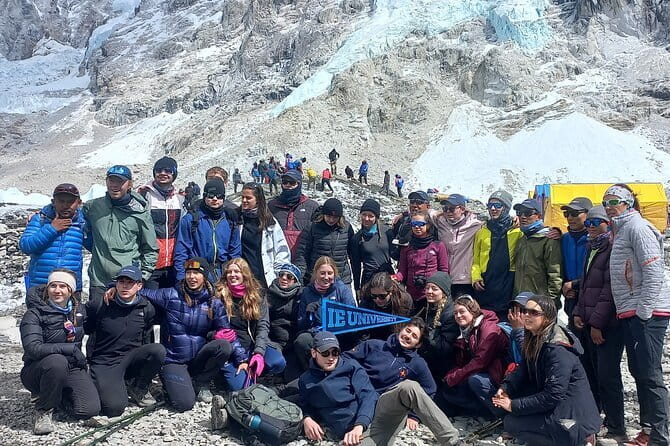
Day seven is where the trek starts to feel more remote. You spend most of the day walking along the Khumbu glacier, and the description notes a climb through a ridge after leaving Dingboche.
This is also the day where the itinerary aligns with the difficulty note: once you go above Dingboche (4,410 m), the trail gets more remote and steep. So even though the day is described as about six hours, it’s not just time on your feet. It’s time in a setting that feels more serious.
In terms of comfort, you’ll be happy you’re not doing this alone. The trip includes an experienced guide and daily support like first aid kit access and oximeter checks later in the plan. That makes a difference when you’re moving through unfamiliar high terrain.
Day 8: Lobuche to Gorak Shep, a big day with rocky going
Day eight is described as a big day. You leave Lobuche and follow the wide valley up to Gorak Shep. The itinerary says the trail slowly goes up a rocky path and becomes steeper as elevation increases.
This is the day that sets up everything for Kala Patthar. Gorak Shep is high enough to make the morning push feel like a real expedition moment, not a casual hike.
If you have limited time, you’ll appreciate this. This tour uses the short window efficiently: you go high, you sleep high enough, and then you hit the signature viewpoint the next day.
One consideration: rocky and steeper trail often feels like more than its mileage. Even with moderate difficulty, your legs may feel it the most here.
Day 9: Kala Patthar (5,644 m) early view, then helicopter return to Lukla
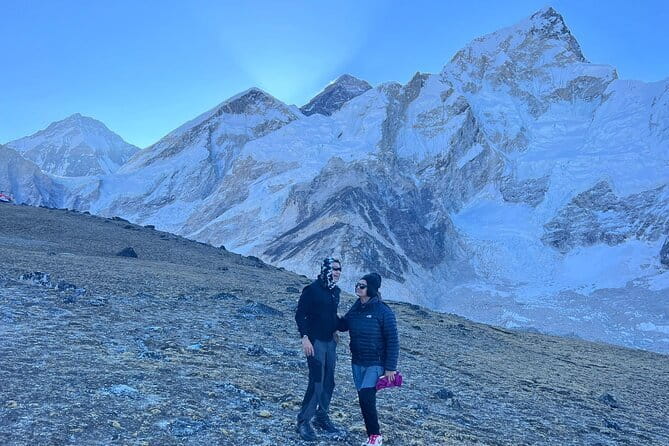
The day starts with Kala Patthar. The itinerary is clear that you can’t leave the Everest area until you see the views from this viewpoint. The Kala Patthar trail is described as well-used but easy to follow, and it starts above Gorakshep, with early sun lighting up the mountains.
This is your payoff day. If the rest of the trek is about getting your body and schedule ready, Kala Patthar is about making sure the whole effort lands on the view you came for. The height listed, 5,644 m, is a reminder that this part of Everest is not casual.
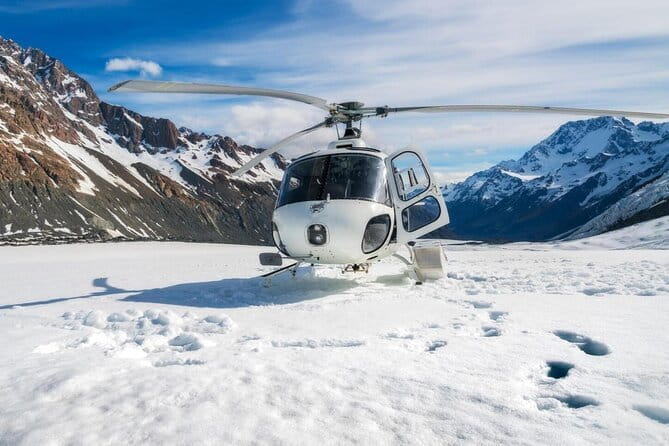
After the viewpoint, the helicopter return kicks in. The tour includes a helicopter flight from Gorakshep to Lukla, and the included flights are also listed as Kathmandu to Lukla and back to Kathmandu.
So you get the classic Everest hike and then a fast exit from the highest area. That’s the whole value proposition of the heli return format.
Price and logistics: what $3,888 per person is really buying
At $3,888.00 per person, this isn’t the budget way to do Everest. But you should look at what’s included, because the price is heavily driven by transport.
Here’s what you’re paying for in practical terms:
- Flights Kathmandu to Lukla and back to Kathmandu, so you’re not self-arranging the riskiest part
- Helicopter flight from the high point area to Lukla on the last day
- Private ground transfer in Kathmandu, including airport pickup and drop by private car
- Permits and official fees, plus taxes paid to the government
- A guided trek, with the guide’s salary, food, drinks, lodging, transportation, and insurance covered
- Basic medical readiness, including a first aid kit and oximeter checks
- Meals, with 8 breakfasts, 8 lunches, and 8 dinners included during the trek
That blend is the core value. This trek isn’t just hiking. It’s hiking plus high-altitude logistics plus medical monitoring plus permit admin plus high-cost transport.
What’s not included is also important. Kathmandu lunch and dinner are not included, and you’ll also pay for personal items. Tea houses may include hot showers and places to charge your phone, but those cost about $2 to $5. Alcohol and extra drinks are not included either, so plan on controlling those expenses yourself.
What the guide and porter setup means for your day-to-day
The tour includes an experienced guide and a porter setup: one porter for two people. That means your loads should be lighter than if you were carrying everything yourself.
It also means you can focus more on pacing. On a nine-day Everest plan, pacing is your real safety tool. The itinerary’s structure, including an acclimatization rest day in Namche and a gradual climb toward Dingboche and beyond, helps you manage effort without going full exhaustion mode.
In reviews tied to Adventure Master Trek, guides like Raj have been praised for making the process easier and more efficient, and Ramesh has been described as fantastic and always helpful. That lines up with the idea that the tour runs with trained people, not just someone who points the way.
Also note the tour includes an oximeter for twice-daily checks of pulse, oxygen saturation, and heart rate. That’s not scenery, but it can change how you feel about the trip. It signals that someone is paying attention, not guessing.
Who this trek fits best, and who should rethink it
This trek is listed for travelers with moderate physical fitness. So if you can handle steady hiking for multiple days, and you’re okay with a steep, remote stretch above Dingboche, it’s a strong fit.
It’s especially well-suited for:
- You if you want Everest Base Camp access in a short timeframe
- You if you prefer guided structure and support, not solo planning
- You if the idea of a helicopter return is appealing because you want less time spent descending
It may be less suitable if:
- You want a long, slow, fully immersive Everest trek without the time crunch
- You struggle with early mornings, since Kala Patthar and the Tengboche sunrise are time-sensitive days
Should you book this Everest Base Camp trek with helicopter return?
I’d book it if your main goal is Everest highlights, not a months-long quest for every last day of hiking. The combination of a gradual climb, an acclimatization rest day in Namche, a dedicated Kala Patthar viewing push, and a helicopter return makes the overall experience efficient without skipping the big moments.
I’d hesitate only if you want a more extended trek pace or you know you personally dislike steeper, more remote trail sections above Dingboche. Also, because the price includes flights and helicopter, it’s best for you if those costs fit your budget and you’re comfortable with the fact that you’re buying logistics as much as scenery.
If you’re ready for a supported Everest sprint with real mountain time, this is a sensible way to do it.
FAQ
How difficult is the Everest Base Camp trek on this 9-day schedule?
The trek difficulty is listed as moderate, and it’s recommended for travelers with moderate physical fitness. The itinerary includes a more remote and steep trail section once you go above Dingboche (4,410 m).
What flights and helicopter rides are included?
The package includes flights from Kathmandu to Lukla and back to Kathmandu. It also includes a helicopter flight from Gorakshep to Lukla on the last day.
Are meals included?
Yes. Breakfast (8), lunch (8), and dinner (8) are included during the trek. Meals in Kathmandu for lunch and dinner are not included.
Is medical support included on the trek?
Yes. The trip includes a first aid kit and an oximeter to check pulse, oxygen saturation, and heart rate twice a day.
What about porter support?
The tour includes one porter for two people, along with an experienced guide and guide support (food, lodging, transportation, insurance covered in the included plan).
Can I get hot showers or charge my phone during the trek?
Tea houses may offer hot showers and places to charge your phone, but those cost about $2 to $5. Those costs are not included.
If I cancel, do I get a full refund?
Free cancellation is offered up to 24 hours in advance for a full refund. If you cancel less than 24 hours before the start time, the amount paid is not refunded.
Latest Kathmandu write-ups
- Langtang Valley Trek★ 5.0 · 3 reviews
- Khopra Danda Trek★ 5.0 · 3 reviews
- Langtang Valley Trek from Kathmandu★ 5.0 · 3 reviews
- 5 night / 6 days Kathmandu Nagarkot Chitwan Pokhara tour★ 5.0 · 3 reviews
- Nepal Highlights Tour: 5 Nights 6 Days Kathmandu & Pokhara Tour★ 5.0 · 3 reviews
- Kathmandu Valley Private Day Tour★ 5.0 · 3 reviews
- Conquer the Himalayas: The Ultimate 16-Day Annapurna Circuit Trek★ 3.5 · 3 reviews
- Kathmandu Heritage Day Tour★ 5.0 · 3 reviews
Everest Base Camp Trek, compared.



Everest Base Camp Helicopter Tour landing at Everest View Hotel
Read our review →


Everest Base Camp Helicopter Tour landing at Hotel Everest View
Read our review →
Browse the lists this tour appears in