
Reviewed · MANASLU CIRCUIT TREK
Manaslu Trek with Larke Pass
Manaslu with Larke Pass is interesting because it is a restricted trek that moves from subtropical valleys up into a cold, Tibetan-style high-country world, ending on one of Nepal’s most rewarding pass crossings. I love the on-the-ground support you get on this route, especially the kind of help that trekkers described as fast and calm when things got stressful, including guide Karma and porter Bishbu Bhatta. I also love the way the trail gradually changes, from riverbank farmland to Mani stones and big glacier views, so every day feels like it earns the next one. One drawback to consider is that this is not a walk in the park, with exposed sections at lower elevations and a long, rocky pass day at Larke La (5,135m) where weather can turn quickly.
You’ll also get a proper start in Kathmandu, with private sightseeing and a Kathmandu hotel base before you head out, which matters when you need sleep and good organization more than extra sightseeing. And because the route is restricted, you are trekking with the right paperwork and a licensed guide, so you can focus on the mountains instead of paperwork panic. If you want a low-effort, always-flat itinerary, this is not it.
Quick hits before you go
- Restricted Manaslu region means licensed-guide trekking and special permits, not DIY trekking.
- Big acclimatization rhythm, with a rest day at Samagaon plus an overnight climb to Samdo.
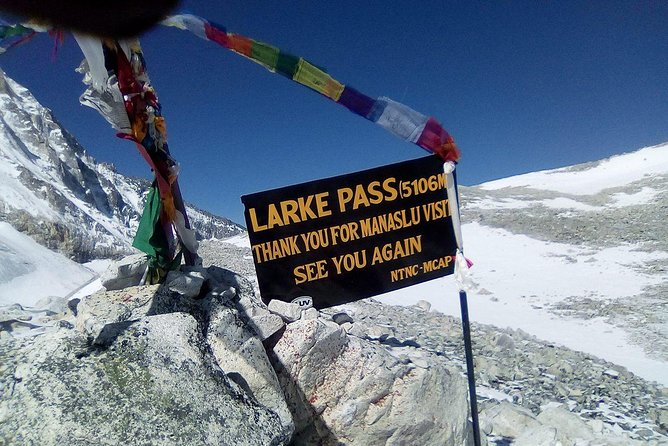
- Larke La is the headline, with a long pass day, icy lakes, and a steep drop into Bimthang.
- Teahouse nights most of the way, with meals included during the trek portion.
- Cultural shift is real, from Budhi Gandaki river villages to Tibetan Buddhist markers like Mani stones and gompas.
- Support sounds like the point, with guide Karma and porter Bishbu Bhatta showing up in real stories as reliable under pressure.
Why this Manaslu with Larke Pass trek feels different
Manaslu is one of those Nepal treks that still feels slightly off the main tourist conveyor belt. The route opened in 1991, and it remains restricted for individual travelers, which changes the whole vibe. Instead of random chaos, you get a more regulated flow with licensed guidance, checked permits, and a clear sense of route control.
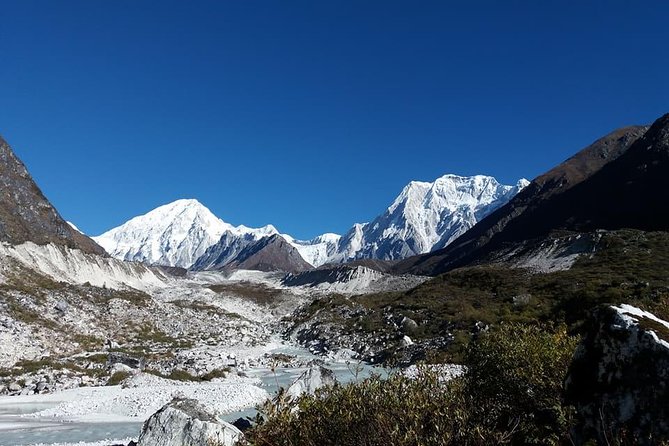
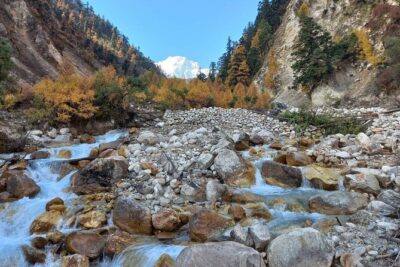
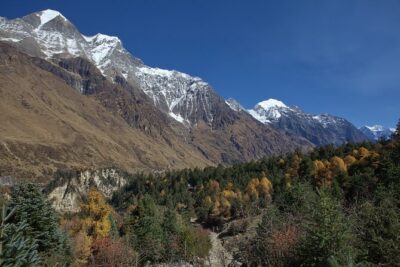
What I like most is how your landscape shifts in stages rather than all at once. You follow the Budhi Gandaki River upstream, and your day after day includes temperature and vegetation changes. You start in sub-tropical surroundings, then work into dry, colder zones, and eventually you’re living in the Tibetan climatic zone with Mani walls, monasteries, and wide pastures.
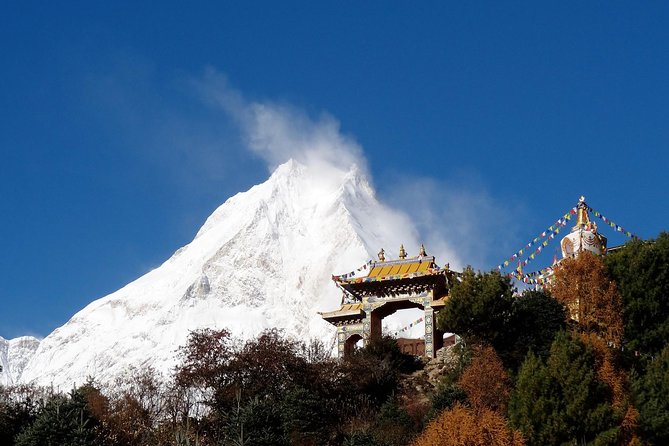
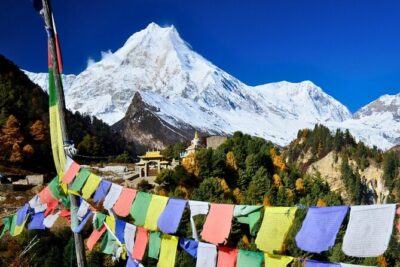
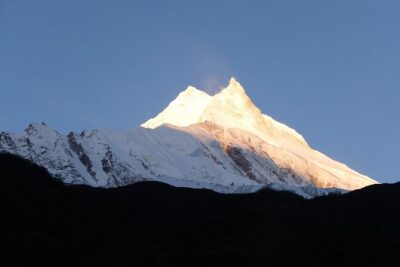
The other reason this trek hits is the view payoff. You’re staring at Manaslu (8,163m) and also picking up nearby peak names and angles throughout the route. Some of the best “wait, wow” moments show up around Samagaon and Samdo, then again when Larke La opens the horizon.
More of the Manaslu Circuit:
- Manaslu Circuit Trek
★ 5.0 · 292 reviews - Manaslu Circuit Trek
★ 5.0 · 184 reviews - Manaslu Circuit Trek:
★ 5.0 · 106 reviews
Permits and a licensed guide, what you actually need for Manaslu
This trek is restricted, which is why the permits and guide requirement matter so much. The Manaslu region requires a unique permit from the Nepal government, and it also needs a licensed guide for trekking. The route is also restricted for individual travelers, so you cannot just show up and do it on your own.
Practically, that means you are joining an organized trek with the paperwork handled as part of the plan. Your itinerary includes permit checks, including a permit checked stop around Namrung (2,550m). You are also seeing the cultural and administrative boundaries take shape as you move into Tibetan Buddhist regions and near the Tibetan border area.
If you are the kind of traveler who hates red tape, this is one place where you should feel grateful the logistics are covered.
Price and logistics: does $1,797 make sense?
At $1,797 per person for an 18-day program, you are paying for a full supported package rather than only “walking service.”
Here’s what your money covers, based on the included items:
- Airport pickup and drop in Kathmandu
- 3-star hotel in Kathmandu with breakfast
- Full-day Kathmandu sightseeing by private vehicle
- Trek teahouse or lodge accommodation with breakfast, lunch, dinner during the trek days
- Guide and porters, with 1 porter for every 2 trekkers
- National park fees and required trekking permits, plus TIMS and a special permit
- General first-aid kits
- Transportation for the road and local transfer parts
- All taxes and fees required
What you typically still need to budget for:
- Meals in cities
- Personal expenses like laundry, snacks, and hot or cold drinks
- Travel insurance (essential)
- Tips for staff
- Personal first-aid kit
- Nepal visa fee and any sightseeing entrance fees
For many people, the value is simple: you are not negotiating permits, you are not figuring out which nights are guaranteed, and you are not doing the long transport pieces without help. Manaslu is remote, and that is where organized support becomes more than comfort. It becomes risk management.
Kathmandu prep days: temples, quiet sleep, then you go
Day 1 is arrival in Kathmandu (1,300m / 4,264 ft). You’re met after landing and custom clearance, then driven to a hotel in Thamel. This is a great time to keep the plan simple: eat, sleep, and do only light movement.
Day 2 is Kathmandu Valley sightseeing plus trek preparation. You visit Pashupatinath Temple, Boudhnath Stupa, Patan Durbar Square, and Swayambhunath Stupa. Swayambhu is listed as more than 2,000 years old, and even if you’ve seen temples before, the scale and layering here are worth slow attention.
This day matters because Manaslu is long and altitude is coming. You’ll want your energy for the mountain side of the trip, not for extra chaos in town.
More to compare around Kathmandu
- Everest Base Camp Trek – 14 Days
★ 5.0 · 1,499 reviews - Everest Base Camp Trek
★ 5.0 · 842 reviews - Private Kathmandu Sightseeing Tour | UNESCO World Heritage sites
★ 5.0 · 756 reviews - Kathmandu: 7 UNESCO Sites with Lunch
★ 4.8 · 744 reviews
Days 3 to 5: riverside walking to Machhekhola, then Jagat
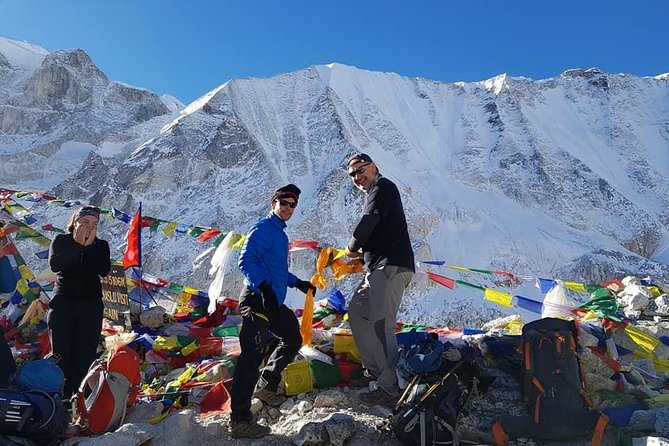
On Day 3, you drive from Kathmandu out to the starting area, with a long road day described as 6 to 8 hours drive to Aarughat, then continuing via Aarkhet Bazaar, with overnight at Soti Khola (the plan also mentions Aarkhet Bazaar as an overnight point). Expect a big travel block, because this trek starts deep in the hills.
Day 4 begins the trek following the Budhi Gandaki River. You climb briefly to Kyoropani, then descend again to the river. You pass small villages on steep valley sides until you reach a widening of the valley opposite a tributary stream entering the Buri Gandaki system. The day ends at Machhekhaola (1,300m), which the plan notes as meaning fish stream.
Day 5 takes you deeper into the valley pattern. You cross and re-cross bridges, including suspension bridges, and you reach Tatopani hot springs area. The route is described as exposed and challenging in places. After Doban, where there is a single teahouse, the river’s rapids and calmer meanders change the feel of the walk. You finish at Jagat (1,360m) after climbing to terraced fields.
My tip for these early days: treat them like training. Keep your pace easy, because the work you do in your body here pays off later when the air gets thinner.
Day 6 to 7: Deng and Bagarchhap, where altitude and culture shift
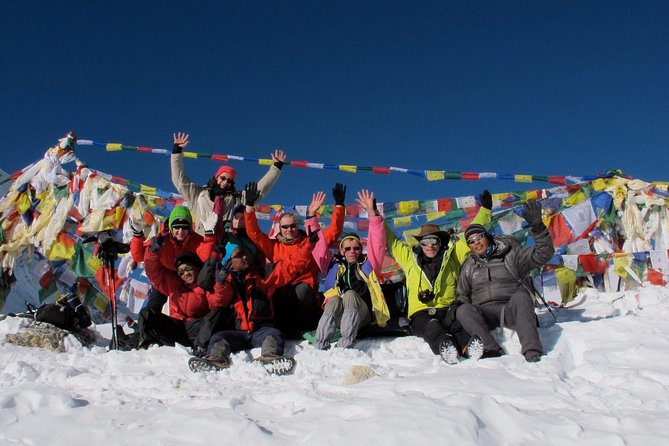
Day 6 starts with descending long stone steps to the river, then climbing terraced hills to Saguleri, with views of Sringi Himal (7,187m) mentioned in the plan. You keep following upstream patterns, with multiple river crossings at Gatte Khola and then onward to Deng (1,800m).
Day 7 is where the cultural change starts to feel obvious. The plan points out the appearance of Mani stones, a sign you are entering high country Buddhist regions. You reach a village/overnight stop described at Ghap, with a note about Tibetan areas and cooler trekking as altitude rises. The overnight is at Bagarchhap (listed around 2,300m in the detailed day-by-day).
This is the sort of transition day where you notice small things: the way trails curve around villages, the way prayer markers show up, and the way the weather starts to feel drier. It’s not just altitude, it’s the whole geography becoming more “high plateau” and less “valley market.”
Days 8 to 10: Namrung and Samagaon, the Manaslu viewpoint phase
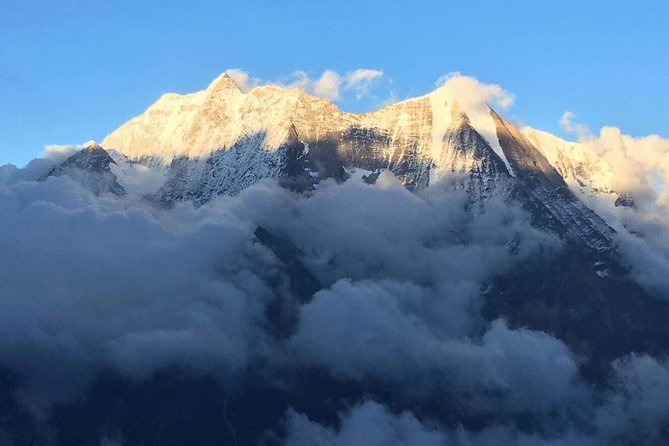
Day 8 heads toward Namrung (2,550m) with increasing mountain views and more Mani walls. The plan also calls out additional river crossings and notes a permit check at Namrung. Above this area the valley opens out into pastures, and you reach Tibetan-style villages such as Sho or Syanjang before arriving at Namrung for a teahouse night. The day ends with one of your first big views of Manaslu North.
Day 9 moves from Namrung to Samagaon (the plan lists a day route to Sama Gaon around 3,500m). You pass Lho (3,150m) with a monastery, chortens, and Manis. You also get specific peak references, like Peak 29, plus a detour to Honsansho Gompa and the Pungen Glaciers for views.
Day 10 is your acclimatization rest day at Samagaon. This is the kind of stop that makes a big difference, because you’re not just marching. You can hike toward Manaslu Base Camp for views of Samdo (Pang phuchuli), Nagdi chuli, Simnang Himal, the Manaslu glacier, and Manaslu icefall, plus a nearby Birendra Kunda ice lake.
If you only have the energy for one choice day hike on this trip, this is the one. It also helps you adjust to the way your breathing changes as you live higher.
Day 11 to 12: Samdo viewpoints and Larkya Phedi’s zigzags
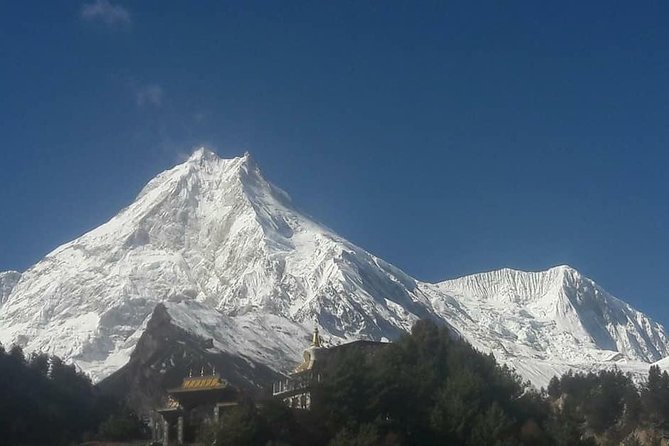
Day 11 is the trek from Samagaon to Samdo (3,690m). The route is described as gentle uphill through a desert path and windy valley. The Tibetan border is about four kilometers away, but visitors are not allowed to pass it. You also pass a Tibetan refugee village at Samdo. This is one of those days where the scenery is huge, but you’ll also want to keep your attention on the human geography too.
Day 12 climbs to Dharmashala or Larkya Phedi (4,460m) in 4 to 5 hours. The trail is described as rocky and zigzagging. Before you reach Larkya Phedi, there’s a Larkya Bazaar market where seasonal fairs are held and locals bring goods from Tibet to sell. Even if the market is quieter than you expect, it’s a useful reminder that this pass route still connects real communities.
You’ll sleep at Dharmashala/Larkya Phedi area for the next day’s pass push.
Day 13 to 14: Larke La crossing, icy lakes, then Bimthang and Tilje
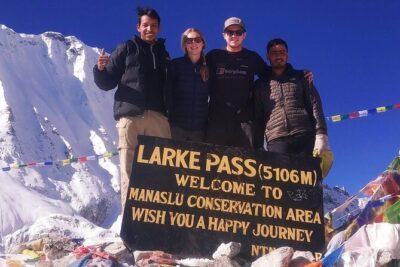
Day 13 is the main event: Larkya La (5,135m) to Bimthang (3,590m). You start early on a steep ascending path through rocky, windy trail. You carry a packed lunch. From the top, the plan mentions views of Larkya peak, sunrise at Mt. Manaslu, plus Ratna chuli, Cheo Himal, and many other snow-capped peaks.
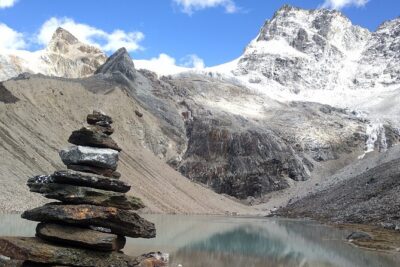
This day includes the part you should take seriously, crossing a pass and hiking downhill through rock and ice, with icy lakes along the way. Then you reach Bimthang, described as a broad and level ablation valley with Mani walls and deserted houses.
Day 14 continues from Bimthang to Tilje (the plan lists Tilje around 2,360m). After a few hours through high pasture, you descend the valley of Burdin Khola toward the west side base camp area for Manaslu views. From a ridge at 4,150m, you get views of Manaslu to the southeast and Annapurna II to the southwest. The route then shifts into a rhododendron forest, narrows into a valley, and reaches Karche (2,785m), which is described as the highest cultivated land in that valley. Finally you walk down to Tilje, with an apple orchard and local wine noted in the plan.
This stretch is often where people feel both relief and fatigue. Your body is tired, but the scenery gives you a reason to keep moving.
Days 15 to 17: Tilje to Dharapani, then the jeep and bus back
Day 15 takes you from Tilje to Dharapani (1,860m). You leave Tilje and trek uphill for about 45 minutes to reach Dharapani, crossing a bridge over the Marshyangdi River. The overnight at Dharapani is meaningful because this is where the trek meets the Annapurna Circuit Trail.
Day 16 is the descent and transport day: walk down about 3/4 hours to Syange, then take jeep or bus about 2/3 hours to Besi Sahar. You overnight in Besi Sahar.
Day 17 is a drive back to Kathmandu and a cultural dinner in the evening. This is not a “party night” program. It’s a nice decompression moment.
Day 18 is departure. You get a driver transfer to the international airport ahead of time so you can connect your flight without sprinting through Kathmandu traffic.
Support quality: what the real stories highlight
The strongest thing I can take from the trek’s real-world experiences is that support matters most when the mountain gets inconvenient. Stories tied to this trek include a situation where help was organized quickly overnight at a reasonable cost, with the porter Bishbu Bhatta described as invaluable during urgency. Another story highlights how guide Karma and the porter supported the group through a memorable circuit-like journey with weather and view highlights.
That doesn’t mean every day will feel easy. It means you are traveling with a team that knows how to handle “normal problems” like logistics and changing conditions, and also how to respond if something feels off.
Who should book this trek, and who should not
This trek is a strong fit if:
- You want a restricted, culturally distinct Himalayan trek rather than a broad super-highway route
- You’re okay with a long program that mixes walking with road transfers
- You like a clear itinerary with permit handling, guide planning, and teahouse-lodge meals during the trek
It’s likely not a good fit if:
- You want mostly flat, short days
- You get uncomfortable with exposed sections, rocky trails, and a very demanding pass day at Larke La
- You are not ready to manage altitude with an acclimatization rhythm
If your goal is to see Manaslu and do it with structure and support, this program is built for that.
Should you book this Manaslu with Larke Pass trek?
I’d book it if you want Manaslu views plus a route that feels “managed” in the best sense. The combination of restricted-region permits, licensed guiding, teahouse meals, and a porters-and-guide setup for your hiking days makes it easier to focus on the mountains instead of logistics.
I would pause if you are only planning for a gentle vacation pace. This route asks for real hiking effort, and Larke La is the kind of day where the mountains make the rules.
If you’re the right fit, the rewards are the gradual shift into Tibetan high-country culture, the high pass experience, and the sense that your trip is supported from Kathmandu all the way down to the Annapurna Circuit meeting point at Dharapani.
FAQ
How long is the Manaslu Trek with Larke Pass?
The program is listed as 18 days (approx.).
Where do you start and end the trip?
You start in Kathmandu (arrival Day 1) and the itinerary returns you to Kathmandu for departure on Day 18.
What is the highest point on the trek?
The highest point is Larke La (5,135m), with Larkya Phedi listed around 4,460m before the pass and Bimthang listed around 3,590m after.
Do I need permits and a licensed guide?
Yes. The Manaslu region is restricted and requires a unique permit and a licensed guide for trekking. Permits are also checked during the trek (including at Namrung).
What kind of accommodation do you use during the trek?
You use teahouse or lodge accommodation during the trekking days, as stated in the included features for your itinerary.
Are meals included while trekking?
Yes. The plan states that teahouse/lodge accommodation during trekking includes breakfast, lunch, and dinner.
Are meals included in Kathmandu?
Meals in Kathmandu are not included. The included items cover the Kathmandu hotel with breakfast, plus sightseeing, but not city meals.
Is travel insurance included?
No. Travel insurance is essential and is listed as not included.
Is free cancellation available?
Yes. You can cancel up to 24 hours in advance for a full refund, and the experience requires good weather with an option to reschedule or get a refund if canceled due to poor weather.
Latest Kathmandu write-ups
- Private Lobuche East Peak Climb and Mt Everest Base Camp Trekking★ 5.0 · 4 reviews
- Ghorepani Poonhill Trek★ 5.0 · 4 reviews
- Mardi Himal Yoga Trek★ 5.0 · 4 reviews
- Bhaktapur Day Tour with Changu Narayen★ 5.0 · 4 reviews
- Everest Base Camp Helicopter Tour★ 5.0 · 4 reviews
- Annapurna Ghorepani Poon Hill trek from Pokhara short and easy hike in Himalaya★ 5.0 · 4 reviews
- Everest Base Camp trek 13 days★ 5.0 · 4 reviews
- Everest Base Camp+Gokyo Ri★ 5.0 · 4 reviews
Manaslu Circuit Trek, compared.
Manaslu Circuit Trek 8th Highest in the World
Read our review →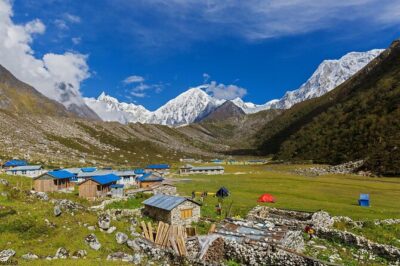
Private 12-Day Manaslu Circuit Trekking in Kathmandu
Read our review →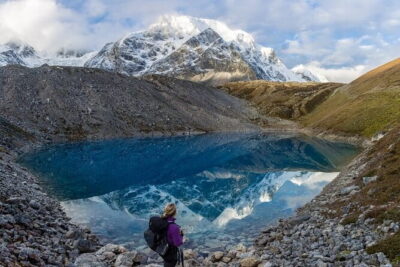
Manaslu Circuit Larkya Pass Trekking 13 days From Kathmandu
Read our review →Browse the lists this tour appears in