
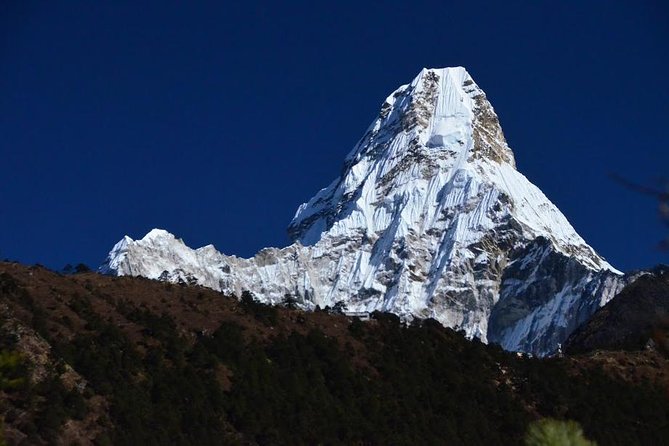
Reviewed · EVEREST BASE CAMP TREK
16 Days Island Peak Climbing With Everest Base Camp Private Trip
Island Peak in Nepal is one of those climbs that sounds both intimidating and oddly inviting. You get the full Everest-region trek feel, then you step onto a technical 6,189m summit day that rewards you with huge views over the Khumbu. I like that this plan also builds in time with Sherpa communities, not just high camps and headlamps.
Two specific things I really like: the acclimatization pacing (Namche, then later on the way up), and the way the trip includes a lot of essentials that would otherwise eat your budget. I also like seeing the names Ram and Arjun come up in past experiences, because it suggests real local logistics and hands-on guiding, not just a ticket and a shrug.
One possible drawback to consider: the trekking portion is based on basic teahouses where toilet and bathroom facilities are outside your room. Add cold weather above 5,000m, and you’ll want to pack smart, so the trip stays fun instead of becoming a long cold lesson.
Key highlights worth knowing
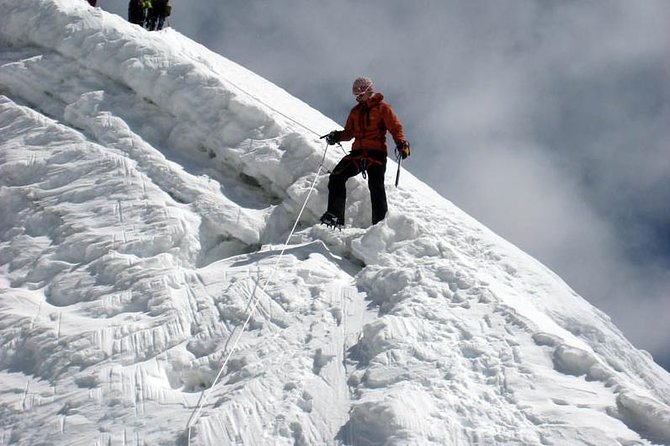
- Island Peak 6,189m plus Everest Base Camp, so you get both a summit goal and the classic Khumbu trek arc
- Acclimatization days in Namche and on approach to Island Peak, designed to keep your summit day more realistic
- Guide and porter included, with porter support up to 25 kg for up to two climbers
- Climbing permit and special climbing gear listed as included, so you avoid many last-minute rentals
- Sherpa life in the Khumbu, with teahouse villages like Namche and Pangboche built into the route
- Farewell dinner in Kathmandu with live cultural show, a nice buffer before you fly home
Island Peak and Everest Base Camp, the practical dream combo
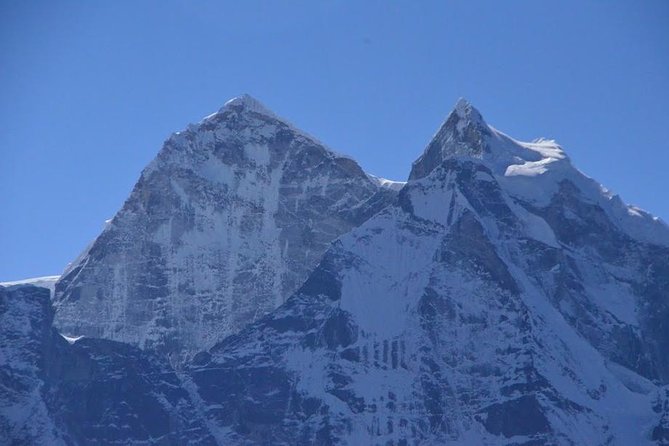
This kind of trip works because it gives you two different rewards. First, you walk through Sherpa country toward Everest Base Camp, where every day of trekking comes with a new view of peaks and villages. Second, you switch gears from trekking to climbing on Island Peak, where technical tools and careful pacing actually matter.
You’re not just chasing a number. Island Peak is also treated as training for higher Himalayan objectives, which is exactly why the itinerary includes acclimatization and a ladder of camps. If you’ve already hiked at altitude before, you’ll feel the logic right away. If you’re new to serious height, you’ll still benefit from the fact that the plan slows down when your body needs it.
And because the Everest Base Camp trek is part of the same circuit, you get the social rhythm of the route. Teahouse dinners, morning queues for hot water, the low-key village life in Namche, then the quiet, big-sky feel as you push higher. It’s not a theme park version of Everest. It’s the real Khumbu pace.
More ways to walk to Everest Base Camp:
- Everest Base Camp Helicopter Tour landing at Everest View Hotel
★ 5.0 · 668 reviews - Gokyo to Everest Base Camp Trek
★ 5.0 · 113 reviews - Everest Base Camp Trek
★ 5.0 · 97 reviews
Price and what you actually get for $2,765
At $2,765 per person, the key question is what that amount buys you beyond the romantic summit photos. Here’s what’s clearly included, based on the trip details:
- Permits: Island Peak climbing special permit is included.
- Guiding and support: English-speaking professional climbing guide included, plus a porter for up to two climbers carrying up to 25 kg (porter expenses, insurance, meals, and transport are covered).
- Altitude-ready lodging: basic teahouse accommodation during the trek, deluxe accommodation for 3 nights in Kathmandu, and tented camp during the climbing period (twin sharing basis).
- Meals: 3 meals per day during the trek (breakfast, lunch, dinner you can choose from the menu), plus breakfast in Kathmandu. During the climbing period, meals are prepared by the guide.
- Climbing and cold-weather gear listed as included: down jacket and sleeping bag, first-aid kit, water purifying solution (iodine-based), and climbing equipment such as tent, ice axe, ropes, crampons, harness, and helmet.
That last point is a big value driver. Many climbers underestimate how much cold-weather and rope-accessories cost when you’re scrambling at the last minute. Still, use common sense: confirm sizes and the condition of gear when you book, especially for boots and crampon fit, even though boots and personal warm clothing are not included.
What’s not included is also part of the value picture:
- Beverages (tea/coffee, bottled water, cold drinks)
- Personal equipment like trekking shoes and climbing boots, and warm clothes
- Travel insurance and Nepal visa
- International flights
- Possible excess baggage charges if you go over the 15 kg airline limit
- Souvenir photos and personal extras
In short: this price looks fair if you want local infrastructure, a guide who’s actually responsible for climbing logistics, and fewer gear headaches. If you already own everything and plan to self-organize permits, you could lower costs. But for most people, the included support is what keeps the trip smooth.
Before you go: fitness level and gear choices that keep you comfortable
The trip calls for moderate physical fitness. That’s not the same as being relaxed, but it does tell you this is built for trekking plus one serious technical summit push. If you get winded on stairs, you’ll feel it here. If you can hike uphill for hours and recover quickly, you’re on the right track.
You’ll also want to take the packing list seriously because the itinerary rises into real cold. The trip notes specifically that you should dress for all-weather conditions and includes examples of what matters: sleeping bag, down jacket, fleece, thermal layers, climbing boots, trekking boots, crampons, warm hat, gloves, warm socks, headlamp, and sun plus cold creams.
Also, remember this: even if some gear is included, you’ll still be responsible for key items like your footwear and personal warm layers. If your boots don’t fit, crampons won’t behave, and your summit plan can suffer. Fit and warmth are not optional.
Finally, altitude matters. Your body will be working hard at elevations well above 4,000m for multiple days, and your summit day is at 6,189m. You can’t muscle through that. The best “gear” you bring is pacing, hydration, and respecting the acclimatization schedule.
Day-by-day: from Kathmandu to Lukla, up to Everest Base Camp, then Island Peak
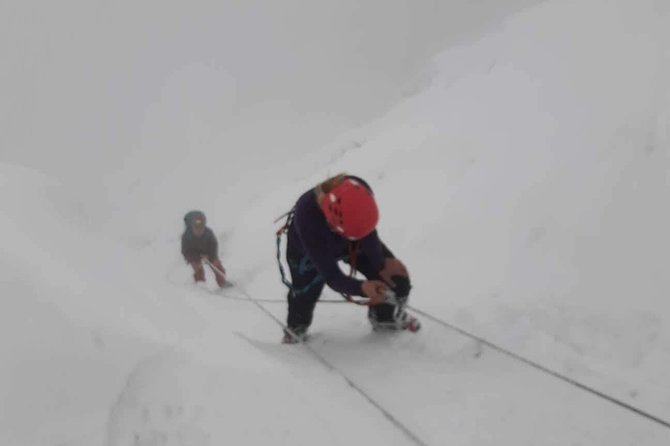
This route is built like a staircase. You fly in, trek higher, sleep higher, then swap trekking boots for climbing tools and step into a technical routine. Here’s how each day fits together.
More trekking peaks with guided ascents:
- Mera Peak Climbing
★ 5.0 · 33 reviews - Island Peak Adventure
★ 5.0 · 15 reviews - Everest Base Camp Trek with Island Peak Climbing
★ 5.0 · 14 reviews - Island Peak Climbing | Summit 6,189m with Expert Guides
★ 5.0 · 3 reviews
Day 1: Arrival and transfer
You land in Kathmandu and get transferred. Use this day to get rested, hydrate, and keep your plans simple. Kathmandu is where you’ll sort logistics, confirm gear, and mentally switch from vacation mode to altitude mode.
Day 2: Trek preparation
This is the day to finalize what you’ll carry, confirm the schedule, and get your kit ready for days of teahouses and cold mornings. If you’re the type who packs at midnight, do yourself a favor and fix that habit now.
Day 3: Kathmandu to Lukla, then trek to Phakding (about 2,610m)
You take the short flight to Lukla (2,840m). Then you trek to Phakding (2,610m). This first trekking day is about rhythm. It’s a gentle warm-up while you start seeing the Everest-region villages change as you gain elevation.
Day 4: Phakding to Namche (about 3,440m)
You climb toward Namche Bazaar (3,440m). Namche is where the trip starts to feel like the classic Everest route: busy tea houses, big views, and the sense that you’re living in the mountains for a few weeks.
Day 5: Acclimatization day in Namche
This is a big deal. Instead of rushing higher, you stay at altitude long enough for your body to adjust. Acclimatization here helps you handle later days when elevations climb again quickly.
Day 6: Namche to Thyangboche (Tengboche) (about 3,680m)
You head toward Thyangboche (3,680m). This is a cultural moment as much as a hiking moment. You’re moving through a Sherpa-centered landscape where monasteries and village life are part of the daily flow.
Day 7: Thyangboche to Pheriche (about 4,240m)
You continue upward to Pheriche (4,240m). Expect the cold to creep in more noticeably. Days start to feel longer because you’ll walk slower and recover longer.
Day 8: Pheriche to Lobuche (about 4,950m)
You climb toward Lobuche (4,950m). This is where the trek begins to feel like a commitment. You’re higher, the air is thinner, and your body will remind you with every uphill step.
Day 9: Lobuche to Gorakshep to Everest Base Camp, then back to Gorakshep (up to about 5,364m)
This day is a highlight and a fatigue check. You go from Lobuche to Gorakshep (about 5,160m), then up to Everest Base Camp (about 5,364m), and return to Gorakshep. Going and coming back is the trade-off, but you get the satisfaction of reaching Base Camp without shortening the acclimatization arc.
Day 10: Kalapatthar (about 5,550m) to Chhukung (about 4,730m)
You reach Kalapatthar (5,550m) and then move toward Chhukung (4,730m). Dropping slightly after Kalapatthar can feel like a mercy, even though you’re still high and still cold. Kalapatthar is also a great viewpoint moment, giving big perspective on the peaks around you.
Day 11: Chhukung to Island Peak Base Camp (about 5,200m)
Now you transition from the Everest Base Camp storyline into the Island Peak approach. You move from Chhukung to Island Peak Base Camp (about 5,200m). This is where you start mentally switching to climbing skills, not just trekking.
Day 12: Island Peak Base Camp to High Camp (about 5,600m)
You go up to High Camp (about 5,600m). This is less about speed and more about learning your breathing rhythm at height. You’ll also be positioning yourself for summit day, so expect a more intentional pace.
Day 13: Acclimatization day
This day is your buffer. It’s scheduled so your body has time to adapt before the summit push. If weather shifts later, these acclimatization choices can be what keeps your summit plan from getting squeezed.
Day 14: High Camp to Summit (6,189m) and back to Base Camp
This is the main event: summit day at 6,189m, then back down to base camp. The climb itself is why the trip includes crampons, ice axe, ropes, and a harness. You’ll be moving in a colder, more technical environment than anything you did on the trek portion.
When you’re on your way back down, take it seriously. Descents at altitude can drain you fast. Save energy for the way to base camp.
Day 15: Base Camp to Pangboche (about 3,940m)
You drop down to Pangboche (about 3,940m). This descent phase is where you start to feel human again. You’re still high, but the air becomes more forgiving, and your muscles finally get a break from constant uphill work.
Day 16: Pangboche to Namche
You continue back toward Namche. This day often feels like a repeat of earlier terrain, but with a new perspective. You’ve changed already, so the route reads differently.
Day 17: Namche to Lukla
You head back to Lukla. By now, you’re likely less interested in peak-bagging and more focused on getting to your flight day with good energy. This is where steady pacing matters, because you don’t want to arrive at Lukla cooked.
Day 18: Fly Lukla to Kathmandu
You fly back to Kathmandu. After a climb like Island Peak plus the Everest-region trek, Kathmandu feels loud and warm. If you have time, enjoy a proper meal and let your legs recover.
Acclimatization that actually looks like a plan, not a guess
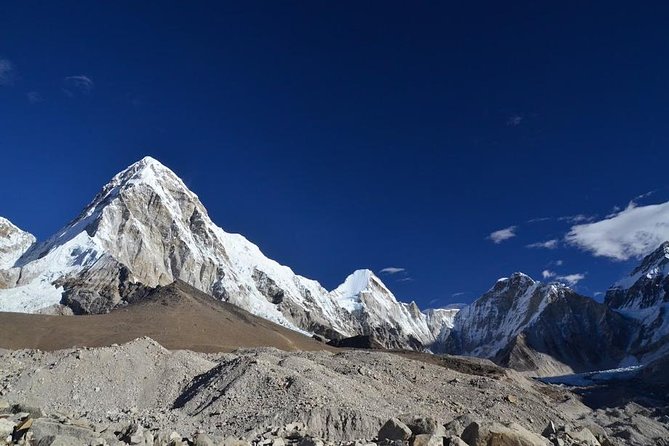
A lot of altitude trips say acclimatization, but don’t really build it into your schedule. Here, the structure is clear.
You gain altitude in steps on the way to Everest Base Camp, and you have an explicit acclimatization day in Namche. Later, once you pivot toward Island Peak, you get a high camp push followed by another acclimatization day before summit day.
That sequence matters for two reasons:
1) It gives your body time to adapt to thinner air before the biggest effort.
2) It creates flexibility if conditions are rough.
Also, the trip is explicit about weather sensitivity. It says the trip operates in all weather conditions, yet summit timing depends on favorable weather conditions. That means you should plan for the reality that your summit window might shift. The trip suggests keeping spare days, and I agree. Two spare days is the kind of small buffer that saves your holiday from stress.
Sherpa culture in the Khumbu, beyond the summit mindset
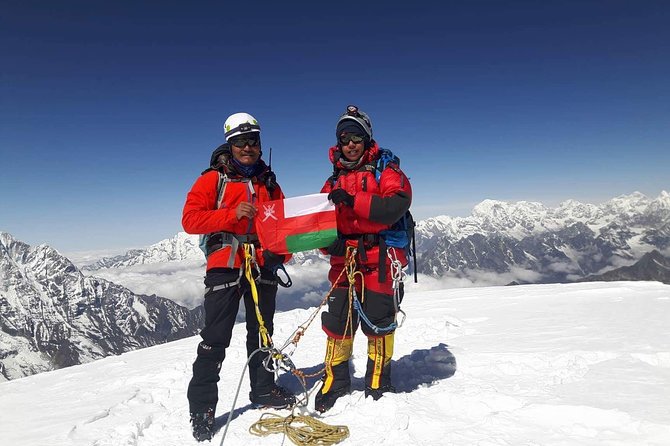
If you only think of Everest as a summit line, you miss most of what makes this region special. This itinerary brings you through villages that are part of Sherpa life. It even calls out the Khumbu region as the original settlement area for Sherpa communities.
You’ll feel it most in the rhythm: teahouse meals, conversations, and the way guides and locals move through the terrain with practiced familiarity. On a climbing itinerary, that social layer can sound secondary, but it’s not. It’s how you stay grounded while you’re pushing into high altitude.
And the cultural tie-in in Kathmandu helps too. The included farewell dinner is described as authentic Nepalese cuisine with a live cultural show. That gives you a human-scale moment before you fly back, and it’s a nice way to reflect on what the mountains did to your sleep and your appetite.
What the included gear means for you on cold mornings
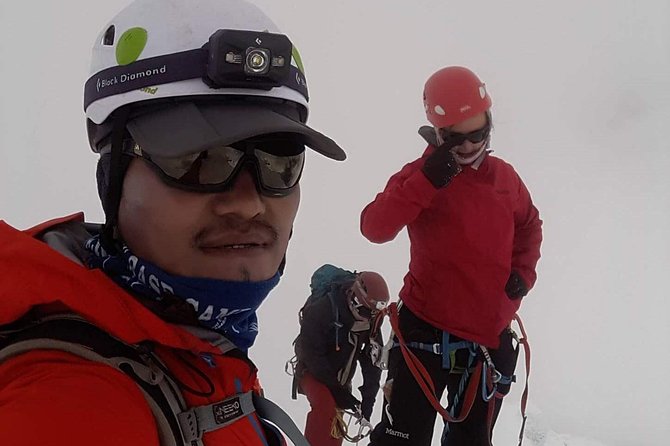
The trip lists a strong set of inclusions for climbing and cold. That’s where this itinerary can feel different from do-it-yourself climbing.
You’re provided with:
- Down jacket and sleeping bag
- Water purifying solution (iodine-based)
- First-aid kit
- Ice axe, crampons, harness, helmet, ropes
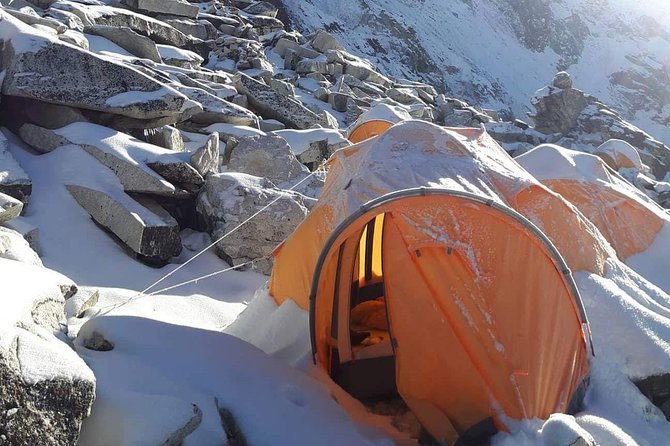
- A tent during the climbing period
For many climbers, the practical benefit is fewer last-minute shopping trips in Kathmandu. For you, the better benefit is confidence. When you show up with the right insulation, you can start your day calmer, which helps when the air gets thin.
Still, you should bring your own key personal items not listed as included, especially trekking shoes, climbing boots, and warm clothes. Even with loaner gear, your personal clothing system is what keeps you functional.
The support factor: guide, porter, and logistics that reduce stress
One of the most praised aspects in the available feedback is how helpful the team is before and after trips, and the fact that people come back. Names that stand out are Ram (logistics support) and guide Arjun (recognized for guiding skill). That matters because in the mountains, stress comes from uncertainty.
You also get porter support for up to two climbers, carrying up to 25 kg. That doesn’t remove the hard work, but it does remove a huge variable. Less weight on your back usually means better energy for acclimatization and climbing.
You’ll still be responsible for your own comfort and pacing, but the trip structure does a lot to reduce the random problems that sink small budgets and good moods.
Should you book this Island Peak private trip?
Book this trip if you want a well-paced route that mixes the Everest Base Camp experience with a serious but structured Island Peak summit. It’s a strong fit if:
- you want a private setup where only your group participates
- you prefer to have permits, guide, porter, and major climbing gear handled
- you’re ready for trekking in high altitude teahouses, then a technical summit day
Consider other options if you’re not comfortable with basic accommodations, because the trek includes teahouses where bathrooms and toilets are outside your room. Also consider your own cold tolerance and your commitment to proper warm layers, since the trip explicitly warns you to dress for cold and includes gear but still expects you to supply personal warmth items.
If you’re the type who wants a clear plan, honest support, and a real Everest-region route that leads to a 6,189m summit attempt, this is a solid choice.
FAQ
What is the highest altitude on this trip?
The summit of Island Peak is listed at 6,189m. The trek also reaches Everest Base Camp around 5,364m and includes viewpoint elevations like Kalapatthar around 5,550m.
What kind of accommodation is included during the trek and climbing?
During the trek, you get basic teahouse accommodation (toilet and bathroom are outside your room). Kathmandu includes deluxe accommodation for 3 nights, and the climbing period uses a tented camp on twin sharing basis.
Does the price include the Island Peak permit and meals?
Yes. The trip includes the Island Peak climbing special permit. Meals are also included: 3 meals per day during the trek with menu choice, plus breakfast in Kathmandu. During the climbing period, meals are prepared by the guide.
What climbing equipment is provided, and what do I need to bring?
The trip lists included gear such as a down jacket, sleeping bag, ice axe, ropes, crampons, harness, and helmet, plus a tent during the climbing period and a water purifying solution. You still need to bring personal trekking and climbing items like trekking shoes and climbing boots and your own warm clothes.
Is this a private tour?
Yes. It’s described as a private tour/activity, meaning only your group participates.
What if weather affects the climb or trek?
The trip notes that it operates in all weather conditions, but it is also subject to favorable weather conditions. If canceled due to poor weather, you are offered an option of an alternative date, and it’s recommended to keep a couple of spare days. For cancellations by you, free cancellation is available up to 24 hours in advance for a full refund.
Latest Kathmandu write-ups
- 15 Days Round Annapurna Trek with Poon Hill from Pokhara★ 5.0 · 5 reviews
- Private Nepal round trip including Ghorepani Poonhill trek★ 5.0 · 3 reviews
- Everest Base Camp Trekking 16 Days★ 4.0 · 7 reviews
- 14 Days Luxury Annapurna Base Camp Trek★ 5.0 · 6 reviews
- Everest Base Camp Trek★ 5.0 · 32 reviews
- Everest Base Camp Trek★ 5.0 · 87 reviews
- Everest Base Camp Trek★ 5.0 · 97 reviews
- 14 Days Annapurna Base Camp Trekking | Best trek for visit Nepal 2020★ 5.0 · 19 reviews
Everest Base Camp Trek, compared.
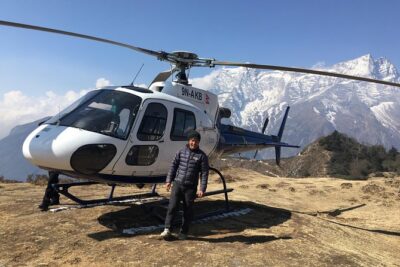
Everest Base Camp Helicopter Tour landing at Everest View Hotel
Read our review →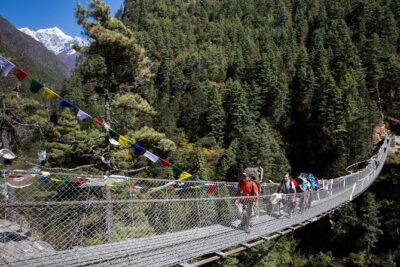
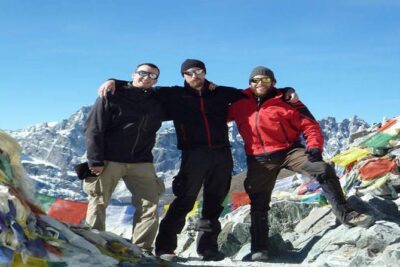
Everest Base Camp Trek 12 Days – Best Himalayan Adventure
Read our review →
Browse the lists this tour appears in